
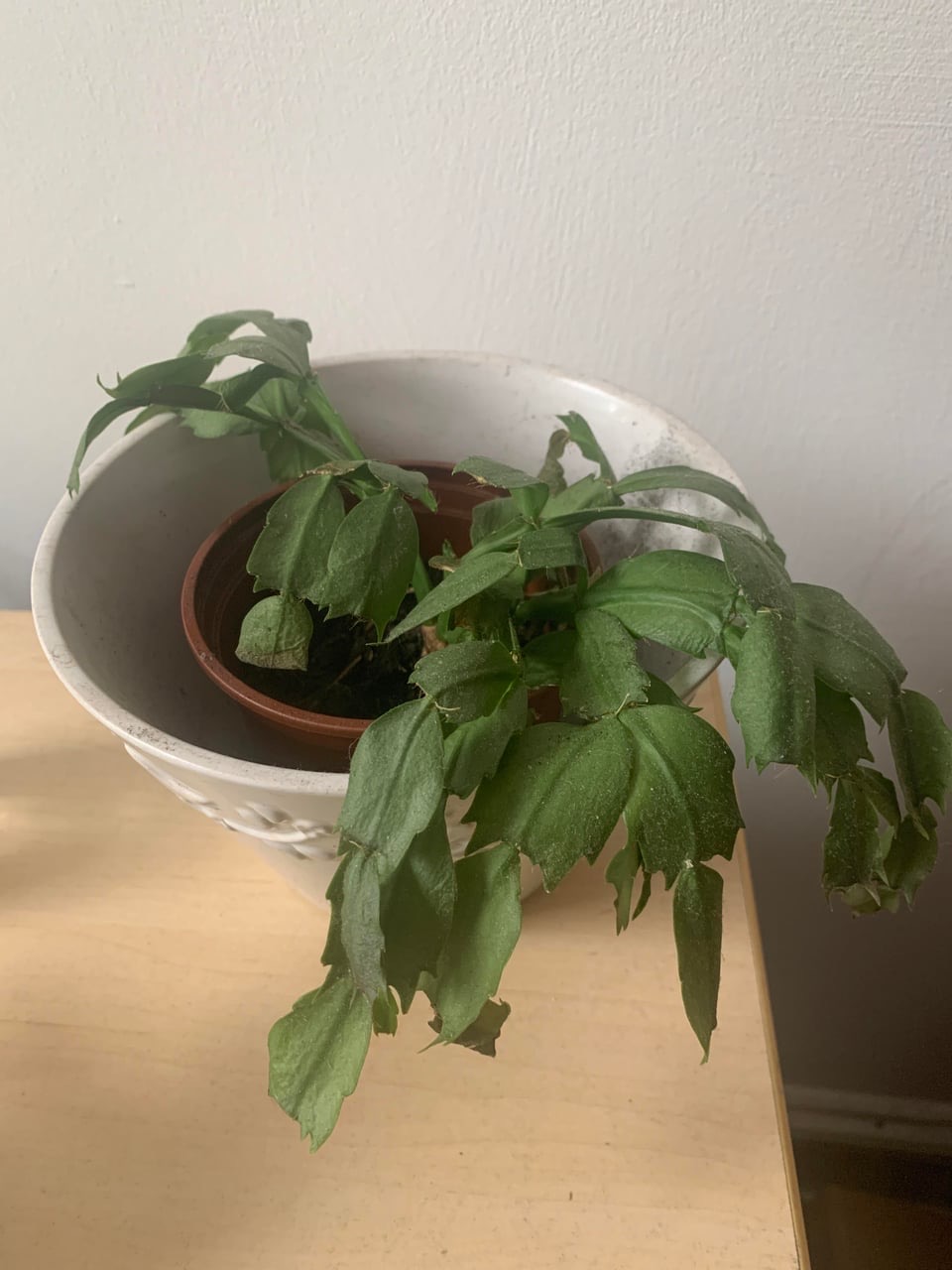
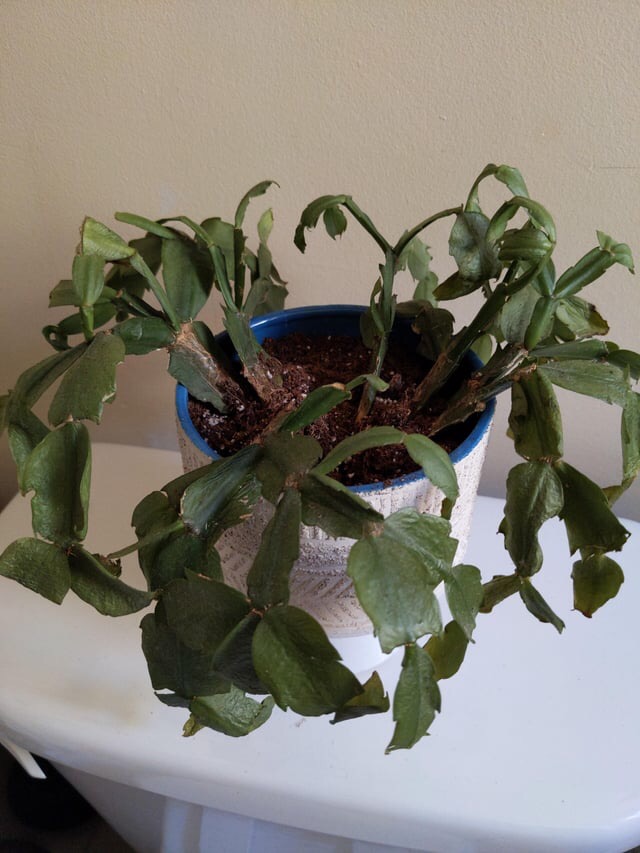
It’s awful when look over at your Christmas cactus and realize it’s gone limp. One minute it’s sitting there full and upright and the next it’s drooping and flopping over the side of the pot
Mine did this the first winter I owned one and. I did the sensible thing and panicked, which resulted in it only getting worse.
But a limp or wilting Christmas cactus is almost always fixable once you work out what’s going wrong with it. They’re tougher than they look.
They can live for decades and some are even passed down through families for a hundred years or more. So a bit of drooping is rarely the death of one.
The tricky part is that limpness can point to a few different problems and some of them are complete opposites of each other. Too much water looks a lot like too little water at first glance.
So I’m going to go through the real reasons your Christmas cactus is limp or wilting and how to fix each one.
Quick Answer
- Overwatering (Most Common): Stop watering and let the soil dry out. Empty the saucer so the roots aren’t sitting in water and check the base for any mushy stems.
- Underwatering: If the soil is very dry and the segments look wrinkled water it slowly with smaller amounts more often rather than one big go.
- Poor Drainage or Wrong Pot: Make sure the pot has drainage holes and use a well draining cactus or succulent mix so water can’t pool around the roots.
1. Overwatering
The Problem:
Overwatering is the number one reason a Christmas cactus goes limp. People treat these like a desert cactus and either water on a rigid schedule or, more often, they see the plant looking sad and assume it’s thirsty so they give it more water. Which usually makes things worse.
A Christmas cactus isn’t a desert plant at all. In the wild it’s an epiphyte that grows in the branches of trees in the humid rainforests of Brazil so its roots are used to lot of air flowing and never being in soggy soil.
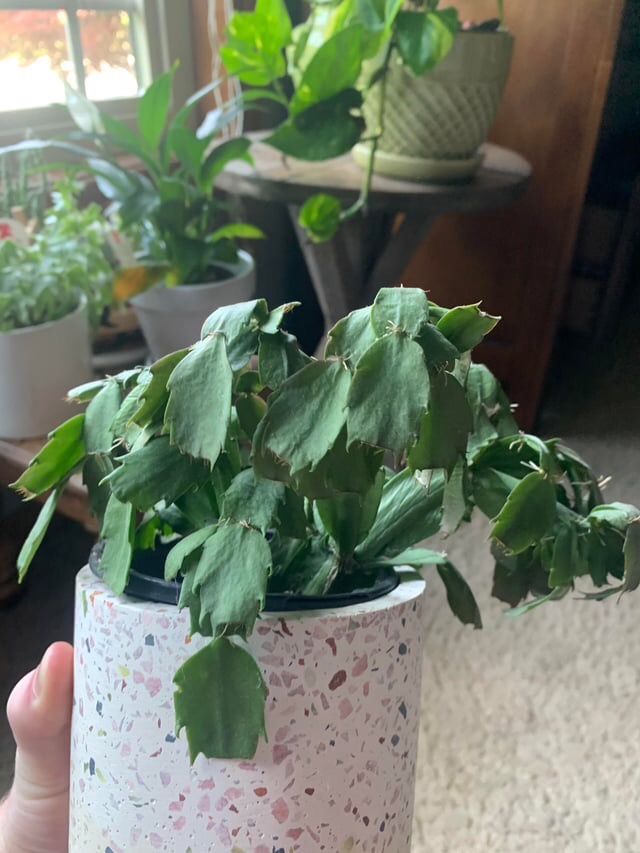
When the soil stays wet the roots can’t breathe and they start to fail. The segments then go soft and floppy because they’re no longer getting what they need.
Signs of Overwatering:
- Segments that feel soft or limp rather than firm.
- Soil that’s still wet days after you last watered it.
- Yellow segments or segments dropping off when you barely touch them.
- A general floppiness throughout all of the plant, not just one side.
The Fix:
- Stop watering right away and let the top inch or two of soil dry out before you even think about watering again.
- Empty the saucer or any outer pot so the roots aren’t standing in leftover water.
- Change your schedule. As a rough guide water roughly every 1 to 2 weeks in the spring and summer and stretch it out to every 2 to 3 weeks in fall and winter but always let the feel of the soil decide.
- If you struggle to judge when the soil is dry a cheap soil moisture meter will make you feel more confident.
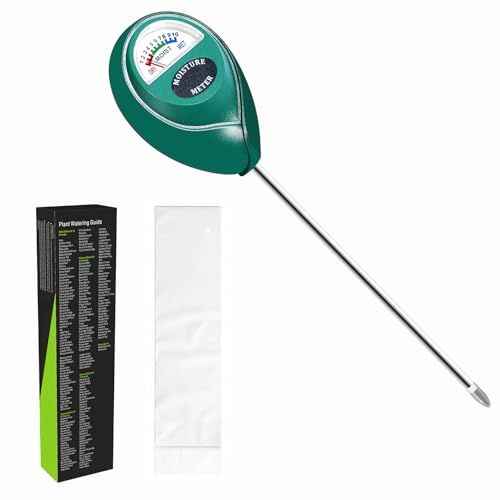 XLUX Plant Soil Moisture Meter, for Indoor and Outdoor use, Battery-Free
If you want to get your watering right for good our complete guide to watering houseplants goes through the whole thing.
2. Underwatering
The Problem:
Now for the opposite issue. Because everyone warns you about overwatering some people go too far the other way and barely water at all.
And while a Christmas cactus stores some water in its segments it’s a rainforest plant, not a desert one. Leave it dry for too long and it will start taking the moisture out of its own segments to survive, which leaves them limp and wrinkled.
What separates this from overwatering is how the segments feel. Overwatered segments go soft and mushy. Underwatered segments go thin and wrinkled and a bit leathery.
Signs of Underwatering:
- Wrinkled, flat or shriveled segments that aren’t mushy.
- Soil so dry it’s coming away from the edges of the pot.
- The plant looks much happier a day or two after a good watering.
- Segments that feel light rather than plump.
The Fix:
- Don’t go mad with water all at once. If the soil is completely dry it can repel the water and run straight through. Rehydrate with smaller amounts more frequently over a few days until the soil is moist again.
- Try bottom watering. Put the pot in a tray of water for 15 to 20 minutes and let the roots take up the moisture from below, then let it drain.
- Once it recovers get on a consistent routine. Check the soil every few days and water when the top inch feels dry.
The University of Connecticut’s home garden team makes the same point about recovery, noting that a wilting, underwatered holiday cactus does best with smaller more frequent waterings rather than one big one. You can read their holiday cacti fact sheet for more.
Not sure whether you’re overwatering or underwatering? Use the quick checker below. Answer a few questions and we’ll point you toward the most likely cause.
What's Wrong With My Plant?
Answer a few questions and we'll help diagnose the problem.
3. Root Rot
The Problem:
Root rot is what happens when overwatering has been going on for a while and the roots have started to decay. This is more serious than just being watered too much once or twice.
At this point the roots can’t take up water or nutrients at all so the plant will collapse and go limp, often starting from the base.
It’s worth treating this as its own problem because the fix is different. You can’t just let the soil dry out and hope.
You have to get in there and deal with the damaged roots and sometimes the kindest thing is to accept the mother plant may not make it and take some cuttings instead.
Signs of Root Rot:
- Soft, brown or black stems that are going mushy at the base of the plant.
- A nasty smell coming from the soil.
- The plant going floppy and segments coming away very easily.
- Black or mushy roots when you take the plant out of its pot.
The Fix:
- Take the plant out of its pot and rinse the soil off the roots so you can see what you’re dealing with.
- Trim away every soft, dark and mushy root with scissors. Only keep the firm, healthy ones.
- Repot it in fresh, dry, well draining mix in a clean pot with lots of drainage holes, then don’t water for several days.
- Take insurance cuttings. Snap off a few healthy segments and pot them up separately. Stem and root rot is often hard to beat, so having cuttings going means you don’t lose the plant entirely even if the original doesn’t pull through.
If your plant is really struggling these guides on reviving a dying succulent and why houseplants die and how to save them both give you steps to save them that will help.
Stop killing your plants by accident.
Get my free guide 7 Gardening Mistakes That Are Killing Your Plants — the most common reasons plants fail, and the simple fixes that turn them around.
4. Poor Drainage or the Wrong Soil
The Problem:
You can water your Christmas cactus perfectly and still end up with limp and waterlogged segments if the pot or the soil isn’t right. If the pot has no drainage holes or the soil is heavy and holds onto water the roots will stay wet no matter how careful you are.
A lot of people get this wrong after being give the plant as a gift because they’re often sold in pretty decorative pots or wrapped in foil with no way for the water to escape. The plant sits in its own runoff and get worse because of it.
Signs of Drainage or Soil Problems:
- Water pooling in the saucer or outer pot after every watering.
- Soil that stays soggy for a long time even though you’re not overwatering.
- A pot with no drainage holes or dense potting soil.
- Limpness that keeps coming back no matter how you much you adjust your watering.
The Fix:
- Make sure the pot has drainage holes. If your plant is in a cover pot, take it out to water, let it drain, then put it back.
- Repot it in a light, well draining mix. A cactus or succulent blend works well and you can add some perlite for better air circulation. Don’t use regular garden soil which compacts and drains badly.
- Since these are rainforest cacti and not desert ones a peat based mix that holds a little moisture is ideal. Some people mix a bit of cactus soil into a peat based mix to get the balance right.
A well draining cactus and succulent potting mix makes this a lot easier.
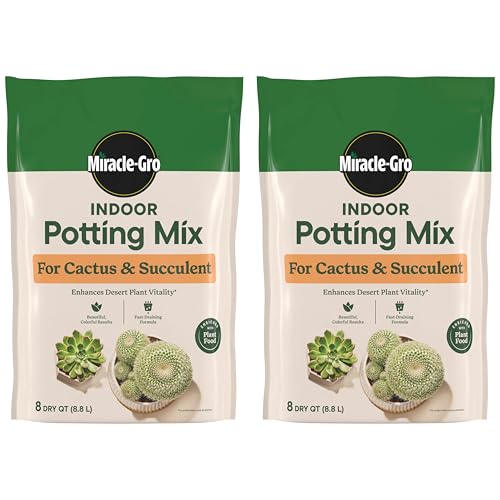 Miracle-Gro Indoor Potting Mix for Cactus & Succulent, 8 qt. (2-Pack)
5. It’s Badly Rootbound
The Problem:
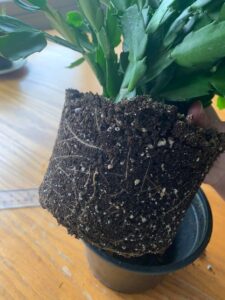
Christmas cacti actually being like to be quite tight in their pots. Being slightly pot bound even helps them bloom.
But there’s a difference between snug and getting strangled. When a plant goes years without being repotted the roots eventually fill every bit of space and start going in circles.
There’s barely any soil left to hold moisture so the plant dries out almost the moment you water it. And so it ends up limp and stressed.
Keeping a Christmas cactus slightly pot bound encourages flowering but repotting is usually needed every three years or so. Ignore it for much longer than that and the plant starts to suffer.
Signs of Being Rootbound:
- Roots growing out of the drainage holes or pushing up above the soil.
- Water running straight through the pot without getting absorbed.
- Soil drying out within a day of watering.
- A plant that hasn’t been repotted in quite a few years.
The Fix:
- Repot it into a container just one size larger. Don’t move it to a huge pot because too much soil holds too much water and will get you back to overwatering territory.
- Do it at the right time. The best time is after flowering has finished when the plant moves into active growth, usually spring.
- Pull the circling roots apart before you put it in fresh mix so they can spread out again.
For the record these plants can be real heirlooms. Missouri Extension notes Christmas cacti often outlive their owners so a repot every few years is a small price for decades of holiday blooms. Their care advice is worth a read too.
6. Temperature Stress
The Problem:
Christmas cacti tend to be at their most vulnerable in the exact season they’re meant to shine because winter is full of temperature extremes indoors. Being next to a radiator, a vent, a fireplace or a window that cold draft scan push the plant past what it can handle and the segments respond by going limp.
Sudden swings are the real problem. Moving the plant from a cold room to a warm one or it getting with hot dry air from the heating coming on can shock it quickly. The same goes for cold drafts coming in from a door or window close to it.
Signs of Temperature Stress:
- Limp or shriveled segments on the side facing a radiator or window.
- A sudden change in the plant right after a cold spell or after you moved it.
- Flower buds dropping off before they open.
- Segments that look fine on one side and stressed on the other.
The Fix:
- Keep it in a stable spot with daytime temperatures around 60 to 70°F. Christmas cacti do like cooler nights but they don’t want cold drafts or sudden drops in the temperature.
- Move it away from any sources of heat like radiators and fireplaces and also away from drafty windows and doors.
- Once the buds start forming resist the urge to move the plant around. They’re sensitive to change at that stage and will drop buds if disturbed.
7. Too Much Direct Sunlight
The Problem:
Because it has cactus in the name people will put their Christmas cactus in the brightest, sunniest window they’ve got. But remember where it comes from.
Up in the rainforest it grows in filtered light that’s shaded by the branches above it. Harsh direct sun is what it never gets in the wild and it doesn’t like it indoors either.
Too much direct sun burns the segments. They go limp, lose their green color and can become a reddish or purple hue as the plant reacts to the stress.
Signs of Too Much Sun:
- A reddish or purple tint on the segments.
- Pale, bleached or washed out looking segments.
- Limpness worst on the side getting the most direct light.
- Dry patches on segments in the sunniest spot.
The Fix:
- Move the plant to bright but indirect light. An east, north or west facing window is usually ideal.
- If your only option is a bright south facing window trying using a sheer curtain to stop some of the light.
- Keep in mind that a slight reddish tinge can also come from other stresses like being rootbound or underfed so check the light first but don’t assume it’s the only cause.
You can get into the plant’s origins and light needs on the NC State Extension Schlumbergera page which is a good reference for the whole genus.
8. Repotting or Transplant Shock
The Problem:
If your Christmas cactus went limp within a few days of being repotted don’t be too worried. Repotting is usually the least worrying reason on the list.
Repotting disturbs the roots and it’s completely normal for the plant to be unhappy for a little while afterward as it settles into its new pot.
The mistake people make here is panicking and overwatering to try and help it recover. But if you do that you’ll end up with root rot.
Signs of Transplant Shock:
- Limpness that showed up within days of repotting or moving the plant.
- No mushy stems, no pests and no very dry or soggy soil.
- An otherwise healthy plant that just looks a bit sad.
The Fix:
- Leave it be. Put it somewhere with stable temperatures and bright indirect light and don’t mess about with it.
- Water normally based on the soil and resist the urge to give it more water just because it looks sad.
- Hold off on fertilizer until you see new growth which tells you the roots have recovered.
- Give it two to three weeks. Most plants bounce back on their own once they’ve adjusted.
9. Pests
The Problem:
Christmas cacti are fairly good at resisting pests but they’re not immune. When bugs get a hold they can weaken the plant and one of the first things you’ll notice is the segments losing their firmness and going limp.
Mealybugs are the usual suspects along with spider mites and overly wet soil can also mean fungus gnats.
Because pests are easy to miss until there are a lot of them it’s worth giving your plant a proper once over any time it looks limp for no obvious reason, especially in the joints between segments where mealybugs love to hide.
Signs of Pests:
- White stuff that looks like fluff in the joints between segments (mealybugs).
- Webbing across the segments (spider mites).
- Tiny flies you can see coming off the soil when you water (fungus gnats).
- A sticky substance on the plant or the surface close to it.
The Fix:
- Take the plant straight away from other plants of yours so nothing spreads.
- Deal with mealybugs directly by dabbing them with a cotton swab dipped in rubbing alcohol.
- Treat the plant with neem oil or an insecticidal soap paying special attention to the joints of segments and under the leaves. Repeat this every week or so until they’re gone.
- For fungus gnats let the soil dry out more between each watering since they breed in constantly damp soil.
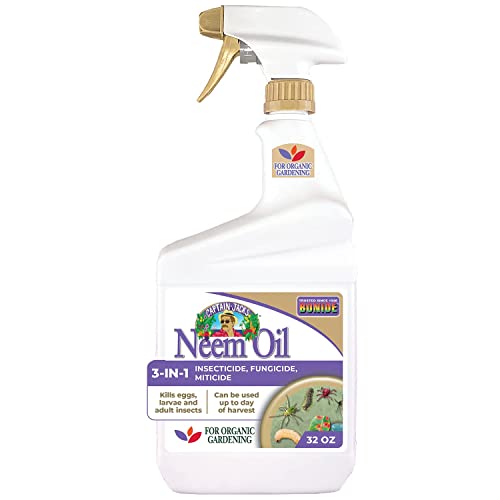 Bonide Captain Jack’s Neem Oil, 32 oz Ready-to-Use Spray
Preventive Care Checklist
| Issue | Solution |
|---|---|
| Overwatering | Let the top inch or two of soil dry before watering and empty the saucer. |
| Underwatering | Water smaller amounts more often and don’t let the soil go bone dry. |
| Root Rot | Trim the rotten roots, repot in dry mix and take insurance cuttings. |
| Poor Drainage | Use a pot with drainage holes and a light, well draining mix. |
| Rootbound | Repot one size up every three years or so, after flowering. |
| Temperature Stress | Keep at a steady 60 to 70°F, away from vents, radiators and drafts. |
| Too Much Sun | Move to bright, indirect light and filter any harsh direct sun. |
| Pests | Isolate, treat with alcohol or neem oil, and repeat until clear. |
Final Thoughts
A limp or wilting Christmas cactus looks bad but nine times out of ten it’s telling you something about its care rather than dying on you. The single most useful thing you can do is stop and feel the soil before you react.
Wet soil is a sign of overwatering, drainage problems or root rot. Very dry soil points toward underwatering or a rootbound plant. That one check rules out half the possibilities straightaway.
Go through the causes with a bit of process of elimination, make one change at a time, and give the plant a couple of weeks to respond before you try anything else.
If you’re still finding your feet with indoor plants in general our beginner’s houseplant care guide goes through the fundamentals that keep every plant happy.
These are tough and long lived plants that want to recover. Catch the problem early and there’s every chance your Christmas cactus will be healthy and ready to bloom again by the time the holidays come around.
Stop killing your plants by accident.
Get my free guide 7 Gardening Mistakes That Are Killing Your Plants — the most common reasons plants fail, and the simple fixes that turn them around.
