
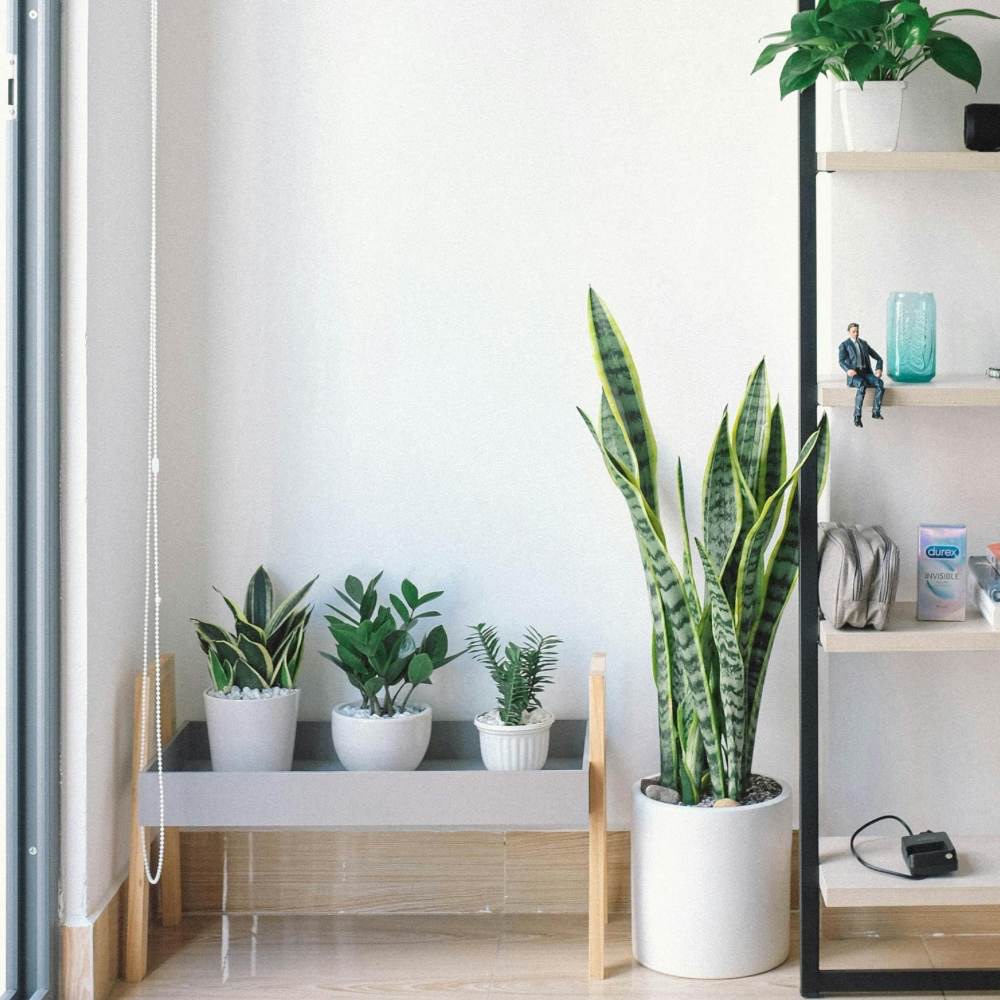
So you’ve decided to bring some plants into your home. I’m obviously biased but still – a great choice!
Houseplants look great, pot course, but they can also clean the air, improve your mood and even help you to feel and be more productive.
But if you’re new growing and caring for plants it can be a shock when you find brown tips or leaves dropping. We like to get things right and not fail, so watching your new houseplant suffer or even die can be upsetting.
Well don’t worry. In this guide I’m going to cover exactly how to keep your plants alive and doing well.
You’ll learn how to choose the right plant or plants for your space, how much to water them, spot any signs of trouble and much more. So even if you’ve already killed something or you’re just getting started this guide will help you grow your confidence along with your plants.
Choosing the Right Houseplants
Choosing which plants fit in with your homes conditions is one of the most important parts for making sure they do well. There are a few things you should think about before making your choice:
Light Availability
Look at the natural light in your home:
- Bright, Direct Light: South facing windows are the best for plants that need a lot of sun like succulents and cacti.
- Bright, Indirect Light: Perfect for most houseplants.
- Low Light: North facing rooms are good for plants that tolerate shade like snake plants.
Maintenance Level
As a beginner it’s a good idea to choose plants that don’t need much maintenance and can survive a little bit of neglect.
These are some good plants to start with:
| Plant | Light Requirement | Watering Frequency |
|---|---|---|
| Snake Plant | Low to bright, indirect light | Every 2 to 3 weeks |
| Pothos | Low to bright, indirect light | Every 1 to 2 weeks |
| ZZ Plant | Low to bright, indirect light | Every 2 to 3 weeks |
| Spider Plant | Bright, indirect light | Every 1 to 2 weeks |
| Peace Lily | Low to bright, indirect light | Every 1 week |
Understanding Light Requirements
Light is obviously one of the most important parts of a plants health. So follow these tips to make sure your plants get enough light.
Types of Light
- Direct Light: Sunlight that shines directly on the plant.
- Indirect Light: Sunlight that comes through curtains or by reflecting off walls.
- Low Light: Spots in your home that don’t get much natural light.
Assessing Your Space
Look at the light your home gets throughout the day. Make a note of which areas and spots get the most and which get very little. This will help you to decide where the right places are for your plants to go.
Supplementing with Artificial Light
If your home simply doesn’t get enough natural light then it’s fine to use grow lights as an alternative. LED grow lights don’t use a lot of energy and will give your plants the spectrum of light they need to photosynthesise properly.
Signs Your Plant Needs More Light
- Leggy growth – the stem stretch toward the light.
- Leaves losing their color.
- Slow or no new growth.
Signs of Too Much Light
- Crispy or brown edges to the leaves.
- Fading or burnt looking leaves.
- Wilting plant or leaves even when soil is moist.
How to Adjust Lighting
- Rotate your plant every few weeks so all sides get the same amount of light and it grows evenly.
- Use sheer curtains to so the strong sun is diffused.
- In the winter use LED grow lights to supplement a lack of light.
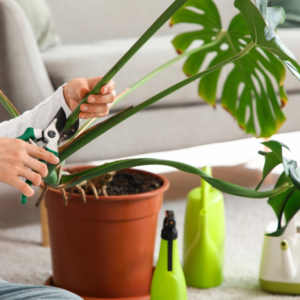
Watering Your Houseplants
Getting the watering right is also very important when caring for your houseplants. They need water, although it depends on the type of plant as to how much water they will need and how often to give it to them.
Watering can often be misunderstood. Overwatering is a common mistake among beginners.
General Guidelines
- Check how moist the soil is before you water. Do this by feeling the soil – just push your finger into the soil and see how it feels. If it’s dry then you can water.
- Make sure your pots have a good amount of drainage holes so the water doesn’t build up and sit at the bottom of the pot. If it does it can cause root rot.
- Use room temperature water. Water that’s too cold can shock the roots.
Water Quality
- Tap water with chlorine in it can be left out overnight. This will give the chlorine time to evaporate.
- You can use filtered or rainwater. Collecting rainwater is simple – just put a container out and wait for it to rain. It works well as water for more sensitive plants like Calatheas.
Bottom Watering vs. Top Watering
- Bottom watering: Put the pot in a tray of water and let it soak up that water through the drainage holes.
- Top watering: Pour the water onto the surface of the soil making sure you don’t get it on the leaves.
Watering Frequency
Different plants have different water needs.
| Plant Type | Watering Frequency |
|---|---|
| Succulents and Cacti | Every 3 to 4 weeks |
| Tropical Plants (e.g., Ferns) | Every 1 to 2 weeks |
| Flowering Plants (e.g., Peace Lily) | Every 1 week |
Soil and Potting Mixes
Having the right soil for your plant will give it the nutrients it needs and lets the water drain from the pot.
Choosing the Right Mix
- Succulents and Cacti: Like a mix that drains well and is gritty. You can make your own by mixing regular pitting soil with perlite and sand.
- Tropical Plants: Do best in a peat mix that holds on to moisture but at the same time drains well.
Repotting Your Plants
Over time your plants will outgrow their pots. The main signs that it’s time to repot are:
- Roots growing out of the drainage holes.
- Soil drying out too quickly.
- Growing slower than usual.
When you do repot use a container that’s about 1 or 2 inches larger in diameter than the one it’s currently in. Loosen the roots, get rid of the old soil and put the plant in some fresh potting mix.
DIY Potting Mixes
- Succulents & Cacti: 2 parts potting soil, 1 part sand, 1 part perlite.
- Tropical Plants: 3 parts peat moss, 2 parts perlite, 1 part bark.

Humidity
A lot of houseplants, especially tropical ones, love humidity. So if your home is a little dry, especially during the winter, there’s are some things you can do to boost it:
Simple Tricks to Increase Humidity
- Grouping Plants Together: When you put plants together and next to one another they can actually increase the humidity between them.
- Using a Humidity Tray: Put pebbles in a tray, add some water and rest your plant on top.
- Misting: Mist your plants a little with a spray bottle. Don’t overdo it though as making the leaves too moist can cause final problems.
- Investing in a Humidifier: A good way to keep the humidity high is with a humidifier, especially for plants like ferns and calatheas.
Feeding Your Plants
Just like people plants need food to survive and grow. Fertilizing helps give them the nutrients they need that can get used up from the soil.
Types of Fertilizers
- Liquid Fertilizers: Easy to use and good for feeding on a routine. Mix with water following the instructions on the packaging or box.
- Slow Release Fertilizers: Granules that release the nutrients slowly over time are good for people who don’t have much time or are away a lot.
- Organic Fertilizers: Comes from natural sources like seaweed or compost. They make the slip healthier and are eco friendly.
Feeding Schedule
Most houseplants like to fed when they’re growing which is in the spring and summer. You should either feed them less or stop completely in the fall and winter when their growth naturally slows.
Pruning and Grooming
You want your plants to stay looking healthy and attractive. So you’ve got to prune and look after them.
Why Prune?
- Encourages plants to grow more when you trim the leggy stems.
- When you get rid of dead or yellow leaves it sends the energy towards the healthy parts of the plant.
- Shape the plant so it doesn’t grow too much and become unbalanced.
How to Prune
Use scissors or pruning shears. Make sure they’re shape so you don’t get blunt edges when cutting.
Cut just above a leaf node so the plant will branch afterwards. Get rid of the what we you’d pruned so it doesn’t attract pests.
Common Pests and Problems
There’s a good chance you’ll face some issues no matter how well you care for your plants. If so this is how to identify and deal with the most common problems:
Recognizing Pests
- Spider Mites: Tiny red or white specks, usually leave a webbing on the leaves.
- Mealybugs: Groups of what looks like cotton on the stems and leaves.
- Fungus Gnats: Small flies that you’ll see hovering around the soil.
How to Treat Pests
- Separate any affected plants from the others top stop the pests from spreading.
- Use neem oil or insecticidal soap as a natural solution.
- Wipe the leaves with a cloth to remove pests.
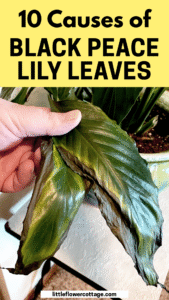
Addressing Common Problems
| Problem | Symptoms | Solution |
|---|---|---|
| Overwatering | Yellow leaves, stems turning mushy | Let the soil dry out and don’t water as often. |
| Underwatering | Dry leaves that are wilting | Water fully and consistently. |
| Low Light | Pale leaves that aren’t growing | Move the plant closer to the light or use a grow light. |
Building Confidence
It can be a bit daunting to get started with houseplants but try to remember that most of them are tough and stronger than you think. Don’t go too fast and be happy with the success you have as you grow with your plants.
If you need a little extra help then this advice will keep your spirits high:
- Begin with one or two plants so you don’t get overwhelmed trying to look after too many.
- Don’t hesitate to do your own research or ask for help. Local plant shops and online communities are brilliant resources.
- Learn from any mistakes you make. Every plant that struggles teaches you something valuable you’ll be able to use for the next one.
