
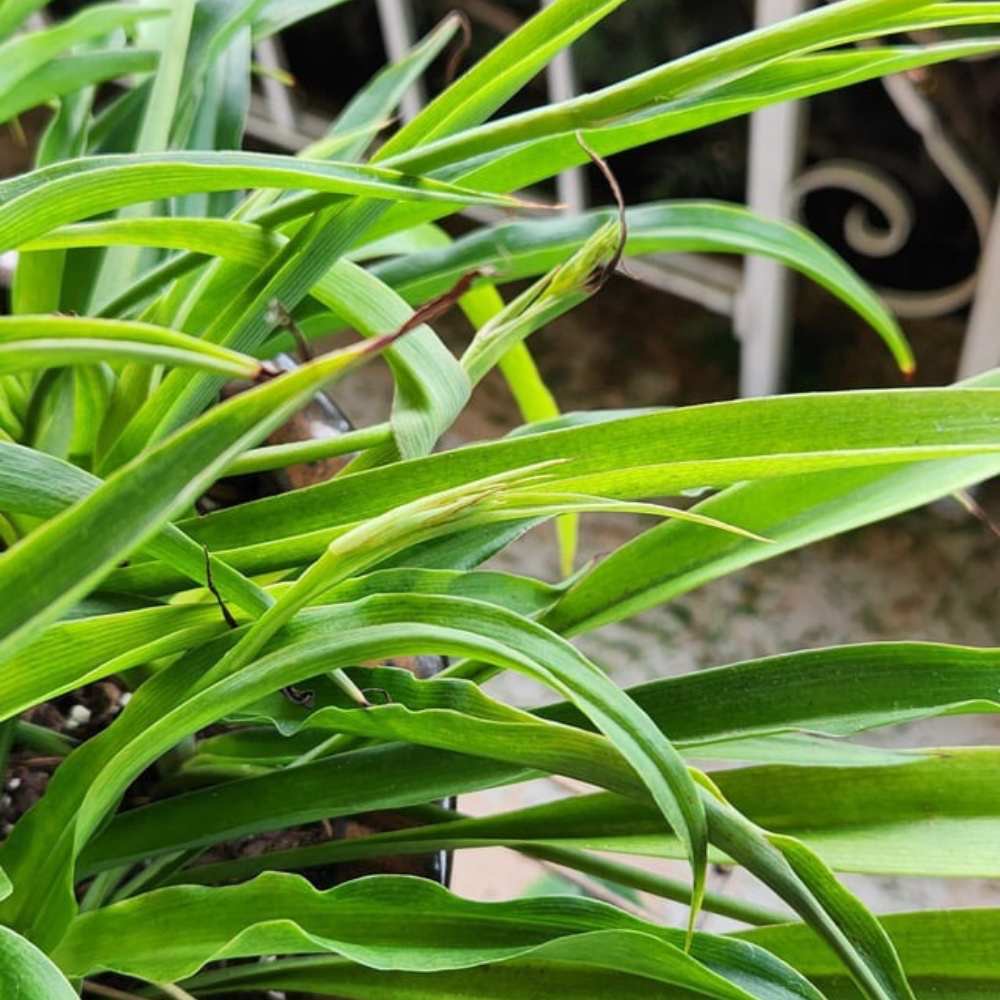
A spider plant is, for the most part, supposed to look quite like a fountain. It should have long leaves that drape over the side of the pot looking like it doesn’t care what it does or where it grows.
So when the leaves start curling in on themselves instead it can be a shock. You might think there’s a problem with your plant.
And you’d be right. But thankfully curling spider plant leaves are almost always something that can be sorted out.
It’s just one of the many ways the plant has to tell and show you something is off. And once you figure out what that is and take the appropriate action it usually bounces back to looking happy and healthy again pretty quickly.
I’ve had spider plants curl on me more than once. The first time it happened I’d been away for a week and when I came home the leaves had rolled up in on themselves, no doubt because I hadn’t cared for it whilst I was away.
The second time it was a plant I’d put on a windowsill in the sun of July, which I thought wouldn’t be a problem for it. And clearly I was wrong!
So the following list are the most common reasons your spider plant leaves are curling, and exactly how to fix each one.
Quick Answer
- Underwatering (Most Common): Curling is usually the plant holding on to water. So water it thoroughly when the top inch of soil is dry and don’t let it get very dry for weeks.
- Too Much Direct Sun: The strong sun in the afternoon will burn and make the leaves curls. Put the plant somewhere it gets bright, indirect light instead.
- Dry Air or Bad Tap Water: Low humidity and the chemicals in tap water both stress the leaves. Raise the humidity a little and use filtered or water that’s sat out for a while first.
For more help see our Spider Plant Care Guide: Tips to Get Thriving Plants.
Why Spider Plant Leaves Curl in the First Place
Before we get into the list it helps to understand what curling is.
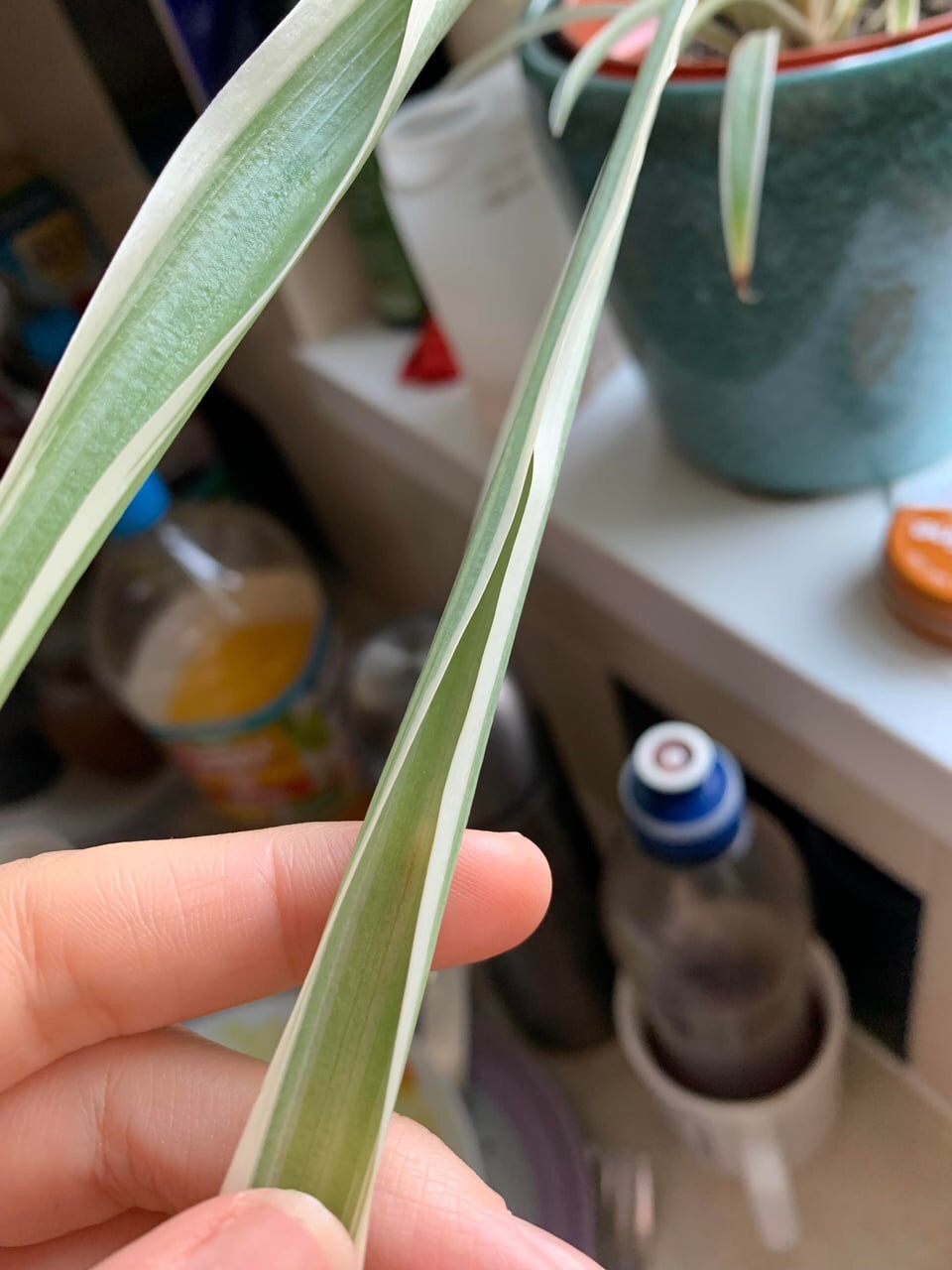
When a spider plant curls its leaves it’s almost always reacting to stress from watering or light. Curling inward means there’s less area of the leaves exposed to the air, which slows down how fast the plant loses moisture. It’s a type of self defense the plant can use when it feels under threat.
That’s why so many of the causes below come back to the same few things: not enough water, too much heat, dry air or roots that aren’t functioning properly. Work out which one is happening and the fix is usually simple.
So let’s take a look at them all starting with the most likely culprit.
Chlorophytum comosum ‘bonnie’, as an example, is one that grows with curly leaves. So check to make sure you haven’t got a curly variety first before assuming something it wrong with it.
1. Underwatering
The Problem:
This is the number one reason spider plant leaves curl and it was my problem the first time around. When the soil dries out completely the plant takes water from its leaves to survive. The leaves then react to losing that water by curling inward to hold on to whatever moisture they have left.
Spider plants are forgiving if you don’t water them but they’re also not cactuses! If you go too long between waterings they will definitely let you know they’re not happy.
Signs of Underwatering:
- Leaves curling inward – they’ll look like a bit like a rolled up paper.
- Brown tips on the curled leaves. If that’s the main symptom see our guide to spider plant brown tips.
- Soil that’s come away from the edges of the pot.
- Leaves that return to looking happy within a day of being watered well.
The Fix:
- Water thoroughly. Do it until the water runs out the drainage holes then let it drain fully.
- Check before you water, don’t rely on a certain date based on a schedule you follow. Stick a finger in the soil. If the top inch is dry you should go ahead and water. If it’s still damp then wait.
- If the soil has gone hard and dry it’s a good time to bottom water. Put the pot in a tray of water for about 20 minutes so the roots can take it up.
For a full breakdown of the right timing and amounts to use our spider plant watering guide covers when, how and how often.

2. Too Much Direct Sunlight
The Problem:
This was the mistake I made in July with the windowsill. Spider plants love bright light but sun in the afternoon is too much. The heat burns the leaves, dries them out faster than the roots can keep up and they will probably curl.
People read or hear something like “spider plants like light” and then feel comfortable putting them right up against a south facing window. Which is often too intense, especially in summer.
Signs of Light Stress:
- Curling along with pale areas.
- Dry spots where the sun hits them.
- The damage is worst on the side that’s facing the window.
The Fix:
- Move the plant back a few feet from the glass of the window or put it near an east facing window that gets sun in the morning.
- If your only option is a bright south or west window then use a sheer curtain to filter the light.
- Bright, indirect light is the best for a spider plant. Not sure what that means? This guide shows you what what “bright indirect” looks like.
3. Low Humidity and Dry Air
The Problem:
Spider plants are tropical so they like a bit of moisture in the air. In a dry room, especially in winter when we turn our heating on, the leaves lose water faster than usual and that’s when curling happens to compensate for the loss.
I keep one of mine in the bathroom for this reason. The shower steam keeps it happy without me having to do anything.
Signs of Low Humidity:
- Curling along with brown tips.
- Worse in the winter or when right next to a heat source.
- The soil is still moist so it isn’t due to watering.
The Fix:
- Move it somewhere that is naturally humid like a kitchen or bathroom that has a window.
- Put the pot on a pebble tray. That’s a dish of pebbles with a bit of water in the bottom and then the pot sat on top of the pebbles (not in the water).
- Put your houseplants next to or near each other. They raise the humidity for each other when close by.
Misting works too but only in the short term. A pebble tray is the better fix.
Spider plant looking sad?
My free guide 7 Gardening Mistakes That Are Killing Your Plants covers the small habits that hold spider plants back from thriving — and how to turn yours around.
4. Tap Water Chemicals
The Problem:
Spider plants are surprisingly sensitive to the fluoride and chlorine that you find in tap water. Over time those chemicals build up in the soil and then do harm to the tissues of the leaves. This then shows up as curling, brown tips and the plant generally being stressed.
I switched to filtered water years ago after having issues with brown tips for months and it made a big difference.
Signs of Water Quality Issues:
- Curling leaves with brown tips and edges.
- A white substance building up on the surface of the soil or around the rim of the pot.
- You’re watering the right way and the humidity is fine but the leaves still look unhappy.
The Fix:
- Use filtered or distilled water. Or rainwater if you collect it.
- If filtering isn’t practical try leaving some tap water out overnight. Some of the chlorine will evaporate away.
- Water the soil very thoroughly every couple of months. Use a lot of clean water and flush it through the pot to wash out the salt build up.
Curling and brown tips often go together so our brown tips guide is worth a look if you’re seeing both.
5. Overwatering and Root Rot
The Problem:
It probably feels wrong but too much water also causes curling too. When the soil stays wet the roots can’t get oxygen and will start to rot.
Damaged roots can’t get water up to the leaves so the plant ends up dehydrated even though the soil is wet. And in turn the leaves curl.
It’s an easy mistake to make if you’re only sticking to a schedule for watering and not checking the soil.
Signs of Overwatering:
- Curling with limp and yellow leaves rather than crispy ones. For that see why spider plants turn yellow.
- Wet soil that never seems to dry out.
- A nasty smell coming from the pot.
The Fix:
- Stop watering and let the soil dry out properly before the next time.
- Make sure the pot has drainage holes and never let it sit in water.
- If you think there might be rot take the plant out of its pot, trim away any brown roots and repot it in fresh soil.
If the roots are already in bad shape our spider plant root rot guide will take you through saving it step by step.
6. Temperature Stress
The Problem:
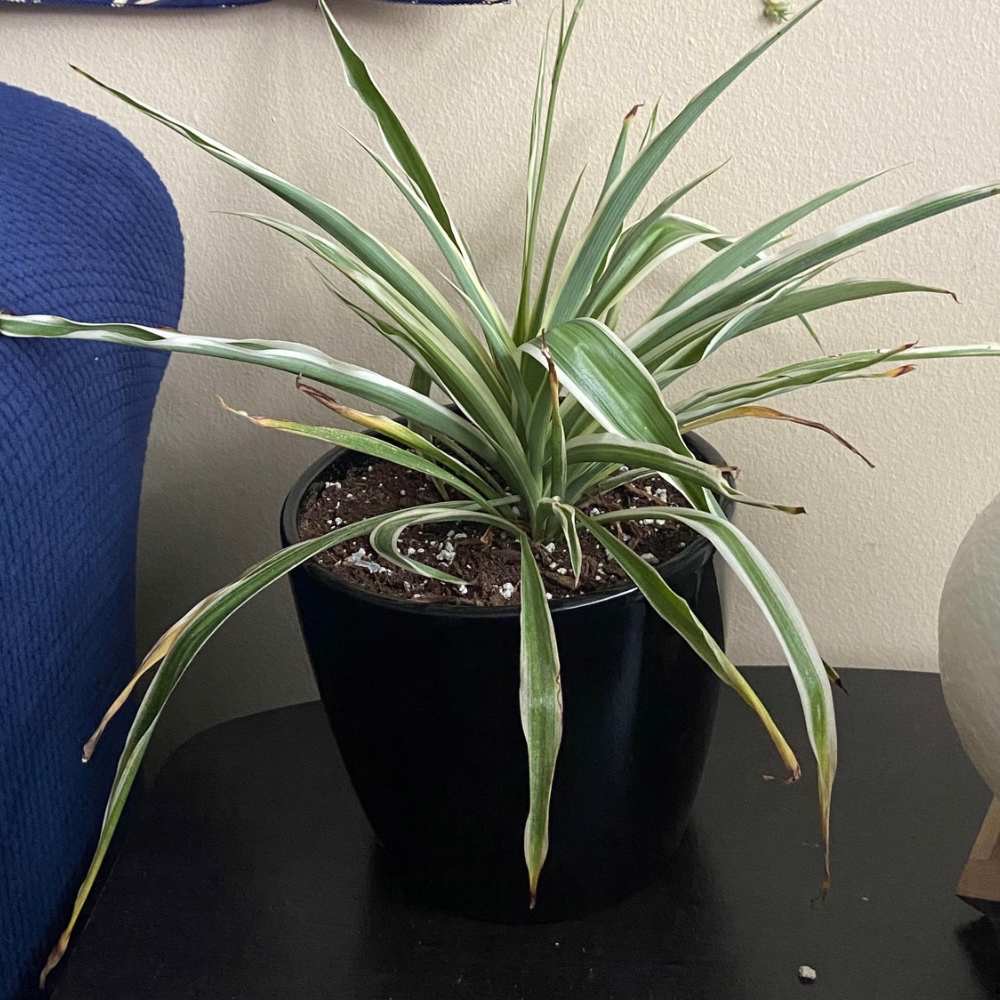
Spider plants like it warm and to stay steady, somewhere around 70 to 90°F (21 to 32°C). Any sudden cold or hot air, or dry air, will shock and stress the plant and curling can be the result.
If you’ve put your spider plant by a window that lets air through or above a radiator there’s a very good chance that’s the reason for curling.
Signs of Temperature Stress:
- Curling that happens suddenly after a change in the temperature or heating.
- The plant is near a door, heating vent etc.
- Watering and light are both fine so it isn’t either of those.
The Fix:
- Move it away from the cold glass of windows, radiators, heaters etc.
- Keep it in a room with a fairly stable temperature.
- Don’t move it between very warm and very cool places as it will just stress it even more.
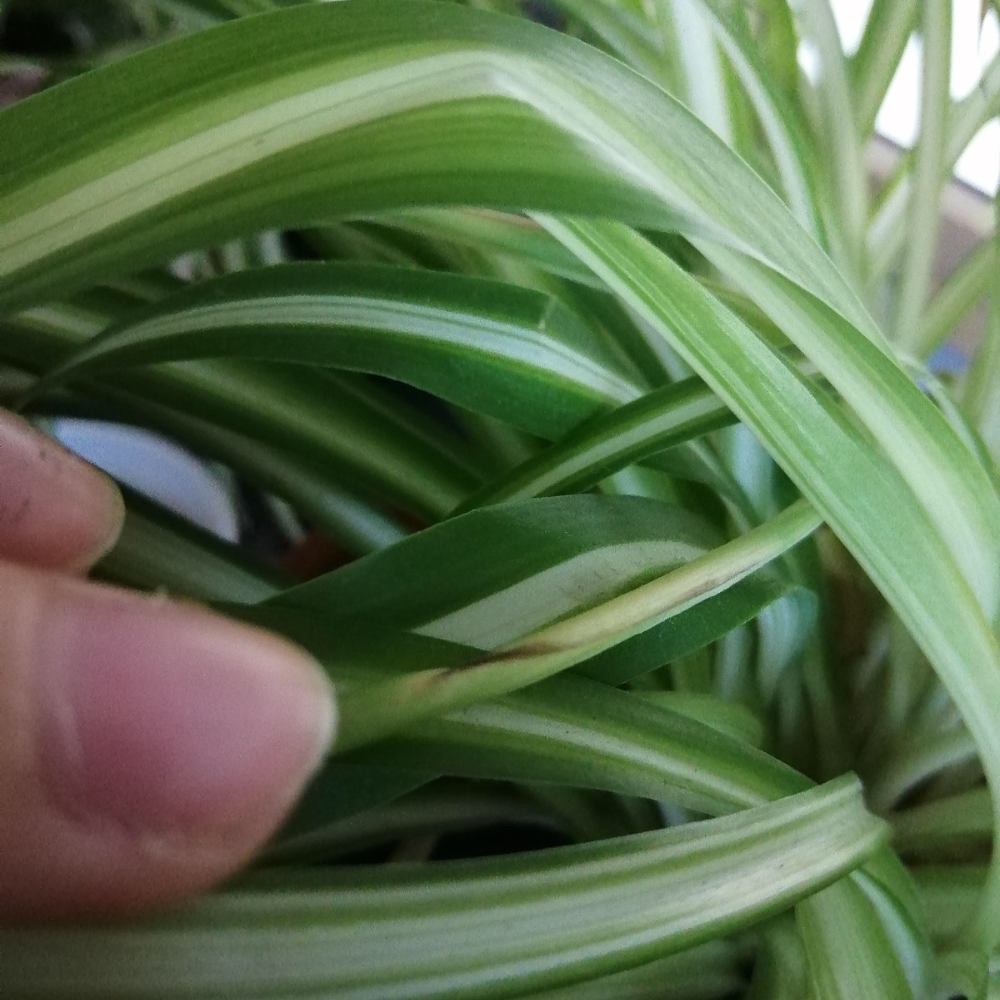
7. Pests
The Problem:
Sometimes curling isn’t about water or light at all. Your plant can have pests like spider mites and aphids feeding on the leaves and the damage to those leaves makes them curl and look generally unhappy. Spider mites in particular thrive in the same dry conditions that already stress your plant.
Signs of Pests:
- Curling along with webbing on the leaves especially where the leaves attach to the stems.
- Tiny dots moving around or a sticky substance on the leaves.
- Speckled or distorted new growth.
The Fix:
- Get the plant away from any others so the pests don’t have a chance to spread to more plants.
- Wipe the leaves and rinse the plant in the shower or sink.
- Treat with insecticidal soap or neem oil repeating every week until the pests are gone.
Raising the humidity afterward helps too as spider mites hate it.

8. It’s Root Bound
The Problem:
Spider plants grow fast and will fill a pot quickly. When the roots don’t have enough room they will grow in circles around themselves and this means there’s less space to hold on to water and nutrients. The plant struggles to stay hydrated and then curling leaves happens.
These plants usually need repotting every couple of years and a lot of people leave it much longer.
Signs of Being Root Bound:
- Roots that are coming out of the drainage holes or growing through the surface of the soil.
- Water that goes straight through the pot because there’s more root than soil.
- Growth that’s stopped and the plant looks stuck.
The Fix:
- Repot it into a pot that’s one size larger. Don’t move it to something huge or the extra soil stays wet and will lead to rot.
- Use a fresh mix that drains well, like regular potting soil with some perlite added.
- Water it in and give it a few weeks to settle and start growing again.
9. Too Much Fertilizer
The Problem:
More food does not necessarily mean your plant will be happier and grow more. Overfeeding will result in a buildup of salt in the soil which then burns the roots and damaged roots lead to, you guessed it, curling and brown edges to the leaves. Spider plants don’t really need much feeding at all.
Signs of Fertilizer Burn:
- Curling with brown, burnt looking edges to the leaves.
- A white crust on the soil or around the edge of the pot.
- It started not long after you fed the plant.
The Fix:
- Flush the soil. Put lots of clean water through the pot to rinse out the build up of salts.
- Feed only during the spring and summer, once a month at most, with a balanced fertilizer that’s been diluted to half the strength.
- Don’t fertilize it in the fall and winter as the plant is resting.
How to Tell Which One It Is
If you’re looking at your plant and still not sure what the cause is work through it like this.
Start with the soil. Is it extremely dry? Then its underwatering.
If the soil is wet and smells bad? It’s overwatering or rot.
From there look at where the plant lives. If it’s being subjected to sun in the afternoon, a draft, or is near a radiator then that all points to light or temperature as the issue.
If the soil and whete it’s been placed both seem fine then look closer at the leaves. If it’s got brown tips that’s a big sign its dry air or tap water.
Webbing or little spots on the leaves means pests. And if none of that fits and growth has stopped then check to see whether it’s too big for its pot.
Curling almost never has a mysterious cause. It’s always going to be one of these nine and usually it’s the first one.
Final Thoughts
Curling spider plant leaves look bad and can be a shock when it happens. Thankfully they’re rarely serious though.
The plant is just stressed about water, light, air or its roots, and it’s telling you in the only way it can.
For me, the two that catch people out most are underwatering and sun, which were the mistakes I made myself early on. Sort out some consistent watering and make sure it’s somewhere that gets bright, indirect light and you’ve dealt with the majority of curling cases right away.
Make one change at a time and give the plant a couple of weeks to react to whatever you’ve changed. And then watch the new growth.
It’ll come in flat and healthy, and that fountain shape comes right back. If yours has really struggled our guide to reviving a dying spider plant can help you bring it back to life.
Spider plant looking sad?
My free guide 7 Gardening Mistakes That Are Killing Your Plants covers the small habits that hold spider plants back from thriving — and how to turn yours around.
