
When I got my first fiddle leaf fig I killed it in about three months. That wasn’t because I forgot to water it, nor because I didn’t care for it the right way or enough. It was because I put it in what I thought was ‘bright indirect light’ and it turned out I had absolutely no idea what that really meant.
If you’ve spent any time looking at plant care labels or going through care guides online you’ll have come across the phrase a hundred times.
Bright indirect light. Low light. Direct sun. Medium light.
All of those are thrown around like everyone already knows what they mean. And if you’re new to looking after plants you just probably don’t know what they really mean.
So I’m going to explain it properly in plain language. By the end of this guide you’ll know exactly what ‘bright indirect light’ means, how to measure it in your own home, which plants want what and how to work with the light you have.
Quick Answer
- Bright but No Direct Sun: The area is well lit but sunlight does not hit the leaves directly. Any direct sub can burn many houseplants.
- Near a Window: Usually within a few feet of an east or south facing window with sheer curtains to soften the light.
- Clear Shadows Test: If your hand casts a soft and blurry shadow (not sharp) then the spot is probably bright indirect light.
Why Plant Light Labels Are So Confusing
When I first started getting serious about houseplants I was most surprised about one thing: there’s no universal standard for what ‘bright indirect light’ means. A plant nursery in Florida and a plant nursery in Minnesota might both label the same plant ‘bright indirect’. But what that looks like in practice is completely different depending on your the season, latitude and what your home is like.
Light is measured in foot candles (the older unit) or lux (the metric version). One foot candle is about 10.76 lux. When plant experts talk about ‘bright indirect light’ they usually mean somewhere between 1,000 and 3,000 foot candles – but you’ll almost never see that on a care label. Instead you get some vague wording which you’re left to interpret yourself.
The categories tend to be something like this:
- Low light: 25 to 150 foot candles. This is the corner of a room that barely gets any daylight, several feet from any window.
- Medium light: 150 to 1,000 foot candles. A few feet from a window or near a north facing window.
- Bright indirect light: 1,000 to 3,000 foot candles. Close to a window but not in direct sun.
- Direct sun: 3,000+ foot candles. In the window, full sun hitting the leaves.
The difference between low light and bright indirect light is huge. It’s 40x different in light intensity. So when a plant tolerates ‘low to bright indirect light’ that’s a massive range. It’s a bit like saying a recipe works with either ‘a little salt or a lot of salt.’ It may be true but not its really not helpful.
What ‘Bright Indirect Light’ Looks Like in Your Home
So what does 1,000 to 3,000 foot candles look like in a real living room?
The Window Test
The easiest rough test: stand at the spot where your plant would live and hold your hand up. If you can see a sharp shadow on the wall behind your hand you’ve got direct light and your plant is getting hit by the sun’s rays directly.
If the shadow is there but soft and blurry around the edges that’s bright indirect. If there’s basically no shadow at all then it’s more like medium or low light.
It’s not scientific but I’ve found it to be useful. I use this trick all the time I’m moving plants around and don’t have my light meter with me.
Is the shadow sharp? Move the plant back. The shadow is soft but visible? That’s a good spot for most tropical houseplants. Shadow barely there? Think again which plant goes here.
Window Direction Matters More Than Window Size
In the Northern Hemisphere (which covers the US, Canada, UK and most of Europe), the direction your windows face changes what kind of light you’re have:
- South facing windows: The brightest in your home. You’ll get direct sun for most of the day. A great place for succulents, cacti and other plants that love sun. For plants that want bright indirect keep them a foot or two away from the window or use a sheer curtain.
- East facing windows: Morning sun, which is gentler. Great for plants that love bright indirect light – this is often the best spot for monsteras, pothos and philodendrons.
- West facing windows: Sun in the afternoon, which is stronger and hotter. Similar to south facing in terms of intensity but only in the afternoon. Can work for bright indirect if plants are kept back a bit from the window.
- North facing windows: The dimmest. Rarely gets direct sun. Medium light at best, true low light in the winter. Good for cast iron plants, ZZ plants and snake plants.
My apartment is mostly north and east facing. So the east window is great for most of my tropical houseplants. The north window is where plants go when I’m not sure what else to do with them.
Distance From the Window Is Everything
Light drops off sharply as you move away from a window – much faster than you’d expect. In a south facing room you might have bright indirect light one to three feet from the window.
By the time you’re six feet back it’s probably going to be medium light. At ten feet you could be in low light. This is why where you put your plant matters so much: six inches can make a real difference.
The physics behind this is called the inverse square law – light intensity decreases as the square of the distance from the source. Doubling your distance from a window doesn’t halve the light, it quarters it. So if you’re moving a plant from two feet to four feet from a window you’re not giving it a little less light. You’re giving it a lot less.
How to Measure the Light in Your Home
If you want to take the guesswork out of it you can measure light properly. There are two main ways to do this.
Use a Free Light Meter App
Your phone’s camera sensor can approximate lux readings and there are free apps (Lux Light Meter is a popular one for iOS; Android has several options too) that give you a decent ballpark. They’re not as accurate as a laboratory, obviously, but they’re consistent. So if you use the same app in the same way you can compare different spots in your home.
To get a useful reading hold the phone face up at the height where your plant’s leaves would be, pointing toward the source of light. Take readings at different times of day like the early morning, midday and late afternoon – and make a note the range. You want the average during the peak hours, not just a one off snapshot.
Buy a Light Meter
A basic digital light meter costs around $15-25 on Amazon and will give you accurate foot candle and lux readings. If you’re serious about your plants – and if you’re reading an article about plant lighting, you probably are – it’s worth it.
As a rough guide once you have some numbers: under 50 foot candles is very low light, 50 to 250 is low to medium, 250 to 1,000 is medium to bright indirect and over 1,000 is the true bright indirect to direct sun range.
Which Plants Want Bright Indirect Light (And Which Don’t)
So, not all your plants want the same thing, and grouping them by the light they need is one of the single most useful things you can do to improve your success.
Best Plants for Bright Indirect Light
These are the plants that do very well at 1,000 to 3,000 foot candles, close to a window but protected from the direct rays:
- Monstera: The big, dramatic split leaf plant everyone loves. It wants bright indirect light and will give you big leaves with holes in them. In lower light the new leaves often come out without holes as the plant is conserving energy.
- Fiddle leaf fig: Notoriously fussy and a lot of that fussiness comes from getting the light wrong. It needs bright indirect light and hates being moved – once you find the right spot for it make sure you leave it there.
- Calatheas and marantas: These plants originally come from the forest floor in tropical areas where they get filtered light. Bright indirect is much like that. Direct sun burns their patterns.
- Bird of Paradise: Needs a lot of light to do well and ideally some direct sun mixed in too. Put it right at a south or west facing window.
- Pothos and philodendrons: Adapt very well but they thrive best in bright indirect. In lower light they’ll survive but grow slowly and grow much smaller leaves.
Plants That Can Handle Less Light Than You Think
These are the ones to put in corners will little light, your north facing rooms and maybe the office that only has one small window:
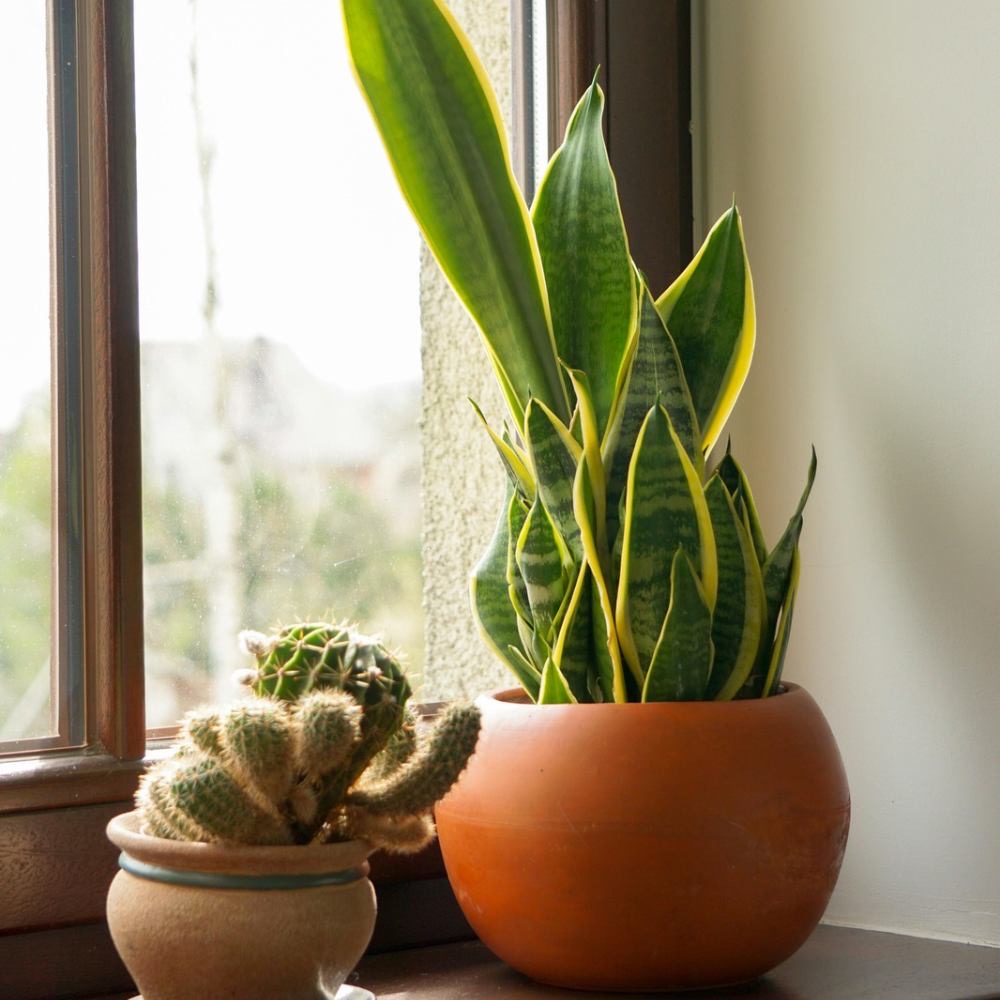
- Snake plants: Basically impossible to kill with too little light. They like bright indirect but will survive in low light. Growth slows to almost nothing but they hold on.
- ZZ plants: Store water in their rhizomes and can deal with being neglected, including getting less light. They grow slowly in low light and faster in bright indirect.
- Cast iron plants: Named because of how tough they are. Will grow in low light spaces where most other plants struggle.
- Peace lily: Will bloom in medium light and survive in low light. One of the few flowering plants that tolerates shade. Se the best places to put peace lilies in your home.
Plants That Need More Light Than Most People Give Them
This is where a lot of plant deaths happen. People assume that because a plant is sold as a houseplant it’s fine in low light.
- Succulents and cacti: These are outdoor plants at heart. They need several hours of direct sun or very bright indirect light to maintain their shape. In low light they etiolate – stretch out to the nearest light source and get leggy and weak.
- Herbs (basil, rosemary, thyme): Most herbs you can use in food are Mediterranean and want full sun. An east facing windowsill is usually not enough. A south facing window or a grow light will e necessary.
- Crotons (Codiaeum variegatum): They need bright light to keep the color in their leaves. In low light crotons fade to green.
How to Work With the Light You Have
Not everyone has a south facing apartment that gets lots of sun. Most of us are working with conditions that are far from perfect.
This is how to make the most of what you’ve got.
Use Sheer Curtains to Filter Direct Sun Into Bright Indirect
If you’ve got a south or west facing window that gets too much direct sun for most of your houseplants then a sheer curtain is one of the best and cheapest tools you have. A white or light colored sheer can cut light intensity by 20 to 50% while still letting enough through. This way you can turn a window that’s too bright into one that gets bright indirect light.
I use sheers on my west facing windows all summer before pulling them down in the winter when the light drops.
Use Grow Lights
If your home doesn’t get much natural light then grow lights are the answer. They’ve come a long way in the last few years.
Full spectrum LED grow lights are energy efficient, don’t produce much heat and can be dialed in to produce the right light spectrum for plants (which is different from what we need to see well).
For most houseplants you want a grow light sitting 6 12 inches above the canopy and running for 12 to 16 hours a day. Use a timer so you don’t forget.
A basic setup – so light, timer, simple clip – costs around $30 to 50 and can make a dark corner become a place where plants can grow.
Rotate Your Plants Every Few Weeks
Plants grow toward the light. If your plant only ever gets light from one direction it’ll start leaning towards that window and one side will grow faster than the other. So it’s important to rotate your plants every few weeks. It will melt sure the growth is even and all the leaves get a share of the light.
This is especially important for plants like monsteras and bird of paradise where having uneven growth is really obvious. I rotate everything on a Sunday so I don’t forget. It only takes a couple of minutes and makes a big difference over time.
Clean Your Plant’s Leaves
Dusty leaves absorb less light as the dust blocks them from being able to photosynthesize. A quick wipe with a cloth every month or two can help them to take in more light, especially for plants with big leaves like monsteras, rubber plants and fiddle-leaf figs.
Don’t use leaf shine products though – they clog the stomata (the pores on the surface of the leaves that the plant uses to breathe). Just water and a soft cloth is good enough.

How to Tell If Your Plant Is Getting Too Much or Too Little Light
Plants are pretty good at telling you what’s wrong – you just have to know what to look for. Light issues show up in some obvious ways.
Signs of Too Little Light
- Leggy, stretched growth: The plant is reaching for the source of its light and growing long and sparse.
- Small new leaves: New leaves are smaller than mature leaves. Or they come without fenestrations (in monsteras).
- Pale or yellowing leaves: The plant isn’t making enough chlorophyll. This can look similar to overwatering symptoms – which is related as plants in low light use water much more slowly and often get overwatered by accident.
- Very slow or no growth: Some slowdown is normal in the winter but if a plant stopped growing completely in the summer light is usually the reason.
Signs of Too Much Direct Sun
- Scorched or bleached patches on leaves: These look like dry spots or faded areas where the leaf has been burnt by the sun. Once this happens the damage can’t be reversed.
- Wilting despite enough water: Strong sun in the afternoon can make plants lose water through their leaves faster than their roots can replace it.
- Soil drying out quickly: Direct sun and heat dry the soil out fast. If you’re watering way more frequently than usual then check whether direct light might be the reason.
The good news with light issues: once you figure it out and move the plant to a better place most plants recover well, especially if you catch it early. Burned leaves won’t heal but the plant will grow new ones in better conditions.
Final Thoughts
Bright indirect light is probably the instruction most given out when caring for plants but is also the least explained. But now you know what it means: filtered, bright light that doesn’t hit the leaves directly, usually 1,000 to 3,000 foot candles and found at a few feet of a well lit window.
And now you know what to do with this. You can figure out which direction your windows face. Use the shadow test for a quick read.
Measure with an app or a meter if you want real numbers. Match your plants to the light you have and don’t try to force a succulent to work somewhere that too dark or keep a fern next to a sunny south window without some kind of protection.
And if your light is poor don’t give up – just choose the plants that fit. Snake plants, ZZ plants, cast iron plants and peace lilies are all beautiful plants that work in less light. Not every home can be a tropical greenhouse and that’s okay.
