
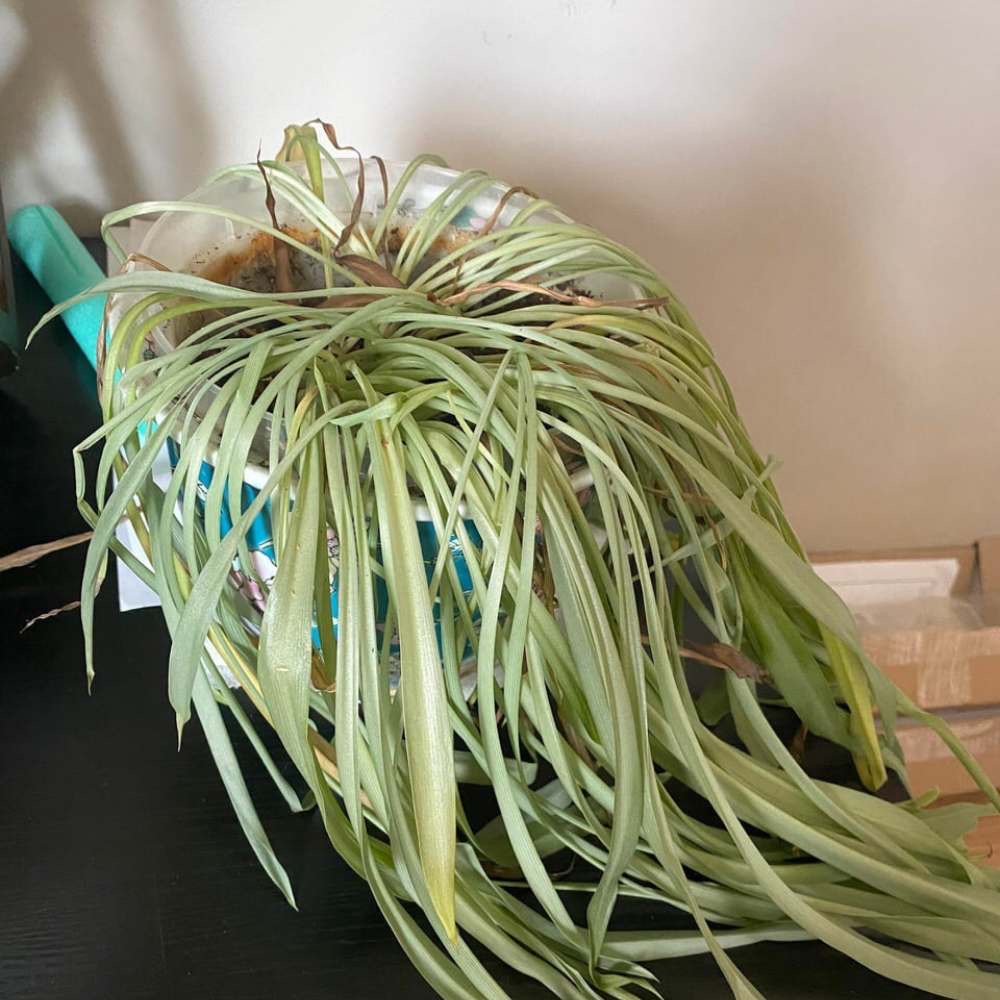
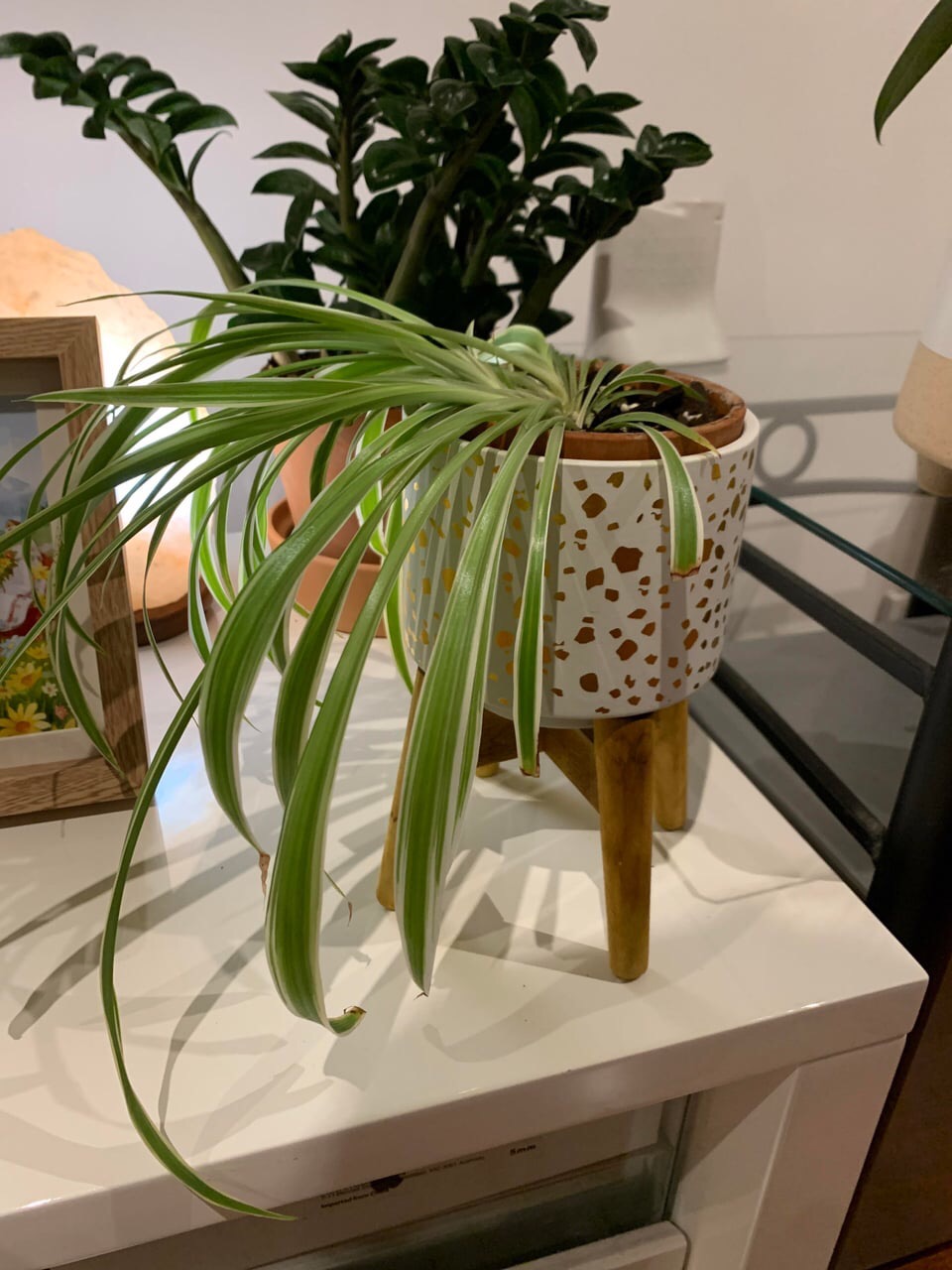
A drooping spider plant looks scary but usually don’t panic because for the most part it isn’t. Yes, it might be looking fine and full one day and then the next it’s flat and seems pretty sorry for itself. And your first thought is probably that you’ve done something wrong and killed it.
Well chances are you haven’t. Most of the time a spider plant is drooping because of something simple. And something you can fix very quickly.
The tricky part is that the two most common causes – too little water and too much water – look almost identical. A floppy spider plant could be needing more water or in soil that’s too wet.
So before you go and grab your watering can (which is what I did the first time my spider started drooping and it made things much worse) it helps to know what you’re looking at.
It also helps to know that spider plants are tougher than they look. They have roots that store water and food which is why a wilted one can recover so fast once you sort out the reason it’s happening.
So here are 9 reasons your spider plant is drooping, how to tell them apart and what to do about each one.
Quick Answer
- Check the Soil First (Most Important): Put a finger two inches down into the soil. Completely dry soil usually means underwatering, soggy soil means overwatering. The fix is very different so check before you do anything prose.
- Water the Right Way: If the soil is dry give it a big top up of water. A spider plant will bounce back up within a few hours if it needed water. If the soil is wet stop watering and let it dry out.
- Sort Out Light and Temperature: Move it out of the direct sun and away from cold air or vents. Keep it somewhere steady that’s ideally between 55 and 70°F.
Need the full picture? See our Spider Plant Care Guide: Tips to Get Thriving Plants.
A quick note before we start. If it’s not the whole plant that’s flopping but some individual leaves curving that’s a slightly different problem. I’ve covered the reasons your spider plant leaves are bending separately. This guide is for when the plant as a whole looks limp and droopy.
1. Underwatering
The Problem:
This is the one that catches most people out and it’s the reason my own spider plants droop more often than I should probably admit. I’m the forgetful type. I’ll go a week or two thinking I watered it recently and then I walk past my spider plants one morning and they’re all flat and sad looking.
Spider plants are fairly tolerant of dry soil, but only up to a point. If the soil is left to go very dry for too long then the leaves will droop. The whole plant flops over the edge of the pot.
The good news is this is the easiest one to fix.
Signs of Underwatering:
- The soil is dry all the way down and may be coming away from the sides of the pot.
- The leaves feel soft and limp rather than firm.
- The plant looks so much better within a few hours of being watered.
The Fix:
- Give It a Big Water: Water slowly until it runs out of the drainage holes. The first time I did this I couldn’t believe how quickly the leaves came back to life over just a few hours. I felt bad for neglecting it but relieved it was such an easy fix.
- Bottom Water If the Soil Is Really Dry: If the soil has gone hard and the water is running straight through it then put the pot in a tray of water for 20 minutes so the roots can soak it up from below.
- Get on a Rough Schedule: Check the top inch or two of soil every few days and water when it feels dry. For more on getting the timing right see our spider plant watering guide.
2. Overwatering
The Problem:
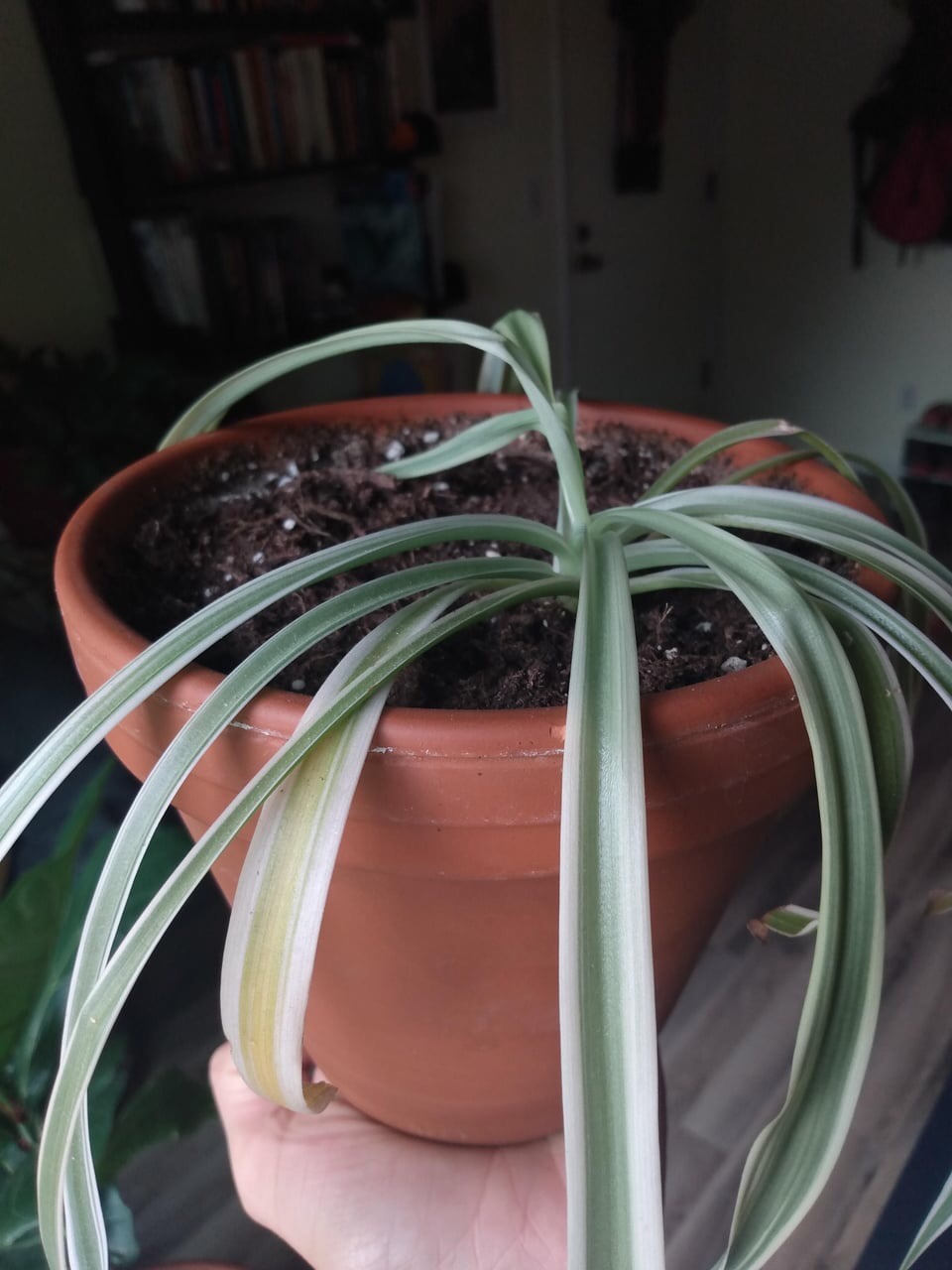
This is where it gets a bit annoying. After I figured out I’d been underwatering I, stupidly, overcorrected. I started watering too much to make up for my neglect, so every few days whether it needed it or not. And the plant drooped again.
But this time the droop was different. The leaves went soft and almost mushy instead of thin and feeling crispy. The soil stayed wet for days.
When a spider plant sits in soggy soil the roots can’t breathe and a plant that can’t take up oxygen at the roots can’t hold itself up either.
Overwatering is the biggest problem houseplant owners face so if you’re not sure which camp you’re in there’s a good chance it’s this.
Signs of Overwatering:
- The soil is still wet days after watering.
- The leaves look limp and feel soft close to the base.
- The lower leaves turn yellow. If you’re seeing a lot of that there are other reasons spider plants turn yellow to look at too.
The Fix:
- Stop Watering: Let the soil dry out properly before you even think about watering again. You aren’t helping even if you’re feeling guilty!
- Check the Drainage: Make sure the pot has drainage holes and tip out any water that’s sitting in the saucer or pot. The roots should never sit in standing water.
- Improve the Soil If Needed: If the soil feels dense and is slow to dry repot into a lighter mix with some perlite mixed in so any excess water can get away.
3. Root Rot
The Problem:
Root rot is what overwatering turns into if you don’t catch it. The roots, which are normally white and feel firm, start to decay and go brown and mushy. At that point the plant can’t take up any water or nutrients and the leaves suddenly drooping is often the first warning sign.
Spider plants are susceptible to root rot if they’re left waterlogged, so this tends to follow on from the overwatering problem above. It’s more serious but you can still fix it if you act quickly enough.
Signs of Root Rot:
- A nasty or rotten smell coming from the soil.
- Roots that are brown and mushy/soft instead of firm and white.
- Drooping that doesn’t get any better no matter how you water.
The Fix:
- Unpot and Inspect: Take the plant out and shake off the soil so you can see the roots without anything in the way.
- Trim the Rot: Cut away any brown, mushy roots with scissors. Keep the firm, white, healthy ones.
- Repot in Fresh Soil: Use a clean pot with drainage and fresh soil (that drains well). Then don’t water too much as it recovers.
If it’s gone further than this and the plant is really struggling our guide on spider plant root rot and how to save it take you through how to rescue it in more detail.
If you’re not sure whether you’re dealing with underwatering, overwatering or rot then use the quick checker below. Answer a few questions and it’ll point you to the most likely cause.
What's Wrong With My Plant?
Answer a few questions and we'll help diagnose the problem.
4. The Pot Is Too Small (Root Bound)
The Problem:
Spider plants grow fast and the roots fill a pot quicker than most houseplants. If they’re left too long the roots wind around themselves and are left with nowhere to go. They can even crack a plastic pot which tells you how much pressure they’re capable of building up.
When a plant is that root bound the soil holds very little water so the plant dries out and droops almost as soon as you water it. A root bound spider plant also tends to stop any new growth which is one of the main reasons a spider plant stops growing.
Signs of Being Root Bound:
- Roots that are coming out of the drainage holes or pushing up through the soil.
- Water that runs through the pot in a few seconds.
- The plant droops again very soon after it’s watered.
The Fix:
- Move Up a Pot Size: Repot it into a pot that’s an inch or two wider. Don’t go straight to a huge pot as too much soil holds on to too much water.
- Loosen the Roots: Carefully pull the circling roots apart before you put it into fresh soil.
- Repot Every Couple of Years: Spider plants generally need repotting every two years or so to stay happy. Put a reminder somewhere if you’re forgetful like me.
Spider plant looking sad?
My free guide 7 Gardening Mistakes That Are Killing Your Plants covers the small habits that hold spider plants back from thriving — and how to turn yours around.
5. Transplant Shock
The Problem:
This can be confusing because it happens right after you’ve done something helpful. You finally repot a root bound plant, are feeling good about it and a day later it’s drooping.
That’s transplant shock. The roots get disturbed during the repotting and need time to settle into the new soil before they can support the plant properly.
I repotted a badly root bound spider plant last year and it drooped for a whole week. I was sure I’d killed it. Then it just bounced back like nothing had ever happened.
Signs of Transplant Shock:
- Drooping that starts within a day or two of repotting.
- The plant was healthy before you moved it.
- No smell, or rotting or pests – just an unhappy plant.
The Fix:
- Leave It Alone: This is really about patience. Don’t repot it again or fertilize it.
- Keep Conditions Steady: Put it in bright, indirect light and water it normally. Stable conditions help it to recover faster.
- Give It a Week or Two: Most spider plants recover from transplant shock within a couple of weeks. If it’s still drooping after that then you’ll have to look at the other causes on this list.
6. Too Much Direct Sun and Heat
The Problem:
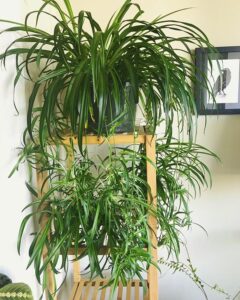
Spider plants love bright light but they can’t tolerate direct sunlight. If you put one in a very sunny window that gets hot then the leaves will lose water faster than the roots can replace it. The plant will wilt in the heat and the leaves can get burnt on top of that.
It’s an easy mistake to make, especially in summer when a spot that was fine in winter is suddenly getting a lot of hot sun.
Signs of Sun and Heat Stress:
- Drooping that’s worse in the afternoon and gets better in the evening.
- Pale, bleached or burnt patches on the leaves that are facing the window.
- Soil that’s drying out much faster than usual.
The Fix:
- Move It Back from the Window: A few feet back from a bright window or behind a sheer curtain is usually good enough.
- Find Bright but Indirect Light: An east or north facing place usually works well. The plant wants a lot of light without the strong sunlight.
- Keep It Hydrated in Hot Spells: In a heatwave it’ll need more water so check the soil more often than you normally would.
7. Temperature Stress and Cold Drafts
The Problem:
Spider plants come from the coastal parts of South Africa and they like things to be mild. They don’t like the temperature swinging suddenly or cold drafts.
Being put next to a drafty window in the winter or right under an air conditioner in the summer can cause the plant to become limp. Their ideal range is roughly 55 to 70°F and you want to keep them above 45°F. Cold is the bigger threat.
A chilled spider plant droops and, if it gets cold enough, the leaves can become mushy.
Signs of Temperature Stress:
- Drooping that started after it becoming noticeably cooler or after the plant was moved to somewhere drafter.
- The plant is near a door, single glazed window, radiator or air conditioning.
- Drooping leaves with no sign of pests or root problems.
The Fix:
- Move It Somewhere Stable: Get it away from the cold glass, drafts and sources of heat.
- Watch the Winter Windowsill: A windowsill that’s lovely in summer can get very cold at night in the winter. Take the plant away from the glass when it’s freezing outside.
- Avoid Vents: Keep it out heating and air conditioning, both of which dry it out and chill it.
8. Salt Buildup from Over Fertilizing or Tap Water
The Problem:
Spider plants need very little feeding. The roots store their own reserves so heavy fertilizing does more harm than good.
Too much fertilizer leaves behind salts in the soil and those salts can burn the roots and stop them from taking up water properly. The result is a stressed and drooping plant.
Hard tap water adds to the problem. Spider plants are sensitive to the chlorine and fluoride in tap water which build up over time. You’ll often see this show up as brown tips too, which is covered in our guide to brown tips on spider plants.
Signs of Salt Buildup:
- A white film on the surface of the soil or around the pot.
- Brown tips of the leaves as well as the drooping.
- A history of frequent feeding or watering only with hard tap water.
The Fix:
- Flush the Soil: Run water through the pot for a minute or two to wash the built up salts out. Let it all drain away.
- Ease Off the Fertilizer: Feed lightly at most, once a month in the spring and summer, with a diluted balanced houseplant feed. Don’t bother with it at all in the winter.
- Switch Your Water: Use filtered or distilled water, or leave tap water out overnight before using it.

9. Pests
The Problem:
Spider plants are pretty disease resistant, but pests are another matter. Bugs like spider mites, aphids, mealybugs and scale will sap the life out of your spider plant. As they feed the plant becomes weaker and starts to droop.
These are easy to miss until there’s a lot of them. By the time the plant is drooping there are usually plenty of them to find if you look closely.
Signs of Pests:
- Webbing between leaves which is a sign of spider mites.
- Sticky substance on the leaves or surfaces close by.
- Tiny bugs or little white spots, especially under the leaves.
The Fix:
- Rinse the Plant: Wash the pests off making sure to focus under the leaves.
- Treat with Neem or Insecticidal Soap: Spray it well and repeat every week or so until they’re gone.
- Isolate It: Keep the affected plant away from your others so the pests don’t spread while you’re treating it.
When Drooping Means the Plant Is Really Struggling
Most of the time a drooping spider plant is an easy fix. But if you’ve worked through this list and it’s still limp, soft and struggling it may be in a more serious decline. In that case our guide on how to revive a dying spider plant goes through the rescue step by step.
Spider Plant Drooping: Quick Fix Guide
| Cause | Fix |
|---|---|
| Underwatering | Give it a deep drink. It usually perks up within hours. |
| Overwatering | Stop watering and let the soil dry out fully. |
| Root Rot | Trim the mushy roots and repot in fresh, dry soil. |
| Root-Bound | Repot one size up and loosen the roots. |
| Transplant Shock | Leave it alone and give it a week or two to settle. |
| Too Much Sun or Heat | Move it back from the window into bright, indirect light. |
| Temperature Stress | Keep it steady between 55 and 70°F, away from drafts. |
| Salt Buildup | Flush the soil and ease off the fertilizer. |
| Pests | Rinse the plant and treat with neem or insecticidal soap. |
Final Thoughts
A drooping spider plant looks worse than it usually is. Nine times out of ten it’s a watering issue and once you’ve figured out if the soil is too dry or too wet the rest is straightforward. Check the soil first, then move on to sorting out the light and temperature and finally rule out the roots and pests.
Spider plants are forgiving and that’s the thing to keep in mind. They store their own water and food, don’t mind being neglected a bit and a limp one will bounce back fast once you fix what’s wrong with it.
So don’t panic and definitely don’t throw it away. Go through the list and give it what it needs – and it’ll be looking happy again before long.
Spider plant looking sad?
My free guide 7 Gardening Mistakes That Are Killing Your Plants covers the small habits that hold spider plants back from thriving — and how to turn yours around.
