
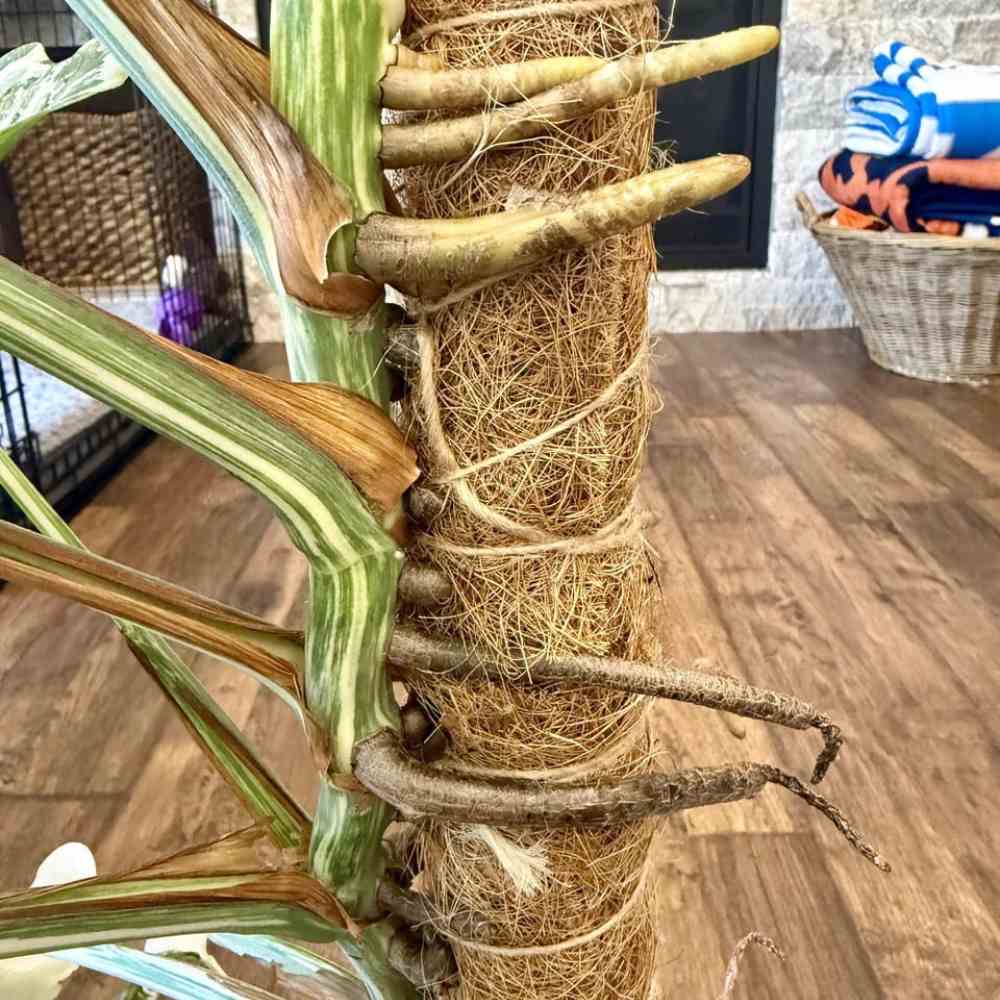
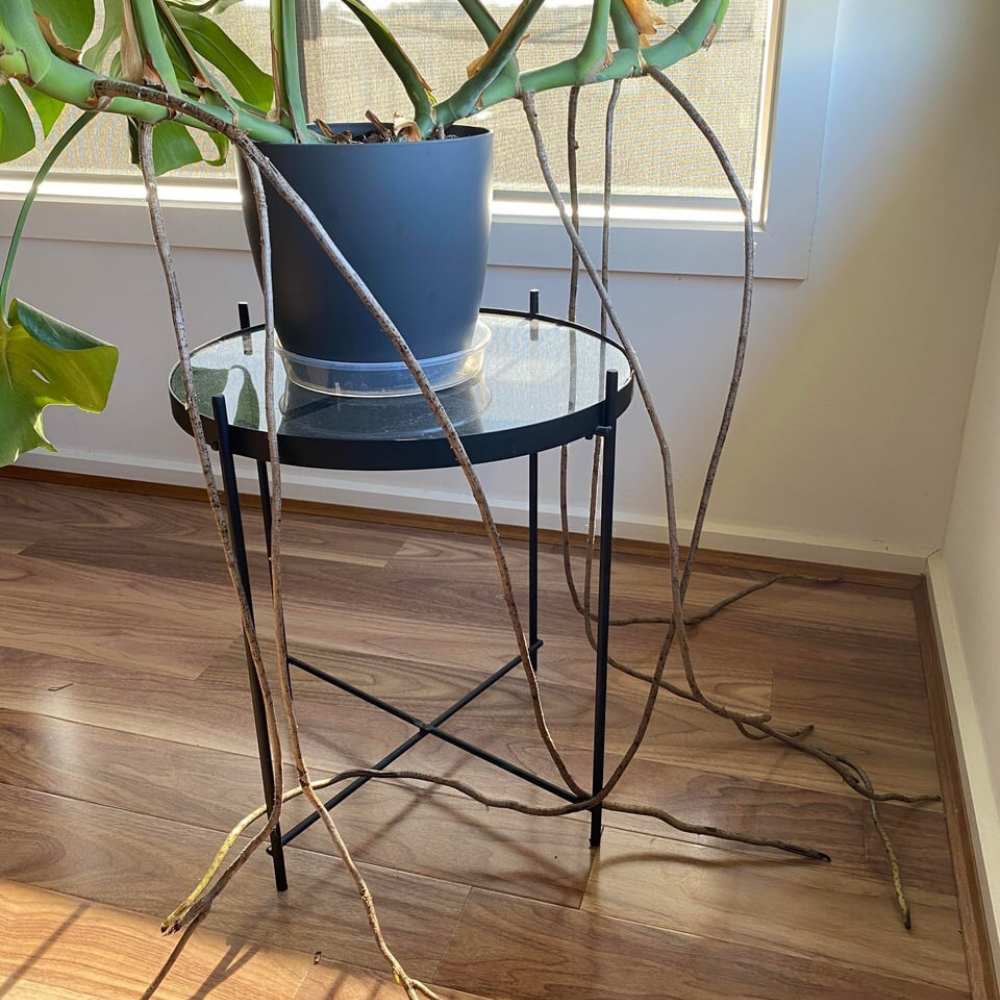
The first time I saw thick roots growing out of the side of my monstera I was sure something had gone wrong with it. There they were, sticking out into the air, reaching for what seemed like nothing in particular, and they looked a bit alien being there next to all the green leaves.
So I did what most of us would do and started frantically googling whether I needed to chop them off before they grew ridiculously large and took over my living room.
What they turned out to be was monstera aerial roots. And they’re a really misunderstood part of monsteras.
When people see them they panic, a bit like I did, and then cut them off without really thinking. Or they just assume they’re a sign their monstera is sick. Whereas most of the time none of that is necessary.
So let’s settle the question of whether you should be cutting or keeping monstera aerial roots. I’ll look at what these roots do, the myths that make people think cutting is the only option and what to do with them instead if they’re annoying you.
Quick Answer
- Keep them by default: Aerial roots are completely normal and a sign of a healthy, maturing monstera. They are not a problem you need to fix.
- Cutting is safe in moderation: Removing a few to make your monstera look better won’t hurt it as along you use clean cutting tools. Just know it gives the plant no real benefit so it’s purely about your preference.
- Redirecting beats cutting: Guide them into the pot or onto a moss pole and they’ll do their job instead of just hanging there.
For the bigger picture see our full Monstera Care Guide: Easy Tips for Growing Monstera.
What Are Monstera Aerial Roots?
Aerial roots are roots that grow above the soil usually coming out from the stem near a node. They will look different from the roots in your pot.
They’re thicker, usually a brown or green type of color and a bit woody. They grow outwards into the air rather than down into the dirt like a regular root would.
To understand why your monstera makes them you have to remember what this plant is in the wild. Monstera is a climbing vine that comes from tropical forests in Central America.
It isn’t growing in a pot out there. It starts it’s life on the floor of the forest before climbing up tree trunks towards the light. According to the Missouri Botanical Garden it can get up as high as 70 feet into the canopy.
The aerial roots are how it does that. They grip onto bark and branches, anchoring the plant as it climbs, and they also take in a bit of moisture and nutrients from the air around them.
The NC State Extension Plant Toolbox describes monstera as an epiphytic climber for exactly this reason.
So when your indoor monstera starts growing aerial roots it’s not gone wrong. In fact the opposite.
It’s doing the most natural thing in the world. It’s looking for something to climb.
That’s usually a sign your plant is maturing and getting comfortable, which is the same stage where you start seeing those big fenestrated holes appear in the leaves.
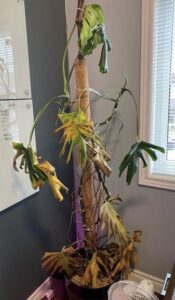
Why Is My Monstera Growing So Many Aerial Roots?
A monstera grows lots of aerial roots when it’s mature, healthy and actively looking for something to climb. Being in good shape, strong light, the right sort of humidity and something to support the plant all encourage more of them.
It’s a sign the plant is growing well, definitely not a problem. So if you’ve got a monstera covered in aerial roots it’s doing well.
The one thing worth checking is that you’re looking at aerial roots and not panicking over the wrong thing. You don’t want to assume that’s what your plant has and get it wrong.
Aerial roots are firm and grow from the stem above the soil. If instead the roots in the pot are brown and smell nasty, that’s root rot, which is a completely different problem.
In that case you’ll want to rescue your monstera from root rot rather than worry about anything happening up top.
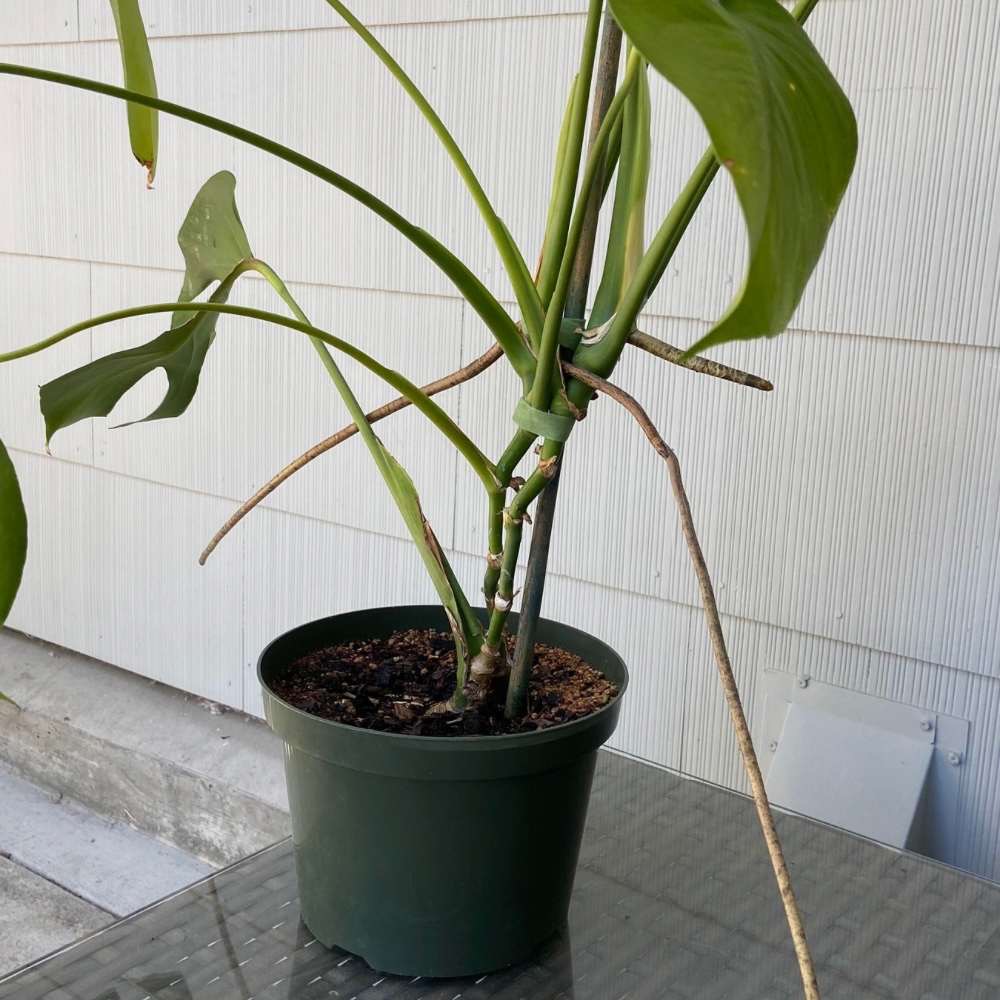
The Myths That Make People Want to Cut Them
Most of the urge to cut comes from a few things people get wrong about aerial roots. I’ll try to clear them up so you don’t cut the roots you don’t need to (much like I did).
“Aerial Roots Mean My Monstera Is Root Bound or Unhappy”
This is the main one people get wrong. Aerial roots are not a sign your plant is unhappy and absolutely not the same thing as being root bound.
A root bound plant shows it in other ways, like roots growing in circles at the surface of the soil, coming out of the drainage holes, water running straight through the pot and any growth stopping altogether.
Aerial roots growing from the stem are just normal behavior for a monstera. If you’re seeing signs of it being root bound then that’s another issue and you’ll want to repot your monstera into a bigger pot. But the aerial roots themselves aren’t the warning.
“They’ll Damage My Walls and Furniture”
People hear “climbing” and get a picture in their had of ivy growing through brickwork and ruining paint. Monstera aerial roots don’t work like that.
They don’t have the aggressive adhesive pads that destroy surfaces. They’ll lean on and loosely grip a support but they’re not boring into your plasterwork. I’ve had roots rest against a wall for months and the worst that happened was a faint smudge that wiped off.
“I Have to Mist Them or Stick Them in Water”
You’ll see advice telling you to mist aerial roots every day or trail them into a glass of water to keep them happy. You really don’t need to.
They take in a little moisture from the air on their own and your plant gets the water it needs through its roots in the soil. Misting won’t ruin the plant but it’s not going to do a lot either.
Yellow leaves? Drooping? Slow growth?
Most monstera problems trace back to one of seven mistakes. My free guide 7 Gardening Mistakes That Are Killing Your Plants walks through every one — and how to fix them.
So Should You Cut Monstera Aerial Roots?
You can cut a few monstera aerial roots without doing any harm to the plant but cutting won’t help your monstera at all. It’s entirely about the cosmetic and how it looks. So really it’s about whether you like how the aerial roots look or not.
The Missouri Botanical Garden puts it plainly too, noting that the aerial roots on the upper part of the plant can either be trained onto a climbing pole or removed. In other words even the experts treat this as a preference rather than a rule.
Cutting is reasonable when:
- You just don’t like how it looks and want a tidier plant.
- A root is growing into your carpet, a gap in the floorboards, a nearby pot etc.
- There are so many tangling together that the plant looks a mess.
I’d hold off on cutting when:
- You’re tempted to remove them all in one go. Take a few at most and leave the rest.
- The roots are gripping a moss pole or support. They’re doing the job of holding the plant up, so it’s best to leave them be.
- You’re cutting because you think it’s good for the plant. It isn’t so if this is the only reason don’t bother.
Every cut is a small wound to your plant and also an opening that could lead to more problems. So the fewer you make the better. But if you don’t do too much and make sure the cuts are clean then your monstera will be able to handle it.
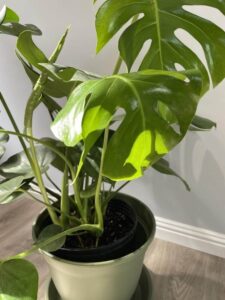
How to Cut Aerial Roots Safely (If You Decide To)
If you’ve weighed it up and you want a few gone it’s important you do it properly. This was the bit I rushed the first time, so much so I tore a root off by hand! You definitely don’t want to do that and should take some time before you get going.
- Sterilize your cutting tools blade. Wipe any scissors or pruners you’re going to use with rubbing alcohol first. A clean cut on a clean tool is very important.
- Cut close to the stem, but not into it. Snip the root a little way out from where it joins the stem. Don’t nick the main stem or the node itself.
- Do a few at a time. Remove one or two then stop. It’s much gentler to the plant to spread it instead of doing one big clear out of them all.
- Leave the cut alone. You don’t need to seal it or treat it. Just keep the area dry for a day or so and let it callous over.
- Watch the plant. A healthy monstera won’t show any signs of being unhappy. If you went too far and overdid it and the plant sulks just ease off a bit and let it recover.
One important warning. Don’t confuse aerial roots with nodes. The node is the little bump where leaves, roots and new growth grow from and you need it intact if you ever want to propagate your monstera into a new plant. Cut the root and never the node.
What to Do With Aerial Roots Instead of Cutting
After having messed up the cutting of my aerial roots this is where I ended up. Redirecting the roots works because your plant gets something out of it.
There are a few options you have with deciding what to do with your aerial roots:
Tuck Them Into the Pot
If you have some aerial roots that are growing low down the plant and near the soil you can guide them into the pot. Once the root hits the soil there’s a good chance it’ll root in there and become another root for the plant.
You’re turning something that doesn’t look great and is annoying you into something that’s useful to your monstera. It’s a win win.
You can pin it in place with a bit of wire if it won’t stay. Just don’t force it so hard that it snaps.
Train Them Onto a Moss Pole or Support
This is what aerial roots are built for. Give your monstera something to climb and the roots will grab on, keep the plant steady and most importantly it’ll help to get the plant bigger leaves over time.
A damp moss pole is the classic choice. There are loads of monstera support ideas if you don’t like a pole and our guide on how to train a monstera to climb and make it look good takes you through how to do it.
Use Them for Propagation
If you’re taking a cutting anyway a part of the stem with a node and a healthy aerial root attached to it gives that cutting a head start when you root it. It gets you something from some growth you would have otherwise thrown away.
Or Just Let Them Dangle
With time a lot of people end up liking the look of the aerial roots. So they just leave the roots where they are.
There’s nothing wrong with that. A monstera with trailing aerial roots everywhere is a monstera that’s growing well – and that’s basically the point.
Final Thoughts
If you only take one thing away from all this let it be that monstera aerial roots are a good sign, not a bad one. They mean your monstera is behaving like it should and maturing into a successful, healthy plant. You definitely don’t need to panic and start cutting away at it.
Keep the aerial roots by default. If a few of them annoy you or one starts growing in a way it shouldn’t you can cut them without doing the plant any harm. Just make sure you know you’re doing it for how it looks and not for the benefit of the plant.
And whenever you can then redirect them into the pot or onto a support so they help the plant out.
Get this part right and you’re well on your way to a healthier and more impressive looking monstera. From here it’s worth taking a look at the rest of your monstera’s care so all the energy it does climbing turns into the growth you’re after.
Yellow leaves? Drooping? Slow growth?
Most monstera problems trace back to one of seven mistakes. My free guide 7 Gardening Mistakes That Are Killing Your Plants walks through every one — and how to fix them.
