
Fiddle leaf figs are stunning plants when they’re happy but they also sulk when you change something even slightly. And repotting is one of the biggest changes you can put one through.
So if you’re nervous about how to repot a fiddle leaf fig without killing it you’re right to be a little careful. It can easily get annoyed at you for doing next to nothing to it and then drop most of its leaves.
But the actual act of repotting a fiddle leaf fig is not nearly as hard you might imagine. Most of the horror stories you might have seen or read happen because of something avoidable mistakes. Once you know what those mistakes are you can make sure you don’t do them and chances are it’ll go smoothly.
I’ve repotted plenty of my own fiddle leaf figs and only killed one along the way (I was new to looking after them, used the wrong pot, watered too much and learnt my lesson). So this is everything I’ve picked up since then about doing it the right way.
Quick Answer
- Only Go Up One Pot Size: Choose a pot just 1 to 2 inches wider than the current one. A pot that’s too big holds on to wet soil around the roots and will kill the plant.
- Repot in Spring or Early Summer: Repot when the plant is actively growing so it recovers faster. Avoid repotting in winter when it’s basically resting.
- Use Chunky Well Draining Soil: A mix of quality potting soil with added perlite or bark keeps air flowing around the roots and stops water sitting around them.
New to all this? Start with our beginner’s houseplant care guide.
Does Your Fiddle Leaf Fig Even Need Repotting?
A lot of people skip over this and don’t even really think about it. If you don’t need to repot it then don’t! You’ll avoid any potential problems, even if they’re not likely.
Fiddle leaf figs like being a bit snug in their pot so there’s no rush to find it a bigger pot just because it’s been a while.
So before you go start check for the signs it needs more room:
Roots Coming Out the Bottom
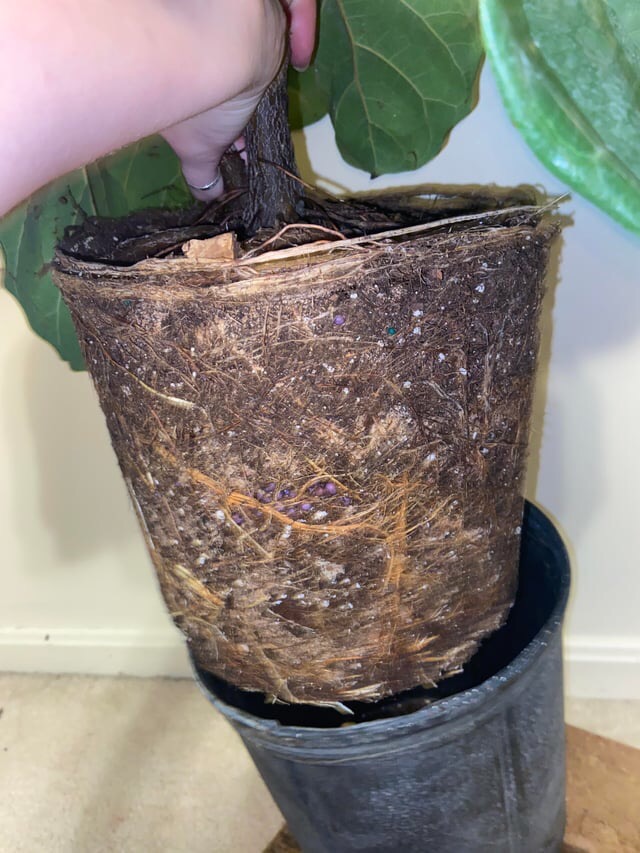
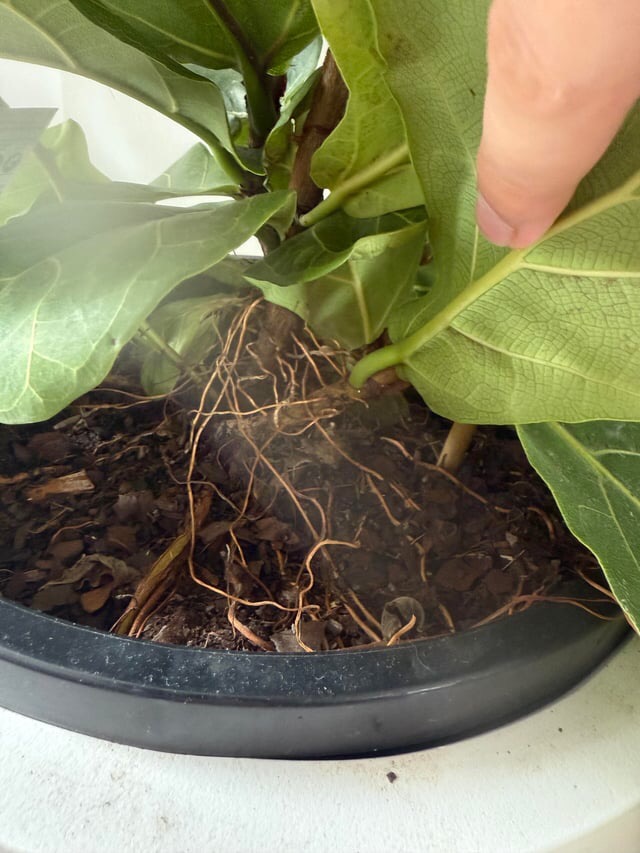
Tip up the pot and have a look at the drainage holes. If you can see roots coming out or circling around down there the plant doesn’t have enough space. It’s the biggest sign you need to repot it.
Water Runs Straight Through
When you water and it pours out the bottom almost instantly that usually means the pot doesn’t have enough soil. There’s nothing left to hold the moisture. My biggest fiddle leaf fig did this for weeks before I realized what the problem was.
It Dries Out Way Too Fast
A root bound plant will take up all the water very quickly. If you feel like you’re watering constantly and it still needs mode that’s a problem with the lack of space and not due to watering.
Growth Has Stopped
If your fiddle leaf fig has stopped putting out new leaves during the spring and summer and everything else is fine it might just be that is has nowhere left to grow. The roots need room before it can really grow strong and look good.
As a rough rule most fiddle leaf figs need repotting every 1 to 2 years. Big mature ones can go longer and you can just refresh the top few inches of soil on those instead of doing a full repot. If none of the signs above are showing then just leave it as it is.
When to Repot a Fiddle Leaf Fig
Timing can be a big part of whether the repot works. Get it right and your plant wont even notice. Get it wrong and your it’ll stress it.
The best time to repot a fiddle leaf fig is spring or early summer. This is when it’s actively growing so it can grow new roots and recover from quickly.
Avoid repotting in late fall and winter. The plant slows down when theres less light and the roots having been disturbed and then sat in cold damp soil with nothing to do will almost certainly result in rot. If your plant is bursting out of its pot in December you can do it but keep the watering light and be patient with its recovery.
Also – don’t repot a fiddle leaf fig the week you bring it home from the store. I know the plastic nursery pot is pretty ugly but the plant has just been through a change of environment already. Let it settle for 2 to 3 weeks first so it doesn’t go through multiple stresses.
What You’ll Need Before You Start
Get everything ready before you take the plant out of the pot. Fiddle leaf figs don’t love having their roots exposed to the air for ages so you want this to be quick and smooth. No frantically looking for tools as you’re doing it.
The Right Pot
This is the most important choice you’ll make. Go up just 1 to 2 inches in diameter from the current pot. No more than that.
It’s tempting to give your plant loads of room so you don’t have to do this again for years. But it’s not a good idea.
A pot that’s too big holds lots of volume of soil that the small roots can’t take water up from. The soil stays wet, the roots sit in it and you get root rot.
An oversized pot is how people accidentally kill a fiddle leaf fig during repotting.
And whatever pot you pick it must have drainage holes. A pretty pot with no holes will kill the plant. If you love a cover pot with no drainage just keep the plant in a plain nursery pot inside it.
Well Draining Soil
Fiddle leaf figs want soil that holds some moisture but drains fast. Straight bagged potting soil on its own tends to stay too soggy for them.
A simple mix that works well is a good quality indoor potting soil with a couple of handfuls of perlite and some orchid bark or coco chips stirred through. That chunkiness makes pockets of air so the roots can breathe.
 PVP Industries Organic Coarse Perlite for Planting and Garden Soil, 120 Qt
You can also buy a ready made fiddle leaf fig soil if you’d rather not mix your own.
 Perfect Plants Fiddle Leaf Fig Soil, 8 qt, Coconut Coir Potting Mix
A Few Odds and Ends
- Clean scissors or pruning shears for trimming any dead or mushy roots
- Newspaper or a sheet to catch the mess (it gets dirty fast)
- A watering can
- Gloves if you don’t like the sap as it can irritate skin a bit
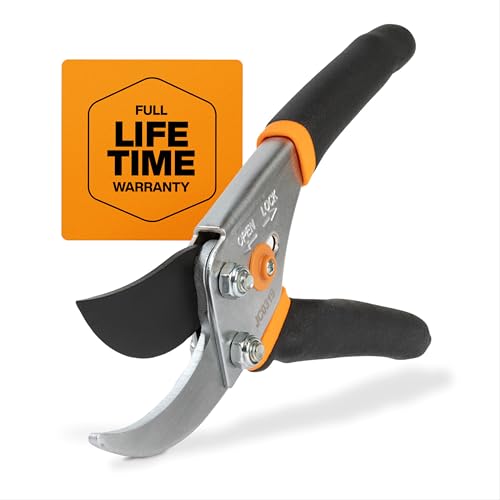 Fiskars Bypass Pruning Shears, 5/8″ Cut Capacity Garden Clippers
How to Repot a Fiddle Leaf Fig Step by Step
Take your time and be gentle with the plant. You want to disturb the roots as little as possible but still give them fresh room.
- Water a day or two before. A lightly moist root ball comes out of its pot a lot more easily than one that’s very dry and it puts the plant under less stress. Don’t do it when it’s soaking wet though. Just water normally a couple of days ahead.
- Take the plant out. Tip the pot on its side and work the plant loose. Don’t pull it by its trunk. Squeeze a plastic pot to break the grip or run a knife around the inside edge of the pot. Support the base of the trunk and slide it out.
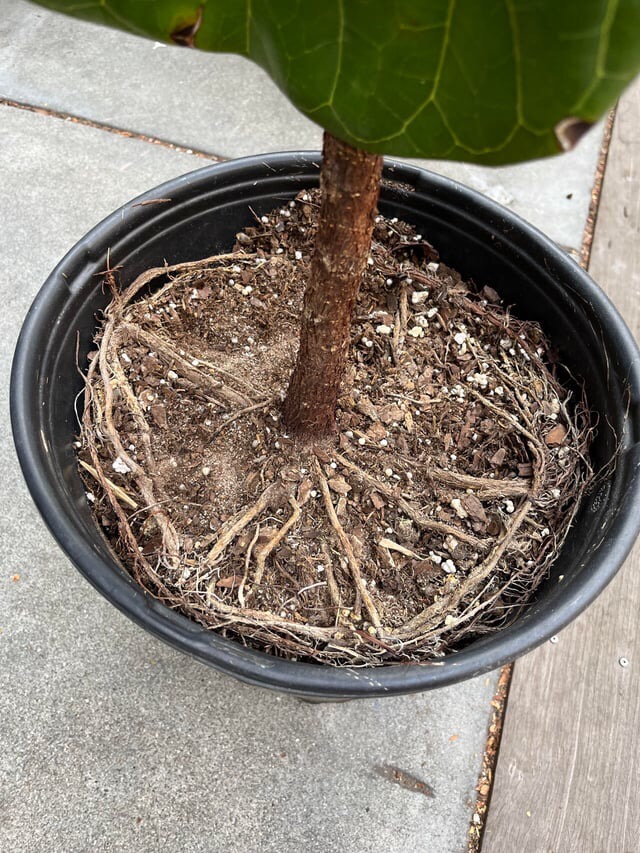
- Look at the roots. Healthy fiddle leaf fig roots will look pale and firm. If they’re growing in circles in a spiral the plant was definitely root bound. If you see any dark, mushy or nasty smelling roots that’s rot and you’ll want to snip those off with scissors.
- Loosen the root ball. If the roots are tightly wound get the outer ones apart with your fingers so they’ll grow outward into the new soil instead of going in circles.
- Add soil to the new pot. Put a layer of your fresh mix in the bottom of the new pot. Sit the plant on top and check the height. The top of the roots should end up about an inch below the rim so you’ve got room to water without it overflowing.
- Backfill around the sides. Hold the plant up and fill in fresh soil around the roots, pressing it down as you go (that will get rid of the bigger air pockets). Don’t pack it in too much though as the roots still need air. Keep the trunk at the same soil depth it was before. Don’t bury it any deeper.
- Water it in. Give it lots of water until it runs out of the drainage holes. This settles the soil around the roots and gets rid of any gaps. Tip out anything that collects in the saucer so the plant isn’t left standing in water.
That’s it. Now you have to wait to see if your plant gets through it ok or is unhappy for a while.
Stop killing your plants by accident.
Get my free guide 7 Gardening Mistakes That Are Killing Your Plants — the most common reasons plants fail, and the simple fixes that turn them around.
Aftercare
The repotting itself rarely kills a fiddle leaf fig. What gets them is what happens in the two or three weeks afterward.
Expect It To Be Unhappy But Don’t Panic
Your fiddle leaf fig may droop, drop a leaf or two or generally look unimpressed for a couple of weeks. Thats normal.
It’s called transplant shock and it doesn’t mean you’ve killed it. The worst thing you can do is panic and start trying to fix the plant with more water and fertilizer. You’ll probably just kill it.
The first time I repotted one it dropped three leaves after a week and I was convinced I’d killed it. I did nothing except leave it alone and it was growing happily a month later.
Keep It in Bright Indirect Light
Put the plant back in the same bright spot it was in before, ideally near a window with plenty of light but out of afternoon sun. A stressed plant recovering from repotting does not want to be getting cooked.
If you’re not sure what counts as the right light our guide on what bright indirect light actually means will help.
Go Easy on the Watering
Fresh soil holds more moisture than the older stuff so your watering routine needs to reset. Water it well once when you repot it then wait until the top inch or two of soil feels dry before you water again.
Overwatering a freshly repotted fiddle leaf fig will probably kill it because the roots are already stressed and then they’re left to sit in damp new soil. When in doubt wait.
If you want a refresher our guide to watering houseplants goes through the basics.
Don’t Fertilize Straight Away
Don’t feed it for about 4 weeks. Fresh potting soil already contains nutrients so there’s nothing to gain and a lot to lose.
Fertilizer salts on newly cut or stressed roots can burn them. Let the plant start growing again and then ease back into a normal feeding schedule.
Don’t Move It and Repot It at the Same Time
If you were planning to repot your fiddle leaf fig and put it in a new room in one go – don’t. Each of those is a just another shock to a plant that really doesn’t like change.
Do the repot, let it recover for a few weeks then think about moving it if you still want to.
Repotting Mistakes That Kill Fiddle Leaf Figs
Most mistakes with repotting a fiddle leaf fig are similar. If you can avoid these it’ll get through the repotting much better.
Going Way Too Big on the Pot
Most important. A giant pot is just going to be lots of soggy soil the roots can’t use. Only go up one size, that’s all.
Repotting Into Dense Soil
Using heavy garden soil or plain potting mix with no drainage amendments keeps the roots wet and not getting enough air. Fiddle leaf figs need that chunky well draining mix. Don’t use a cheaper soil.
Overwatering Afterward
By far the most common way people finish off a repotted fiddle leaf fig. The plant looks stressed, the owner assumes it’s thirsty and then gives it more water which drowns it.
If your plant is drooping after a repot the answer is almost never more water. It’s more likely to be root rot setting in.
Repotting at the Wrong Time of Year
Doing it in the middle of winter when the plant is resting means a slow, stressful recovery with a real risk of rot. Wait for spring if you possibly can.
Disturbing the Roots Too Much
There’s a difference between loosening the roots gently and a very tightly bound root ball and aggressively ripping it apart or scrubbing all the old soil off. Fiddle leaf figs hate the roots being disturbed so be as gentle as the you can. Only remove the roots that you can see are definitely dead or rotten.
If your plant does take a turn for the worse and you’re not sure why our guide of common reasons houseplants die and how to fix them will help to diagnose what’s going on.
How This Compares to Repotting Other Houseplants
If you’ve repotted other houseplants before a lot of this will feel familiar. The mechanics are broadly the same as when I repotted my monstera, or really any big leafy houseplant. Take it out, check the roots, go up a size, use good soil, water in.
The difference with fiddle leaf figs is their temperament. A pothos or a monstera doesn’t mind a repot and will carry on.
A fiddle leaf fig makes a much bigger deal of it. So the technique isn’t really any harder you just need a slightly gentler hand and a lot more patience with the recovery.
Final Thoughts
Follow the rules – only repot when it needs it, do it in spring or early summer, go up just one pot size, use chunky well draining soil and then leave it alone to recover instead of fussing over it.
The repot itself is the easy part. The patience afterward is where most people make the mistake.
Expect the plant to do a bit sulking and don’t let the urge to overwater win out. Give it a few weeks. And then it’s very likely your fiddle leaf fig bounces back looking better than ever with fresh room to grow into.
Get the pot size and the aftercare right and you’ve avoided the two mistakes that account for most repotting deaths. Everything else is just being gentle and being patient.
Stop killing your plants by accident.
Get my free guide 7 Gardening Mistakes That Are Killing Your Plants — the most common reasons plants fail, and the simple fixes that turn them around.
