
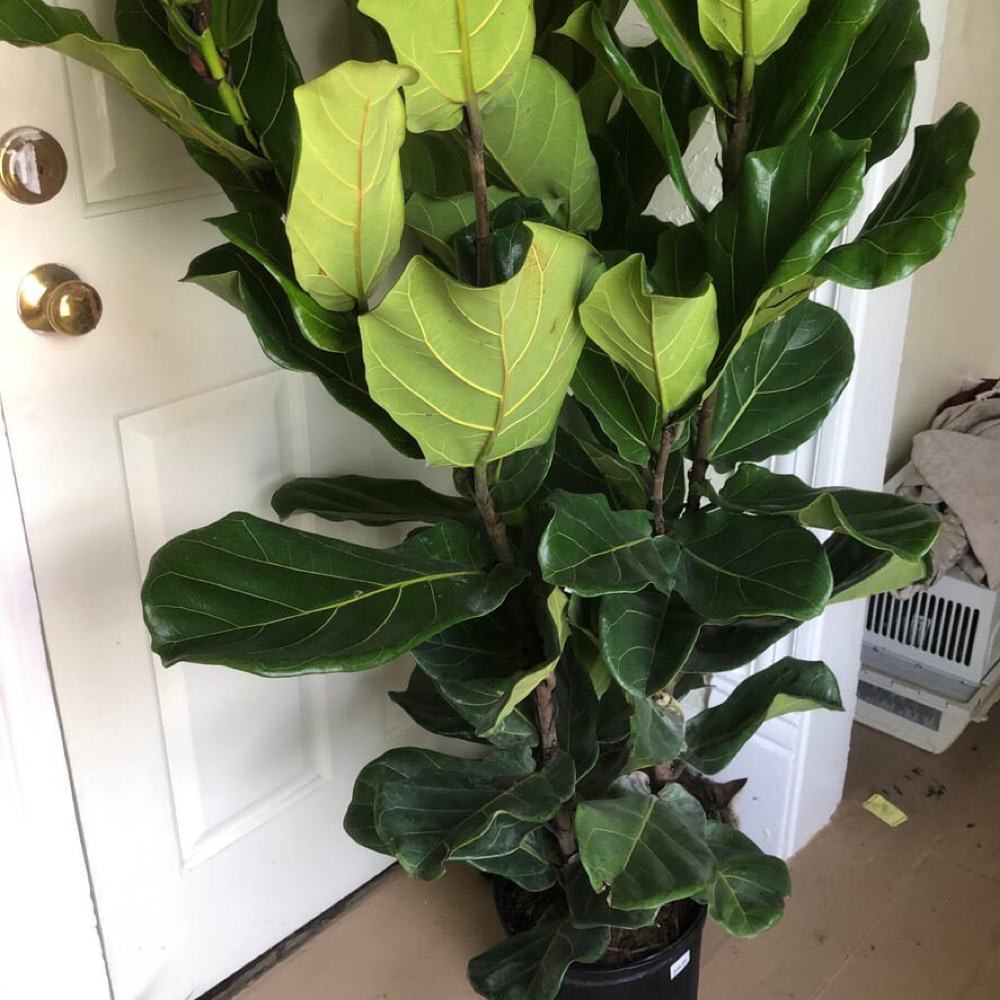
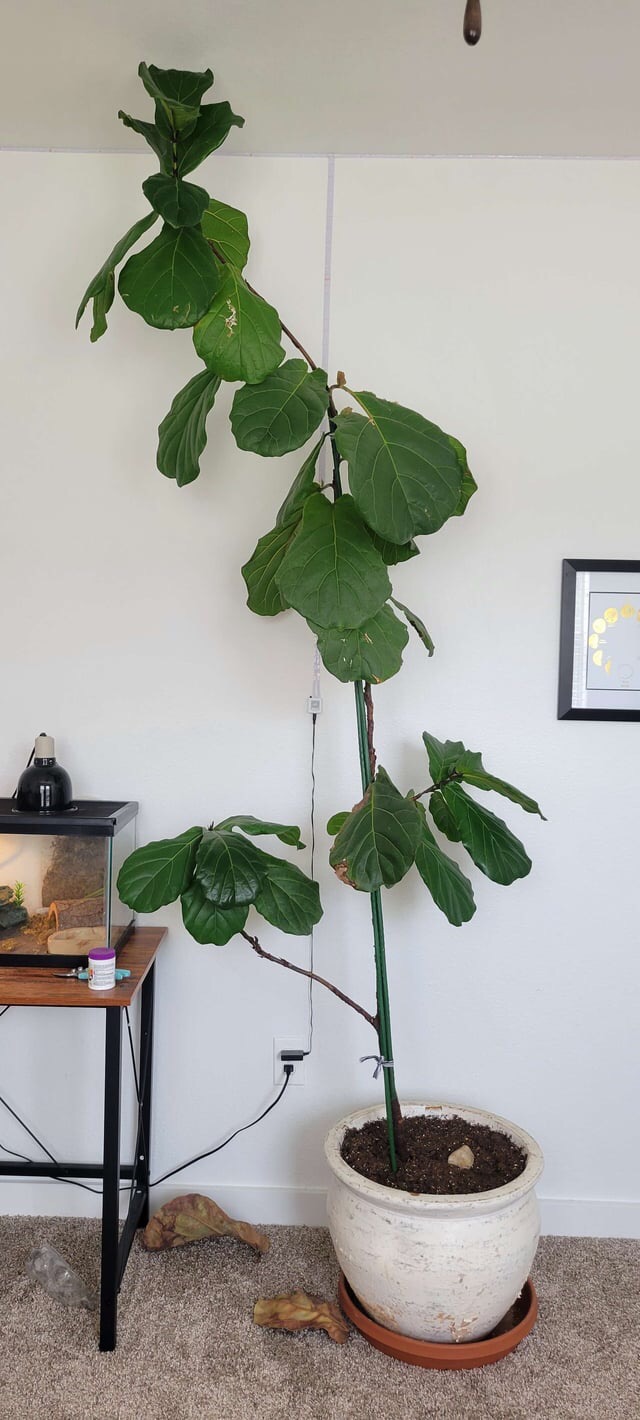
The first fiddle leaf fig I owned didn’t grow as I’d hoped. In fact it looked like a broomstick.
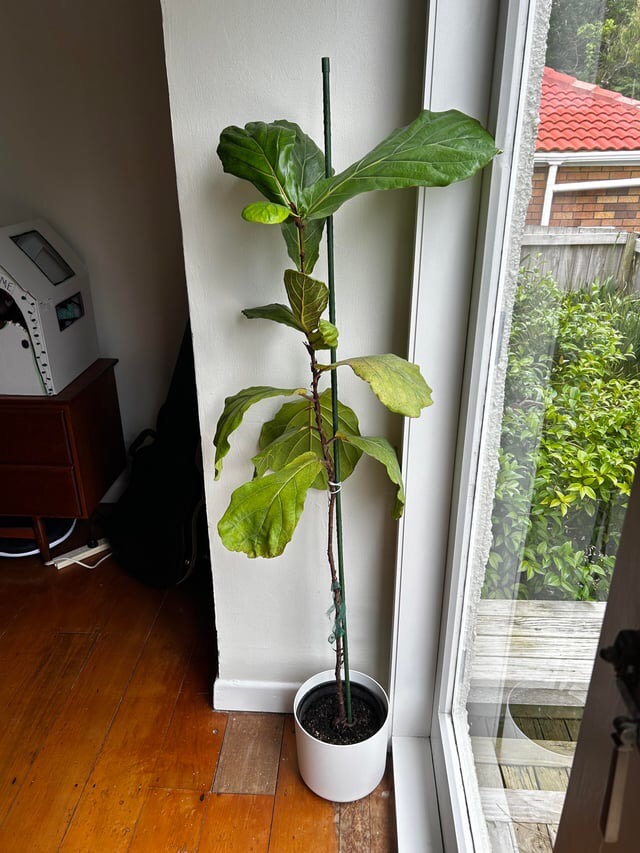
It had a straight trunk, a group of leaves right at the very top and then just lot of bare stem beneath it. It was still healthy but just looked like a plant that wasn’t trying to grow and look interesting.
And I couldn’t work out why. I was giving it the right amount of water and light. It kept growing news leaves.
But every new leaf came out of the same spot at the top so it just got taller and lankier but never filled out.
Well, that’s what fiddle leaf figs do if you leave them to get on with things themselves. They just grow up naturally and not out. And if you want a bushy one with a few branches and some shape to it you have to make that happen.
So this is how to get a fiddle leaf fig to branch out and look full and not like a green flagpole.
Quick Answer
- Pinch or Prune the Top: Cutting off the top growing tip breaks the plant’s habit of only growing upward. It then reacts by growing new branches lower down.
- Give It Lots of Bright Light: New branches only fill in properly with strong light. Placed somewhere without enough light they come in weak and stretched out which puts you right back where you started.
- Feed and Be Patient: Feed through the spring and summer to fuel the new growth then give it time. Branching takes weeks, not days.
Not sure what counts as enough light? See Understanding Plant Light: What ‘Bright Indirect’ Means.
Why Fiddle Leaf Figs Grow Tall Instead of Bushy
Before you cut anything it helps to understand what’s going on because once it it will make it all make more sense after.
Fiddle leaf figs have something called apical dominance. That’s a fancy way of saying the plant has a boss.
The growing tip right at the very top produces hormones that tell all the buds lower down the stem to stay dormant and not grow. The plant puts all its energy into that one tip so it grows straight up and puts nothing into branching out.
In the wild this is a smart decision. The plant grows quickly up toward the light and beats everything else around it. In your living room it just means a tall skinny plant with a bald trunk.
So to get a bushy fiddle leaf fig it isn’t really about feeding it more or watering it better. You need to interrupt the top tip so the buds lower down get the message that they’re allowed to grow.
What Bushy Means for This Plant
This is different to something like a spider plant. A spider plant gets bushy by producing loads of leaves from the base. A fiddle leaf fig gets bushy by growing branches.
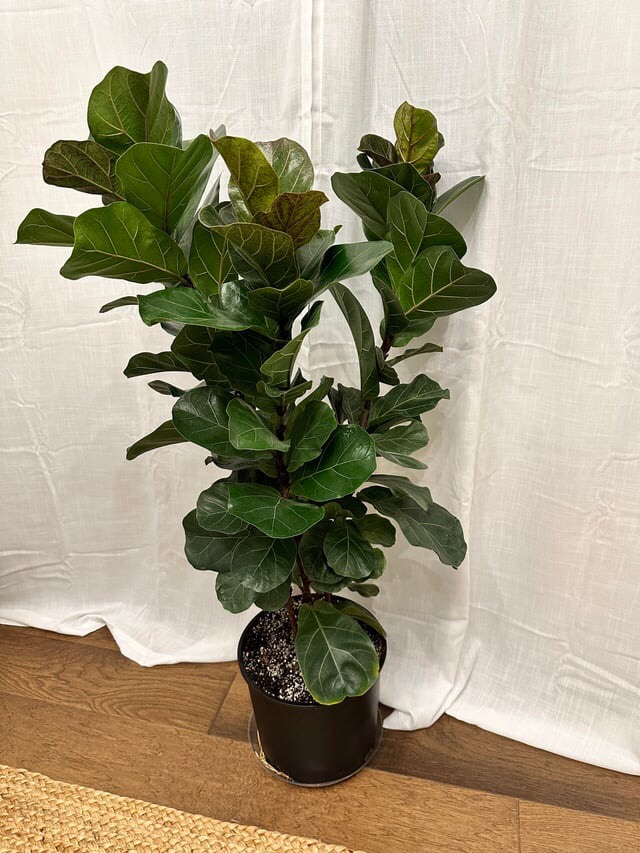
You want a plant that splits off into two or three or more separate stems each with its own set of leaves instead of one single trunk. That branching is what gives it the full shape everyone wants.
And branches almost never happen on their own indoors. You have to trigger them.

Pinching or Pruning the Top
When you cut off the top growing tip you remove the source of those hormones that were keeping everything else dormant. The plant panics and activates the buds sitting below the cut.
Usually you’ll get two or three new branches pushing out from just under where you snipped.
I know cutting the top off a plant feels wrong. But it works.
How to Do It
You’ve got two versions depending on how brave you’re feeling.
Pinching is the gentle one. If your plant is still young and the top growth is soft and green you can just pinch out the very tip with your fingers. You’re only taking off an inch or so of the newest growth. If you’re nervous is the best way because there’s a lot less risk involved.
Pruning is the proper version. Cut the main stem back by anywhere from a couple of inches to several nodes depending on where you want the branches to form. Cut just above a leaf or a node. Wherever you cut is roughly where the new branches will appear so think about the height you want first.
I’d use a good pair of shears for this and not kitchen scissors because a clean cut heals faster and you’re less likely to crush the stem. A sharp pair of bypass pruning shears is one of those tools you end up using on every plant in the house.

One thing to be aware of – fiddle leaf figs leak a white sap when you cut them. It’s mildly irritating to the skin so don’t get it in your eyes or on the sofa and wash your hands after.
How Much to Cut
Don’t hack half the plant off in one go. Take the top section back to where you want the branching to start and leave the plant with lots of healthy leaves below the cut so it can keep feeding itself.
And do it on a healthy plant. If your fiddle leaf fig is already stressed, dropping leaves, kept in a dark spot etc. then pruning it will just stress it more and has probably won’t get good branching. It had to be healthy first before pruning.
Stop killing your plants by accident.
Get my free guide 7 Gardening Mistakes That Are Killing Your Plants — the most common reasons plants fail, and the simple fixes that turn them around.
The Bend Trick (If You Don’t Want to Lose Height)
If you bend the trunk of your fiddle leaf fig over and hold it there the plant thinks the the top is destroyed. It reacts by pushing a new branch out from further up the stem to take over as the new leader.
Then you let it go and the trunk straightens back up. And now you’ve got an extra branch.
It sounds made up but it isn’t. It works on the same hormone logic as pruning you’re just tricking the plant instead of cutting it.
How to Do It
Bend the top third of the trunk over to the side so it’s arched, not snapped, and hold it there. You can tie it to a stake or a something heavy to keep it bent. Leave it for a week or two.
Do it slowly. You want a bend, not a crack. If the trunk is thick and woody it might be too stiff to bend safely in which case pruning or notching is the better way to go.
After a week or two you’ll likely see a new branch starting where the trunk was under the most tension. Once it’s going you can release the trunk and let it straighten. Repeat further up if you want even more branches.
The nice thing here is you keep all the height and all the leaves. You’re adding branches instead of trading height for them. For a plant that took you two years to grow tall that’s a big deal.
Notching
Notching is for when you want a branch in a very specific spot and you don’t want to lose the top at all. It’s a little more difficulty but it does give you more control.
The idea is you make a small cut just above a node (a node is where a leaf grows or used to grow) which interrupts the hormone flow to that one bud and convinces it to start growing into a branch.
How to Do It
Find a node on the bare part of the trunk where you’d like a branch. Make a small cut into the stem just above that node, going about a third of the way through. Not all the way, you’re not trying to cut the trunk off, just to nick it.
That little wound blocks the dominance signal to the bud below it and that bud will often wake up and start branching.
This can be hit and miss though. Sometimes the bud takes off and other time it does nothing.
But if there’s one bald patch on your trunk you’re desperate to fill notching is the best method. Do a couple at once to improve your odds.
Light or Your New Branches Will Be Just as Leggy
You can do all the pruning and bending in the world but if the plant is not given enough light then the new branches will come in weak, stretched and pale and you’ll be right back where you started.
Fiddle leaf figs want a lot of light. More than most people give them.
They’re happiest in bright indirect light right by a window and they’ll even take a bit of direct morning sun once they’re used to it.
The big mistake is putting a fiddle in the middle of a room because it looks good there. It might look good for a while but it will slowly stretch toward the nearest window, the new growth will be small and the gaps between leaves will get longer.
Where to Put It
An east facing window is a great place. Bright morning sun that isn’t harsh.
A south or west window works too but take the plant back a little or filter the light with a sheer curtain so the afternoon sun doesn’t burn the leaves.
If where you live is dark and there’s nothing you can do about it then this is one plant where a grow light will work. A decent full spectrum grow light will keep the new branches compact and strong through winter instead of letting them stretch.
 LBW Grow Light for Indoor Plants, 642 LEDs Grow Light with Stand
And rotate the plant a quarter turn every week or so. Fiddle leaf figs grow toward light and if you never turn them they lean and get lopsided with all the good growth on the window side and a bald back.
A quarter turn a week keeps them growing evenly all the way round which is important when you’re trying to build a full shape. For more on getting the light right see our guide to what bright indirect light means.
Feed It After You Prune
When you prune a plant and ask it to push out new branches you’re asking it to do work. It needs energy to do it.
Through spring and summer, which is when your fiddle is actively growing and when you should be doing all this branching stuff anyway, feed it with a balanced houseplant fertilizer.
I do it once a month during the growing season, diluted to the strength on the bottle or a little weaker. I’d rather underfeed than burn the roots.
A general balanced houseplant fertilizeris fine as you don’t need anything fancy or specific for fiddle leaf figs despite what the marketing says.
 Miracle-Gro Indoor Plant Food for All Plants
Ease off in fall and stop through winter. The plant isn’t really growing then so feeding it just risks a build up of salts in the soil. Feeding a dormant plant doesn’t make it grow, it just sits there.
The Two Plants in One Pot Shortcut
If you want fullness right now and you don’t want to wait months for branches there’s a cheat that works with fiddle leaf figs and it’s what a lot of the big impressive floor plants in nice photos are.
Plant two or three fiddle leaf figs in the same pot.
Nurseries do this all time. What looks like one lush bushy plant is often three separate stems grown together in one container so it looks as full from day one.
How to Do It
Get two or three young fiddle leaf figs, the smaller cheaper ones are perfect for this, and pot them together in one container spaced a few inches apart. Use a well draining potting mix so the extra roots don’t stay soggy. From the front it instantly looks like one full plant.
You can even combine this with pruning. Grow your three stems up a bit then pinch the tops so each one branches. Now you’ve got fullness from having multiple stems and fullness from branching. That’s how you get a really dense fiddle leaf fig.
Patience
The one thing none of this gets around is time. Fiddle leaf figs are not fast plants.
When you prune the top the new branches don’t appear overnight. It can take a few weeks before you even see the buds swelling and longer before they look like real branches.
So do the work, get the light right, feed it in the growing season and then leave it alone and let it do its thing. Don’t keep cutting because it isn’t branching fast enough. It’s working, it’s just slow.
Get those pieces in place and that straight boring flagpole turns into a full branching plant that looks like it belongs in a magazine. Mine did eventually. Yours will too.
Stop killing your plants by accident.
Get my free guide 7 Gardening Mistakes That Are Killing Your Plants — the most common reasons plants fail, and the simple fixes that turn them around.
