
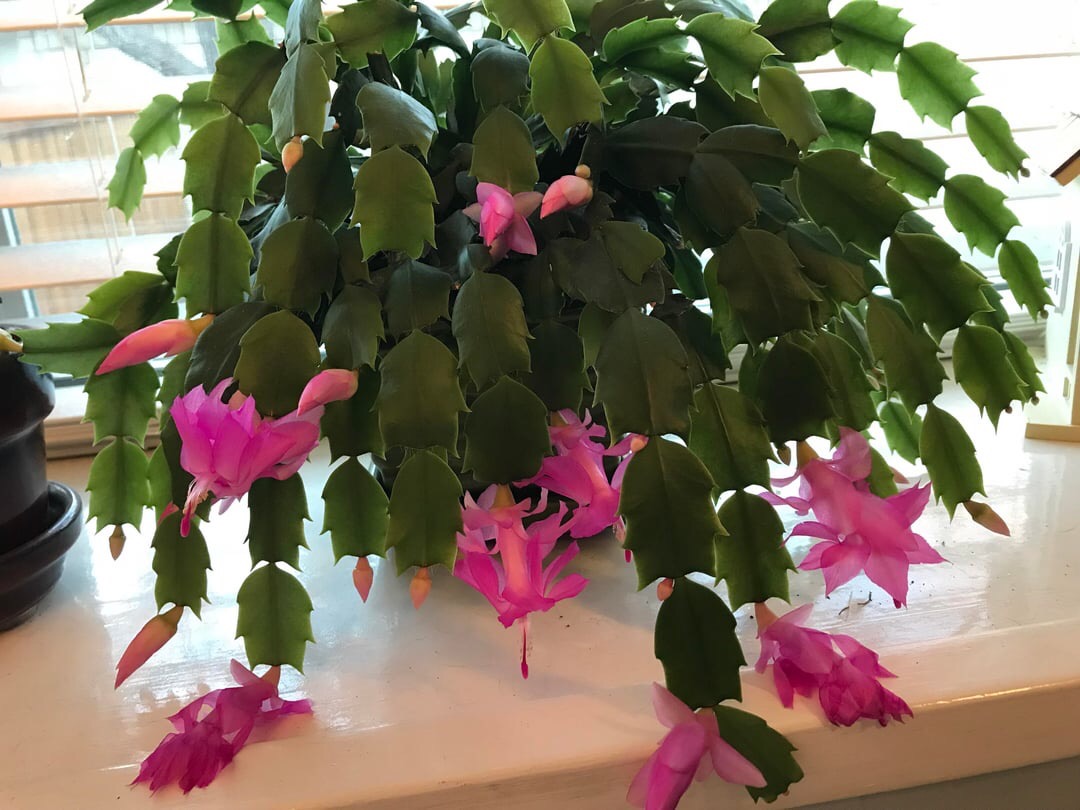
My Christmas cactus came with lovely pink flowers. They looked great for about three weeks and then they all dropped off and the plant did nothing for 11 months.
The following December it did nothing. So did the December after that.
I assumed I’d killed it somehow. But it was and I just didn’t know how to get a Christmas cactus to bloom.
I was going about caring for it all wrong. It’s about tricking the plant into thinking winter has arrived.
Once I understood that everything changed. Now mine blooms every year without fail and I’ve done the same for a couple I rescued from friends who’d given up on them.
So this is everything I’ve learned about how to get a Christmas cactus to bloom for the holidays. It’s easier than you’d think but timing matters a lot and there are a few mistakes that will ruin the whole thing if you’re not careful.
Quick Answer
- Give It Long Nights (Most Important): A Christmas cactus needs 12 to 14 hours of complete uninterrupted darkness each night for about 6 weeks to set buds. Even a lamp or a kitchen light can stop it.
- Or Just Keep It Cool: Cool nights of 50 to 59°F will trigger buds all on their own regardless of light. This is the easy way.
- Start in Mid September: Begin the treatment around the middle of September and you’ll have flowers by Christmas. Buds usually show up within 3 to 4 weeks.
Another stubborn bloomer worth learning: How to Make a Snake Plant Bloom.
Why Your Christmas Cactus Won’t Bloom
A Christmas cactus doesn’t bloom because it’s December. It’s the with light and temperature that makes it bloom, and December just happens to be when those conditions naturally line up.
Botanists have a word for this. Christmas cacti are thermo-photoperiodic which is a clever way of saying they respond to both temperature and day length. Mess with either one and you can get the plant to flower.
Give it the wrong conditions and it’ll stay green regardless of how healthy it is. It’s the same principle behind getting other fussy plants to reflower, like getting an orchid to rebloom. The plant needs a signal, not just good care.
It’s Really About Long Nights
A Christmas cactus is what’s called a short day plant. That means it starts making flower buds when the nights get long and the days get short which is what happens as we head into winter.
It needs roughly 12 to 14 hours of complete darkness every night to get the message. And when I say complete I mean it.
According to Clemson’s Home and Garden Information Center as little as 2 hours of interrupted light at night can stop bud set.
This was my problem for those two years I mentioned. My plant was on the windowsill in my kitchen.
Every evening we’d have the lights on until eleven at night. The plant was getting maybe four hours of proper darkness and it never had a chance.
Streetlights coming through the window, a lamp you’ve left on, even the glow from the TV. Any of it is enough to confuse the plant.
Cool Temperatures Do the Same Job
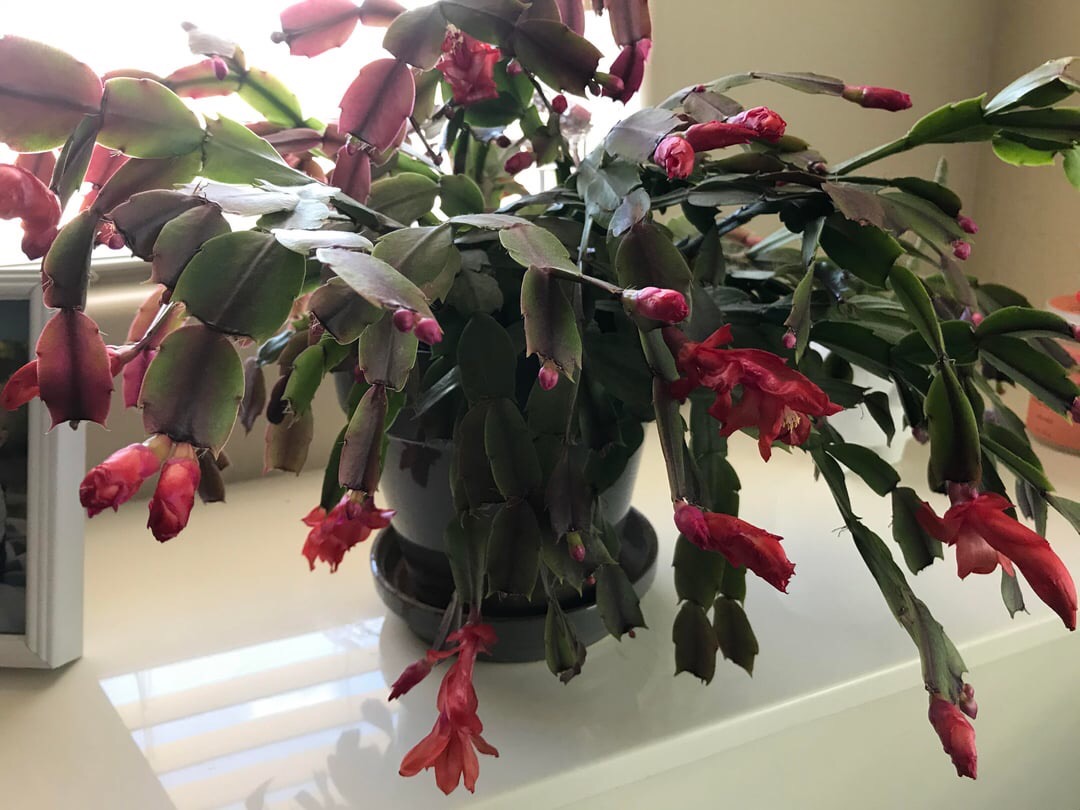
You don’t have to obsess over the darkness if you can give the plant cool nights instead. Which makes things much easier.
If the night temperatures sit between 50 and 59°F the plant will set buds regardless of how much light it’s getting. The cold does the work for you in this case.
The University of Minnesota Extension points out that cool nights combined with the natural shortening days of fall will get most plants flowering without any problems.
Just don’t let it drop below 50°F. Below that you risk damaging the plant and the buds can drop off.
Iowa State University Extension recommends setting the plant up in a cool bright spot in late summer and letting the natural fall conditions do the rest.
This is why so many people accidentally get their Christmas cactus to bloom by sticking it in a cool spare room or a porch and forgetting about it. The neglect is doing the right thing without you knowing.
Is It Even a Christmas Cactus?
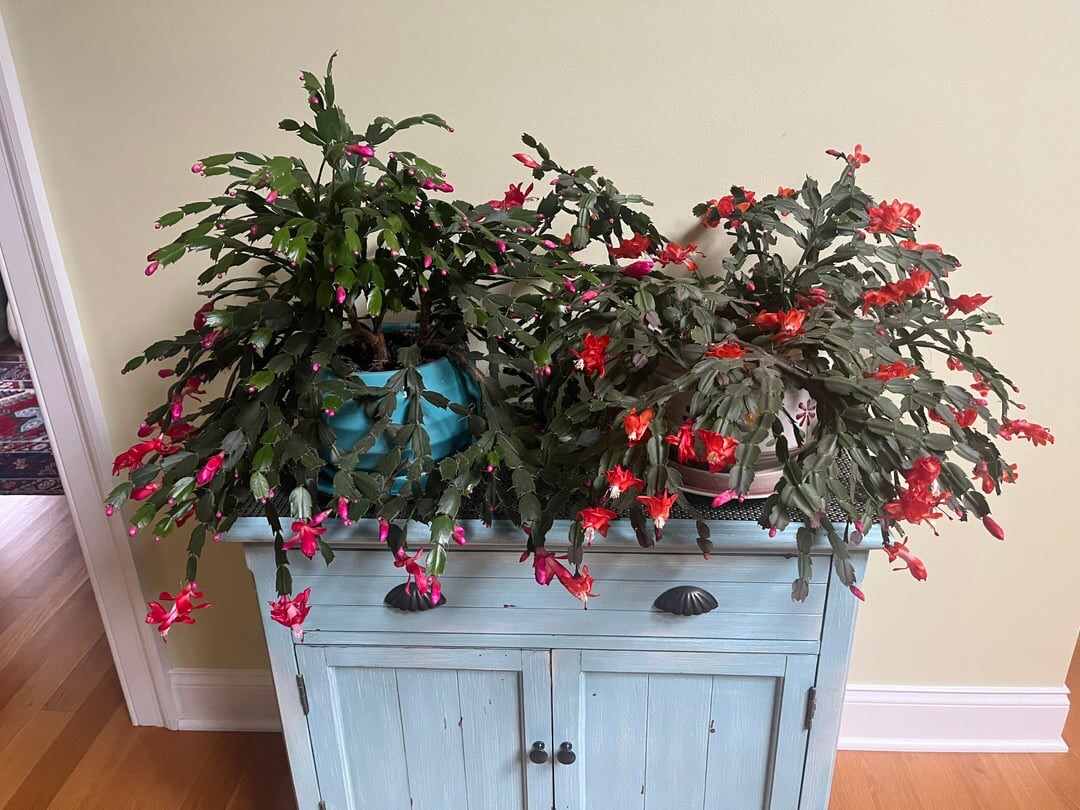
Most plants sold as Christmas cacti are actually Thanksgiving cacti. They’re close relatives and the care is the same but the Thanksgiving one blooms about a month earlier.
You can tell them apart by the stem segments. A true Christmas cactus has smooth and scalloped edges. A Thanksgiving cactus has sharp pointed edges that almost look like little claws.
Why does this matter? Because if yours blooms in November every year and you’ve been worried that it’s too early it’s not broken. It’s probably a Thanksgiving cactus. Either way the method for getting it to bloom is the same.
How to Get a Christmas Cactus to Bloom Step by Step
There are two ways to do this and you can pick whichever works best for you.
The Cool Temperature Method (The Easy One)
This is what I do now and it takes almost no effort.
Around mid September find the coolest room in your house that still gets decent daytime light. Somewhere like a spare bedroom or a hallway. Maybe even a porch if you’ve got one that doesn’t freeze. It just need to stay around 50 to 60°F at night.
Put the plant there and for the most part you just leave it alone. Keep giving it bright indirect light during the day and ease off with the watering a bit. That’s really all you need to do.
The cool nights trigger the buds and within about three to four weeks you’ll start seeing tiny buds forming at the ends of the segments. Once that happens you’re basically in the clear and can look forward to it flowering.
The Darkness Method (More Hands On)
If all of your house stays warm which mine does in winter thanks to the heating then you’ll need to control the light instead.
Every evening around 6pm move the plant somewhere that’s pitch black. A closet, a spare cupboard, or throw a cardboard box or a black bag over it. Then every morning bring it back out into bright light.
You need to do this for about 12 to 14 hours of darkness a night for roughly 6 weeks. I know that sounds like a lot of work, and it is. This is why I switched to the cool room method the second I realised it existed.
The one rule you can’t break is the darkness has to be total. No cheating. If the closet door is slightly open or a hallway light on the plant will notice and all your work will be undone.
When to Start for Christmas Blooms
Timing is the bit people get wrong. They start in December and then wonder why there are no flowers for Christmas.
You need to work backwards. From the day you start the treatment it takes about 6 weeks to set buds and then a bit longer for those buds to open.
So if you want flowers by late December you want to be starting the whole process around the middle of September (which is roughly when this article has been published).
Miss that window and you can still get blooms they’ll just show up in January instead. Which isn’t the end of the world. A Christmas cactus in full flower in the middle of a grey January is still lovely to have around.
Stop killing your plants by accident.
Get my free guide 7 Gardening Mistakes That Are Killing Your Plants — the most common reasons plants fail, and the simple fixes that turn them around.
Light and Watering While It’s Setting Buds
Getting the bloom trigger right is most of the battle but a few other things need to be in place or the plant won’t have the energy to flower well.
Light
A Christmas cactus is not a desert cactus. It’s a rainforest plant. It grows on tree branches in the forests of Brazil where the light is bright but dappled and gets filtered through the canopy.
So it wants bright indirect light. Not very direct sun which will burn the segments. An east facing window is close to perfect. A south or west window works too but make sure you keep the plant back a foot or use a sheer curtain.
During the bud setting period the daytime light still matters. The plant needs long dark nights but it also needs good light during the day to fuel the buds.
Watering
Unlike a normal cactus Christmas cactus will not tolerate being very dry. If you treat it like a regular cactus and water it once a month it’ll shrivel up.
Water when the top inch of soil feels dry. Give it so enough until water runs out the bottom then tip away whatever is left in the saucer. Never let it sit in water.
That said ease off slightly during the fall bud setting phase. A little bit of stress from slightly drier soil can help to push the plant into flowering mode. Just don’t let it dry out completely.
Overwatering is the main reason these plants die. Root rot from soggy soil kills more Christmas cacti than anything else. So if you’re the type who loves to water this probably isn’t the plant for you.
Our guide to watering houseplants will go through the finger test if you want to get it right. And if yours is already looking sad our post on reviving a dying succulent will help you bring it back.
Ease Off the Fertilizer
Stop feeding the plant once you begin the bloom treatment in fall. Fertilizer encourages leaves to grow and right now you want the plant putting its energy into flowers not new segments.
I feed mine through spring and summer with a balanced houseplant food and then stop completely from about September. You can start again once the flowers have finished.
A phosphorus rich bloom booster fertilizer in early fall before you begin the treatment can help too if you want to give it every advantage.
 Miracle-Gro 1-Pound 1360011 Water Soluble Bloom Booster Flower Food, 10-52-10, 1 Pack

Once the Buds Appear (Don’t Ruin It Now)
This is where I lost my blooms more than once so although I’m biased I would say this is one area to pay real attention to.
Once those little buds form the plant becomes super sensitive. And the classic mistake is getting excited, picking up the plant and moving it to a nice spot in the living room where everyone can see it.
Do not do this.
Why the Buds Keep Falling Off
Bud drop is so frustrating. You do everything right, the buds form and then they just fall off one by one before they ever open.
It’s almost always caused by a sudden change. Moving the plant to a different room. A draft from a door or window. The radiator or heating making it too hot. Letting the soil dry out completely or drowning it. Even just rotating the pot can be too much.
The plant is saying to you that the conditions have changed, it’s finding it stressful so it’s dropping the buds. If you’ve ever dealt with an orchid you’ll be familiar with this type of the drama.
So the rule is simple. Once you see buds, stop moving the plant. Pick somewhere it for it to be and leave it there. Keep the temperature steady. Keep it away from drafts and vents.
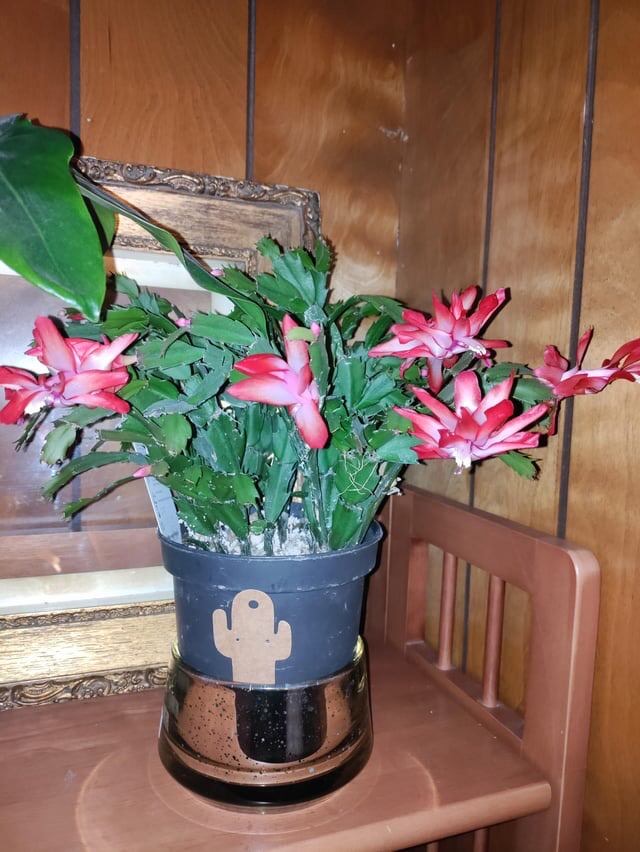
What to Do When It’s Flowering
Once the buds have set the darkness stuff doesn’t matter. The photoperiod has done its job and you can put the plant wherever you like as long as you don’t shock it with a big change.
Move it somewhere a little warmer now, around 68°F is ideal for the most flowers and the longest display. Water a little more often but don’t change the amount as the plant is working hard and drinking more.
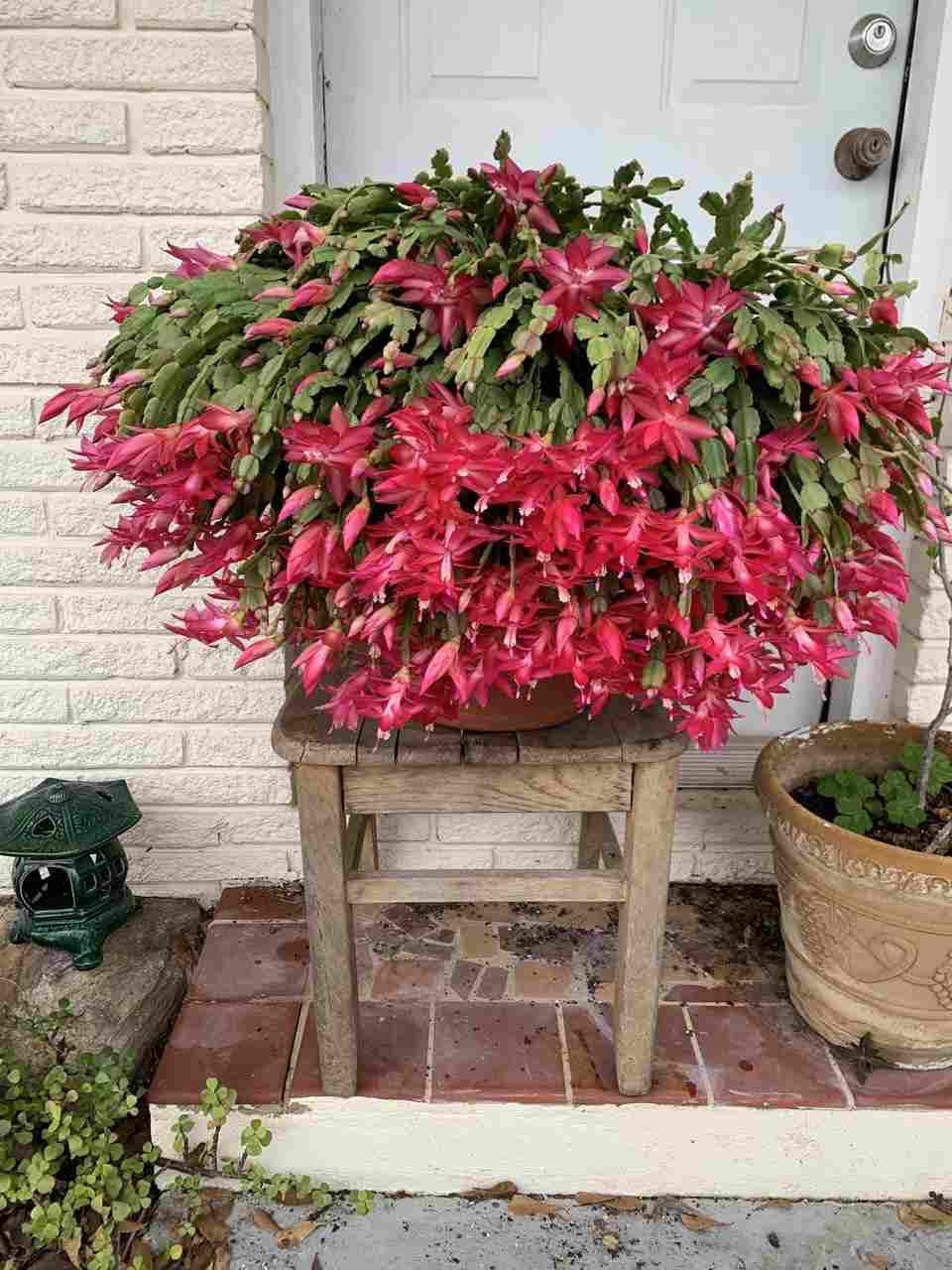
Then just enjoy it. A well looked after Christmas cactus will stay in flower for a good four to six weeks.
And these are not throwaway plants, they can live for over 100 years and get passed down through families, so the one you’re fussing over now might even outlive you.
Mistakes That Stop Blooming
Leaving a light on at night. This was the big one I got wrong. Just one lamp, the TV, a bright streetlight through the window, any light at all can do it. All of it interrupts the darkness and stops bud set. The plant needs proper black nights.
Keeping it too warm. If the room stays above 70°F the plant often won’t bloom even with long nights. Warmth tells it it’s still summer. So do all you can to cool it down.
Starting too late. Begin in December and you’ve missed Christmas. Mid September is the target for holiday blooms.
Moving it once buds appear. This will result in every bud dropping to the floor. Leave it alone.
Treating it like a desert cactus. Watering it once a month and giving it direct sun. It’s a rainforest plant. It wants more water and light that’s less harsh.
Overwatering during bud set. Slightly drier is good right now. Soggy soil rots the roots and drops the buds.
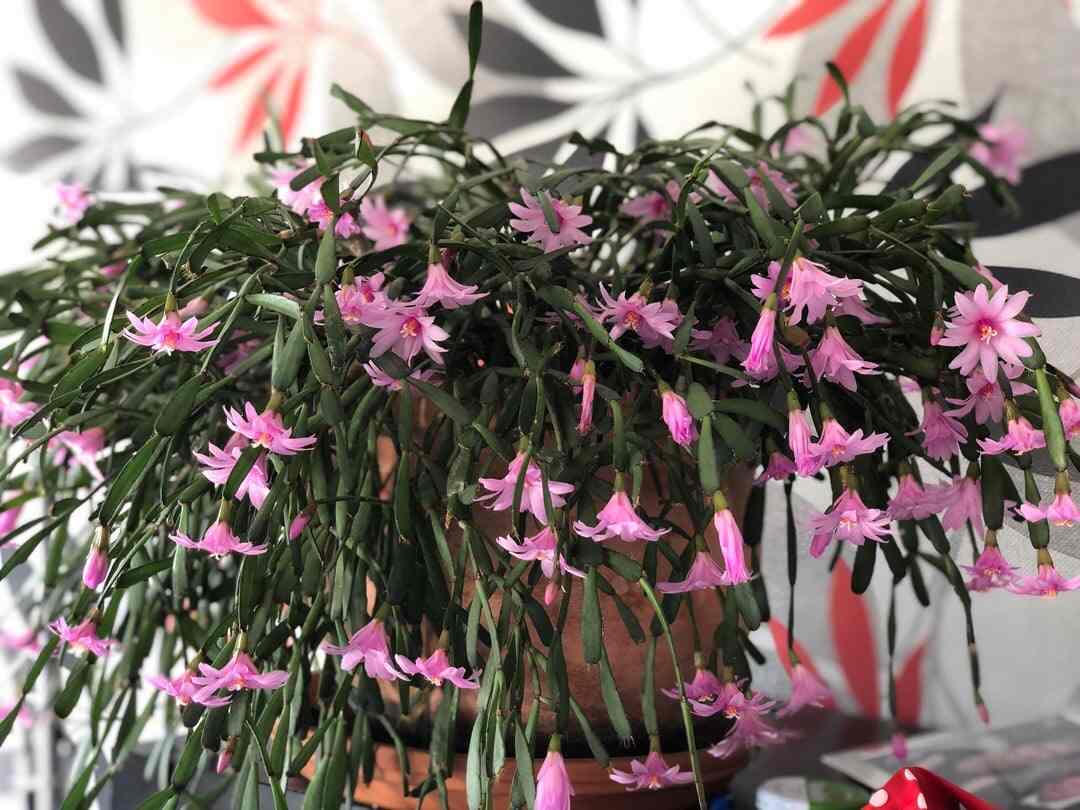
What to Do Right Now
If you want your Christmas cactus to bloom this year this is what I’d do today.
- Work out if you can give it a cool room at 50 to 60°F at night. If yes, that’s your best way and you can mostly skip the darkness routine.
- If your house stays warm choose a closet or cupboard and commit to the 12 to 14 hours of darkness every night for 6 weeks.
- Start now if it’s anywhere near mid September. The timing is the thing you can’t fake.
- Move it to bright indirect light for the daytime hours and get it away from any direct sun.
- Stop watering a little and stop fertilizing until after it blooms.
- Once the buds appear, stop touching it. Don’t move it, don’t let it get drafts, keep everything steady.
You don’t need to do all of it perfectly. Get the temperature or the darkness right and get the timing right and the plant will usually do the rest.
Final Thoughts
For years I thought some people just had a magic touch with Christmas cacti and I wasn’t one of them. But it’s a lot more boring than that. Getting a Christmas cactus to bloom is just about giving it cool nights or long dark nights for about six weeks starting in the middle of September.
Everything else like the light and the watering and not moving it once buds form is just making sure the plant has the energy and the stability to follow through.
Mine has bloomed every year since I worked it out. I just figured out what it was asking for.
If yours has been stubborn don’t write it off. Christmas cactus are tough and they live for decades.
Give it one proper autumn of the right treatment and there’s a very good chance you’ll have flowers for the holidays. And if you’re newer to indoor plants in general our beginner’s houseplant care guide is good for the basics that keep everything alive.
If you want to get an entire shelf of festive plants it’s worth knowing which ones get along, especially if you’re mixing them in pots or window boxes outside.
Stop killing your plants by accident.
Get my free guide 7 Gardening Mistakes That Are Killing Your Plants — the most common reasons plants fail, and the simple fixes that turn them around.
