

There are few flowers that are as charming as violets. Their purple blossoms have been capturing hearts for centuries. I still remember my grandmother’s violet-lined garden path that looked like something out of a fairy tale.
But not all plants make good neighbors for violets. Some can literally bully them out of existence while others create conditions that make your violets struggle.
I’ve learned this the hard way over years of gardening – watching my perfect violet patch turn into a sad, wilting mess because I planted the wrong companions nearby. So I’m sharing what I’ve discovered about which plants to keep away from your lovely violets and why.
Getting Started: Understanding Violets
Violets (particularly the common Viola species) are relatively low-maintenance flowers but they do have specific needs. They generally prefer partial shade & consistently moist, well-draining soil rich in organic matter. Most violet varieties are fairly compact, growing just 4-8 inches tall, which makes them perfect for borders, rock gardens and as ground cover.
But as alluded to before – violets can be quite particular about their neighbors. While they might look delicate they’re actually quite resourceful plants that have evolved to thrive in woodland environments. They’ve developed some interesting survival strategies, including producing chemicals that can inhibit the growth of certain plants around them (a process called allelopathy).
However, violets themselves can be sensitive to aggressive plants that compete for the same resources.
Getting these companion planting relationships wrong doesn’t just lead to poor growth – it can completely wipe out your violet patch. Plants that are too aggressive will outcompete violets for nutrients, water and sunlight. Others might create soil conditions that violets hate, or attract pests that will make a meal of your precious flowers.
So let’s look at the plants and flowers you will definitely want to avoid.
Plants Not to Plant with Violets
1. Mint Family Plants
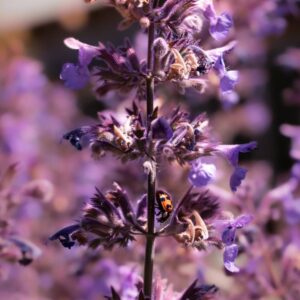
The mint family (including peppermint, spearmint, catnip, and lemon balm) might smell amazing, but they’re absolute thugs in the garden.
Mint plants are aggressive spreaders with vigorous root systems that will quickly overpower the more delicate violet root structures. They also compete aggressively for the same soil nutrients that violets need.
Extra Tip: If you absolutely must have mint in your garden, plant it in submerged pots to contain those roots, and keep it well away from your violet patches.
2. Tall Grasses
Ornamental grasses might look elegant swaying in the breeze but they’re bad news for violets. The problem is twofold: competitive root systems and shading.
Many tall grasses have dense, fibrous root systems that can literally strangle violet roots. They’re also usually much taller than violets, creating too much shade for these flowers that prefer dappled sunlight rather than deep shade.
I once planted some lovely blue miscanthus grass near my violet patch. Within a season, the violets were struggling – pale and spindly as they reached for whatever light they could find. The grasses had also depleted the soil moisture that violets depend on.

3. Sunflowers

Sunflowers & violets are a classic mismatch. Sunflowers are not only massive compared to dainty violets but they’re also notorious for their allelopathic effects.
Sunflowers release chemicals into the soil that inhibit the growth of many other plants – including violets. They’re also heavy feeders that deplete the soil of nutrients that violets need. To make matters worse, the dense shade cast by sunflower stalks and leaves can prevent violets from getting the light they need.
Extra Tip: If you want both sunflowers and violets in your garden, plant them in completely separate areas with at least 3-4 feet between them.
4. Potatoes and Other Nightshades

The nightshade family (including potatoes, tomatoes, eggplants, and peppers) doesn’t play well with violets. These plants are susceptible to similar diseases and pests, which can quickly spread to your violets if planted nearby.
Potatoes, in particular, are heavy feeders that can deplete the soil of nutrients that violets need. They also prefer more acidic soil than what violets typically thrive in. I once made the mistake of planting some potatoes in a raised bed adjacent to my violet patch – within a few months both plants were struggling.
5. Black Walnut Trees
This one might seem obvious since black walnut trees are infamous for their toxic effects on many plants, but it bears mentioning. Black walnut trees release juglone, a chemical compound that inhibits the growth of many plants, including violets.
The toxic zone extends well beyond the canopy of the tree, so even if you think your violets are safely outside the tree’s shade, they might still be affected by the juglone in the soil.
6. Hostas
Hostas might seem like natural companions for violets since they both enjoy partially shaded areas but they’re actually quite competitive. Hostas have large, dense root systems that can crowd out violet roots. Their large leaves also create deep shade that can be too much for violets, which prefer dappled light.
I tried interplanting violets with hostas in a shady corner of my garden, thinking they’d complement each other. Within a year the hostas had completely taken over & the violets were barely hanging on.
Extra Tip: If you want both plants in the same area plant hostas in containers to contain their roots, and place them far enough apart that violets still get dappled light.
7. Aggressive Groundcovers

Plants like creeping Jenny, vinca and English ivy might seem like good companions for violets since they’re all low-growing but as aggressive groundcovers they will quickly overwhelm delicate violets.
These plants spread rapidly through runners or stolons, creating dense mats that can smother violet plants. They also compete for the same resources in the soil. I had a patch of sweet violets completely overtaken by an innocent-looking creeping Jenny that I thought would add a nice contrasting texture.
8. Annual Bedding Plants

Many common annual bedding plants like petunias, marigolds and impatiens can be problematic companions for violets. These plants are often heavy feeders that require frequent watering and fertilizing – regimens that can be too intense for violets.
Annual bedding plants also tend to be more susceptible to certain pests and diseases that can spread to violets. I once planted a border of marigolds near my violets, thinking the marigolds would help repel pests. Instead the spider mites that attacked the marigolds quickly moved on to my violets.
9. Roses
While roses and violets might seem like a romantic pairing, they actually have quite different needs. Roses are heavy feeders that require rich soil and regular fertilizing. They also prefer full sun, while violets prefer partial shade.
Roses are also prone to a number of fungal diseases that can spread to violets if planted too close together. The thorns on rose bushes can make it difficult to tend to the violets growing nearby without getting scratched.
I tried growing some violets at the base of my favorite climbing rose. The rose thrived, but the violets struggled in the dense shade and depleted soil.
10. Invasive Perennials

Plants like goldenrod, yarrow & bee balm are beautiful and beneficial for pollinators but they can be too aggressive for violets. These plants spread rapidly through rhizomes or self-seeding, quickly taking over garden spaces.
They also tend to be much taller than violets, creating too much shade for these sun-loving flowers.
Good Companion Plants for Violets
Now let’s look at some plants that make excellent companions:
- Ferns: Their delicate fronds create dappled shade that violets love, and they have non-competitive root systems.
- Primroses: These spring-blooming perennials have similar light and moisture requirements to violets.
- Astilbe: These feathery flowers thrive in the same partial shade conditions as violets.
- Coral Bells (Heuchera):’Their colorful foliage complements violet blooms, and they enjoy similar growing conditions.
- Bleeding Heart: These spring-blooming perennials create dappled shade for violets during the hottest part of the day.
Tips for Successful Companion Planting
If you’re planning a garden with violets, keep these tips in mind:
- Assess your violets’ specific needs – different varieties have slightly different requirements
- Consider the mature size of companion plants to ensure they won’t overshadow violets
- Plan for succession blooming so your garden has visual interest throughout the seasons
- Use physical barriers like buried pots or garden dividers to keep aggressive plants in check
- Monitor soil moisture and nutrient levels regularly, especially when introducing new companion plants
Last year, I created a lovely shade garden with violets, ferns and coral bells. The key was carefully monitoring how each plant was doing and making adjustments as needed. I had to move a few plants that were getting too big and shading the violets too much.
Final Thoughts
Companion planting with violets doesn’t have to be complicated but it does require a bit of thought and planning. By avoiding the plants on this list & choosing compatible companions instead, you’ll create a garden where your violets can truly thrive.
Every garden is unique though and what works in one location might not work in another. Pay attention to how your violets respond to their neighbors and be willing to make changes if needed. Sometimes the best gardening lessons come from our mistakes!
