
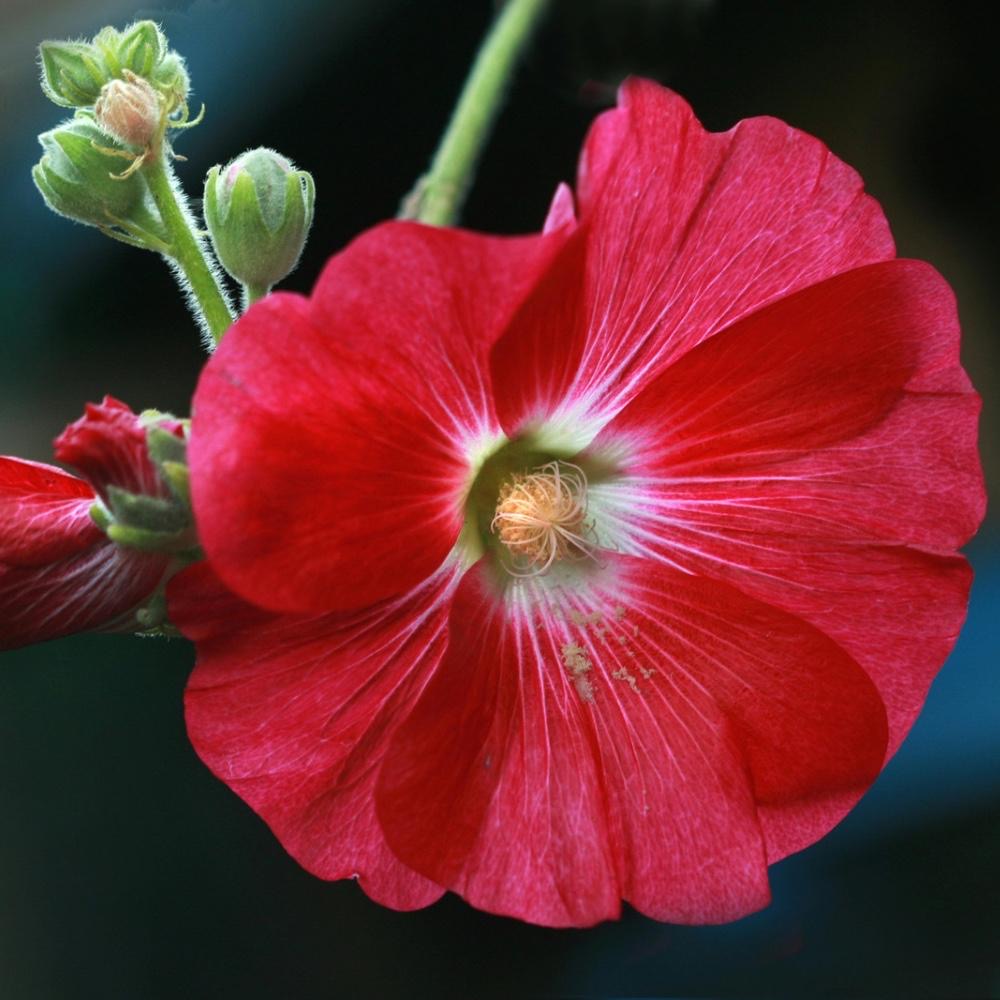
Hollyhock is a gorgeous, towering flower that brings that classic cottage garden feel to any space. They can reach impressive heights and produce flowers in practically every color of the rainbow.
But like that one friend who just doesn’t get along with everyone at the party, hollyhocks can be a bit particular about their garden companions.
When I planted a beautiful row of hollyhocks along my fence line, surrounded by what I thought would be complementary plants, things didn’t go to plant. Fast forward two months and my hollyhocks were struggling while some neighboring plants were thriving a little too well.
Understanding Hollyhock
Hollyhocks (Alcea rosea) are biennial or short-lived perennial plants that produce tall spikes loaded with colorful blooms. They’re stunning vertical accents that can reach 6-8 feet tall in the right conditions.
But hollyhocks aren’t simply pretty faces. They have specific growing requirements that directly impact what should and shouldn’t be planted alongside them.
First off, hollyhocks are heavy feeders that need nutrient-rich soil to produce those impressive flower stalks. They also require full sun (at least 6 hours daily) & good air circulation to prevent disease issues. Speaking of disease, hollyhocks are unfortunately prone to rust fungus, which can spread to neighboring plants if you’re not careful.
Last year, I planted my hollyhocks without much thought to their companions, and by mid-July, I was dealing with stunted growth, rust problems and a general garden mess. Trust me when I say that proper planning with hollyhocks will save you headaches down the road.
Getting Started: Plants to Keep Away from Your Hollyhocks
Not every plant makes a good neighbor for hollyhocks. Some compete too aggressively for resources, others create conditions that encourage disease and some just don’t look right aesthetically next to these tall beauties.
So here’s my comprehensive list of plants to avoid planting near your hollyhocks and why.
1. Other Mallows and Relatives

- Hibiscus
- Rose of Sharon
- Marshmallow
- Lavatera
Hollyhocks belong to the mallow family (Malvaceae), and planting them near other mallows is asking for trouble. Why? Because plant diseases and pests often target entire plant families. The dreaded hollyhock rust (Puccinia malvacearum) can easily spread between related plants, creating a disease hotspot in your garden.
I made this mistake two years ago when I planted hollyhocks right next to my prized hibiscus – within weeks the rust had spread to both plants and I spent the rest of the season spraying fungicides and removing infected leaves. Not how I wanted to spend my summer evenings.

2. Aggressive Spreaders
- Mint
- Bamboo
- Lemon balm
- Ivy
Hollyhocks need their space, especially as they develop their substantial root systems. Plants that aggressively spread through runners or rhizomes will compete directly with your hollyhocks, often winning the battle for soil resources.
Hollyhocks already struggle as short-lived perennials – they don’t need the added competition!
Try it: Check Any Two Plants for Compatibility
Use the checker below to see how any two of your plants will get along – pick one from each side and we’ll tell you whether to plant them together or keep them apart.
Plant Compatibility Checker
Select two plants to check if they are compatible companions in your garden.
Compatibility Results:
3. Tall, Dense Plants

- Sunflowers
- Corn
- Jerusalem artichokes
- Dense shrubs
While hollyhocks themselves are tall, they need good air circulation to prevent fungal issues. Planting them next to other tall, dense plants creates a humid microclimate that’s perfect for rust & powdery mildew development.
Garden not living up to its potential?
My free guide 7 Gardening Mistakes That Are Killing Your Plants covers the most common reasons outdoor plants struggle — and what to do about it.
4. Heavy Shade Producers
- Large trees
- Tall shrubs to the south or west
- Building walls that block morning sun
Hollyhocks are sun worshippers, requiring at least 6 hours of direct sunlight to produce strong stems and abundant flowers. Planting them near structures or plants that cast significant shade will result in weak, leggy plants that flop over and produce fewer blooms.
5. Shallow-Rooted Annuals

- Marigolds
- Petunias
- Impatiens
- Begonias
This one might seem counterintuitive but small annuals planted around hollyhocks can cause problems. Hollyhocks have deep taproots and need consistent moisture. The shallow-rooted annuals compete for surface water and nutrients, often leaving the hollyhocks shortchanged.
And caring for these annuals (frequent watering, fertilizing, deadheading) can disturb the soil around hollyhock roots and potentially damage the plants. I once planted a ring of petunias around my hollyhocks to hide their “bare ankles” but the hollyhocks struggled all season despite my best efforts.

6. Moisture-Loving Plants

- Astilbe
- Ligularia
- Ferns
- Rodgersia
While hollyhocks appreciate consistent moisture, they absolutely hate wet feet. Planting them near moisture-loving plants means you’ll either overwater the hollyhocks (leading to root rot) or underwater the moisture-lovers (leading to stress and poor performance).
My garden has a naturally damp corner where my ferns thrive. One year I tried adding hollyhocks to the mix for vertical interest. By mid-summer the hollyhocks developed yellowing leaves and stunted growth – clear signs they were getting too much moisture for their liking.
7. Plants That Attract Japanese Beetles
- Roses
- Japanese maple
- Grapes
- Raspberry
Japanese beetles love hollyhocks, rating them among their favorite garden snacks. If you plant hollyhocks near other plants that Japanese beetles adore, you’re essentially creating an all-you-can-eat buffet for these destructive pests.
8. Plants That Prefer Acidic Soil
- Azaleas
- Rhododendrons
- Blueberries
- Camellias
Hollyhocks prefer slightly alkaline to neutral soil (pH 6.0-7.5), while acid-loving plants need pH levels of 4.5-6.0. This fundamental difference in soil preference means that if you amend the soil for one, you’re creating suboptimal conditions for the other.
9. Wind-Vulnerable Plants
- Dahlias
- Gladiolus
- Top-heavy flowers without sufficient stems
Hollyhocks, with their tall, somewhat brittle stems, can be vulnerable to wind damage. Planting them near other wind-vulnerable plants means that in a strong storm, you might have a domino effect of falling plants, with one toppling into the next.
10. Drought-Tolerant Xeriscape Plants
- Lavender
- Rosemary
- Yucca
- Agave
Hollyhocks need consistent moisture, especially during their first year & throughout the flowering period. Planting them in a xeriscape garden with drought-tolerant plants creates a watering conflict – either the hollyhocks suffer from too little water or the xeriscape plants get more than they want.

11. Plants That Create Dense Ground Cover
- Creeping thyme
- Ajuga
- Pachysandra
- Vinca
Hollyhocks often self-seed, which is part of their charm and how they perpetuate in the garden. Dense ground covers prevent seeds from reaching the soil & germinating, breaking the hollyhock’s natural lifecycle.
They also compete directly for soil resources. My experiment with planting hollyhocks amidst a bed of ajuga resulted in weak, spindly plants that produced few flowers and no viable seeds for the next generation.
12. Plants That Need Frequent Division
- Daylilies
- Hostas
- Irises
- Shasta daisies
Plants that need frequent division require soil disturbance every few years. This disrupts hollyhocks’ root systems and can damage or kill establishing seedlings. Since hollyhocks are biennial or short-lived perennials that rely on self-seeding, this disruption can break their reproductive cycle.
I once planted hollyhocks behind a daylily border. When it came time to divide the daylilies I inadvertently destroyed dozens of hollyhock seedlings that would have been next year’s flowers.
13. Plants With Similar Disease Vulnerabilities
- Snapdragons (rust susceptible)
- Roses (powdery mildew issues)
- Delphinium (crown rot problems)
Beyond family relatives, some unrelated plants share similar disease vulnerabilities with hollyhocks. Planting these together concentrates potential problems and can amplify disease pressure in that area of your garden.

Good Companion Plants for Hollyhock
There are some plants that make excellent companions to Hollyhock though.
- Coneflowers (Echinacea) – Their drought tolerance and different disease profile make them compatible neighbors
- Salvias – Especially the perennial types that don’t need frequent division
- Catmint (Nepeta) – The soft, mounding habit contrasts beautifully with hollyhocks’ vertical form
- Russian Sage – Its airy texture complements hollyhocks without competing for resources
- Black-eyed Susans – They bloom at similar times for a coordinated display
I’ve had particular success pairing my hollyhocks with flowering herbs like lavender and catmint. The color combination is gorgeous, and these plants seem to peacefully coexist without competing too heavily for resources.
Tips for Successful Companion Planting
Here are some additional tips I’ve learned for successful hollyhock companion planting:
- Give hollyhocks space – at least 2 feet between plants to allow for good air circulation
- Plant hollyhocks against walls or fences where they won’t overshadow other plants
- Consider the “right plant, right place” principle – match plants with similar light, water, and soil needs
- Use lower-growing companions in front of hollyhocks to hide their sometimes bare lower stems
- Remember that hollyhocks are biennial or short-lived perennials – plan for succession as plants naturally die out
One strategy that’s worked well in my garden is creating “islands” of hollyhocks surrounded by compatible plants rather than integrating them into mixed borders. This makes it easier to address their specific needs without compromising other plants.
Final Thoughts
Hollyhocks are beautiful but they’re not the most accommodating plant when it comes to garden companions. Paying attention to what you plant near them can make the difference between struggling specimens & success.
The mistakes I’ve made growing hollyhock taught me valuable lessons about how demanding these flowers are.
It’s always good to keep in mind that compromise and finding the sweet spot where plants can coexist but enhance each other is the key.
Garden not living up to its potential?
My free guide 7 Gardening Mistakes That Are Killing Your Plants covers the most common reasons outdoor plants struggle — and what to do about it.
