
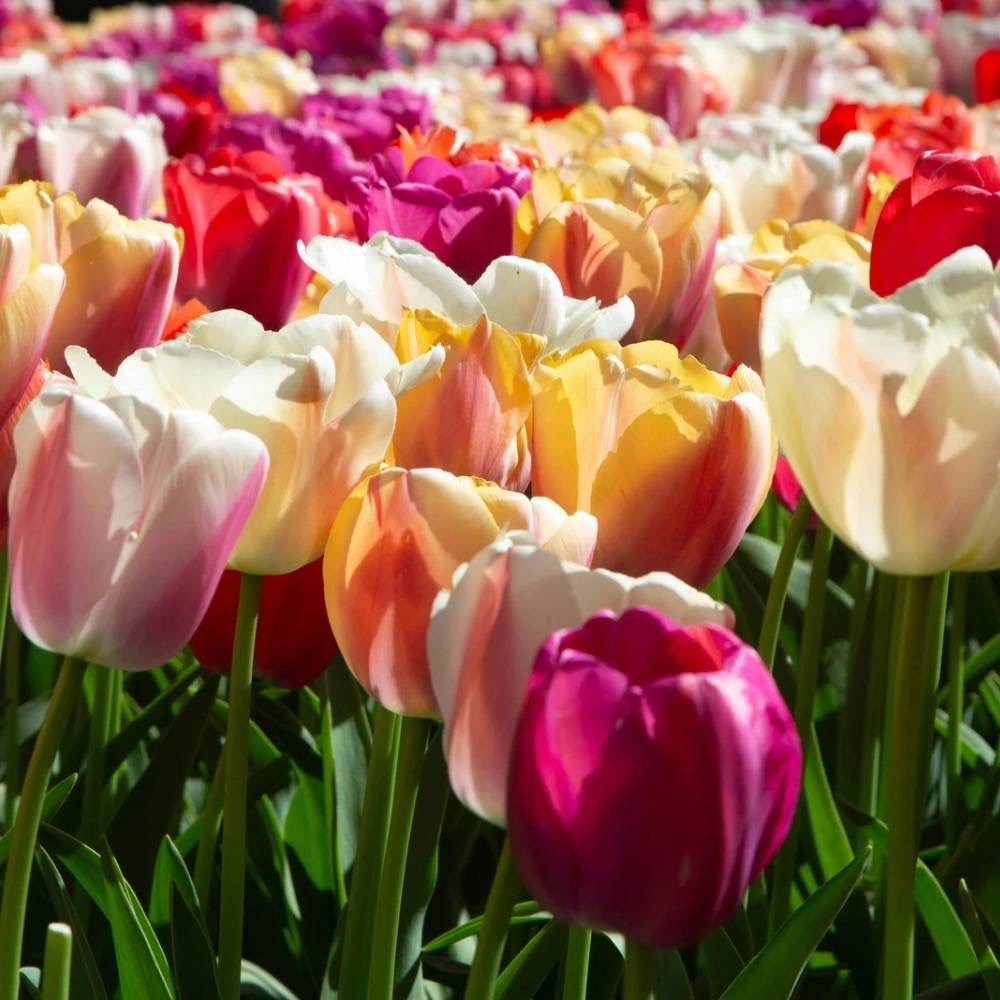
After spending countless spring mornings admiring neighborhood tulip displays, I finally decided to plant my own tulip garden five years ago. But I was in for a bit of a shock – it wasn’t as simple as digging holes and dropping bulbs!
Tulips can be quite particular about their garden companions. That planting scheme you spotted on Pinterest? It might be setting your tulips up for failure.
After growing tulips for years I know the plants that just don’t play nice with these spring favorites, and I’m going to help you avoid them too.
Understanding Tulips
Tulips might look delicate but theyre actually pretty tough in the right conditions. Originally from mountainous regions with cold winters and hot, dry summers, they’ve adapted to survive harsh weather cycles – which explains some of their quirky growing habits.
What most gardening books don’t tell you? Tulips are surprisingly selfish with their resources. They need plenty of sunlight (at least 6 hours daily), well-draining soil, and they absolutely hate staying wet for extended periods.
Tulip bulbs also contain natural chemicals that can inhibit the growth of certain plants nearby – it’s called allelopathy, and it’s the plant world’s version of saying “back off, this is my territory.” This chemical warfare is one reason why not every plant makes a good neighbor.
When tulips get crowded or have to compete too much for resources, you’ll know it. The blooms get smaller each year, stems grow shorter, and eventually, they might not flower at all. Trust me, there’s nothing more disappointing than waiting all winter for tulips that never show up!
Key Tulip Facts To Keep In Mind
- Tulips need excellent drainage – soggy soil leads to bulb rot
- They prefer full sun for best flowering
- Bulbs need a cold period (chilling) to bloom properly
- Most tulips are perennial in theory but often act as annuals in many gardens
- Peak blooming period is relatively short – usually 1-2 weeks
13 Plants to Keep Away From Your Tulips
1. Aggressive Ground Covers

I once planted sweet woodruff as a pretty spring ground cover around my tulips. By the second season this innocent-looking plant had formed a thick mat that choked out half my tulip shoots. Aggressive ground covers like sweet woodruff, pachysandra, and vinca might seem like perfect companions, but they’ll quickly overrun tulip bulbs, preventing proper growth and flowering.
These spreaders also compete for water and nutrients, leaving less for your tulip bulbs. And when tulips are trying to emerge in spring, they can get tangled in these dense mats of foliage.
The Problem
- Creates too much competition for space and nutrients
- Makes it difficult for tulip shoots to emerge properly
- Can trap moisture around bulbs, promoting rot
2. Deep-Rooted Vegetables
Vegetables with extensive root systems – like tomatoes, corn, or potatoes – will compete directly with tulip bulbs underground. These hungry feeders drain the soil of nutrients that tulip bulbs need to store energy for next year’s flowers.
The Problem
- Root competition damages and displaces bulbs
- Heavy feeding depletes soil nutrients tulips need
- Makes bulb digging and division difficult

3. Tall Ornamental Grasses
The swaying beauty of ornamental grasses caught my eye at the garden center three seasons ago. I planted miscanthus near my tulip bed, and while it looked stunning in summer, it cast dense shade over my tulips the following spring. Those tulips produced weak, pale stems stretching desperately toward any light they could find.
Ornamental grasses like miscanthus, pampas grass, and some tall fescues grow sizeable root systems that can invade tulip territory. Their density can also block crucial spring sunlight.
The Problem
- Creates too much shade when tulips need full sun
- Underground rhizomes can displace and damage bulbs
- Fallen grass debris can trap moisture around emerging shoots
4. Mint Family Members
The mint family includes many garden favorites like catnip, lemon balm, and oregano. They spread vigorously through underground runners, quickly invading bulb territory. Once established, they’re nearly impossible to remove without disturbing your tulips.
The Problem
- Underground runners tangle with and displace bulbs
- Extremely difficult to remove once established
- Competes aggressively for nutrients and water
5. Walnut Trees and Their Relatives
Black walnut, butternut, and even pecan trees release juglone from their roots, nuts, and decomposing leaves. This natural herbicide can stunt tulip growth or prevent blooming altogether.
The Problem
- Juglone toxicity inhibits tulip growth and flowering
- Effect can extend far beyond the tree’s canopy through root spread
- Symptoms include yellowing leaves and failure to bloom
6. Bamboo
The trendy architectural look of bamboo tempted me years ago. What the nursery failed to mention was its invasive nature. Within two seasons, bamboo shoots were popping up right through my tulip bed, displacing and damaging bulbs.
Most bamboo varieties spread via aggressive underground rhizomes that can travel far from the parent plant. These woody invaders can physically push tulip bulbs out of position or crush them as they expand.
The Problem
- Nearly impossible to contain once established
- Underground rhizomes physically damage bulbs
- Creates deep shade that tulips can’t tolerate
7. Trees With Surface Roots
Surface rooting trees like maples, beeches and poplars send feeder roots far beyond their drip line, invading flower beds with networks of fine roots.
The root systems don’t just compete for water and nutrients; they make the soil physically difficult to work and can prevent proper tulip bulb development.
The Problem
- Surface roots compete directly with bulbs for space
- Makes digging and planting nearly impossible
- Draws excessive moisture from soil during critical growth periods
8. Daffodils (In Large Numbers)

This one surprised me. While a few daffodils mixed with tulips look charming, I once created a mixed bed with equal numbers of both. The daffodils thrived year after year while my tulips gradually disappeared.
Daffodils contain natural pest deterrents that protect them from rodents and deer. Great for them, but when planted densely, these compounds can inhibit tulip growth. Daffodils are also more vigorous perennializers, eventually crowding out tulips.
The Problem
- Chemical compounds may inhibit tulip growth
- More aggressive spreading can crowd tulips
- Different water needs can cause problems for neighboring bulbs
9. Sunflowers
These garden favorites also produce chemicals that inhibit the growth of certain other plants – tulips included – a process called allelopathy.
The Problem
- Extreme nutrient depletion affects tulip bulb development
- Allelopathic effects can inhibit tulip growth
- Seeds that drop and sprout can disrupt bulb beds
10. Water-Loving Plants
The consistent moisture these types of plants require create conditions that lead to tulip bulb rot.
Plants that thrive in consistently damp soil will either suffer alongside your tulips in well-drained conditions, or worse – they’ll encourage you to overwater, threatening your bulbs with fungal diseases.
The Problem
- Moisture requirements conflict with tulips’ need for dry dormancy
- Encourages overwatering that leads to bulb rot
- Creates soil conditions favorable to tulip diseases
11. Summer Annuals Planted Too Early
In my eagerness to fill the space after tulips finished blooming I once planted petunias while tulip foliage was still green. The tulips returned smaller the next year because I’d interrupted their energy storage process.
Disturbing the soil and tulip roots before the foliage has completely yellowed prevents bulbs from storing enough energy for next year’s bloom. It’s tempting to tidy up those yellowing leaves, but patience pays off with stronger blooms next season.
The Problem
- Disrupts the energy storage process tulips need
- Root disturbance can damage bulbs
- Early competition for resources weakens tulips
12. Invasive Perennials

Plants like obedient plant, bee balm, and gooseneck loosestrife might be beautiful perennials, but their aggressive spreading habits make them terrible tulip companions.
These garden thugs quickly form dense colonies that overrun more delicate plants. Their extensive root systems make removal difficult without disturbing bulbs.
The Problem
- Aggressive spreading chokes out tulips
- Difficult to remove without damaging bulbs
- Creates too much competition for limited resources
13. Late Spring Bloomers That Hide Tulip Foliage
By blocking light from reaching tulip leaves, these plants essentially starve the bulbs of energy for next year.
The Problem
- Blocks light from tulip foliage during critical energy storage
- Can cause premature tulip dormancy
- Leads to weakened or absent blooms the following year
Good Companions for Your Tulips
After all those warnings you’d be forgiven for thinking nothing works with tulips. Well there are some companions that will perform beautifully in your garden:
- Grape Hyacinths (Muscari): These small bulbs bloom alongside tulips and don’t compete aggressively.
- Pansies and Violas: Their shallow roots don’t interfere with bulbs, and they provide beautiful ground-level color.
- Creeping Phlox: Forms a beautiful carpet that doesn’t overwhelm tulips.
- Forget-Me-Nots: Self-seeding annuals that provide perfect blue contrast without aggressive roots.
- Alliums: Their late spring blooms take over as tulips fade, with compatible growing requirements.
Tips for Successful Companion Planting with Tulips
This is what I’ve learned about creating successful tulip partnerships:
- Layer bulbs properly: Plant smaller companions like crocus at shallower depths above tulips.
- Think about timing: Choose companions that bloom simultaneously with your tulip varieties.
- Group by water needs: Keep tulips with plants that also prefer drier conditions after blooming.
- Consider color: Planning complementary colors makes both plants look better.
- Plan for tulip dormancy: Have summer plants ready to fill in spaces without disturbing bulbs.
Final Thoughts
Tulips have taught me patience and observation in the garden. When I first started growing them, I made nearly every mistake possible – planting them with aggressive neighbors, disturbing them too early after flowering and not giving them the excellent drainage they demand.
They might be a bit fussy about their companions but the reward of those perfect blooms is worth the extra planning. Remember, gardening is all about experimentation – sometimes you learn more from the plants that fail than the ones that thrive.
If your tulips aren’t performing well, take a look at their neighbors before assuming the bulbs are to blame. That aggressive mint, spreading bamboo, or water-loving astilbe might be the real culprit behind disappearing blooms.
