
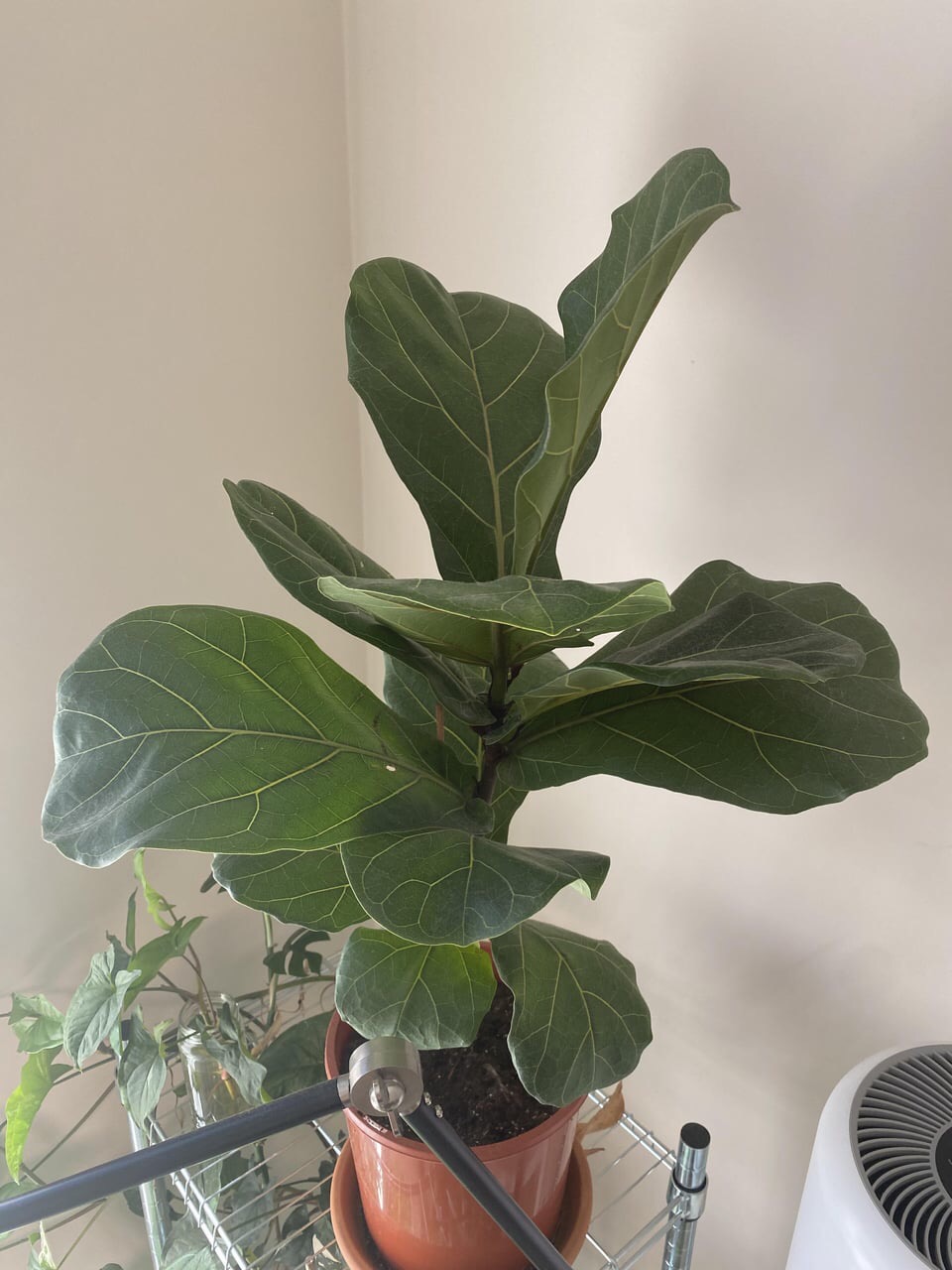
If you’ve bought a fiddle leaf fig I can guarantee you that it will, at some point, just stop growing. It will stop growing any new leaves without any obvious problem you can point to. It’ll just sit there, looking perfectly happy but doing nothing.
I was sure I was doing something wrong for weeks with own fiddle leaf fig when it stopped growing. I eventually realized the issue was so simple I almost couldn’t believe it.
It was the window. I’d moved the plant two feet to the left – away from a drafty spot – and that was enough to throw the whole thing off.
Fiddle leaf figs are known to be very fussy. They’re native to the rainforests in West Africa, where conditions are warm, humid and consistently bright.
In a centrally heated apartment with low light and a cold window draft they’ll struggle. According to most horticultural sources fiddle leaf figs in their natural habitat can reach up to 12 to 15 metres tall – so they want to grow. When they’re not something is almost always off.
This guide takes you through the 9 most common reasons your fiddle leaf fig has stopped and what you can do to help it get started again.
The Big Environmental Culprits
1. It’s Not Getting Enough Light
This is by far and away the most common reason fiddle leaf figs stop growing. We look at our plants and think because it’s near a window and getting light that’s good enough. But it isn’t enough for a Ficus lyrata.
Fiddle leaf figs need bright, indirect light for at least 6 hours a day. Ideally they want to be within 1 to 2 metres of a large south or east facing window (in the northern hemisphere).
Anything less than that and your plant will go into a kind of slow mode where it’s surviving but not growing much. Growth essentially stops because the plant doesn’t have enough energy to produce new leaves.
The tricky part about this is that low light stress doesn’t always look dramatic. Your plant might not be yellowing or dropping leaves.
It might just be doing nothing at all. New growth needs a lot of energy. Without enough light the plant simply doesn’t bother.
If you’ve put your fiddle leaf fig in the corner of a room because you think it looks nice there that’s could well be the problem. Try moving it a lot closer to your brightest window.
Give it two to three weeks and watch to see if there are any signs of new bud formation at the top of the stem. That little nub of new growth is a very good sign.
One thing worth noting: fiddle leaf figs hate being moved. So when you do put it somewhere new try to find it a permanent spot and stick to it. Every time you move it to a new location it has to re-acclimatise, which costs energy and can trigger leaf drop.
 Costa Farms Fiddle Leaf Fig, Live Indoor Ficus Lyrata Floor Plant
2. Temperature Swings Are Stressing It Out
Fiddle leaf figs like consistency. That’s somewhere between 16 to 24°C (60 to 75°F), and they want that temperature to be stable throughout the day and night. Anything outside that range – even temporarily – can cause the plant to slow down or stop growing completely.
What can ruin the temperature are things people don’t think of as causing a plant stress. Things like heating vents that blow hot dry air or a window that gets cold at night (even if the room feels warm during the day).
An air conditioning unit thats going on and off close to your plant. Cold drafts from doors. Even sitting too close to a single pane window in the winter can mean the leaves are getting temperatures a lot lower than the rest of the room.
Check the temperature near your plant at different times of day, especially at night and in the morning. A digital thermometer with a min/max reading function is useful for this as it’ll show you exactly what temperatures your plant is being subjected to when you’re not watching.
3. The Humidity Is Too Low
Fiddle leaf figs are built for humidity levels of around 30 to 65%. Most homes – especially in winter with the central heating running – are somewhere between 20 to 30% humidity. That gap is a big deal.
Low humidity doesn’t usually cause any signs you’ll see straight away. What it does though is slow everything down.
The plant loses moisture through its leaves faster than it can absorb it through the roots, and in response, it stops any new growth to conserve resources. You might also notice leaf edges going slightly brown and crispy over time – a classic sign of air that’s too dry.
The solutions here are straightforward. A humidifier placed near (not on) the plant is the most effective option. Regular misting can help but is less consistent. Grouping your fiddle leaf fig with other plants raises the local humidity slightly through transpiration. And keeping it away from radiators and heating vents makes a real difference.
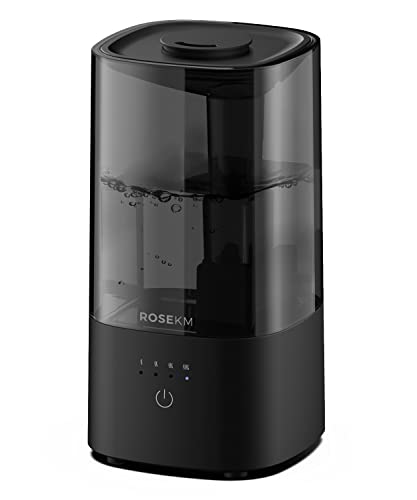 ROSEKM Humidifiers for Bedroom, 2.0L Cool Mist Humidifier for Home Plant
Watering and Root Health
4. You’re Watering Wrong
Watering is where most people go wrong with fiddle leaf figs. That usually means too much, too often.
Overwatering is significantly more common than underwatering, and it’s also more damaging. Consistently wet soil can result in root rot and a plant with damaged roots can’t absorb the nutrients it needs to grow.
The standard advice – water when the top 5cm of soil is dry – is a decent starting point. But the better approach is to check the moisture level about halfway down the pot before you water.
The soil at the top dries out faster than the roots need. If it’s still moist at depth then wait a few more days.
Overwatering symptoms can look a lot like underwatering symptoms which is part of what makes it confusing. Yellow leaves, drooping, lack of new growth – all of these can apply to both.
So you have to check the roots. Healthy roots are white or a tan color and will feel firm. Rotten roots are brown and usually smell pretty unpleasant.
If you’re seeing root rot you’ll need to repot, trim the damaged roots and give the plant fresh, well draining potting mix.
Fiddle leaf figs also prefer consistency in their watering. Choose a day to water (or a set of conditions – water when the top layer is dry and it’s been at least 7 days) and stick to it as reliably as you can.
5. The Pot Has No (Or Poor) Drainage
This one often goes hand in hand with overwatering. Even if you’re careful about how much you water, if that water can’t escape from the pot, you’ll end up with waterlogged soil regardless. Fiddle leaf figs need very good drainage – they will can’t be left to sit in water.
Check that your pot has drainage holes, that those holes aren’t blocked and that any outer pot isn’t collecting standing water at the bottom. You tip out the water but if the inner pot is sitting in a puddle the roots are still getting wet.
The potting mix matters too. A standard, dense potting soil holds too much moisture for fiddle leaf figs.
A well draining mix will let the water move through and also allow air to reach the roots, which is what the plant needs.
 Organic Fiddle Leaf Fig Soil, Well-Draining Potting Mix, Large 7.5L Bag
6. It’s Root Bound and Running Out of Space
A fiddle leaf fig that’s completely outgrown its pot will stop growing. Not because anything is wrong exactly but because it can’t grow anymore without more room. When the roots start growing in circles in the pot or start coming out of the drainage holes the plant has nowhere left to go.
That said, fiddle leaf figs actually like being a little bit snug in their pots. The key word is little though.
Some slight restriction to the roots encourages flowering (in ideal conditions) and can focus the plant’s energy upward. But when the roots are stuck – you can barely get the plant out of its pot or the roots are circling the entire root ball – you’re going to need to give it a bigger pot.
Repot it into a container that’s 5 to 7cm bigger in diameter than the current pot. Don’t go mad and get a much bigger pot – too much soil holds on to too much moisture and can cause root rot.
Spring is the best time to repot as the plant is going into its active growing season and will recover more quickly.
Nutrition and Soil
7. It’s Nutrient Deficient
Fiddle leaf figs are hungry plants during their growing season (roughly spring through early autumn). If the potting mix is old and depleted of the nutrients it needs, or if you haven’t fertilised the plant in a while, a lack of key nutrients – particularly nitrogen – will slow down how much it grows.
Nitrogen is the nutrient that gives the plant leafy growth. A nitrogen deficient fiddle leaf fig will often show older leaves turning pale yellow while new growth is either very poor or doesn’t happen at all.
The good news is this is an easy fix. A balanced liquid fertiliser used every month during the growing season is usually enough to keep things going.

Don’t fertilise in autumn and winter. The plant isn’t actively growing during those months and fertilising a dormant or slow plant can cause salts to build up in the soil which will lead to other issues.
If you’re not sure whether your potting mix is depleted, repotting with fresh mix in spring will reset things without risk.
8. Pests Are Draining Its Energy
A fiddle leaf fig under pressure from pests will put all its energy into coping with that, not new growth. The most common pests they get are spider mites, scale insects and mealybugs – all of which are easy to miss until they’ve established themselves properly.
Spider mites tend to hide under leaves and produce webbing. Scale insects look like small brown bumps on stems and leaf veins. Mealybugs appear as white patches, often in the joints of the leaves and along stems. Any of these infestations will drain the energy of the plant and, if they’re left untreated, can cause it to decline.
Get into the habit of checking the undersides of your fiddle leaf fig’s leaves when you water. Catching pests early makes treatment much easier.
Neem oil solution, insecticidal soap or just wiping the leaves with a damp cloth can both treat and stop most common infestations. According to the Penn State Extension, regular inspection is one of the best ways of management pests on houseplants and it really helps.
Timing and Expectations
9. It’s Just Resting
Sometimes the answer isn’t a problem. It’s a season.
Fiddle leaf figs naturally slow their growth – sometimes stopping entirely – during autumn and winter. Light levels drop, the temperatures fall and the plant responds by going into a sort of maintenance mode.
This is completely normal and not a sign that anything is wrong. If your fiddle leaf fig was growing actively through spring and summer and has now slowed down as the days shorten this is almost certainly the explanation.
The other timing factor worth mentioning is acclimatisation. If you’ve recently brought a new fiddle leaf fig home or moved an established one then you have to give it time.
They can take 4 to 8 weeks – sometimes longer – to settle into a new environment before they start growing again. During that period and as they adjust it’s not rare to see some leaf drop and doesn’t necessarily mean the plant is in trouble.
Patience is part of how you care for fiddle leaf figs. They aren’t fast growers at the best of times.
Under perfect conditions a healthy fiddle leaf fig might put out one new leaf every 2 to 4 weeks during the growing season. If you’re expecting growth to be super fast then you’ll always be disappointed.
Getting Your Fiddle Leaf Fig Growing Again
If your fiddle leaf fig has stopped then start by ruling out the basics before you do anything drastic:
- Is it within 1 to 2 metres of a bright window with at least 6 hours of indirect light?
- Is the temperature consistently between 16 to 24°C with no drafts or vents close to it?
- Is the humidity adequate – and is the plant away from radiators?
- Are you watering only when the soil is dry partway down?
- Does the pot drain properly with no standing water left underneath?
- Is it root bound, or has the soil become compacted and depleted?
- Are you fertilising monthly through the growing season?
- Have you checked the undersides of the leaves for pests recently?
- Is it possible the plant is simply in its natural rest period?
Work through that list one factor at a time. In my experience it’s rarely one big main problem – more often it’s two or three small things together. Fix the light, improve the drainage, manage the humidity and watch what happens over the following few weeks.
Fiddle leaf figs need some patience and consistency. Probably more than almost any other houseplant.
Once you find the conditions they’re happy with they’ll thrive and you’ll get big, beautiful leaves. Which I’m sure is what you want.
