
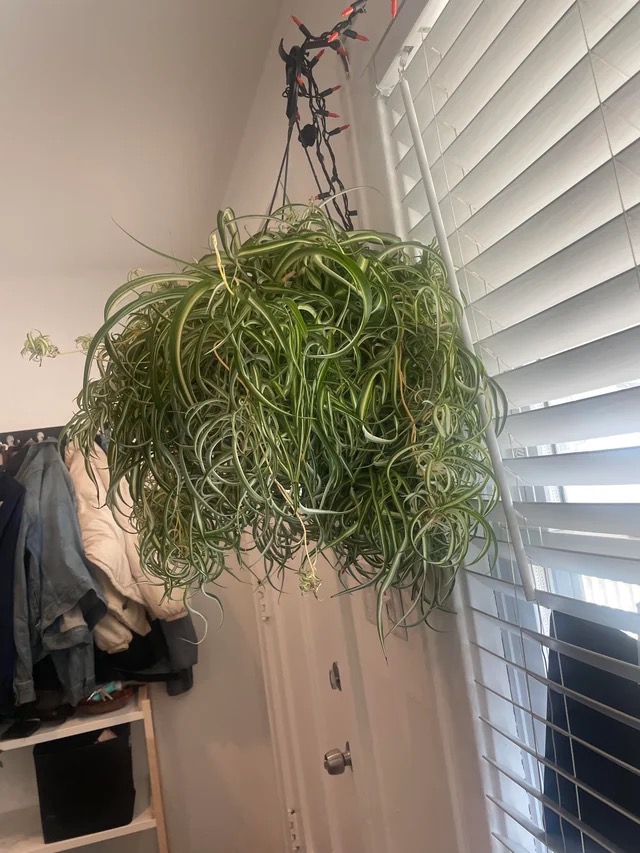
When I first got a spider plant I made the mistake of putting my first one in a corner with very little light. That was mainly because I’d been told they were a low light plant.
Unfortunately about a year later it looked pale and stretched out. And I couldn’t work out what I was doing wrong.
Long story short – it was the light.
Spider plants are tough plants that forgive a lot of neglect. And they won’t die in low light.
But while they don’t die they also won’t look good. It’s the light that decides how good and happy your spider plant will look.
So this guide is for getting the light for your spider plant just right. How much they need, where to put them and how to read the plant when it’s telling you the light is wrong.
Quick Answer
- Bright, Indirect Light Is Best: Spider plants do best a few feet from a bright window where they get lots of light but no direct sun on the leaves.
- They Tolerate Low Light but Don’t Thrive in It: Somewhere that’s poorly lit means they’ll survive but grow slowly, lose their stripes and become leggy.
- Direct Afternoon Sun Burns Them: A little morning sun is fine but midday and afternoon sun burns the leaves and turns the tips brown.
How Much Light Does a Spider Plant Need?
Spider plants want bright, indirect light. That’s the short and easy way to answer this.
If you want the slightly longer version then – they’re a plant that evolved growing on the floor of tropical and subtropical forests. So they’re used to lots of indirect brightness but not a lot of direct sun hitting them. That’s the environment you want to get indoors.
The reason people get confused is because of the reputation they have for being low light plants. And It’s not completely wrong.
Spider plants will tolerate it and they’ll stay alive in conditions that would kill a fussier plant. But as mentioned earlier – tolerance and preference are two different things.
A spider plant tolerates low light. It much prefers bright indirect light.
And when you give it what it prefers you get faster growth, better color, more of the baby spiderettes etc. Just a better plant.
If you’re not sure what “bright indirect” even means in practical terms check out our guide to what bright indirect light actually means. But the quick test is this.
Hold your hand about a foot above the plant on a day with lots of sun. If it casts a fuzzy sort of shadow that means you have bright indirect light.
If the shadow is crisp and sharp it means its direct sun. No shadow at all means the spot isn’t getting enough light.
The Best Spot for a Spider Plant
Where you put the plant is more important than almost anything else you’ll do for it.
East Facing Windows
An east window is close to perfect for a spider plant. You get bright morning sun that’s gentle then ambient light for the rest of the day.
My best looking spider plant is in an east window and it’s grown huge. It’s got lovely striped leaves with babies hanging off everywhere.
If you’ve got an east window with space then that’s the best place to start.
North Facing Windows
North windows work too. The light is softer and more consistent and there’s basically no risk of the plant getting burnt.
The trade off is that growth can be a bit slower and a very variegated plant might lose a little of its stripes over time. Still a good and more importantly safe option especially if you’re nervous about burning the leaves.
South and West Facing Windows
South and west windows are the bright ones and they can work. If you’re going that way then you need to be a bit careful though.
The direct afternoon sun that comes through these is strong enough to burn spider plant leaves and give you brown tips.
The fix is easy. Just take it away from the window.
Put it a few feet away from the glass rather than right on the sill or hang a sheer curtain up to filter the light. That turns the direct sun into the bright indirect light the plant wants.
I’ve also got a spider plant doing great in a west window this way sitting about four feet back from the window on a shelf.
How Far From the Window?
Light drops off fast as you move away from a window. Somewhere that looks bright to your eyes three feet into the room can be giving only a fraction of the light the plant gets when it’s put right by the glass. That’s because your eyes adjust and the plant doesn’t care how it looks to you.
As a rough rule keep a spider plant within about three to five feet of a decent window. Right on the sill is fine for north and east windows.
Take it back a bit for south and west. Once you get much further than five feet from any window you’re getting into low light territory regardless of whether the room feels bright to you or not.
Signs Your Spider Plant Isn’t Getting Enough Light
Spider plants are pretty good at telling you when the light is wrong. You just have to know what you’re looking at.
It’s Getting Leggy and Stretched
This is the main one. In low light the plant stretches out for whatever light it can find. The leaves get long, thin and floppy.
This was what my plant in a corner with little light was like. It wasn’t unhealthy as such it was just trying to find some light that wasn’t there.
The Stripes Are Fading
Variegated spider plants (the ones with the white or cream stripes) need decent light to keep them. In low light the stripes fade and the plant will start to become plain green because it gets rid of the pale parts of the leaf to squeeze more chlorophyll out of the light it’s getting. If your plant was once stripy and is looking greener and duller than it used it’s usually because of light.
Growth Has Stopped
A happy spider plant grows fast. If yours hasn’t had any new leaves in months and won’t grow any babies one of the first things to check is low light.
Spiderettes take a lot of energy to produce and a plant that’s doesn’t have enough light won’t bother. There are other reasons a plant stops too and we go over those in why your spider plant isn’t growing and why it isn’t producing babies but light is near the top of the list.
It’s Leaning Hard to One Side
If the plant is leaning toward the window that’s it telling you it wants more light than it’s getting. Turning it about a quarter every week or so should even out the growth. A lot of leaning is a sign it just isn’t getting enough light.
What's Wrong With My Plant?
Answer a few questions and we'll help diagnose the problem.
Spider plant looking sad?
My free guide 7 Gardening Mistakes That Are Killing Your Plants covers the small habits that hold spider plants back from thriving — and how to turn yours around.
Signs Your Spider Plant Is Getting Too Much Light
Too much light is less common than too little but it does happen. Usually when someone puts the plant in a very bright south window.
Brown, Crispy Tips and Edges
Brown tips have a few causes (fluoride in tap water and inconsistent watering are the usual suspects) but direct sun is a big one. If the tips are going brown and the plant is in afternoon light try moving it away from the window before you change anything else.
We go into this more in why your spider plant has brown tips but sun burning them is something that happens a lot.
Pale, Bleached Looking Leaves
Too little light makes the stripes fade. Too much light bleaches the leaves, giving them a washed out look sometimes with dry patches where the sun has burnt the tissue.
It’s a different look to the soft fade of low light. Bleached leaves look sun damaged rather than dull and stretched.
Dry Patches or Scorch Marks
Spots where the plant has been burnt (pale or brown dry patches in the middle of a leaf, not just at the tips) are a big sign the sun is too direct. Once a leaf is burnt it won’t heal but you should still move the plant so any new growth will be clean.
If you’re seeing washed out color and browning that watering changes don’t fix that’s the difference between the two problems. Faded and floppy means it needs more light. Bleached/burnt means give it less direct sun.
A plant turning yellow can point to other issues which we go through in why your spider plant is turning yellow.
Variegated vs All Green Spider Plants
The classic variegated spider plant with cream or white stripes needs more light than the plain green kind. The stripes have little to no chlorophyll so the plant is doing all the work from the green parts of the leaf.
Put it somewhere that gets low light and it will fade the stripes and go greener to survive.
The solid green varieties are more forgiving in lower light because all of the leaf is working. So if you’ve got a heavily variegated plant you’ll want to make sure it’s somewhere bright. If it’s all green you’ve got a bit more slack.
Do Spider Plants Need a Grow Light?
Most spider plants don’t need a grow light if you’ve got a a decent window for them to live. But there are two situations where I would use one.
The first is if your home is just very low in light generally or if the room has no good window. If the brightest spot you have still isn’t good enough a grow light will work.
The second is winter which I’ll get to in a second.
If you do want a grow light then you don’t need anything fancy. A basic full spectrum LED grow light on for around 10 to 12 hours a day, put maybe a foot or so above the plant, works.
I use an inexpensive clip on LED grow light for the plants in my back room that doesn’t get a lot of light and it’s kept them full and stripy through some very dark winters. Put it on a cheap plug timer and you can basically forget about it.
 SANSI Grow Lights for Indoor Plants, Pot Clip-On Plant Light
Light Changes With the Seasons
There’s something else you have to be aware of and that’s the seasons. The perfect spot in July can be a bad spot in December.
Winter light is weaker and there’s far less of it. The sun sits lower, the days are short and that bright summer windowsill can become surprisingly bad for your plant.
So a spider plant that looked great all summer can start fading once winter sets in, not because you changed anything but because the light did.
A couple of things will help. You can move the plant closer to the window for winter as the risk of burning is much lower when the sun is weak. A south or west window that was too harsh in summer can become ideal in the winter.
And if your winters are properly dark and gray this is when a grow light is going to really help.
Then move things back in spring when the sun gets stronger again. It sounds like more work but really it’s about a two minute job twice a year and it keeps the plant looking good all year round rather than struggling through the winter.
What About Office and Artificial Light?
Spider plants are one of the better choices for an office or a room lit mostly by artificial light which is why you’ve probably seen them everywhere in workplaces.
Regular ceiling lights on their own usually aren’t enough for great growth but if you’ve got bright fluorescent or LED overhead lighting running most of the day, along with even a bit of window light, a spider plant will cope fine.
It might grow a little slower and the variegation might weaken a bit but it’ll live and look pretty good. If it’s a spot indoors with no natural light at all then think of it light a low light room as discussed above and add a small grow light.
Moving Your Spider Plant to a Brighter Spot
If you’ve read all this and realized your plant needs more light don’t just put it straight into a window that gets lots of sun tomorrow. Plants get acclimated to their light level and a sudden shock by moving them can cause burning even at light levels they’d be fine with normally.
Do it gradually. Move the plant to the brighter spot for a few hours a day to start then build up over a week or two. And once it’s settled in a good spot you can just leave it there.
Spider plants don’t like being moved around constantly because every move means they burn up some energy adapting to the new position instead of growing. Find the right spot then let it get on with it.
While you’re sorting the light out it’s worth making sure your watering is right as too they work together. More light means the plant takes up more water quicker so check the spider plant watering guide if you’ve just increased the brightness.

Quick Recap: Getting Spider Plant Light Right
If you skimmed to the bottom this is a quick summary:
- You want bright, indirect light. That’s going to be best. Plenty of brightness and no strong direct sun on the leaves.
- East and north windows are the safe bets. South and west work great too, just make sure you keep the plant a few feet back or use a sheer curtain.
- Stay within about three to five feet of a window. Rooms feel brighter to your eyes than they actually are to the plant.
- Leggy, pale and faded means more light. Bleached and burnt means less direct sun.
- Variegated plants need more light than all green ones to keep their stripes.
- Add a grow light for dark rooms or gloomy winters. Nothing fancy needed.
- Adjust for the seasons. Move closer to the window in winter, back off in summer.
Get the light right and most of the other spider plant problems will sort themselves out. The plant grows faster, keeps its color, grows babies and looks great.
Mine became one of my best looking plants when I stopped believing the low light myth and gave it a proper bright spot.
It really is mostly about the light. Fix that and the rest tends to follow.
Spider plant looking sad?
My free guide 7 Gardening Mistakes That Are Killing Your Plants covers the small habits that hold spider plants back from thriving — and how to turn yours around.
