
Spider plants have a reputation for growing in almost anything. Which is true up to a point.
You can put one in a pot of garden soil and it will survive for longer than most plants would. Give it the wrong drainage and it will still grow through conditions that would kill a peace lily or a calathea.
But spider plants being tough doesn’t mean they don’t care about their growing medium. And a spider plant that’s just surviving and one that’s growing new leaves, runners and spiderettes is usually down to the soil it’s growing in.
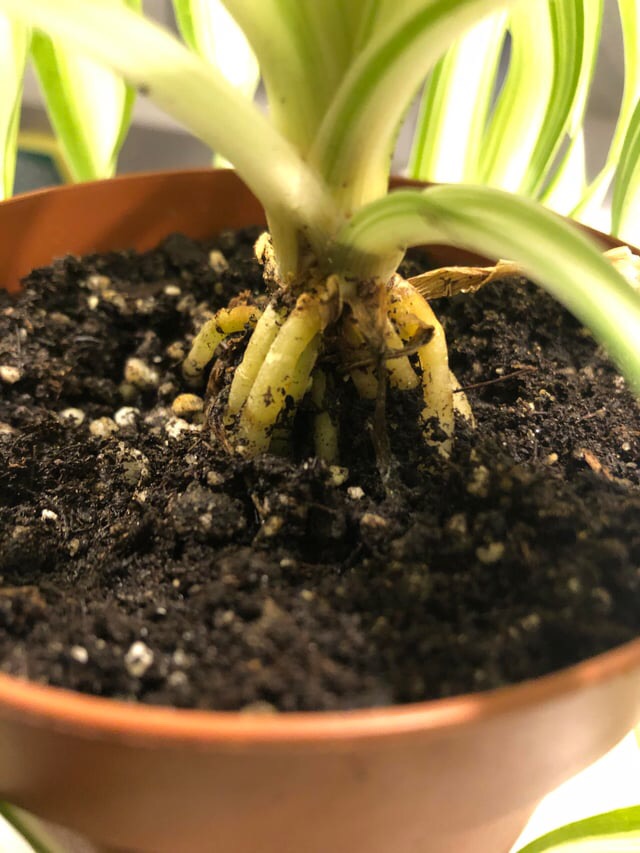
The roots that make spider plants so good at coping with a lack of water are also the thing that makes getting the soil right so important. Those roots store water efficiently – which is useful when the plant dries out – but rot easily when they sit in consistently waterlogged conditions.
A soil that drains well protects those roots. If it stays wet for too long it will kill them over weeks or months before the symptoms you can see become obvious enough to act on.
This guide goes through what spider plants need from their growing medium, which commercial mixes work and which don’t, how to mix your own, what to avoid and why, how soil connects to watering frequency and pot choice and when and how to refresh the growing medium. Get the soil right and almost everything else about spider plant care becomes easier.
What Spider Plants Need From Their Soil
Spider plants are native to southern Africa. They grow in places like forest margins, rocky hillsides and disturbed ground.
The soils in these environments all drain reasonably well, are moderately fertile and they go through distinct wet and dry cycles, bit just staying consistently saturated.
The growing medium for a potted spider plant should get close to those conditions: good drainage, moderate moisture retention, adequate nutrients and the ability to dry out somewhat between waterings without becoming hydrophobic.
None of these requirements are extreme, which is why spider plants don’t mind lots of different growing mediums – but a mix that gets all of them right will get a noticeably better performing plant than one that gets them only partially right.
Property 1: Good Drainage
This is the most important part of soil for spider plants. A growing medium that stays waterlogged for long periods stops the roots from absorbing oxygen and will kill off the roots faster than almost any other problem.
Good drainage doesn’t mean the mix dries out immediately after watering – that’s too fast and the plant will struggle to absorb enough moisture between waterings. It means the water passes through the mix easily and the spaces of air in the compost are restored within a few hours of watering. The mix doesn’t stay saturated for days.
Property 2: Moderate Moisture Retention
While drainage is the priority the growing medium still needs to hold on to enough moisture to keep the roots damp between waterings. Spider plants don’t want to dry out completely despite their abiloty to deal with drought.
If they’re always underwatered they will get brown tips on the leaves, slower growth and roots that start to die. The balance is a mix that holds moisture for a few days after watering and then begins to dry from the top down. This gives you a window to water again before the roots become totally dry.
The roots can deal with some brief dry spells but this isn’t a substitute for good soil moisture retention. A mix that dries out within a day or two of watering puts the plant in constant drought stress and relies too heavily on the reserves of the roots.
Property 3: Good Aeration
Spider plant roots need oxygen as much as they need water – roots consume oxygen and release carbon dioxide and roots in soil without enough oxygen suffocate in the same way as roots in waterlogged conditions.
A growing medium that has pockets of air doesn’t compact and provides the oxygen exchange that health of the roots depends on. This is why perlite is important: not just for drainage but for maintaining the aeration that supports healthy root.
Property 4: Slightly Acidic to Neutral pH
Spider plants prefer a soil pH of approximately 6.0 to 7.0 – slightly acidic to neutral. Within this range the nutrients in the growing medium are most available to the plant’s roots.
Most good quality houseplant composts fall within this range so pH is rarely a problem unless you’re noticing symptoms that suggest a lack of nutrition (interveinal yellowing, poor response to feeding). If you suspect pH is an issue a cheap pH testing kit from any garden centre will confirm or rule it out quickly.
Property 5: Moderate Fertility
Spider plants are moderate feeders – not as hungry as dahlias or fruiting vegetables but not as frugal as succulents or Mediterranean herbs. The growing medium should contain enough organic matter to give them a base level of nutrients, supplemented by a regular liquid feeding programme through the growing season.
A medium that doesn’t have enough nutrients puts pressure on your feeding schedule; one that’s got too much can cause salts to build up and toxicity. A good quality houseplant compost gets the right fertility baseline for most spider plants.
 GARDENERA Premium Spider Plant Potting Soil Mix
Ready Made Commercial Mixes: What Works and What Doesn’t
The best starting point is a commercial potting mix. And there are quite a few types available.
Quality and suitability vary a lot and knowing what to look for – and what to avoid – saves you from trial and error that costs the plant as much as you.
Houseplant or Indoor Plant Compost: The Best Starting Point
A good quality houseplant or indoor plant compost is the most reliable ready made option for spider plants. These mixes are made to balance moisture retention and drainage better than general purpose garden compost.
They usually contain some slow release fertiliser to support initial growth and they’re designed for the roots of plants in pots rather than for garden beds. For spider plants a houseplant compost used as the base of the growing medium – ideally with some perlite added to improve the drainage and air flow – is a good and reliable choice.
The limitation of most houseplant composts straight from the bag is that they can be hold on to a little too much moisture for spider plant roots, particularly in cooler conditions or lower light positions where the plant take sip water slowly.
This is why adding 20 to 30% perlite to a houseplant compost is almost always an improvement over using it straight. The perlite keeps the drainage and air flow where they need to be without reducing how much water it holds on to.
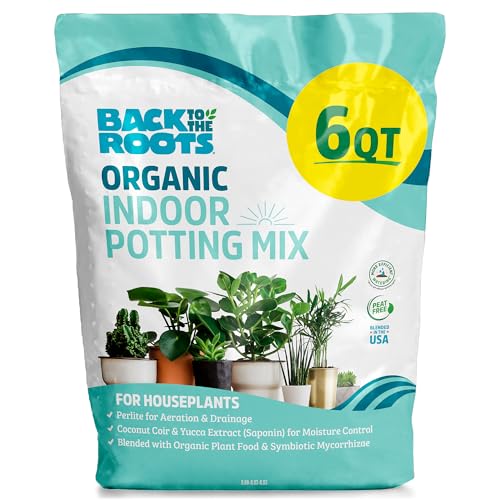 Back to the Roots 100% Organic Indoor Potting Mix
Multi Purpose Compost: Usable With Changes
Standard multi purpose compost – the general purpose bag sold for everything from seed sowing to container gardening – can work for spider plants but tends to be too dense and holds on to too much moisture on its own.
It compacts relatively quickly in a pot too, losing the air flow that new mix has. And the fact that it holds too much moisture can keep spider plant roots in consistently damp conditions that increase the chances of the roots rotting.
If multi purpose is what’s available use it with a a decent amount of extra perlite added – 30 to 40% by volume – to bring the drainage and air flow closer to what the plant needs. Treat it as a base that needs improving rather than a finished product.
Peat Free Mixes: Increasingly Viable
As peat free growing mixes improve they’re starting to work for spider plants. Coir based mixes (made from coconut husk fibre) have decent moisture retention and are more sustainable than peat. Although they can be slightly more variable in texture and pH than peat based alternatives.
Wood fibre based peat-free mixes have improved significantly and many now perform almost as well as peat based products for houseplant use. The main thing, as with any mix, is checking that it’s reasonably free draining and adding perlite if it seems dense.
The peat free transition is ongoing and the quality of each products varies by brand. So it’s worth checking recent reviews of before buying.
 Compost Bliss 100% Natural Compost Soil for Gardening, Seed Starting Soil, & Potting Mixes
Cactus and Succulent Compost: Too Fast Draining
At the opposite end from multi purpose compost there are mixes formulated for cacti and succulents that are drain too much for spider plants. These mixes are designed to dry out very quickly between waterings which is great for plants that store water and want less frequent and thorough watering followed by lots of drying.
Spider plants don’t want to dry out as completely or as quickly as a cactus does. A spider plant in cactus mix will dry out too fast and develop brown leaf tips more than one in mix that holds the right amount of moisture.
On its own cactus mix is the wrong choice. It can be used in small quantities to help drainage in a heavier mix but it’s not a base medium for spider plants.
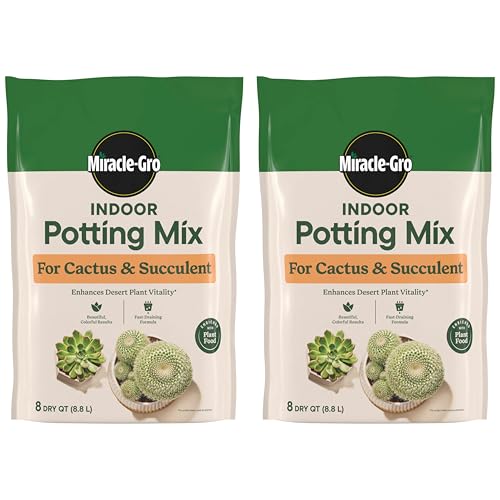 Miracle-Gro Indoor Potting Mix for Cactus & Succulent
Potting Mix With Added Fertiliser Gel Crystals
Some commercial potting mixes – particularly those marketed for hanging baskets and patio containers – contain polymer gel crystals that are designed to reduce how often you water. For spider plants these crystals can hold too much moisture around the roots for too long.
Check the label before using any commercial mix for spider plants and avoid those that list water retention gel as an ingredient. For hanging spider plants in very hot, dry summer conditions where quick drying is a problem a small quantity of crystals in a mostly bark based mix might be appropriate – but this is an exception rather than a rule.
DIY Soil Mix Recipes
Mixing your own growing medium for spider plants is straightforward and gives you complete control over the drainage, moisture retention and aeration of the mix. The recipes below are starting points – adjusting the ratios based on your specific conditions (climate, pot type, watering habits, and position) is part of developing a feel for what works best for your plants.
The Standard Mix: Reliable for Most Conditions
- 60% good quality houseplant or indoor plant compost
- 30% perlite
- 10% coco coir or fine bark chips
The compost provides moisture retention, organic matter and nutrients. The perlite improves the drainage. The coco coir or bark adds structure and stops the mix from becoming too dense. This is a good all round starting point that works well in most pot types and home conditions.
The Well Draining Mix: For Overwaterers or Cool, Low Light Conditions
- 50% houseplant compost
- 40% perlite
- 10% horticultural grit or coarse sand
If you know from experience that you tend to overwater or if your spider plant is in a cool or lower light spot where the plant uses water slowly then changing the mix toward maximum drainage makes root rot less likely. The tradeoff is that the mix dries out faster and the plant may need watering slightly more often than with the standard mix – but the root environment is much safer. Horticultural grit (not builder’s sand which can create a cement type of mix with compost) adds more drainage.
The Moisture Retentive Mix: For Hot Climates or Frequent Forgetting
- 65% houseplant compost
- 25% coco coir
- 10% perlite
Coco coir has excellent properties that holds on to moisture and releases water slowly to the roots. This mix suits those who are in hot, dry climates where standard mixes dry out too quickly or for people who tend to forget watering regularly or plants in terracotta pots where the moisture evaporates through the pot walls as well as the soil. The reduced perlite means drainage is slightly less aggressive – a pot with good drainage holes is especially important with this mix to compensate.
The Enriched Mix: For Large, Established Plants in Need of a Boost
- 50% houseplant compost
- 25% perlite
- 15% worm castings or well-rotted compost
- 10% coco coir
Worm castings are a slow release organic fertiliser that improves the soil and adds nutrients without the salt building up like in synthetic fertilizers. This enriched mix is particularly useful for large, established spider plants that are heavy feeders, for plants being repotted after several years in depleted compost or for those who prefer to reduce their reliance on liquid feeding. The worm castings don’t replace a feeding programme completely but supplement it.

What to Avoid and Why
Quite few materials cause problems when used for spider plants and recognising them is as valuable as knowing what to use. Most of these mistakes come from understandable logic that just doesn’t work in practice.
Garden Soil
Garden soil is the most common mistake made by newer plant owners and the one with the most predictable consequences. In the open ground soil works because it’s part of a continuous system – water drains away, roots grow into the surrounding areas, the soil maintains structure over time. In a pot that all disappears.
Garden soil compacts and become dense and doesn’t drain well. It typically contains weed seeds, pests and pathogens that aren’t a problem outdoors but cause significant issues in a container.
For spider plants specifically the poor drainage of compacted garden soil in a pot creates conditions for root rot to happen. So never use garden soil in a spider plant pot.
Very Fine, Dusty Old Compost
Old compost that has been sitting in an opened bag for a year or more, or compost that has been in a pot for several years without being replaced breaks down to a fine dust. It’s lost all its physical structure along with most of its nutritional value.
It compacts immediately when it gets wet, drains poorly and has almost no air flow. If the compost you’re going to use to repot a spider plant has a fine texture a bit like paste instead of the slightly crumbly, chunky texture of fresh mix, don’t use it.
The cost of a bag of fresh houseplant compost is small relative to the improvement in growing conditions it will give you.
Alkaline Amendments
Garden lime, wood ash and spent mushroom compost are all alkaline amendments useful in outdoor gardening but potentially harmful in a spider plant pot. Raising the pH above 7.0 means it’s in a range where certain nutrients – particularly iron – become unavailable to the plant’s roots.
This can cause the interveinal yellowing (chlorosis) that looks like a nutritional problem but doesn’t respond to feeding because the issue is nutrients not being available rather than a lack of them. Stick to the neutral or slightly acidic ingredients in the recipes above and avoid anything you know raises soil pH.
Pure Sand
Adding sand to a potting mix to improve drainage is a common piece of advice that doesn’t work as intended for potted plants. Fine sand mixed with compost can actually make it become like concrete when it settles, making drainage worse rather than improving it.
If you want to improve drainage beyond what perlite provides use horticultural grit (coarser particle size than sand, with better drainage properties) rather than builder’s or sharp sand. Perlite remains the most effective and most easily available drainage amendment for houseplant mixes.
Compost Containing Water Retaining Gel
As noted in the commercial mixes section, polymer gel crystals in a potting mix hold too much moisture around spider plant roots for too long. This is particularly problematic in the winter when the plant’s demand for water drops and the gel continues holding moisture the roots can’t use. Check labels carefully and choose mixes without gel additives for spider plants.
How Soil Connects to Watering and Pot Choice
Soil, pot and watering frequency are a system rather than independent decisions. What’s in the growing medium determine how quickly it dries, which determines how often the plant needs watering, which in turn affects how much drainage the pot needs to have.
Changing one of these variables changes what the others need to do and understanding those connections prevents the mismatches that cause problems even when each choice seems reasonable.
Soil and Pot Material
Terracotta pots are porous and let moisture evaporate through the sides, which means the growing medium dries out faster than it would in a plastic or glazed ceramic pot. This affects the soil mix you should use.
If you’re growing a spider plant in terracotta then a slightly more moisture retentive mix – with more coco coir and less perlite – compensates for the extra evaporation through the pot walls. If you’re growing in a non-porous plastic or glazed pot, a more free-draining mix is appropriate because there’s no evaporation through the sides to help dry the medium between waterings.
The practical implication: the standard mix recipe in this guide is made for a plastic or glazed pot in typical home conditions. For terracotta, move toward the moisture retentive recipe. For a particularly large plastic pot in a cool, low light room, move toward the free draining recipe. The mix and the pot work together – choosing one without thinking about the other produces conditions that don’t match what you intended.
Soil and Pot Size
Spider plants in pots that are too large for their roots have more growing medium than the roots can take moisture from efficiently. The outer parts of the pot stay wet long after the roots have taken what then needs which makes for constantly damp conditions that increase the chance of root rot.
A pot that’s the right size where there’s an appropriate amount of growing medium around the roots rather dries in line with how much water is taken up. This keeps the roots healthier and makes watering easier.
Spider plants are known for growing well when a little root bound. In fact they produce more runners and spiderettes in slightly cramped conditions as a response to stress.
This is true but does have some limits. A mildly root bound plant in good compost is fine. One that’s severely root bound in exhausted compost that has become compacted and depleted is not.
Repot it when you see signs of being root bound (roots out of drainage holes, very rapid drying, soil replaced by root mass).
 2 Pack 8 Inch Pots for Plants Indoor, Plastic Self Watering Planters
Soil and Watering Behaviour
A well formulated mix that drains well with good perlite is forgiving of too much watering because the excess moisture drains away quickly. A dense, poorly draining mix punishes every overwater because moisture builds up.
Getting the soil right is partly about protecting the plant from your own watering habits. If you know you tend to water a lot then a mix that drains E better gives you more margin for error. If you tend to underwater a slightly more moisture retentive mix compensates for that.
When and How to Refresh or Replace the Soil
Even the best growing medium has a lifespan. Organic matter breaks down, nutrients deplete, salt from fertiliser and tap water accumulates over time et c.
Knowing when to address this – and how to do it with minimum disruption to the plant – is part of keeping a spider plant in good long term health rather than just keeping it alive.
Signs the Growing Medium Needs Replacing
- The medium stays wet for significantly longer than it used to. If a mix that dried within five days now takes ten or more the structure has collapsed and drainage has been compromised.
- The surface of the mix looks fine and dusty rather than chunky and open. Visual confirmation that the compost has degraded to a dense, poorly aerated consistency.
- White or pale crusty deposits on the soil surface or pot rim. Fertiliser that’s built up and mineral salts from tap water, indicating the soil chemistry needs resetting.
- Growth has slowed despite good light, regular feeding, and correct watering. When other variables are appropriate and growth still stalls, depleted, degraded compost is a common explanation.
- It has been two or more years since the last repotting. Even if the plant hasn’t outgrown its pot, the growing medium at this point is likely significantly depleted and structurally degraded.
The Annual Top Dress: The Low-Effort Annual Refresh
The simplest soil refresh doesn’t require repotting at all. Once a year – typically in spring at the start of the growing season – remove the top 2-3cm of compost from the pot surface and replace it with fresh houseplant mix.
The surface layer is typically the most degraded part of the medium. Removing it eliminates the immediate chemical and structural problems without disturbing the roots.
It takes ten minutes, costs almost nothing and makes a real difference to the plant’s growing conditions between full repottings. Do this every spring as a routine habit rather than waiting until problems become visible.
Flushing to Remove Salt Build Up
If white crustiness has appeared on the surface of the soil or rim of the pot then the salt build up has reached a level worth addressing directly.
Put the pot in a sink and run a generous volume of plain water slowly through the compost – enough to flush several pot volumes of water through the drainage holes. This dissolves the accumulated salts and carries them out through the bottom.
After flushing don’t feed for two to three weeks before resuming at half strength. Do this every few months if you’re a regular feeder or whenever deposits become visible. Using rainwater or filtered water reduces the rate of mineral build up between flushes.
Full Repotting: Every One to Two Years
A full repotting – so removing the plant from its pot, shaking off as much old compost as practical, trimming any damaged or rotten roots, and replanting in fresh mix – should happen every one to two years. The frequency depends on how fast the plant is growing (faster growth depletes compost faster), what light and feeding conditions it’s been in and how quickly the current mix shows signs of degradation. Spring is the best time to repot, giving the plant the full growing season to establish in its new medium.
When repotting use the opportunity to inspect the roots. Spider plant roots should be white and firm. Brown, soft, or hollow roots indicate root rot that should be cut away before repotting.
If the roots are significantly reduced after removing rotten material then repot it into a smaller pot to match the reduced root volume rather than going into the same or a larger pot. Too much compost around fewer roots stays wet too long and risks more rot.
Spider plant looking sad?
My free guide 7 Gardening Mistakes That Are Killing Your Plants covers the small habits that hold spider plants back from thriving — and how to turn yours around.
