
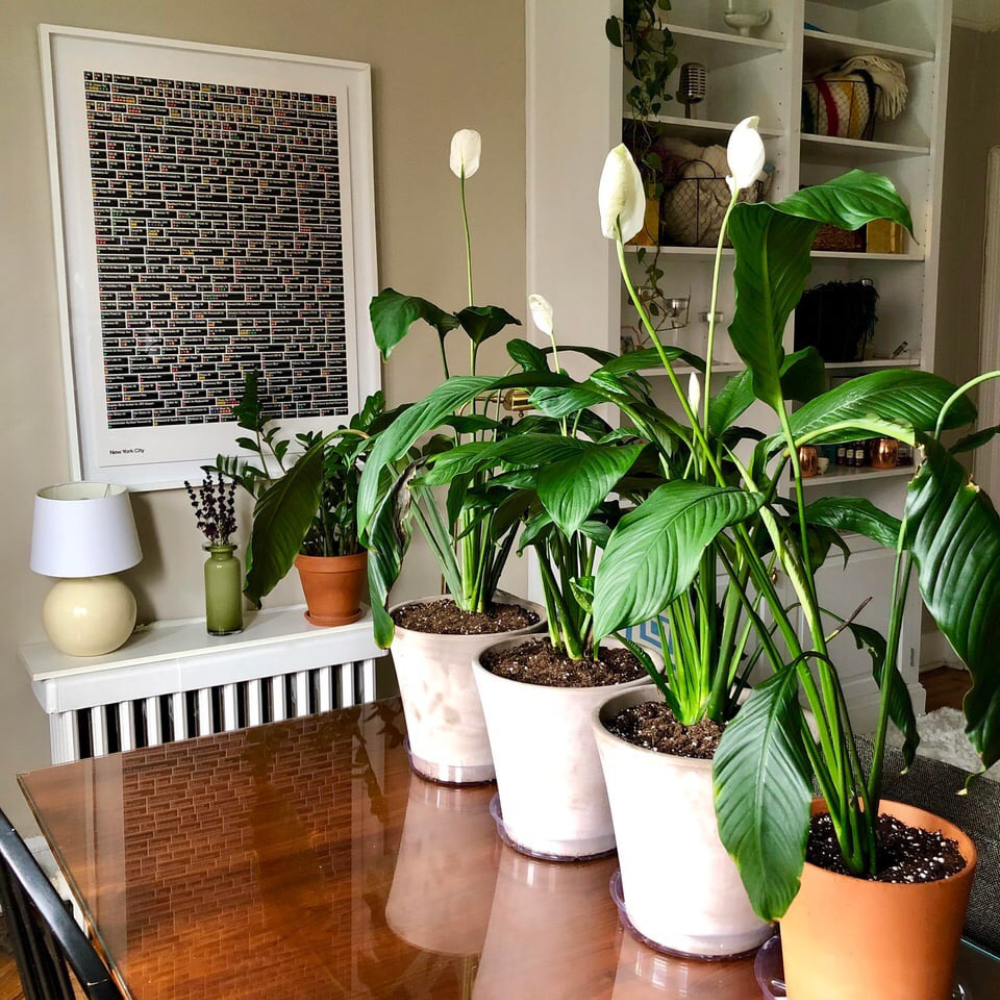
Peace lilies can be awkward to care for but there’s one thing that does help – they will let you know when they’re unhappy.
If they need water they’ll drop but bounce back quickly once they’ve been watered. When they don’t like their light they tell you through pale, yellow leaves. And when they’ve outgrown their pot they tell you that too, in a few different ways at once, until you pay attention.
Things get tricky though because some of those signs – wilting, yellow leaves, slow growth – overlap with other common problems. An overwatered peace lily and a root bound peace lily can look very similar on the surface.
Knowing which signals mean the pot is too small instead of it being a problem with watering or light is what saves you from misdiagnosing the plant and making things worse.
This guide goes through the seven signs that show your peace lily needs repotting, what each one means and what to do about it – including a step by step repotting guide at the end so you know exactly what you’re doing when the time comes.
Quick Answer
- Roots Growing Out of the Pot (Most Common): Roots that are coming out of the drainage holes or above the soil mean the plant has run out of space.
- Water Dries Out Too Fast: If the soil dries much faster than usual the roots may be taking up most of the pot.
- Slow Growth or Constant Drooping: A crowded peace lily may stop growing and wilt quickly after it’s been watered.
For more help see Peace Lily Care Guide: Tips to Get Thriving Plants.
Sign 1: Roots Are Escaping the Pot
01 Roots growing out of the drainage holes or above the surface of the soil
This is by far and away the most unambiguous sign of all. If you can see the roots coming out of the drainage holes at the bottom of the pot or at the surface of the soil and above the compost then the plant has run out of room. It’s very clearly telling you the pot is too small.
Peace lily roots grow out and down looking for space and resources. When they’ve filled every available inch of the pot then they’re left with nowhere to go but out through the drainage holes or up and out of the soil.
Neither is a sign of a healthy, thriving plant. Both are signs of a plant that’s been in too tight conditions for too long.
Something worth knowing: peace lilies, like quite a few other plants, can tolerate and even perform slightly better when a little root bound compared to being in a pot with too much space. A few roots at the drainage holes doesn’t necessarily mean the plant is suffering. A tangled mass of roots with barely any soil is a different situation though – that plant needs repotting as fast as possible.
Sign 2: The Plant Dries Out Unusually Fast
02 Soil goes from wet to bone dry within a day or two
Peace lilies are thirsty plants at the best of times. But if you find yourself watering every day or two and the soil still seems to dry out almost immediately, the problem is usually not that the plant needs more water – it’s the ratio of roots to soil.
When a pot is very root bound there’s so little compost left in relation to the amount of roots. The water then runs through very quickly and very little gets held on to for the plant to draw from between each watering.
This is a self reinforcing problem. The more root bound the plant becomes, the faster the pot dries out, the more frequently you water and the more the roots continue to fill whatever space remains.
If you leave it long enough the plant starts to suffer from stress due to lack of water even when you’re watering it regularly. The soil can’t hold enough moisture to meet the plant’s needs between those waterings.
One thing to rule out first: very small pots dry out fast regardless of how dense the roots are simply because there’s less compost to hold moisture. And terracotta pots dry out faster than plastic or ceramic because the moisture evaporates through the sides of them.
If your plant is in a very small terracotta pot that alone could explain the very fast drying out. Check the root to soil ratio by taking the plant out before repotting if you need to.
Sign 3: Wilting Between Waterings Despite Adequate Moisture
03 The plant droops even though the soil isn’t dry
Peace lilies are famous for how much they drop when they need water. It’s almost funny how dramatic it is.
The whole plant droops, sometimes so much that you’ll think you’ve killed it, but then perks back up within an hour or so of being watered.
Most peace lily owners have seen this at least once and had a big shock the first time it happens. But there’s a different kind of wilting that means something else: wilting that happens even when the soil is still moist.
When a peace lily wilts with damp soil there are two possible causes. The first is overwatering and root rot – the roots have been damaged by being consistently wet and can no longer take up water even when it’s there in the soil.
The second is bad root binding – the roots have become so compacted and packed that they can’t absorb water properly even from the small amount of soil that’s left. In both cases the symptom is the same: a drooping plant with wet soil.
This distinction matters a log for treatment. A root bound plant that’s treated for root rot – having its roots cut back and being put in dry compost – will be made worse. A root rot plant that’s repotted into a larger pot without first getting rid of the damaged roots will continue to declining in its new, bigger home. Get the diagnosis right before you do anything.
Sign 4: Slowed or Stopped Growth in the Growing Season
04 No new leaves appearing despite good conditions
Peace lilies are not the fastest growing houseplants but a healthy plant in good conditions should produce new leaves fairly regularly through the spring and summer. If your peace lily has stopped giving you any new growth at all – so no new leaves from the centre of the plant, no new offshoots appearing at the base – despite being in decent light, at the right temperature and getting the right amount of water, roots that are too constrained is a likely causes.
Growth needs resources: water, nutrients and enough space for the roots to expand. A severely root bound plant is limited on all three.
The soil has had the nutrients taken from it by years of root activity and regular watering flushing them out. There’s almost no soil left to hold water.
And the roots have nowhere left to grow which tells the plant that it just can’t expand any more. In response the plant just sort of plateaus and maintains what it has rather than investing energy in new growth.
Rule out other causes first. Slow or stopped growth in winter is completely normal – peace lilies slow down in low light and cool temperatures and this is not a sign of a problem.
No growth in summer with poor light is a light problem, not a root problem. And a peace lily that was recently repotted can be putting its energy into the roots before any growth on top resumes.
Sign 5: The Pot Is Visibly Deformed or the Plant Is Top-Heavy
05 The container is bulging, cracking, or the plant keeps tipping over
This sign is less common than the others but very clear when it happens. Peace lilies can develop surprisingly big and strong roots for a relatively modest looking plant and in thin plastic pots the pressure from those roots can actually deform the pot – pushing the sides out or distorting the base.
In ceramic or terracotta pots this is rarely a problem because the material is strong enough to withstand them but in the lightweight plastic pots that most houseplants are sold in then bulging of the sides of the pot is a big sign of some real extreme root binding.
Separately, a peace lily that keeps falling over – tipping out of its pot or leaning to one side – despite being in a good sized container, has often become top heavy relative to the size of the pot. As the plant produces more leaves and the roots fill the pot the centre of gravity shifts higher up and the plant becomes unstable.
This isn’t harmful in itself but it’s a good sign the plant has outgrown its pot and could do with being moved to something wider and heavier at the base.
Sign 6: Yellowing Leaves That Aren’t Explained by Light or Watering
06 Persistent yellowing despite correct care
Leaves that are turning yellow a peace lily are one of the most commonly misinterpreted symptoms because so many different problems cause it. Overwatering causes yellowing. Too little light causes yellowing. Nutrient deficiency causes yellowing.
And yes – being root bound for a long period causes yellowing through depleted nutrients and struggling roots.
The key word there though is persistent. A single yellow leaf on an otherwise healthy peace lily is almost always just that leaf reaching the end of its natural life – peace lily leaves do age and turn yellow, and this is completely normal.
Persistent yellowing that gets progressively worse and affects multiple leaves over time, even with the right watering and enough light, and that doesn’t respond when you adjust them, points toward a more systemic problem. And in a plant that hasn’t been repotted for a few years, nutrients being depleted is the most likely cause.
If you’ve ruled out watering and light as causes and the plant hasn’t been repotted in two or more years then fresh compost is almost certainly part of the solution. Even if the pot size is still good enough old, depleted compost is doing the plant no favours and repotting it in fresh mix often give some big improvements in leaf colour within a few weeks.
See this guide for more reasons for yellow peace lily leaves.
Sign 7: It Has Been More Than Two Years Since the Last Repot
07 You genuinely cannot remember when you last repotted it
This is a preventative sign rather than a reactive one and arguably the most useful. Peace lilies are usually repotted every one to two years, depending on how much they’re growing and how quickly they fill their pot.
A plant that hasn’t been repotted in two years will almost definitely have taken much of the nutritional value of its original compost, regardless of whether it’s root bound or not. The organic matter has broken down, the nutrients have been used or washed through with regular watering and the soil will have compacted over time into something that doesn’t have much air flow and is less hospitable to the roots than it was when the plant was first potted.
If you can’t remember when you last repotted your peace lily or if it’s the plant you’ve had for years in the same pot from when it was given to you or bought from a garden centre – treat that uncertainty as a signal to check. Take it out, look at the root to soil ratio, and make a judgement call.
You don’t always need a larger pot: sometimes refreshing the compost in the same pot is all a peace lily needs to get its growing again and back to full health.

How to Repot a Peace Lily: Step by Step
Once you’ve confirmed the plant needs repotting the process itself is straightforward. Peace lilies are among the more forgiving plants to repot – they recover quickly and dont get too stressed by it, even when the roots are disturbed.
The main thing is not to go too large with the new pot, which is the most common repotting mistake.
What You Need
- A new pot that’s one size up from the current one – typically 2 to 5cm (1 to 2 inches) larger in diameter. No larger. A pot that’s too big holds more soil than the roots can absorb water from which will result in it becoming too wet and the risk of root rot.
- Fresh potting compost – a general houseplant or indoor plant mix works well. Peace lilies like compost that holds on to some moisture without becoming waterlogged. So a mix with some perlite added in (around 20 to 30%) improves the drainage without making the mix too dry.
- Scissors or secateurs for trimming away any damaged roots.
- Drainage material for the base of the pot – a layer of perlite, gravel or broken pot pieces helps stop the drainage holes from becoming blocked with compost.
The Process
- Water the plant the day before repotting. A well hydrated plant can deal with the stress of repotting better than a dry one and moist compost holds together better when you’re working with the roots.
- Prepare the new pot. Add a thin layer of drainage material over the drainage holes then a layer of fresh compost – enough that when you put the root ball on top, the top of the root ball sits about 2 to 3cm below the rim of the new pot.
- Remove the plant from its current pot. Turn it sideways and ease the plant out. For a very root bound plant this might be awkward. Run a knife around the inside edge of the pot to free the root ball if it’s stuck or squeeze the sides of a plastic pot to loosen it.
- Look at and tidy up the roots. Remove as much of the old compost as you can from around the root ball – this make sure the plant is surrounded by fresh compost in its new pot. Trim away any roots that are dead (brown and dry), rotten (brown and mushy), or growing in a circle around the base of the root ball.
- Check for offsets. Peace lilies grow offshoots quite a lot. That is small daughter plants growing from the base of the main plant. Repotting is the best time to separate these if you want to propagate new plants. Each offset needs at least a few roots of its own to survive being separated. Pull them apart from the main root ball or cut with scissors and pot them separately in small pots with fresh compost.
- Place in the new pot. Centre the roots in the new pot, hold it at the right height and fill in around it with fresh compost. Firm gently with your fingers – you want good contact between the compost and roots without compacting the mix heavily. Leave 2 to 3cm of space below the pot rim to water.
- Water thoroughly. Water in well after repotting to settle the compost around the roots and get rid of any air pockets. Some compost will settle and you may need to top up slightly after watering.
- Put it in lower light than usual for one to two weeks. Repotting is stressful for roots even when done well. Reducing how much light it needs – and therefore the plant’s need to take up water and nutrients through roots that are still adjusting – lessens the shock of being repotted and helps the plant settle more quickly. After two weeks move it back to its normal position.
What to Expect After Repotting
Peace lilies sometimes look worse before they look better after repotting. Some wilting or drooping leaves in the first few days is normal.
This is repotting shock that disrupts the roots ans comes with any transplanting. Keep the plant in lower light, keep it moist (not wet but not dry) and don’t panic. Most peace lilies recover within one to two weeks and then begin showing some improvement within a month.
The signs of recovery to look for are: leaves growing up again. Improved colour of the leaves. New leaf spears growing from the centre of the plant.
These are all signs that the roots are reestablishing in the fresh compost and the plant is getting what it needs again.
The first peace lily I repotted had been in the same pot for so long that when I took it out there was basicallt no compost left. It was just a big mess of roots in the shape of a pot.
I’d been watering it twice a week for months and it still looked miserable. Two weeks after repotting it in fresh compost in a slightly bigger pot it grew three new leaves very quickly and flowered the following spring for the first time in two years.
That’s what repotting a root bound peace lily at the right moment can look like.
