
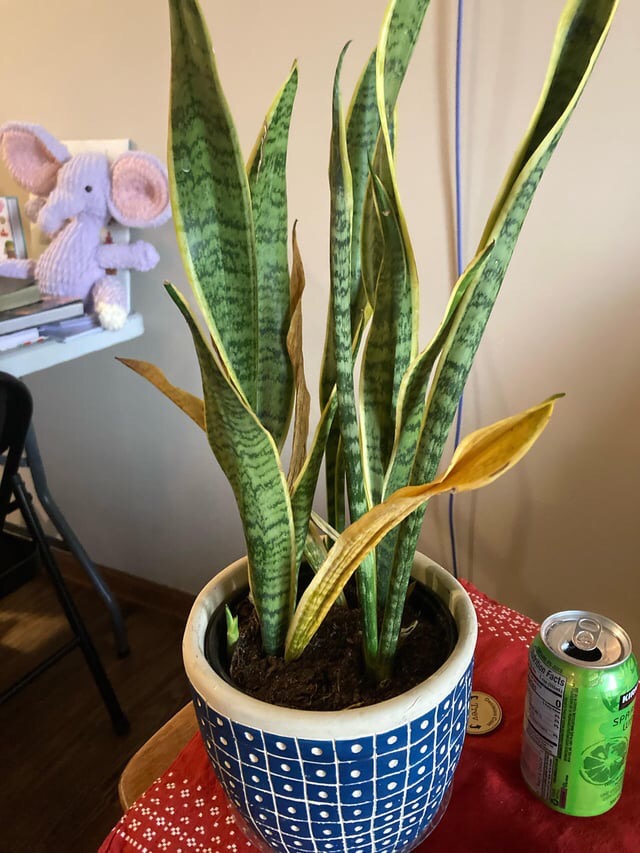
Is your snake plant looking a bit yellow? Well it’s probably more common than you think.
When I first noticed my own snake plant turning yellow I had a bit of a panic. I always thought snake plants were impossible to kill. What was I doing wrong!?
If you’re in the same position the don’t worry. Yellow leaves on a snake plant definitely mean something isn’t right but it’s usually something that can be fixed as well.
So I’m going to take you through the most common reasons your snake plant might be going yellow as well as how to get it back to its green self.
Quick Answer: Why Your Snake Plant Leaves Are Yellow
Quick Answer
- Overwatering (Most Common): Too much water stresses the roots which causes yellow leaves. Let the soil dry out completely before you water again.
- Poor Drainage: Pots without drainage holes mean the roots will sit in water and get damaged. Always use a mix that drains well and a pot with holes.
- Low Light or Cold Stress: Too little light or low temperatures can cause the leaves to become discolored. Move the plant to somewhere it will get bright, indirect light and that keeps it warm.
1. Overwatering
If there’s one thing snake plants hate more than anything it’s getting too much water. I killed my first snake plant by overdoing it with the watering can.
Overwatering is without a doubt the most common reason snake plant leaves turn yellow. They are native to West Africana plane where they would have needed to be able to deal with dry conditions. They store water in their leaves which means they need far less than most houseplants.
When you water too often the soil stays wet and soggy and the roots literally drown and rot. This root rot stops the plant from taking up nutrients properly, and that’s when you get yellow leaves.
How to fix it:
- Let the soil dry out completely between each water
- In the winter you might only need to water once a month
- Make sure your pot has drainage holes (an absolute must!)
- Check the roots – if they’re brown or black and look/feel mushy then you’ll need to remove the affected areas and repot the plant in fresh soil
One winter I went nearly two months without watering my snake plant and it was perfectly happy. And it’s always better to under than overwater a snake plant.
2. Poor Drainage
Your snake plant could be going yellow because of bad drainage even if you’re not overwatering.
I had to rescue a friend’s dying snake plant that they had in a beautiful ceramic pot but without any drainage holes. It was absolutely flooded and so it was a huge shock that it was turning yellow.
How to fix it:
- Always use pots with drainage holes
- If you really love decorative pots that don’t have holes use it as a cache pot. That means you keep your plant in a plastic nursery pot with drainage that sits inside the decorative one
- Use soil that drains well – regular potting mix is too heavy. You should try adding some perlite, pumice or coarse sand as all of them will drainage
- Empty the saucer your plant is on after watering – don’t let it sit in water
A good snake plant soil mix is about 1 part potting soil to 1 part succulent/cactus mix. This should make sure the water flows through filly rather than getting trapped around the roots.
3. Underwatering
I know, I’ve just spent ages telling you not to overwater, but you can also go too far the other way! Snake plants can live without a lot of water but they have a limit.
Underwatering causes yellow that usually starts at the tips and edges of the leaves. The yellow areas might also look shriveled or crispy which is different from the yellow you’ll get if you overwater the plant.
How to fix it:
- Check the moisture of the soil by putting your finger a couple of inches down – if it’s very dry throughout you can water
- When you do water do it enough so that the water runs out of the drainage holes
- During the growing season (spring/summer), you’ll probably need to water every 2 to 3 weeks
- Set a reminder on your phone if you’re forgetful like me!
It can be a little tricky to find the right balance of not too much but not too little. But when you get it your plant will thank you.
4. Too Much Direct Sunlight
Snake plants are known for being plants that grow without much light. But it’s less well known that they can also get sunburned.
Too much direct sunlight, especially through windows which can intensify it, will cause yellow or even burnt leaves. My snake plant once got a nasty sunburn after I moved it to a south facing windowsill in the summer.
How to fix it:
- Move your snake plant away from any direct sun, especially in the afternoon when it’s at it’s strongest
- East facing windows are good for the morning sun as it’s gentle and snake plants much prefer this
- If you’re putting yours in a south or west window make sure it’s a few feet back or use a sheer curtain
- Acclimate any snake plant slowly to increased light levels
Snake plants can actually adapt to pretty much any light level except very low shade and strong direct sun. They’re really versatile that way which makes them perfect office plants.

5. Temperature Stress
Snake plants start off fine with most temperatures but can get upset when it changes. As they’re tropical plants they like temperatures between 65 to 85°F (18 to 29°C). When they get too cold or there are drafts the leaves can turn yellow as a result.
I left my snake plant too close to a drafty window during the winter one year and some of the leaves ended up with yellow streaks.
How to fix it:
- Keep your snake plant away from drafts, radiators/heating and air conditioning vents
- Avoid fluctuating temperatures. So don’t put it by any doors that open to the outside frequently
- If the temperatures drop below 50°F (10°C) the plant will definitely show it’s unhappy
- Bring any outdoor snake plants inside well before the frost starts
6. Pest Infestations
Snake plants may not be as susceptible to pests as other houseplants but it can still happen. Spider mites, mealybugs and scale insects can all attack your snake plant and cause the leaves to turn yellow.
I once bought a snake plant that i didn’t realize has lots of spider mites. Within a few weeks I started to see webbing and yellow dots on the leaves.
How to identify and fix pest issues:
- Try to look at both sides of the. leaves on a regular basis for tiny bugs, webbing or a sticky substance
- For smaller infestations just wipe the leaves with a cloth (you can use some dish soap as well)
- Isolate any infected plants as soon as you can so the pests don’t spread
- For more serious infestations treat with insecticidal soap or neem oil
- Repeat whatever treatments you need every week until all the pests are gone
I try to quarantine any new plants for at least two weeks before I put them anywhere near my other houseplants. It’s saved me a lot of headaches.
7. Aging – Natural Yellowing
Sometimes leaves turn yellow just because they’re old. Like humans getting gray hair, plants are similar.
Older leaves on snake plants will eventually turn yellow and die off as the plant sends energy to the new growth. This is completely normal and nothing to worry about if it’s just the occasional bottom leaf.
How to tell if it’s natural aging:
- Only the oldest, outermost leaves are affected
- The yellow happens slowly
- The rest of the plant looks healthy and is growing normally
- Remove the yellow leaves at the base once they’re fully yellow
My oldest snake plant loses about 1 to 2 leaves per year because of natural aging and it’s still growing happily after 8 years.

8. Nutrient Deficiencies
Snake plants don’t need much fertilizer but but they do need some nutrients to stay healthy. If your plant has been in the same pot with the same soil for years it could be lacking those essential nutrients.
A lack of nitrogen is a big cause of older leaves turning yellow while the newer leaves stay green but smaller than usual.
At one point my snake plant slowed down in how much it was growing and some leaves were looking pale after three years where I hadn’t repotted or fertilized it. A soil refresh and a little fertilizer perked it right up.
How to fix it:
- Fertilize just a little 1 or 2 times during the spring and summer
- Use a balanced houseplant fertilizer at half the recommended strength
- Repot every 2 to 3 years with fresh potting mix
- Don’t fertilize in the or winter
More isn’t better with fertilizer. If you give your snake plant too much of it then the roots can burn and this will cause yellow leaves.
9. Disease Problems
Snake plants can occasionally develop fungal issues, especially when they get wet. Southern blight, root rot and leaf spot diseases can all cause the leaves to become yellow.
How to fix it:
- Isolate the affected plant quickly
- For fungal leaf spots remove the affected leaves and use a fungicide
- For root or crown rot you’ll need to unpot the plant, remove all the rotted parts and repot it in fresh soil
- Stop these diseases from coming back by making the air flow around your plants better and make sure they don’t get wet leaves
Most snake plant diseases are down to overwatering and poor air flow. If you improve these two things then you can stop most diseases from taking hold.
FAQ About Snake Plant Yellowing
Can yellow snake plant leaves turn green again?
Unfortunately once a part of the leaf has turned yellow it can’t go back to being green. The plant has already broken down the chlorophyll in it. Instead you should be to fixing the underlying issue to stop anymore yellow, but the already yellow parts will stay that way.
Should I cut off yellow leaves from my snake plant?
Yes, but only if the leaf is mostly yellow. If it’s just the tips that are yellow then you can cut those off. Completely yellow leaves should be removed at the base.
How often should I water my snake plant to prevent yellowing?
This will depends on your home’s temperature, the humidity, size of pot, season etc. The best thing to do is hurt check the soil and only water when the top 2 to 3 inches are completely dry. That will mean watering roughly every 2 to 3 weeks in the summer and once a month or less in winter.
My snake plant has yellow rings on the leaves – what’s causing this?
Yellow rings or halos on snake plant leaves is usually because of overwatering along with cold temperatures. This can happen when plants are watered too much during the winter. So you’ll want to cut back how much you’re watering and make sure your plant isn’t in a cold draft.
Will my snake plant recover from yellowing?
If you catch the problem early and address whatever the underlying cause is then your snake plant is likely to recover. New growth should be healthy and green. However, if it’s been severely damaged and has very bad root rot then it might be beyond saving. If that is the case then take some cuttings for propagation so you can start over.
Final Thoughts
If you’ve found your snake plant is turning yellow then take heart from knowing that they’re very tough. I’ve seen them bounce back from being at deaths door with just a little bit of proper care. It all comes down to diagnosing what the problem is and then making the necessary changes quickly.
Look to overwatering first as it’s the most common killer of snake plants. So if you’re in doubt don’t water. And don’t forget to check for the simplest solutions first before assuming the worst.
Give your plant the right care and it can keep growing for decades.
