
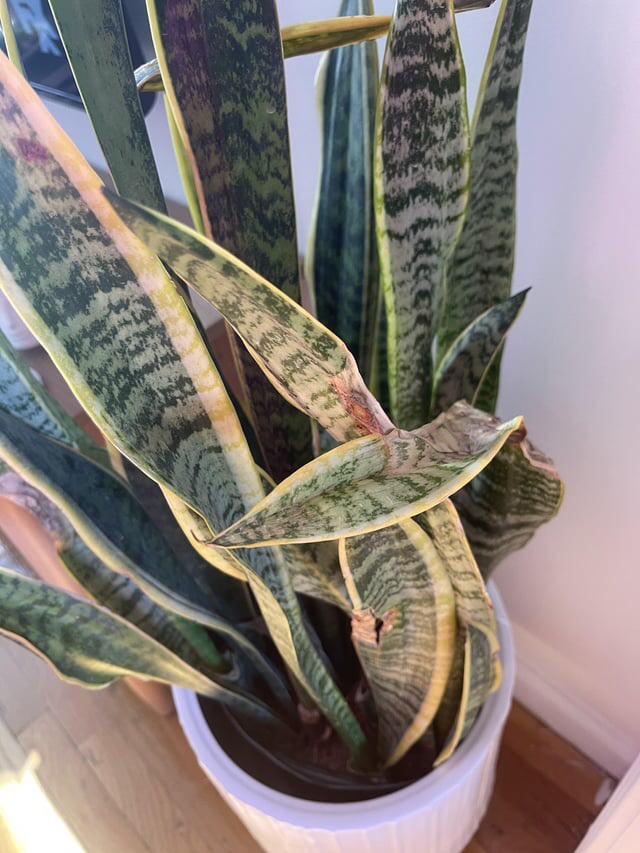
Snake plants can quickly turn from looking great to having ugly brown spots and edges. It happens far more often than your think. But why?
Snake plants are supposed to be basically impossible to kill. They will survive even when neglected, have bad lighting and that one time you forgot to water anything for three weeks when on vacation.
But as with all plants there’s only so much they can take. So if your snake plant is turning brown something is definitely not right. I’ll take you through the most common reasons and how to fix them and help you get your snake plant back its old self.
1. Overwatering
I used to think that giving my plants more water always made them happier. But that isn’t the case. Snake plants would much rather be left alone most of the time.
Overwatering is probably the main killer of snake plants. They’re actually originally from Africa and are designed to store water in their leaves, meaning they can go for weeks without needing any watering.
So when you give them too much water the roots can get overwhelmed, stopping them from being able to breathe, and causing them to rot.
Signs your snake plant is overwatered:
- Soft, mushy leaves
- Brown spots that look like they’ve booked soaked in water
- A nasty smell from the soil (that’s the rotting roots!)
- Leaves falling over
How to fix it:
- First, stop watering. Let the soil dry out completely.
- If its got really bad you might need to repot your plant.
- Check for root rot – take the plant out of its pot trim any black/mushy roots.
- Only water when the soil is completely dry from now on.
- For most homes that will be about once every 2 to 4 weeks, even less in the winter.
My neighbor nearly killed her 5 year old snake plant by watering it every week when it didn’t need it. I got her to slow it down and it bounced back within a month. Even in the summer I rarely water mine more than once a month and it’s doing really well.
2. Underwatering
I know, I just told you not to overwater and now I’m saying the opposite. Yeah, it can get a bit confusing. But even though snake plants are able to deal with little water they’re not actually cacti.
So your snake plant is going to need some water eventually. If you haven’t watered it for months it’ll start to show you it’s unhappy with dry, brown tips and edges.
Signs of an underwatered snake plant:
- Brown tips of the leaves that can also be dry and crisp
- Leaves that look shriveled
- Soil that’s pulling away from the sides of the pot
- The pot feeling very light when you pick it up (because there’s zero moisture)
How to fix it:
- Give your snake plant a big water, and let the water run all the way through the drainage holes.
- Don’t try to make up for lost time by watering it daily. All you’ll do is shock it.
- Get in to the habit of routinely watering your plant based on your home’s conditions.
- Put your finger into the soil and if it’s dry you should go ahead and water.
When we had a heatwave a while back I completely forgot about my upstairs snake plant for about two months. The edges of the leaves had turned very brown but after I got back to watering it normally the new growth came in perfect. The damaged leaves sadly don’t recover but you can trim the brown edges off if they bother you.
3. Too Much Light
Snake plants can handle some direct light they can also get sunburnt. If you’ve put your plant next to a south facing window that gets a lot of direct sunlight for hours on end then the leaves are likely to get burnt and turn brown, especially at the tips.
Signs of sunburn:
- Brown, dry patches on the side of the plant that is facing the light
- Yellowed areas on the leaves that later turn brown
- Crispy texture to the areas that are affected. Feels a bit like paper
How to fix it:
- Move your plant a few feet away from intense direct sunlight
- Use a sheer curtain to filter the bright direct light
- Rotate your plant now and again so every sides gets the same amount of light
- The damaged areas won’t recover but any new growth will be healthy once you fix the lighting
I had a snake plant on my west facing windowsill that was getting huge amounts of afternoon sun. I moved it about 3 feet away from the window and the browning stopped completely.
4. Temperature Stress
Snake plants like it warm (which makes sense seeing as they’re from Africa), but not TOO warm. They’re happiest when the temperature is between 60 to 85°F (15-29°C). Extreme cold or the temperature fluctuating a lot can also cause brown spots or edges.
But it’s cold drafts from doors or windows in the winter that really upset snake plants. Air conditioners in the summer are also terrible for them. Nothing will stress your snake plant out more than a sudden change in the temperature.
Signs of temperature stress:
- Brown spots appearing after a cold spell
- Leaves turning brown when plant is near to air conditioning vents or cold windows
- Declining health after the temperatures drop below 50°F (10°C)
How to fix it:
- Keep snake plants away from drafty doors and windows, especially in the winter
- Don’t put them where the heating or air con vents are pushing out air
- If you live somewhere that gets cold then move them at least 6 inches away from the windows in winter
- Never leave them in a car or garage where the temperature drops below 50°F (10°C)
5. The Water Quality
Snake plants can be sensitive to chemicals in our tap water. If your water has a lot of chlorine in it or fluoride or salts then these can build up in the soil over time and cause the tips of the leaves to turn brown.
Signs of water quality issues:
- Brown tips that come on slowly over time
- White crust on the surface of the soil or around the rim of the pot
- Brown edges to the leaves with a yellow halo
How to fix it:
- Use filtered, distilled or rainwater instead of tap water
- If you have to use tap water then let it sit out overnight so the chlorine evaporates
- Water the soil heavily and flush it out every few months to wash away any build up of minerals
- Repot every year with fresh soil to stop any salt from building up
I’ve been in a position where my apartment had really hard water and all my plants started getting brown tips. I switched to filtered water and within a couple months it had more a big difference. So if you’re noticing crusty white stuff on your pots that’s a classic sign of minerals building up.
6. Pest Problems
Snake plants don’t get pests very often (another reason they’re awesome), but when they do, it’s usually spider mites, mealybugs or scale insects. They will really do damage to your plants if given the chance and leave brown spots behind.
Signs of pest infestation:
- Tiny brown spots that spread with time
- Sticky substance on leaves
- Being able to see bugs or webs (if you look really closely)
- Slow new growth
How to fix it:
- Isolate any infected plants as quickly as possible to protect your other plants
- Wipe the leaves with a cloth to physically remove the pests
- Spray the affected one with insecticidal soap or neem oil solution (follow the package directions)
- For bad infestations you might need to treat every week for several weeks
- Check any plants that are near to the affected one as the bugs love to spread!
I brought home a new plant once that introduced spider mites to my other plants. I saw specks of damage on my snake plant that eventually turned brown. After looking at it with a magnifying glass, I found which pests were causing the problems and started treatment. If you catch them early then it’s easy to manage pests.
7. Fungal Diseases
If your snake plant has brown spots with yellow halos or brown patches there’s a good chance it’s got a fungal disease. Usually this happens when the leaves get and stay wet for too long or when the air flow around them is poor.
Signs of fungal issues:
- Circular brown spots with noticeable edges
- Dark brown or black patches that spread
- Brown areas that feel soft rather than crispy
- Multiple spots that grow and merge together
How to fix it:
- Stop watering as much and never get the leaves wet when you water
- Improve the air flow around the plant. You can use a small fan if there’s no other way.
- Remove any leaves that have been badly affected
- Treat with a fungicide if the problem persists
- Don’t water from overhead as the leaves will get wet if you do
The snake plant I had in my living room developed brown fungal spots because the humidity was just too high and it had really poor ventilation. When I moved it to my bedroom and stopped watering as often it solved the problem.
8. Your Plant is Just Getting Old
Sometimes brown tips are just part of aging. Snake plant leaves don’t live forever and the oldest leaves will eventually turn brown and die off as the plant grows new ones.
Signs it’s just natural aging:
- Only the oldest leaves on the outer part of the plant are affected
- Browning will start at the tips and get worse slowly
- The rest of the plant looks healthy and carries on growing without any problems
- The brown areas are dry, not soft
How to fix it:
- This is normal! You can trim any completely brown leaves
- For leaves that just have brown tips you can trim the brown parts
- Continue your normal care – this isn’t a sign something’s wrong
My 7 year old snake plant regularly has the odd leaf that turns brown. I just snip it off at the base and the plant continues as normal. It’s actually a sign your plant is growing and renewing itself.
9. Your Plant is Pot Bound
Snake plants don’t care about being a little crowded but not too much. If your plant has been in the same pot for years and is completely rootbound it could begin to show signs it’s stressed through brown leaf tips.
Signs your snake plant needs repotting:
- Roots growing in circles around the inside of the pot or growing out of the drainage holes
- Growth has slowed a lot
- Water runs straight through the pot without being absorbed
- The plant is literally breaking the pot (yes, they can be that strong!)
How to fix it:
- Repot it into a container that’s about 1 to 2 inches larger in diameter
- Use fresh potting mix that drains well (cactus mix works really well)
- Don’t go too big with the new pot – snake plants like to be a little snug
- The spring or early summer is the best time to repot
I once had a snake plant that was so root bound, the plastic pot cracked in more tha one spot. Once I’d repotted it the brown tips stopped appearing and the plant gave me a few new leaves in gratitude.

Frequently Asked Questions
Should I cut the brown parts off my snake plant?
You can, but you don’t have to. If you just don’t like the way it looks then go ahead and trim off the brown parts. Try to cut them at an angle to so you keep the leaf’s natural pointed shape. Just the brown bits though. Don’t cut into the healthy green tissue or you’ll make new brown edges.
Can a completely brown snake plant leaf turn green again?
Nope, sorry! Once a leaf has turned brown that part is dead and won’t recover. But new growth will be healthy if you fix the underlying problem. Sometimes it’s best to just remove any leaves that have turned all brown so the plant can focus its energy on new growth.
How often should I water my snake plant to prevent browning?
There’s no single answer for this because it depends on your what your home is like. If you want a general answer then the best thing to do is wait until the soil has dried out complete then water it thoroughly. In most homes that will be about every 2 to 4 weeks, less in winter, maybe a little more often in very hot and dry summers. But when in doubt it’s always better to underwater than overwater.
Is coffee good for snake plants?
No! Some plants like acidic soil but snake plants don’t. Used coffee grounds can introduce fungus and liquid coffee can make the soil far too acidic. So just stick to plain water and then occasionally use diluted regular houseplant fertilizer in the summer.
My snake plant has brown spots after repotting. What did I do wrong?
Probably nothing serious. Snake plants sometimes get stressed after being repotted (called transplant shock). Make sure you’re not overwatering the repotted plant and keep it in similar light to before, then just give it time to adjust. Don’t fertilize at all for at least a month after repotting.
Can snake plants recover from root rot?
Yes, if you catch it early enough. You’ll have to take it out of the pot, wash off all the soil, cut away any black roots, let the remaining healthy roots dry in the air for a day and then repot it. Don’t water for at least a week afterward. Bad root rot might need you to propagate the remaining healthy parts to save the plant.
Final Thoughts
If your snake plant is looking a little crispy around the edges it’s understandable to be worried. But take heart from knowing that snake plants are incredibly tough and most brown spot issues can be fixed without having to do too much.
Overwatering is the most common reason, followed by not enough or too much light. Get those right and you’re most of the way there. When in doubt, do less – snake plants are almost designed to survive neglect.
My snake plants have always bounced back when I’ve messed up. Give yours some tough love, fix whatever the underlying problem is that’s causing it and before you know it it’ll be looking good again.
