

Snake plants are practically invincible. I’m not even kidding – I’ve seen these plants survive in situations that would kill most houseplants in days.
But… that doesn’t mean they can’t die. They’re just harder to kill than most!
I’ve been growing snake plants for years and even I’ve managed to kill a few. It happens to the best of us. The good news is that these sturdy succulents usually give plenty of warning signs before they give up the ghost.
So how do you know if your snake plant is dying? Well, that’s what I’m here to tell you.
I’ll go through all the major warning signs that your snake plant is on its last legs, why these problems happen, and—most importantly—how to fix them before it’s too late!
So let’s try to save your plant baby, shall we?
1. Mushy, Soft Stems
Probably the most obvious sign your snake plant is in serious trouble is when those normally firm, upright leaves start going soft and mushy. This is NOT normal and needs immediate attention!
Healthy snake plant leaves should feel firm and stand tall without support. If yours are flopping over or feel soft when you squeeze them you’ve got a problem on your hands.
I learned this the hard way when I noticed one of my snake plants had a leaf that felt like a soggy noodle. Within a week, the whole plant had collapsed into a sad, smelly mess. Total plant disaster!
Why It Happens:
Nine times out of ten, mushy stems mean one thing: overwatering. Snake plants are succulents native to arid regions of West Africa. They store water in their leaves and absolutely hate sitting in soggy soil.
When you water too frequently or don’t allow proper drainage, the cells in the leaves absorb too much water and literally burst, causing that disgusting mushy texture. It’s basically plant drowning!
According to a study by the University of Florida, overwatering accounts for approximately 80% of houseplant deaths. Snake plants are especially vulnerable because their reputation for being “indestructible” often leads people to neglect their specific needs.
How to Fix It:
First things first – assess the damage:
- If only one or two leaves are mushy, you can remove just those leaves by cutting them off at the base with clean scissors.
- If the mushiness has spread to multiple leaves or the entire plant, you’ll need to take more drastic measures.
Here’s my rescue plan:
1. Remove the plant from its pot
2. Cut away all mushy, rotten parts with sterilized scissors or a knife
3. Let any remaining healthy parts dry out for 2-3 days
4. Repot in fresh, well-draining cactus soil
5. Don’t water for at least a week after repotting
Prevention is always better than cure, though. Only water your snake plant when the soil is completely dry – usually every 2-3 weeks in summer and once a month or less in winter.
2. Yellow or Brown Leaves
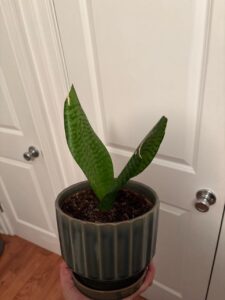
When snake plant leaves start changing color, it’s definitely a sign something’s wrong. Healthy snake plants have those gorgeous deep green leaves, sometimes with lighter patterns depending on the variety.
So if you’re seeing yellowing or browning, your plant is essentially waving a little flag that says “Help me!”
Why It Happens:
Yellow leaves usually point to overwatering (again!), but can also indicate too much direct sunlight.
Brown leaves or brown spots, on the other hand, could mean:
- Underwatering (crispy brown edges)
- Sunburn (brown patches where sun hits)
- Fungal infection (irregular brown spots)
- Cold damage (dark brown spots)
I once put my snake plant right next to a heating vent during winter, and within a few days, the leaf tips had turned an ugly brown. Turns out, snake plants hate dramatic temperature fluctuations and dry, hot air!
How to Fix It:
For yellowing leaves:
- Check soil moisture first – if it’s wet, let it dry out completely
- Move to a spot with bright indirect light rather than direct sun
- Don’t water until the soil is completely dry
For brown leaves:
- If the edges are crispy, water more consistently
- If there are brown patches, move away from direct sunlight
- Cut away severely damaged leaves at the base
- Keep plants away from cold drafts, heaters, and air conditioners
According to research from the Royal Horticultural Society, snake plants prefer temperatures between 65-85°F (18-29°C). Keep them in this range for best results!
3. Drooping or Falling Over
Snake plants are supposed to stand tall and proud – it’s literally in their nickname, “mother-in-law’s tongue”! (Because they’re sharp and upright… I didn’t come up with it!)
So when your snake plant starts drooping or falling over, something’s definitely wrong. A healthy snake plant should be able to support itself without any help.
Why It Happens:
There are several reasons your snake plant might be doing the limbo:
- Overwatering making the stems weak (yes, it’s usually overwatering!)
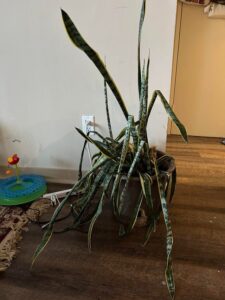
- Insufficient light causing the plant to stretch and become leggy
- Rootbound conditions where the roots have completely filled the pot
- Pest damage weakening the plant structure
About 30% of indoor plants suffer from light deficiency issues, according to a survey of houseplant owners. Snake plants can tolerate low light, but they won’t thrive in it.
How to Fix It:
For drooping leaves:
- Check the soil – if it’s soggy, follow the steps for fixing overwatering
- If the plant is stretching toward a light source, rotate it regularly and consider moving it to a brighter spot
- Support leaning leaves temporarily with stakes if needed while you address the underlying issue
- Check if the plant needs repotting – if roots are circling the bottom or coming out drainage holes, it’s time for a bigger home
I’ve had success using chopsticks or bamboo stakes to prop up drooping leaves while I fixed the root cause. Just be careful not to damage the roots when inserting the stakes!
4. Stunted Growth
Snake plants aren’t exactly speed demons when it comes to growth – they typically put out just a few new leaves each year. But if your plant hasn’t grown AT ALL in a year or more, that’s a sign something’s off.
Healthy snake plants should produce new shoots periodically, and existing leaves should gradually get taller. If yours seems stuck in time, it’s probably struggling.
Why It Happens:
Several factors can cause growth to stall:
- Insufficient light (they can survive in low light but won’t grow much)
- Nutrient deficiencies in the soil
- Root restrictions from being severely rootbound
- Temperature stress (too cold or fluctuating too much)
- Dormancy period (normal in winter)
Did you know snake plants can live for 5-10 years in the same pot? But they do need occasional fertilization – about 42% of houseplant owners never fertilize their plants at all, which can lead to stunted growth.
How to Fix It:
- Move to a spot with brighter indirect light – eastern or western exposure is ideal
- Fertilize lightly with a balanced houseplant fertilizer diluted to half strength once in spring and once in summer
- Check if the roots have filled the pot – if so, repot in a container 1-2 inches larger
- Maintain consistent temperatures between 65-85°F (18-29°C)
- Be patient – snake plants naturally grow slowly!
One year I thought my snake plant was completely stalled, but after moving it from a dark corner to a spot near a north-facing window and giving it a light feeding, it surprised me with three new shoots within a month!
5. Pest Infestation
Snake plants aren’t typically pest magnets, but they’re not immune either. If your plant is looking unhealthy and you can’t figure out why, check carefully for unwanted visitors.
The most common pests that affect snake plants are mealybugs, spider mites, and scale insects – all of which can cause serious damage if left unchecked.
Why It Happens:
Pests typically attack plants that are already stressed or weakened, so an infestation might be a secondary problem resulting from:
- Overwatering (surprise, surprise!)
- Poor air circulation
- Bringing in infested plants without quarantining them
- Using contaminated soil
According to a study by the University of California, approximately 25% of houseplant problems involve some type of pest issue. While this is lower than watering issues, it’s still significant!
How to Fix It:
For mealybugs (white cotton-like patches):
- Remove them with a cotton swab dipped in rubbing alcohol
- For larger infestations, spray with insecticidal soap or neem oil
For spider mites (tiny moving dots, fine webbing):
- Increase humidity around the plant
- Spray leaves with water to dislodge mites
- Apply neem oil to all surfaces
For scale (brown bumps that don’t move):
- Scrape them off gently with a fingernail or soft brush
- Apply horticultural oil to smother remaining insects
I once had a mealybug situation that I ignored for too long (they were hiding at the base of the leaves), and they nearly killed my favorite snake plant! Don’t make my mistake – check your plants regularly for early signs of pests.
6. Root Rot
If your snake plant seems to be declining despite your best efforts, the problem might be below the surface. Root rot is a serious condition that can kill your plant if not addressed quickly.
Since you can’t see the roots without unpotting the plant, you’ll need to watch for above-ground symptoms: yellowing leaves, mushy stems, a foul smell coming from the soil, or a plant that seems to be sinking lower in its pot.
Why It Happens:
You guessed it – overwatering is the primary culprit! When soil stays wet for too long, it creates the perfect environment for fungal and bacterial pathogens that attack the roots.
Root rot can also develop from:
- Pots without drainage holes
- Using standard garden soil instead of well-draining potting mix
- Keeping the plant in too large a pot
- Environmental conditions that slow drying (cold, humid weather)
Studies show that approximately 90% of root rot cases in succulent plants like snake plants are directly related to watering practices.
How to Fix It:
This is serious business, so don’t delay:
1. Remove the plant from its pot
2. Wash away as much soil as possible to expose the roots
3. Cut away all black, brown, mushy, or foul-smelling roots with sterilized scissors
4. Treat remaining roots with a fungicide solution
5. Allow the plant to air dry for 24 hours
6. Repot in fresh, well-draining soil (use cactus mix with extra perlite)
7. Use a clean pot with drainage holes
8. Don’t water for at least a week after repotting
I’ve successfully rehabilitated snake plants with root rot, but you have to act fast! If you catch it early enough, your plant has a good chance of recovery.
7. Wrinkled, Shriveled Leaves
While overwatering is the most common snake plant killer, underwatering can cause problems too. If your snake plant’s leaves are wrinkling, shriveling, or developing deep ridges along their length, dehydration may be the issue.
Healthy snake plant leaves should feel firm and plump, not wrinkled or leathery.
Why It Happens:
The main causes of dehydration in snake plants include:
- Going too long between waterings (even snake plants need some water!)
- Very low humidity environments
- Rootbound conditions that prevent proper water absorption
- Using fast-draining soil that doesn’t hold any moisture
Interestingly, about 15% of snake plant owners underwater their plants because they’ve heard these plants are drought-tolerant. They are – but they’re not camels!
How to Fix It:
If your snake plant is showing signs of dehydration:
1. Give it a good, thorough watering until water runs from the drainage holes
2. Allow the top 2-3 inches of soil to dry out before watering again
3. Consider increasing humidity slightly with a pebble tray
4. Check if the plant is rootbound – if roots are circling tightly, repot in a slightly larger container
5. Add a small amount of organic matter to your potting mix to improve water retention
One of my snake plants developed wrinkled leaves after I forgot about it during a vacation. A good soak and a more consistent watering schedule brought it back to its former glory within about three weeks.

FAQ About Dying Snake Plants
Can a completely yellow snake plant recover?
If all leaves have turned yellow, recovery is unlikely but possible. Cut away any mushy parts, repot in fresh soil, and adjust care. New growth may eventually emerge from the rhizome if it’s still healthy.
Why does my snake plant keep falling over?
This usually indicates weak stems from overwatering, insufficient light, or being rootbound. Check the soil moisture first, ensure adequate indirect light, and consider repotting if roots are circling the container.
How often should I water my snake plant?
Much less than you think! In spring/summer, water only when soil is completely dry (usually every 2-3 weeks). In fall/winter, reduce to once a month or less. Always check soil moisture before watering.
Can a snake plant recover from root rot?
Yes, if caught early. Remove all rotted roots, treat with fungicide, let dry, and repot in fresh well-draining soil. Success depends on how much healthy root system remains.
Should I cut off damaged snake plant leaves?
Yes, severely damaged leaves won’t recover and drain energy from the plant. Cut them at the base with clean scissors. Minor damage (slight browning at tips) doesn’t require removal.
Why is my snake plant turning brown in the middle?
This often indicates a fungal infection or bacterial problem. Isolate the plant, reduce watering, improve air circulation, and remove severely affected leaves. A copper fungicide may help in severe cases.
How do I know if my snake plant is getting enough light?
Snake plants in adequate light maintain their color pattern, grow (albeit slowly), and stand upright. Those in too little light become leggy, pale, and stretch toward light sources. They tolerate low light but grow best in bright indirect light.
Final Thoughts
The vast majority of snake plant problems come down to overwatering. These plants truly prefer neglect to too much attention. When in doubt, hold off on watering for another week – they can handle it.
Prevention is always easier than cure. Give your snake plant well-draining soil, a pot with drainage holes, bright indirect light, and minimal water and it will reward you with years of low-maintenance beauty.
And if you do start seeing signs of trouble, don’t panic! Most snake plant problems can be reversed if caught early. These resilient plants want to live – they just need you to create the right conditions for them to thrive.

Found the solution for the dark dried out leaves but there’s a layer of white fuzzy mold etc… what’s wrong and how do I fix it?