
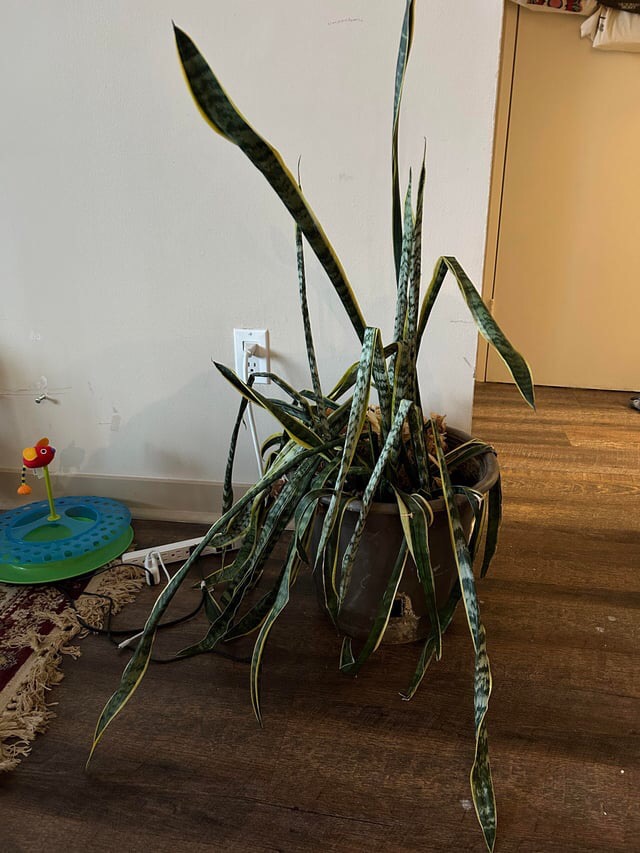
Having a snake plant slowly dying, especially when it’s known for being super tough, is frustrating. They’re supposed to be able to survive any amount of neglect but clearly that isn’t always the case.
But there is some good news. They’re also very good at bouncing back from being on the brink when you know what you’re doing.
So if your snake plant is looking sad, yellow or just generally unhappy, don’t give up on it just yet! I’ve brought back to life some seriously sad looking plants, and you probably can too.
Keep reading and I’ll you show you how to do so in the easiest way.
Quick Answer
- Stop Overwatering (Most Common): Snake plants store water in their leaves. So it’s best to let the soil dry out completely before you water again. And always empty the saucer afterwards.
- Check Roots and Repot: Take the plant out of its pot and cut any mushy roots or ones that smell nasty. Repot it in dry soil that drains well making sure it has drainage holes.
- Improve Light: Put the plant in bright, indirect light. Low light will slow down how quickly it recovers whereas strong sun can burn the leaves.
For more help See the reasons your snake plant isn’t growing.
Understanding What Went Wrong
Before we start fixing the problem it helps to figure out why your snake plant is struggling in the first place. Snake plants come from Africa originally. And being such a hot environment they would have to deal with a lack of water and rain. This shows us what they need to do well:
- They like being too dry rather than too wet (overwatering is the main snake plant killer)
- They don’t mind bright light but do best in indirect bright light
- They don’t need lots of fertilizer
- They can handle neglect quite well
I would take a rough guess and say about 75% of dying snake plants are down to overwatering. The other 25% are usually dealing with extreme conditions like freezing temperatures, pests or root rot.
I once left a snake plant in my car during the hot summer and it actually recovered after a few months of proper care. These plants really want to live!
8 Ways to Save a Dying Snake Plant
1. Stop Watering
If your snake plant has yellow leaves or the soil has been wet for weeks then the first thing you need to do is STOP WATERING.
I know that probably feels counterintuitive – when plants look sick we want to help and that means giving then water. But with snake plants this is usually the worst thing you can do.
Instead:
- Check the soil moisture – if it feels at all damp, don’t water it
- Only water when the soil is completely dry (that could be 3 to 6 weeks between waterings)
- When you do water do it thoroughly but not too often
I’ve saved at least three snake plants just by stopping watering. Sometimes the best care is no care at all.
2. Repot with Proper Drainage
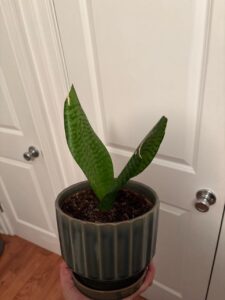
If your snake plant is sitting in very wet soil you’ll need to take more action. Repotting can save your plant if you do it right.
What you’ll need:
- A pot with drainage holes
- Cactus/succulent soil mix (or regular potting soil mixed with perlite/sand)
- Scissors or a knife
- Optional: Cinnamon powder (it’s a natural fungicide)
Steps:
- Remove the plant from its current pot
- Shake the old soil away from the roots
- Look at the roots – healthy ones are firm and white/tan, rotten ones will be soft and brown/black
- Cut away any rotted roots
- Let the plant dry in the air for 1 to 2 days if it was previously waterlogged
6. Repot in fresh soil
7. Don’t water for at least a week after repotting
I saved my favorite snake plant this way after it had been overwatered by my house sitter. I had to get rid of about half the roots but it bounced back within a few months.
3. Propagate the Healthy Parts
Sometimes you can’t save the whole plant but you can save parts of it. This works really well if only some of the leaves are still healthy.
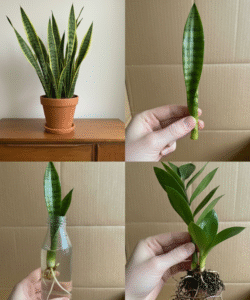
Snake plants can be propagated in two main ways:
- Leaf cuttings in soil or water
- Division of rhizomes (the stems under the growing)
For leaf cuttings:
- Cut a healthy leaf into 3 to 4 inch sections
- Remember which end was closest to the soil (the bottom)
- Let those form callus where you’ve cut them for 1 to 2 days
- Place the bottom end down in soil
- Keep soil just slightly moist until new growth appears (which can take a few weeks or months)
I managed to take a single healthy leaf from an otherwise dead snake plant and ended up with three new plants from that one leaf.
If you want some more help try our full guide to propagating snake plants.
4. Adjust The Light
Snake plants do adapt well to different light conditions but extremes can stress them out. If your plant has been getting too little light it might be pale and floppy. Too much direct sun can cause burnt, brown patches.
The ideal light for most snake plants is:
- Bright, indirect light
- Morning sun is OK
- Protect them from strong afternoon sun
- Some varieties with darker leaves can deal with less light
I’ve found that snake plants do surprisingly well about 5 to 10 feet from a sunny window. They’ll survive in a spot that doesn’t get much light but won’t do nearly as well as the could. They’ll also be more susceptible to overwatering problems since they use less water in lower light.
5. Treat for Pests
Snake plants will occasionally attract mealybugs, spider mites or scale insects, especially when they’re stressed.
Signs of pests are:
- Sticky substance on the leaves
- Bugs you can see or a type of cotton material
- Weird spots or discoloration
- Webbing between leaves
Treatment options:
- Separate the plant from any others quickly
- Wipe the leaves with a cloth (you can make it damp with soapy water)
- If you keep getting pests then use neem oil or insecticidal soap
- Repeat any treatments every week until the pests are gone
I had a snake plant that had a problem with mealybugs. All I had to do was use diluted rubbing alcohol on a cotton swab a few times and they were gone. You have to be persistent with pest treatment.
6. Address Temperature Extremes
Snake plants like the temperatures between 65 to 85°F (18 to 29°C). They’ll show signs of stress if they’re kept outside of these ranges for any length of time.
Cold damage looks like:
- Dark areas on the leaves
- Leaves collapsing
- Soft and mushy texture
Heat stress looks like:
- Dry tips and edges of the leaves
- Faded looking leaves
- Shriveling
If your snake plant has suffered temperature damage:
- Move it to an appropriate temperature
- Trim the badly damaged parts
- Resume normal care

7. Change Your Watering
Even if you’re not overwatering too often your watering technique might be causing problems.
Best practices are things like:
- Water the soil not the leaves or crown
- Make sure the water drains through completely
- Try bottom watering
- Use room temperature water, not cold
Bottom watering technique:
- Put the pot in a basin with a few inches of water
- Let it sit for 15 to 30 minutes
- Remove and let the water drain completely
This works as it helps the roots to grow deeper and stops the water from sitting in the crown, which can cause rot. I switched to bottom watering for all my snake plants after losing one to crown rot and haven’t had any issues since.
8. Be Patient
Snake plants are slow growers even when they’re healthy. When they’re recovering from damage they can be even slower to show improvement.
What to expect during recovery:
- Damaged leaves won’t heal
- Recovery can take months, not days or weeks
- The plant may look worse before it looks better as it gets rid of the damaged bits
I spent almost 6 months nursing a very overwatered snake plant back to health. For the first 3 months it looked like nothing was happening. Then out of the blue a new healthy leaf appeared and I knew we it was on the right track.
Common Snake Plant Issues and Solutions
Let’s look at the most common problems that might be killing your snake plant and how to fix them:
Overwatering and Root Rot
Symptoms:
- Yellow leaves
- Soft stems at the base
- Nasty smell from the soil
- Leaves falling over
Causes:
- Watering too often
- Bar drainage in pot or soil
- Pot too large for the plant
Solutions:
1. Stop watering
2. Repot in fresh, dry soil that drains well
3. Remove any rotted roots during repotting
4. Use a pot with drainage holes that’s not too big
5. Wait at least 2 to 3 weeks before you water again
Underwatering
Symptoms:
- Thin leaves
- Curling inward
- Brown tips
- Slow growth
Solutions:
1. Soak thoroughly but not that often
2. Make sure the water reaches all parts of the roots
3. Get into the habit of watering more consistently
Pest Infestations
Symptoms:
- Sticky substance on the leaves
- Bugs you can see
- Strange spots or discoloration
- Webbing between leaves
Solutions:
1. Isolate the affected plant
2. Wipe the leaves with soapy water
3. Use neem oil or insecticidal soap
4. Maybe use insecticides if it’s bad
5. Check and treat other plants too
Light Problems
Too little light symptoms:
- Leggy growth
- Falling over
- Dull colors
- Slow or no growth
Too much direct light symptoms:
- Burned patches
- Bleached areas
- Dry, crispy edges
Solutions:
1. For too little light: Move to a brighter spot but do it slowly – they don’t like sudden changes
2. For too much direct light: Move a few feet away from windows or use a sheer curtain
Temperature Stress
Symptoms:
- Discolored patches after cold exposure
- Wilting when it’s very hot
- Doesn’t grow during the seasons it should
Solutions:
1. Keep between 65 to 85°F (18 to 29°C)
2. Protect it from any drafts, heating vents, and air conditioners
3. Move indoors before the temperature drops below 50°F (10°C)
Fertilizer Issues
Too much fertilizer symptoms:
- Salt buildup on soil
- Burnt leaves
- Poor growth
Solutions:
1. Flush the soil with water
2. Repot if the buildup of salt is bad
3. Only fertilize during the spring/summer
4. Use fertilizer at half strength
About 90% of snake plant problems will be down to one of the above. If you fix the water and light most of the other issues sort themselves.

FAQ About Dying Snake Plants
How often should I water my snake plant?
It depends but generally every 3 to 6 weeks is good enough. Always check that the soil is completely dry before you water again. In the winter you might go even longer between waterings.
Can a completely yellow snake plant leaf turn green again?
Unfortunately, no. Once a leaf has turned yellow due to overwatering or other damage it won’t go back to being green.
Should I cut off damaged snake plant leaves?
Yes, but be selective. Remove completely yellow or softer leaves. For leaves with just the tips or edges damaged you can trim just those parts.
How long does it take for a snake plant to recover?
It will vary depending on how bad the damage is but you should expect at least 2 to 3 months before seeing any major improvement. Complete recovery might take 6 to 12 months.
Can I save a snake plant with no healthy leaves?
Maybe! If the rhizomes (underground stems) are still healthy they might produce new leaves eventually. Remove all the mushy parts, repot it in dry, fresh soil, and wait. I’ve seen snake plants regenerate from just rhizomes before.
Is my snake plant dead or dormant?
Check the base of the plant and how firm remaining leaves. A dormant plant will have firm but discolored leaves. A dead plant will be smelly or completely dried out. When in doubt, wait.
Why does my snake plant keep falling over?
This is usually because of either overwatering or not enough light. Make sure your plant has enough light and isn’t sitting in wet soil.
Final Thoughts
Saving a dying snake plant will usually come down to fixing how you’re caring for it. A lot of the time that’s by doing less rather than more.
The good part is that if you catch the problems early enough snake plants have a good chance of recovering. Even in cases where I thought all hope was lost I’ve been surprised how easily they’ve bounced back.
The best thing you can do with a snake plants is have some restraint. If you’re not sure then hold off on watering for another week. Move them less often than you think you should. Fertilize more lightly than the bottle suggests.
So don’t give up on your dying snake plant just yet. With the tips in this article you’ve got a great chance to bring it back stronger than ever.
