
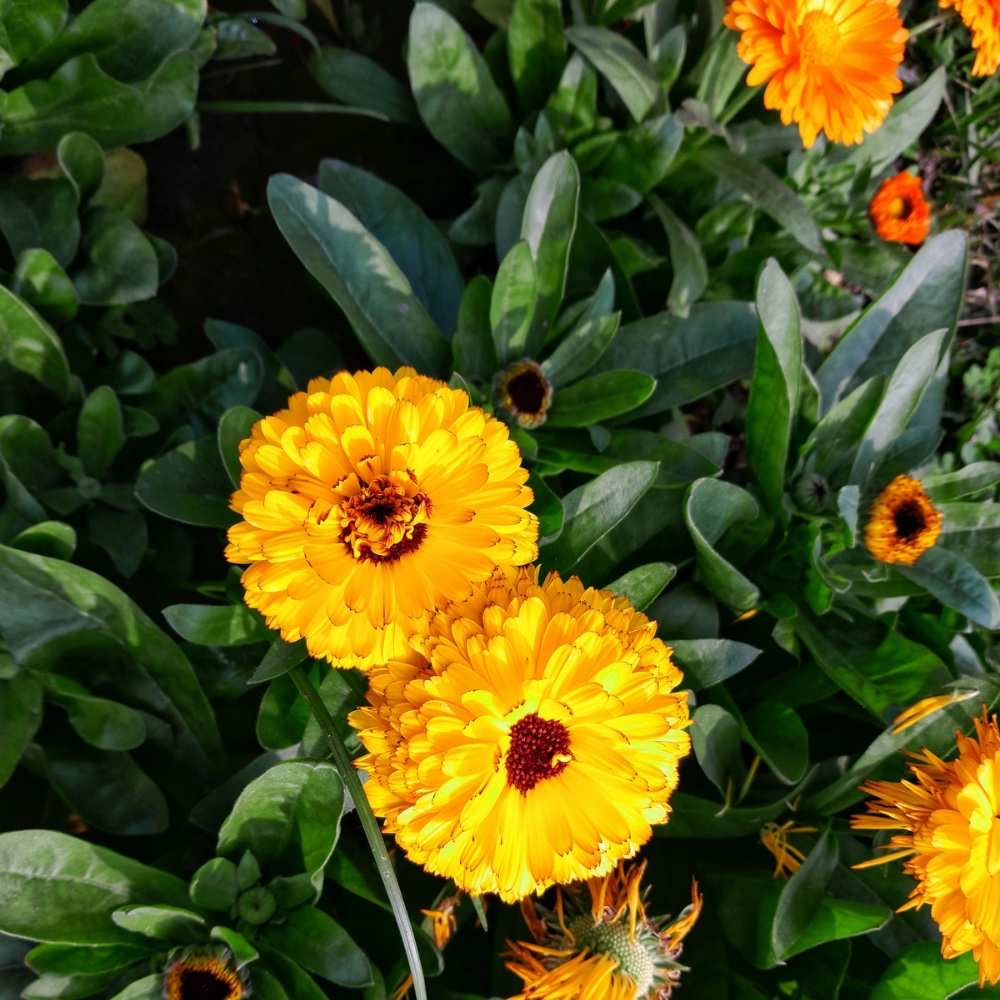
Marigolds may look cheerful and innocent but they aren’t as easygoing as their appearance suggest. Sure, these vibrant flowers seem like they’d play nice with anything, but I’ve killed enough plants to know better.
With that in mind I’m going to give you some companion planting wisdom that actually works, straight from my own gardening hits and misses.
Understanding Marigolds
First time I planted marigolds I scattered them everywhere thinking they’d be perfect border plants for everything. Which was a mistake. Those innocent-looking orange and yellow blooms are actually little chemical factories pumping compounds into the soil around them.
Marigolds belong to the Tagetes genus, and they’re not just pretty faces. They release thiophenes and other compounds through their roots that can either help or seriously hurt neighboring plants. That’s what makes them both amazing companions and absolutely terrible roommates, depending on what you’re growing.
What nobody told me when I started gardening was that marigolds are actually aggressive little things. They compete fiercely for nutrients and space despite their compact size. I once planted a row alongside my beans thinking I was being clever with pest control – half my bean plants barely produced that year.
So while they’re valuable for pest control (particularly nematodes) and their roots help to clean soil of certain problems, you have to remember they can’t just go anywhere.
Why Companion Planting with Marigolds Matters
Getting companion planting wrong with marigolds can lead to:
- Stunted growth in neighboring plants
- Reduced harvests from your vegetables
- Increased susceptibility to disease
- Wasted garden space and effort
- Chemical incompatibility in the soil
Plants NOT to Grow With Marigolds
1. Beans

Last summer I lined my bean rows with marigolds thinking I was being clever with pest control. The beans closest to the marigolds struggled all season, producing maybe half what the others did. Turns out the compounds marigolds release can interfere with the nitrogen-fixing bacteria that beans need to thrive.
Why it doesn’t work:
- Marigolds can inhibit the beneficial bacteria beans rely on
- Both compete for similar nutrients
- Beans prefer different soil conditions than what marigolds create
Try it: Check Any Two Plants for Compatibility
Use the checker below to see how any two of your plants will get along – pick one from each side and we’ll tell you whether to plant them together or keep them apart.
Plant Compatibility Checker
Select two plants to check if they are compatible companions in your garden.
Compatibility Results:
2. Cabbage Family Plants

Broccoli, cabbage, cauliflower – I’ve tried them all alongside marigolds and regretted it every time. These brassicas need their space and specific nutrients that marigolds compete for too aggressively.
The problem:
- Cabbage family plants are heavy feeders, so are marigolds
- Root competition becomes significant
- The strong scent of marigolds can actually attract certain cabbage pests
- Shade issues as both mature can lead to leggy, weak cabbage plants

3. Fennel
I learned this one the expensive way. Planted a gorgeous row of fennel down the middle of a bed bordered with marigolds. By mid-season the fennel was stunted and never developed those plump, flavorful bulbs I was dreaming about.
Why they clash:
- Fennel releases its own compounds that inhibit many plants (including marigolds)
- The combined allelopathic effect creates a dead zone between them
- Both are aromatic and the scent combinations confuse beneficial insects
4. Peas
Like their bean cousins, peas just don’t appreciate what marigolds do to the soil. The same issues with nitrogen-fixing bacteria come into play here.
What goes wrong:
- Disruption of the nitrogen-fixing process
- Marigolds can overtake the shallow root system of peas
- Peas prefer cooler soil while marigolds tend to warm it
5. Climbing Roses

This pairing looks gorgeous in gardening magazines but works terribly in real gardens.
The issue:
- Roses are heavy feeders that don’t like competition at their base
- The marigold scent can repel some beneficial insects that roses need
- Watering needs differ significantly
- Increases fungal disease risk for both plants
6. Potatoes
I tried this combination because I read marigolds deter potato beetles. Sure, they might help with some pests, but they created other problems instead.
Why it’s problematic:
- Marigolds can attract certain insects that damage potato plants
- Root competition at crucial development stages
- Different watering requirements create issues
- The soil acidification from marigolds isn’t ideal for potatoes
7. Melons
I’ve seen firsthand that melons and marigolds are mortal enemies. Any melons planted near marigolds were significantly smaller and less sweet than those planted elsewhere.
What happens:
- Melons need to spread out while marigolds crowd them
- The moisture levels that benefit marigolds can rot melons
- Nutrient competition at crucial fruiting times
- Increased risk of powdery mildew when planted together
8. Cucumbers

Similar issues to melons – cucumber yields are notoriously lower when bordered the bed with marigolds. The plants just never seemed to take off the way they should have.
The problems:
- Marigolds’ pest-deterring qualities also repel beneficial pollinators
- Root system conflicts at the same soil depth
- Cucumber vines need more space than marigolds allow
- Increased humidity between plants can cause disease issues
9. Sunflowers
This pairing just looks wrong too. The massive sunflowers tower over and shade the sun-loving marigolds, while the marigolds seem to stunt the sunflowers’ growth. Neither plant wins.
Why they clash:
- Extreme height differences create impossible sun management
- Heavy competition for the same nutrients
- Allelopathic interference from both plants
- Opposite aesthetic effects in the garden design
10. Bindweed and Invasive Vines
I made the mistake of thinking marigolds would help control bindweed in a troubled corner of my yard. Not only did they fail to control it, but the bindweed seemed to specifically target and strangle my marigold plants first!
What goes wrong:
- Invasive vines actually seem to target marigolds
- The marigolds get easily overwhelmed and shaded out
- Impossible to manage watering properly for both
- The vines use marigolds as “climbing supports” to reach other plants
11. Sage and Rosemary
These herbs need dry, well-drained conditions that conflict dramatically with what marigolds prefer.
The issue:
- Completely opposite watering needs
- Soil pH preferences that conflict
- The strong scents compete and confuse beneficial insects
- Root depth conflicts create weakness in both plants
12. Geraniums
Both are popular bedding plants, but they fight like siblings when planted together. I tried a mixed planter of geraniums and marigolds on my patio, and within weeks the geraniums were showing signs of stress.
Why it doesn’t work:
- Both are heavy feeders competing for the same nutrients
- Similar pest issues mean they can actually concentrate problems
- Watering needs are just different enough to create issues
- The strong scent of both creates an overwhelming effect
13. Zinnias
You’d think these cheerful flowers would make great companions, but my zinnia/marigold border was a disaster. The zinnias grew spindly and produced fewer blooms, while the marigolds seemed stunted.
The problems:
- Direct competition for the same pollinators
- Nearly identical nutritional needs creates deficiencies
- Both prone to similar fungal issues which can compound when together
- The visual clash actually reduces the impact of both flowers
Great Plants to Grow With Marigolds
After all those failures I can assure you that marigolds do play nice with others. Here are some proven winners:
- Tomatoes – Marigolds deter nematodes and tomato hornworms
- Peppers – Similar benefits to tomatoes, plus improved growth
- Basil – The scent combinations actually improve pest control
- Nasturtiums – Create a powerful pest-deterring duo
- Eggplant – Benefits from the same nematode control as tomatoes
- Salvia – The color combinations are stunning and they support each other’s growth
Tips for Successful Companion Planting
After years of getting it wrong (and occasionally right), here’s what I’ve learned about making companion planting work:
- Distance matters – Even incompatible plants can sometimes coexist if given enough space. I now plant marigolds at least 18 inches from sensitive plants.
- Consider timing – Plant companions with similar life cycles. My spring marigolds finish just as my fall cabbage is getting established – perfect timing!
- Watch the water – Group plants with similar moisture needs together. My drought-tolerant herbs have their own section far from thirsty marigolds.
- Soil matters – Some plants can coexist better in rich, healthy soil that can support multiple demands.
- Use containers strategically – Sometimes the best solution is to separate plants completely. My patio now has dedicated containers for marigolds, away from plants they don’t play nice with.
Final Thoughts
Marigolds aren’t the garden cure-all that some gardening books make them out to be. They’re more like a specialized tool – incredibly effective in the right situation, potentially damaging in the wrong one.
Remember that gardening is always about observation and adjustment. What works in a Zone 6 garden might need tweaking in your climate. The plants I’ve listed as problematic companions might actually work in your specific soil or microclimate.
The secret to success isn’t just following rules about what not to plant together – it’s about watching how your garden responds and being willing to move things around when they’re not thriving. My garden journal has saved me from repeating mistakes year after year.
