
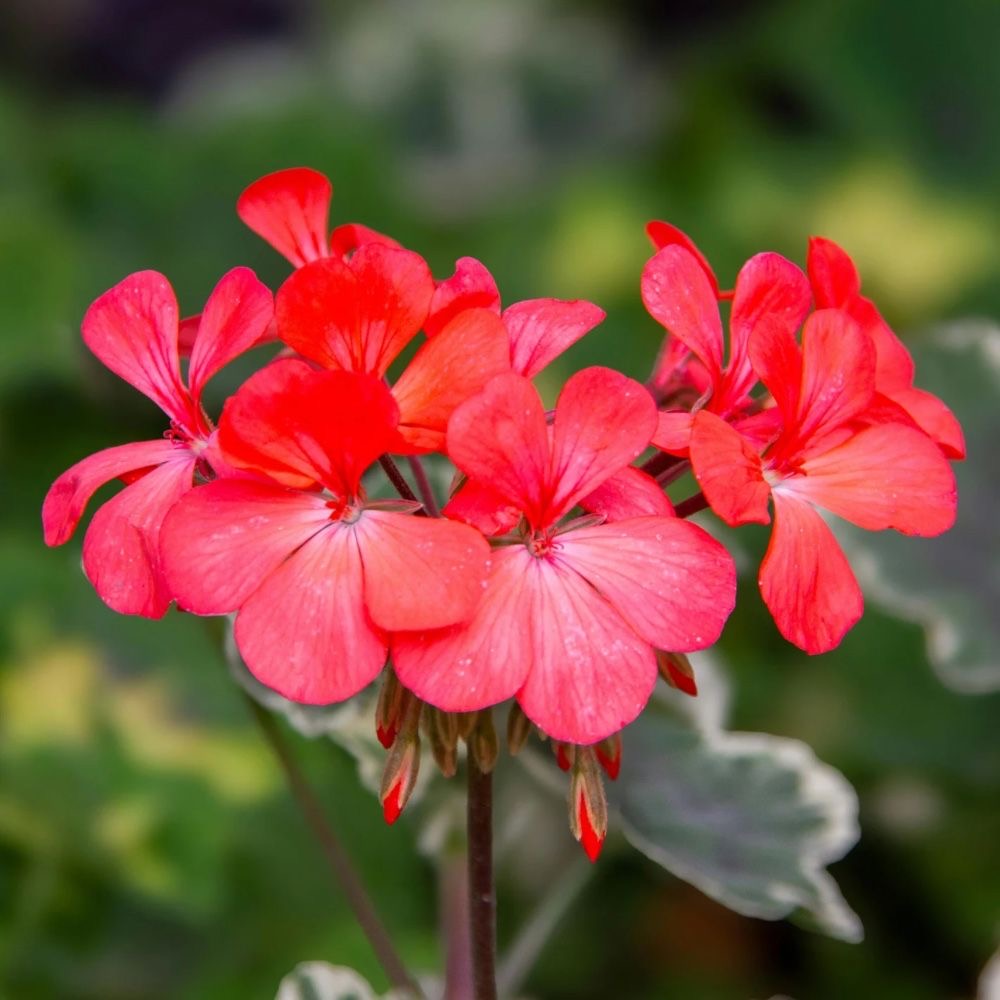
I spent years struggling to get geraniums to grow and wondering why. It took me all that time to figure out it was down to what I was planting with them.
So I’ve put together a list of plants that simply don’t work with geraniums and why.
Let me save you from the heartbreak of watching your geraniums struggle while you wonder what went wrong.
Understanding Geraniums
Geraniums might look tough and adaptable (and they are, to some extent), but they also need everything just right. I crammed my first container garden with every pretty flower that caught my eye. But a couple of weeks later my geraniums were sulking and had yellow leaves while the other plants were all doing great.
And geraniums aren’t actually that difficult, they just have specific needs. They like soil that drains well, lots of sunlight, and – most importantly for us – they don’t like having to fight for resources.
True geraniums have shallow roots that make them vulnerable to other plants that are aggressive. They’re also a little bit picky about their growing conditions, liking relatively dry soil between waterings, which means they don’t work well with plants that need more water.
When you plant incompatible plants with your geraniums they’re going to be fighting under the soil. Your geraniums might show how unhappy they are by:
- Poor growth
- Fewer flowers
- Yellow leaves
- More likely to be affected by pests and diseases
13 Plants That Will Make Your Geraniums Miserable
1. Mint and Other Aggressive Herbs
I once thought a border of mint would look great alongside my red geraniums. That was a mistake! Mint is a massive garden bully. It grows and spreads quickly and aggressively both above and below the ground, taking over everything in its path.
The mint looked innocent enough at first, but within a few weeks it had taken over the geraniums’ space. By mid summer my geraniums were struggling for nutrients, water and simply room to exist.
Why it’s a problem:
- Mint’s roots will literally strangle geraniums
- It spreads fast, taking over any available space
- Other herbs like oregano and marjoram cause the same issues
- Once it’s established it’s very hard to remove mint without disturbing the roots of the geraniums
Try it: Check Any Two Plants for Compatibility
Use the checker below to see how any two of your plants will get along – pick one from each side and we’ll tell you whether to plant them together or keep them apart.
Plant Compatibility Checker
Select two plants to check if they are compatible companions in your garden.
Compatibility Results:
2. Marigolds

This one surprises a lot of people because marigolds are seen as great companion plants. And they are – just not for geraniums. Both of them like similar amounts of light but they fight over the same nutrients.
Why it’s a problem:
- Marigolds and geraniums fight for the same nutrients
- Marigolds often win this fight which leaves geraniums lacking the nutrients they need
- Both plants attract similar pollinators, so there’s the potential of your geraniums getting fewer visits
- The strong scent of marigolds can sometimes overpower the scent of geraniums
3. Impatiens

Impatiens would seem like they’d be perfect neighbors for geraniums. However, how much water they need are completely opposite. Impatiens like moist soil whereas geraniums do best when allowed to dry between waterings.
Why it’s a problem:
- Completely different water needs
- Impatiens’ need for lots of moisture can lead to root rot in geraniums
- Trying to meet both plants’ needs stresses them both
- Different fertilizer needs makes for more complicated care
Garden not living up to its potential?
My free guide 7 Gardening Mistakes That Are Killing Your Plants covers the most common reasons outdoor plants struggle — and what to do about it.
4. Large, Sprawling Vines
Morning glories, climbing roses and other vines might seem like beautiful background plants for geraniums but they quickly become too much. They will fight for nutrients but they also create too much shade as they spread.
Why it’s a problem:
- Vines grow quickly and cast too much shade
- Their roots fight with geraniums for water and nutrients
- Lots of vines take up so much in the way of nutrients that it leaves none for geraniums
- The weight of some vines can damage geranium stems if they fall or are blown over
5. Hostas

Hostas large leaves spread out wide and can quickly create a lot of shadow over geraniums. Plus hostas like consistently moist soil which goes against then geraniums’ preference for drying out between waterings.
My sister’s garden had these two planted together and her geraniums struggled all season with yellow leaves and root issues from the damp soil.
Why it’s a problem:
- Different water needs create stress for both plants
- Hostas’ large leaves make too much shade for geraniums
- Hostas’ roots fight with geraniums
- The humidity created by hostas can increase disease risk for geraniums
6. Cabbage and Other Brassicas
While planting flowers with vegetables is generally a great idea the cabbage family (including broccoli, kale and cauliflower) make poor companions for geraniums. These quickly take the nutrients from the soil and attract pests that can spread to geraniums.
Why it’s a problem:
- Brassicas are extremely heavy feeders that take all the nutrients from the soil
- They bring cabbage moths and other pests to the garden that can then spread
- The way they grow can overshadow smaller geraniums
- The roots fight, especially in containers

7. Large Ornamental Grasses
Those gorgeous ornamental grasses might look stunning in magazines but if you plant them near geraniums you’re going to have problems. Their large roots and the way they spread quickly dominates.
Why it’s a problem:
- Competitive roots that dominate the soil
- Create too much shade for geraniums that love the sun
- Many grasses are allelopathic, which mean they releasing substances that stop other plants growing
- They fall over quickly and can damage more the stems of geraniums
8. Tomatoes
Both tomatoes and geraniums belong to different plant families but they’re susceptible to the same sort of diseases. Planting them together increases the risk of problems throughout your garden.
Why it’s a problem:
- Get similar fungal and bacterial diseases
- Tomatoes’ grow aggressively and that means they overshadow geraniums
- Tomatoes take lots of nutrients from the soil
- Both attract similar pests
9. Aggressive Groundcovers
Plants like creeping Jenny, ice plant or English ivy might seem like good options for filling in around geraniums but they quickly become a problem. As they spread fast and hard they will fight with geraniums and often win the battle for resources.
Why it’s a problem:
- Spread aggressively and take over geraniums’ space
- Stops water from reaching geranium roots
- Climb and cover geranium stems, blocking the light
- Can be nearly impossible to remove once they’re in
10. Lilies

Both of these plants are beautiful but lilies and geraniums need a lot of different care which makes them poor together. Lilies need consistent moisture and rich soil but geraniums like to dry out between waterings.
I’ve seen this combination fail repeatedly in gardens with either the lilies struggling without enough water or the geraniums suffering from overwatering.
Why it’s a problem:
- Different water needs stresses both plants
- Lilies’ grow tall and make too much shade for geraniums
- Their bulbs fight with geranium roots for space
- They need different fertilizer
11. Petunias

These might seem like natural partners for geraniums but they actually fight strongly with each other. Both plants need similar nutrients from the soil and petunias’ can take over the geraniums.
Why it’s a problem:
- Fight for the same soil nutrients
- Petunias’ overrun geraniums
- Both attract similar pollinators which means they may get less visits
- The way they’re affected by pests can lead to difficulty treating them
12. Potatoes
Potatoes and geraniums might seem like a strange mix but it’s worth noting that they really don’t work well together. Potatoes get several diseases that can then spread to geraniums and the way they grow upsets geraniums roots.
Why it’s a problem:
- Potatoes can pass on diseases to geraniums
- They mess up the geranium roots
- Digging up potatoes also damages geranium roots
- The way the soil needs to be prepared for them is different
13. Ferns
Ferns look like they would work well with geraniums but what they need to grow are completely the opposite. Ferns need shade and lots of moisture and geraniums like sun and drier conditions.
Why it’s a problem:
- Different light and water needs
- The way ferns spread can crowd out geraniums
- Ferns like humidity which increases the risk of diseases for geraniums
- They like different soil pH levels
Good Companions for Geraniums
After so much doom and gloom you might be wondering what actually works with geraniums. Well these are some companions that won’t upset them:
- Roses – similar water and sunlight needs
- Lavender – the same water needs and keep pests away
- Salvia – grows up so doesn’t fight over space
- Dusty Miller – the silver leaves look great with geranium flowers
- Euphorbia – doesn’t mind a lack of water and that matches what geraniums need
Tips for Successful Companion Planting
When planning your plants with geraniums keep these principles in mind:
- Match the water needs – plants that like to dry out between waterings work best
- Consider roots – shallow roots mean less competition
- Think about growth habits – avoid plants that make lots of shade for geraniums
- Plan for size – leave enough space for all the plants to reach their full growth
- Consider disease – don’t combine plants that increase the risks of diseases
I always think it’s best to think about the plants’ relationship six months from planting, not just how they look on day one. A vinca, for example, might look tiny now but by August it could be overrunning your geraniums.
Final Thoughts
Planting the right plants together is just as much about what you don’t plant. I’ve seen too many gardeners disappointed when their carefully chosen geraniums fail to grow and do well all because they were planted with the wrong neighbors.
Geraniums aren’t all that difficult plants but they do have certain needs. Respect those needs by choosing appropriate plants and you shouldn’t have any problems.
And if you’ve already made some of the mistakes here? Don’t worry – we’ve all done it at some point. Gardening is all about learning, and sometimes the best lessons come from our slip ups. Just make some adjustments next season and your geraniums will recover.
Garden not living up to its potential?
My free guide 7 Gardening Mistakes That Are Killing Your Plants covers the most common reasons outdoor plants struggle — and what to do about it.
