
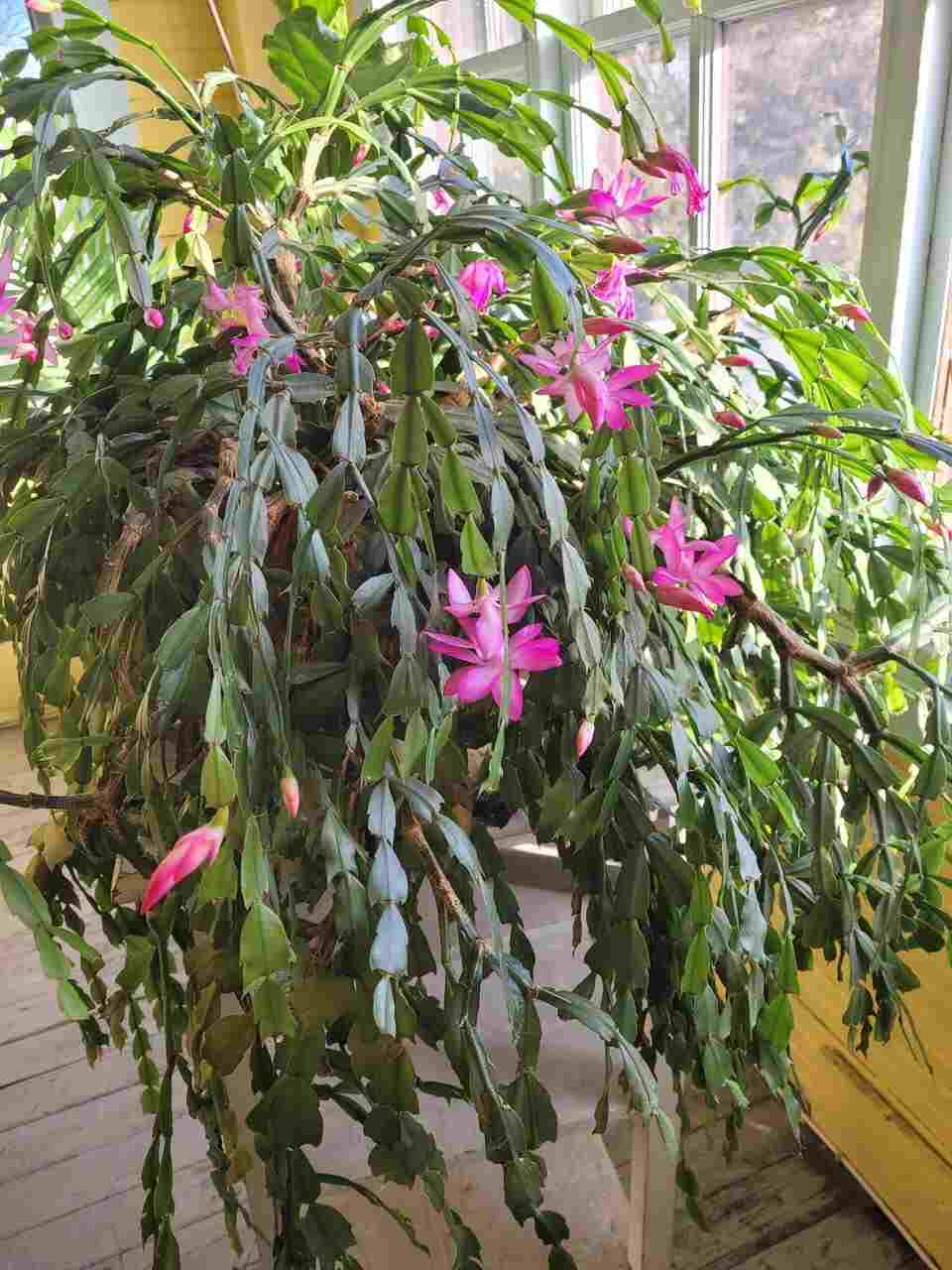
The Christmas cactus in my kitchen sits on a windowsill and gives me beautiful pink flowers every December. It’s been in my family for ages and is older than I am.
I think people have the impression that a Christmas cactus is a seasonal plant you just throwaway soon after the holiday is over. But if you get the care right it’ll outlive you and bloom year after year after year.
This care guide will help you to get a big and successful Christmas cactus. It doesn’t matter if you just got gifted one, picked one up on an impulse or you’ve had a leggy one on your shelf for two years, this Christmas cactus care guide covers everything you need. Light, water, the weird bloom trick that makes all the difference and how to keep it flowering every holiday season without fail.
Quick Answer
- Give it bright, indirect light: Christmas cactus wants a bright spot out of direct sun – within a few feet of an east, west or south facing window is ideal.
- Water when the top inch is dry: This is a tropical plant, not one from a desert. Let the top inch of soil dry out then water it thoroughly. Never let it sit in soggy soil.
- Trigger blooms with cool nights and long darkness: In fall give it around 6 weeks of cool temperatures (50 to 60°F / 10 to 15°C) and over 12 hours of uninterrupted darkness each night to set flower buds.
Already struggling with a sad-looking plant? Here’s how to revive a dying succulent style plant.
Meet the Christmas Cactus (It’s Not Really a Cactus)
Let’s clear up the biggest misconception first. It leads to a lot mistakes in how these plants are cared for.
Your Christmas cactus is not a desert plant. It looks a bit like one but it comes from the mountain rainforests of southeastern Brazil where it grows up in the crooks of trees and on mossy rocks. Botanists call that an epiphyte – a plant that grows on other plants rather than in the ground. Orchids do the same thing.
So while it belongs to the cactus family it has almost nothing in common with the spiky ones you see in Arizona. According to UF/IFAS Gardening Solutions, Christmas cacti want dappled light, moisture and humidity – the opposite of a windowsill that gets a lot of sun. Treat it like a regular cactus and you’ll end up with a shriveled plant that never flowers.

Christmas, Thanksgiving or Easter? How to Tell What You Have
Most plants sold as “Christmas cactus” are actually Thanksgiving cactus. They’re close cousins in the genus Schlumbergera, and their care is nearly identical, but they’re not the same plant.
There are three “holiday cacti” you’ll come across:
- Thanksgiving cactus (Schlumbergera truncata): Pointed teeth on the stem segments. Blooms earliest, usually mid to late November. This is the one most stores sell.
- Christmas cactus (Schlumbergera x buckleyi): Smooth, rounded edges on the segments. Blooms a bit later, closer to December. The “true” Christmas cactus.
- Easter cactus (Rhipsalidopsis gaertneri): Blooms in spring. Needs a bit more care than the other two.
The quickest test is to look at the edges of the stem segments. Sharp points mean Thanksgiving. Soft scallops mean Christmas.
For the usual day to day care it doesn’t matter that much – they want the same things. But it explains why your “Christmas” cactus sometimes flowers in November.
NC State Extension has a good breakdown of the true Christmas cactus if you want to really get into the differences.
 Purple Thanksgiving Cactus Plant
These Plants Live for Decades
This is my favorite thing about them. Christmas cactus are will live a long time.
With decent care they can bloom for generations – University of Missouri Extension horticulturist David Trinklein has said they often outlive their caretakers and some documented plants are over a hundred years old.
That’s why they get passed down through families. My one in my kitchen is proof.
So when you’re caring for one you’re not keeping a houseplant alive for a season – you’re potentially starting something you can hand down to your grandkids (no pressure!).
Christmas Cactus Light Requirements
Remember that in the wild Christmas cactus live under a canopy of leaves and get filtered, dappled sunlight. So it wants bright but indirect light indoors.
Somewhere thats a few feet from an east or west facing window is best. A south facing window works too but keep it back a little or filter the light with a sheer curtain so the sun doesn’t hit it directly.
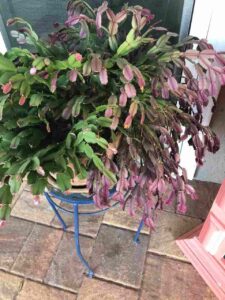
Too Much Sun vs Too Little
You’ll know your plant is getting too much direct sun when the segments start turning a reddish or purplish color or they look pale. That’s the plant producing protective pigments and a warning about sunburn. Move it somewhere that gets less sun and it’ll turn green again.
Too little light is more common in winter homes and the symptom is simpler: no flowers. A Christmas cactus not getting enough light will survive for years but without blooming and the new growth will look thin. If your plant is all green stems and no color then checking the light should be the first thing you do.
Watering
If a Christmas cactus dies it’s almost always from overwatering. I’ve done this myself as I was scared of it needing water that I somehow convinced myself it needed lots of it. I ended up turning it to mush.
So the best way to water is when the top inch of soil feels dry. Water it thoroughly until it runs out the drainage holes. Then leave it alone until the top inch dries out again.
How Often Should You Water a Christmas Cactus?
Water a Christmas cactus roughly every one to two weeks but let the soil guide your. Stick your finger an inch into the soil.
If it’s dry? Water it. Still damp? Wait a few days and check again. How often depends on your home’s temperature, humidity, the size of the pot and the season.
In the growing season (spring and summer) it’ll take up more water. In fall and winter do so less – University of Minnesota Extension recommends reducing watering as the plant rests and sets buds.
Unlike a real desert cactus though you don’t want it bone dry for long periods of time. Slightly moist but never soggy. That’s what it really likes.
Watch for Root Rot
The danger with constant wet soil is root rot which is the biggest killer of Christmas cactus. The frustrating part is that an overwatered, rotting Christmas cactus and an underwatered one can look almost the same – limp and wrinkled segments.
The tell is the soil. Limp segments and wet soil usually means the roots are rotting and can’t take up water.
Limp segments and very dry soil means it’s just needs water and will perk it up. If you suspect root rot then take the plant out of its pot and check – healthy roots are firm and a pale color, rotten ones are brown and mushy.
The same rescue steps apply as with any houseplant so this guide to spotting and saving root rot is worth a read if you’re dealing with it.
A well draining pot with drainage holes stops most of this. Please don’t plant yours in a pot with no drainage. I’ve had plants die on me purely because I put them in pots that looked pretty but had very little drainage.
Soil and Potting
Christmas cactus like a loose, fast draining mix. Standard potting soil on its own holds too much water and stays soggy, which will again lead to root rot.
You’ve got two options. Buy a bagged cactus or succulent mix, which drains well out of the bag. Or make your own.
The one I use is roughly:
- Two parts quality potting soil
- One part orchid bark or coco coir
- One part perlite or coarse sand
That will give you moisture retention without the sogginess. And the chunky bits make air pockets that the roots like.
You can get a well draining succulent and cactus potting mix if you’d rather skip the mixing.
 Premium Christmas Cactus Soil – Organic, Nutrient Rich, Optimal Draining Potting Mix
Keep It Slightly Pot Bound
Christmas cactus flower better when they’re a little bit cramped in their pot. It gives them the tight, root restricted way they would grow when in a tree branch in the wild.
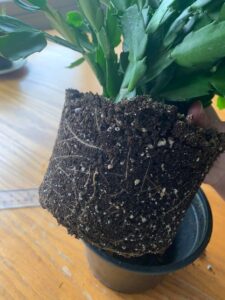
So don’t repot it into something huge. In fact you only need to repot it every three years or so and even then just go up one pot size.
A plant that’s slightly pot bound will often give you more blooms, not fewer. The best time to repot is in spring after flowering has finished, never when it’s in bud or bloom.
Temperature and Humidity
For most of the year, Christmas cactus are comfortable in the same temperatures we are – roughly 65 to 75°F (18 to 24°C).
What they hate is sudden change and cold drafts. Keep yours away from vents, radiators, doors that have strong drafts etc. Hot, dry air from a heater or a cold draft from a door can easily cause dropped flower buds which is very frustrating when you’ve waited all year for those buds.
Because they’re tropical they also like a bit more humidity than the average dry winter home will usually have. You don’t need to go overboard though.
Grouping it with other plants helps or using a pebble tray under the pot works well – just put the pot on the pebbles not sitting in the water. If your home gets really dry in the winter with the heating on then a small humidifier will help.
Fertilizing
Christmas cactus aren’t heavy feeders but a bit during the growing season keeps them healthy and sets them up nicely to bloom.
Feed with a balanced houseplant fertilizer (something like 10-10-10 or a 20-20-20 diluted to half strength) every two to four weeks from spring through to the early fall. That’s the active growing window.
A gentle balanced liquid houseplant fertilizer is all you need – no special “bloom booster”.
 Miracle-Gro Indoor Plant Food for All Plants, 8 fl. oz. (2-Pack)
Then stop. Once you get to fall and you’re moving into the bloom triggering routine don’t feed until after the flowers have finished. Fertilizing while it’s trying to bloom can actually work against you.
How to Make a Christmas Cactus Bloom Year After Year
Getting the first blooms is relatively easy because the plant arrives from the store already with lots of buds. Getting it to bloom again, next year and every year after is where people have trouble.
Christmas cactus are what botanists call thermophotoperiodic, which means two things trigger their flowering: cool temperatures and short days (long nights). In the wild the shortening days and cooler nights are the plant’s signal that its blooming season has arrived. You just have to recreate that signal at home.
The Fall Bloom Routine
Starting in early to mid fall (around late September to October in most US homes) give your plant about six weeks of the following:
- Lots of darkness: The plant needs 12 to 14 hours of complete darkness every night. So no lamps, no TV glow, not even a streetlight coming through the window. Even brief light during the dark period can reset the clock and stop buds from forming.
- Cool nights: Night temperatures around 50 to 60°F (10 to 15°C) push it to set buds. If a plant gets cool enough – consistently below about 68°F (20°C) – it’ll often bud up regardless of the light.
- Slightly drier soil: Don’t water as much during this time, keeping the soil on the drier side of your normal routine (but not fully dry).
The easiest way to do this is to either move the plant to a cool room – a spare bedroom or porch that stays cold and dark at night is perfect. Or, if your nights are mild enough, leave it outside in a the shade until just before your first frost.
The naturally cooling nights and shortening days do the work for you. Just bring it in before the temperatures get near freezing because it can’t handle frost.
Once Buds Appear, Don’t Move It
When you finally get buds it’s natural to be excited, and many people then move the plant to the middle of the room to show it off – and within days all the buds drop off.
Christmas cactus hate being moved once they’re in bud. A sudden change in light, temperature or even the direction it’s facing can cause bud drop.
So once you see buds, pick a place for it stay and leave it there. Keep watering consistent, keep it away from drafts and sources of heat and let it get on with it. The blooms will last six to eight weeks if you don’t disturb it.
Pruning and Propagation
Pruning your Christmas cactus does two good things: it keeps the plant full and bushy instead of getting straggly looking and it gives you free cuttings to grow into new plants.
How to Prune
The best time to prune is in the late spring after blooming has finished and before the plant puts on its summer growth. All you have to do is twist or snip off a few segments at the joints where two segments meet.
Pinching back the tips like this encourages the plant to branch out and get fuller. Don’t be shy – tidying it up makes for a more impressive plant next season.
Propagating New Plants
This is extremely easy:
- Twist off a healthy cutting made of three to five connected segments.
- Let the cut end dry and get a callus for a day or two – this stops it rotting when you plant it.
- Put the callused end about an inch deep into moist, well draining potting mix.
- Keep it lightly moist and in bright indirect light. Roots usually form within a few weeks.
To speed things up you can cover the pot with a clear plastic bag to trap humidity. It works like a mini greenhouse.
Just keep the plastic from touching the cutting. Late spring and early summer are the ideal times to propagate when the plant is naturally growing.
Pot a few cuttings together in one pot and you’ll get a nice full plant much faster than from a single stem. These make lovely gifts especially if the parent plant has a family story attached.
Christmas Cactus Problems and Fixes
These are some of the issues you’re most likely to come up against and how to sort them out.
Flower Buds Dropping Off
This is the most common complaint and it’s usually down to change. Sudden shifts in temperature, light or location, drafts or inconsistent watering (too much or too little) all cause bud drop.
The fix is stability: once the buds form keep the plant in one spot, away from vents that give off heat or drafts, with a steady watering routine.
Limp, Wrinkled or Droopy Segments
This is either underwatering or root rot and as I mentioned earlier the soil tells you which. Dry soil means it need water and it should firm up within a day.
Wet soil means stop watering and check the roots for rot. Being limp with soggy soil means you should unpot it and inspect.
Reddish or Purple Segments
Usually too much direct sun, sometimes stress or cold. A little reddening at the tips doesn’t really matter but if the whole plant is turning color then move it out of direct light to somewhere better.
No Flowers At All
If your plant is healthy but won’t bloom it almost always comes down to the fall routine – it didn’t get enough darkness or cool nights to trigger the buds. Streetlights, lamps or a too warm room are the usual reasons.
Go back to the blooming section above and give it six weeks of coolness and darkness. If you’ve wrestled with a non blooming plant before the logic is similar to diagnosing why an orchid won’t bloom – it’s nearly always about giving the plant the conditions it needs.
Pests
Christmas cactus are pretty resistant but look out for mealybugs (little white groups) and spider mites. Dab mealybugs with a cotton swab dipped in rubbing alcohol and treat larger infestations with insecticidal soap or neem oil. Keep any affected plant away from others so it doesn’t spread.
What's Wrong With My Plant?
Answer a few questions and we'll help diagnose the problem.
Is Christmas Cactus Toxic to Pets?
Nope, Christmas cactus is non toxic to both cats and dogs according to NC State Extension. That’s one of the reasons these plants make such good holiday gifts.
That said non toxic doesn’t mean that if a pet eats a big mouthful them they won’t get an upset stomach or mild vomiting from the fiber and plant material. So it’s still worth keeping it somewhere your pets can’t get at it.
But you don’t need to panic the way you would with something like a lily or a poinsettia.
Stop killing your plants by accident.
Get my free guide 7 Gardening Mistakes That Are Killing Your Plants — the most common reasons plants fail, and the simple fixes that turn them around.
Christmas Cactus Care FAQ
How long do Christmas cactus blooms last?
The flowering period usually lasts six to eight weeks if the plant is happy and doesn’t get disturbed. Keeping it cool and out of drafts, with good watering, helps the blooms last as long as possible.
Can a Christmas cactus go outside in summer?
Yes and it often loves it. Put it in a shady place out of direct sun once the weather is warm. The naturally cooling fall nights outdoors can even help trigger blooming. Just bring it inside before your first frost because it can’t survive in freezing temperatures.
How often should I repot a Christmas cactus?
Only every three years or so. They flower better when a bit pot bound so there’s no rush. When you do repot, go up just one pot size and do it in spring after blooming.
My Christmas cactus is blooming at Thanksgiving, not Christmas. Why?
You almost certainly have a Thanksgiving cactus which naturally blooms a few weeks earlier. Check the stem segments – if it has pointed teeth that means it’s a Thanksgiving cactus. If it has smooth scallops that means it’s a true Christmas cactus. How you care for them is the same.
Should I mist my Christmas cactus?
You can but it’s not very effective for raising the humidity over the long term. A pebble tray, grouping some of your plants together or a small humidifier all work better if your home gets dry in the winter.
Final Thoughts
Christmas cactus care is really quite simple. Bright indirect light, water only when the top inch dries out, a pot with good drainage and comfortable room temperatures for most of the year. That’s the all it needs.
Stop killing your plants by accident.
Get my free guide 7 Gardening Mistakes That Are Killing Your Plants — the most common reasons plants fail, and the simple fixes that turn them around.
