
There are few things more frustrating when you’re growing and caring for an orchid than watching a spike get loads of buds, become excited about the bloom that’s coming and then watching those buds shrivel up and drop off before any of them open.
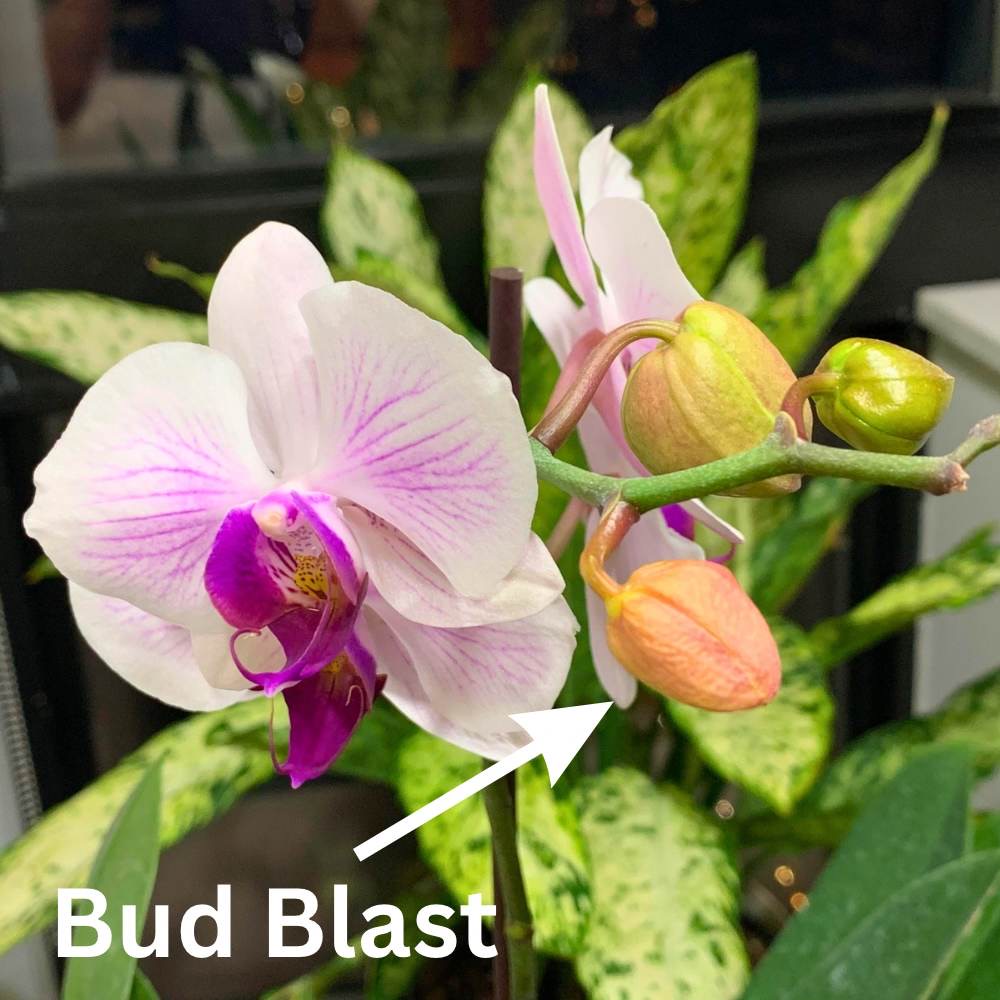
This is called bud blast and if your orchid buds are falling off before they bloom you’re definitely not alone. It’s one of the most common things that goes wrong with orchids, especially the moth orchids (Phalaenopsis) most of us start out with.
The first orchid I ever owned did it. I’d had it for a few weeks, it gave me a spike with about eight buds on it and I was so pleased with myself that I moved it from the bathroom windowsill onto the bright kitchen counter so I could look at it. Which was a stupid mistake on my part.
After about a week every single bud had gone soft and dropped. I thought I’d killed it. (I hadn’t – that orchid is now on its second rebloom after I nearly threw it out, which I’ll come back to later on)
Thankfully bud blast almost always comes down to something in the environment, and once you spot it, it’s usually an easy fix. So I’m going to take you through the reasons your orchid buds are falling off and what to do about each one.
Quick Answer
- Stop Moving It (Most Common): Once the buds form leave the orchid where it is. Even small changes in the light, temperature or position can make it drop all of them.
- Keep It Away From Fruit: Ripening fruit gives off ethylene gas which makes orchids drop buds. Either move the fruit bowl or move the plant away from it.
- Steady Warmth, No Drafts: Keep it around 65 to 80°F (18 to 27°C), away from cold windows your oven and any vents you have. Sudden changes in the temperature will cause bud drop.
Already losing open flowers too? See Reasons the Flowers Are Falling Off Your Orchid.
First, Is It Really Bud Blast?
Before you panic and start changing everything it’s a good idea to check that what you’re seeing is really a problem.
If the open flowers at the bottom of the spike are fading and dropping while new buds keep opening at the top, that’s just normal. Orchid flowers don’t last forever and the plant works its way up the spike. That’s not bud blast, that’s simply life.
This is how long orchid blooms actually last so you know what to expect.
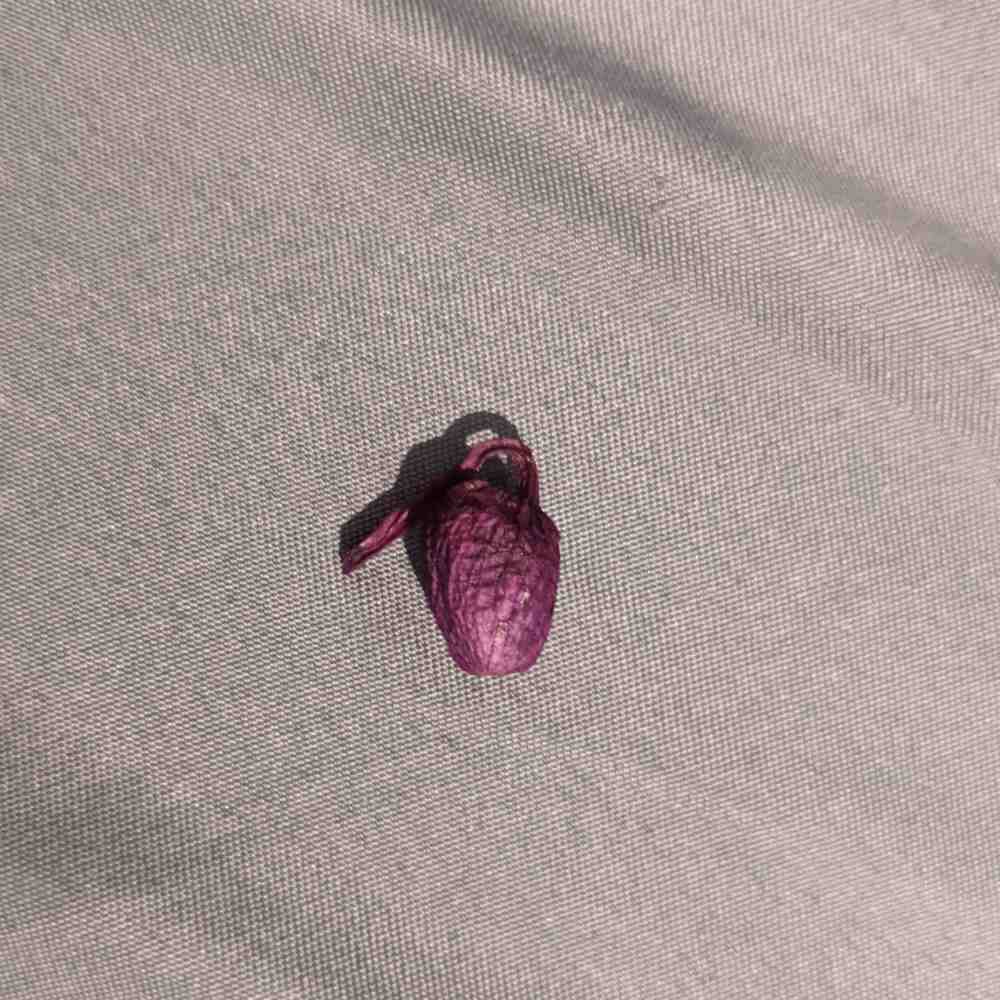
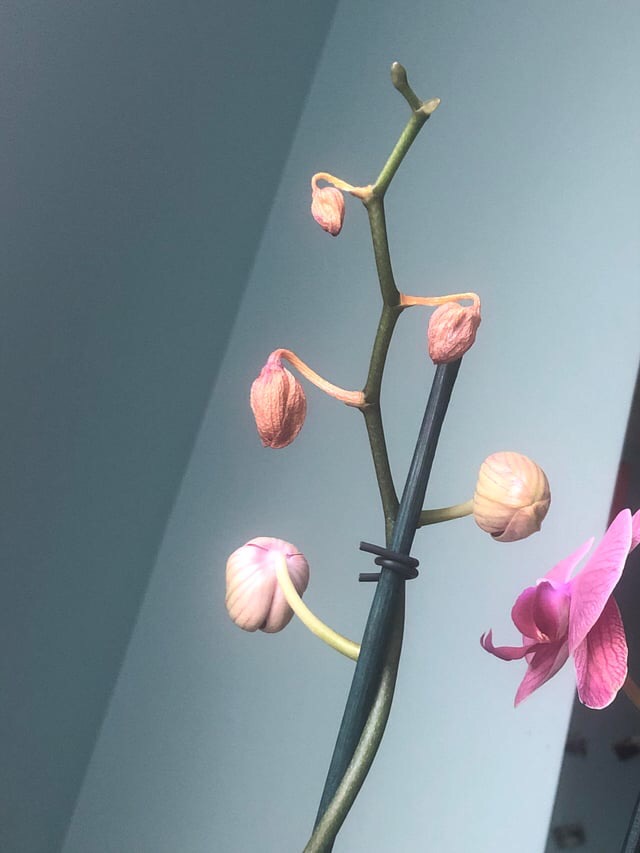
Bud blast is when the unopened buds turn yellow, shrivel up and fall before they ever get the chance to open. That’s the plant telling you it can’t support those buds in its current conditions.
Something most people aren’t aware of: if you’ve just brought an orchid home and it drops a few buds in the first week or two, that’s almost normal. Think about what that plant just went through.
It was raised in a climate controlled greenhouse, boxed up, shoved in trucked before being take to a shop, then sat under fluorescent lights for who knows how long before it’s carried out to a cold (or boiling) car. The St. Augustine Orchid Society describes these as the equivalent of jet lagged plants and a bit of bud drop after that journey is the rule rather than the exception. You can read their full overview of bud blast here.
So before you get worried and start acting rashly check which one you’re dealing with. If you’re sure it’s bud blast then keep reading.
1. You Moved It While It Was Budding
The Problem:
This is the main problem and it’s the mistake I made. Orchids hate change while they’re forming buds.
The buds are the most sensitive part of the whole plant and every little change in the light, temperature and direction gives them a reason to give up those buds.
When you move a budding orchid, even just turning it around or putting it a few feet closer to a window, it can decide the conditions are no longer safe and drop the buds to save its energy. Environment changes that happen suddenly as the buds are forming is one of the main triggers for blast.
Signs It’s This:
- You recently moved, rotated or repotted the plant.
- The buds dropped within a week or two of the change.
- The rest of the plant looks healthy.
The Fix:
- Pick a spot and leave it: Once you see buds don’t move the plant until it’s finished flowering.
- Don’t even rotate it: It’s tempting to turn it to get even light but wait until after the bloom before doing so.
- Wait to repot: Never repot an orchid in bud or in bloom. Wait until it’s flowering is completely finished.
Unfortunately buds which have already blasted aren’t coming back. But if you stop messing around now you can usually save the buds still left on the spike.
2. There’s Ripening Fruit Nearby (Ethylene Gas)
The Problem:
This is the weirdest one on the list and the something most people would never really think about. Ripening fruit gives off a gas called ethylene. Orchids are extremely sensitive to it and even a small amount in the air can make them drop their buds.
This was my second orchid’s problem. It kept blasting buds and I couldn’t work out why until I figured out I’d put it right next to a bowl of fruit on the kitchen counter.
A bunch of bananas was killing my orchid with its silent gas! Ethylene from fruit is up there with leaks from heaters and cigarette smoke as a known cause of bud blast. So it’s a real thing and not just bad luck.
Signs It’s This:
- The orchid is in a kitchen or near a fruit bowl.
- Buds shrivel for no obvious reason while the watering and light are fine.
- Someone smokes in the house, or there’s a gas stove near the plant.
The Fix:
- Separate fruit and orchids: Keep ripening fruit, especially bananas, apples and tomatoes well away from any budding orchid.
- Mind the fumes: Don’t put your orchids near gas appliances, fresh paint or let it be around cigarette smoke.
- Ventilate: A bit of fresh air movement helps clear out any ethylene thats built up in the room.
3. You Let It Dry Out Too Much
The Problem:
When an orchid gets too dry it takes the moisture out of its buds, which are the easiest thing to sacrifice. So when the plant can’t get enough water it withdraws it from the buds and they blast.
Forming buds is hard work for an orchid so a plant that was doing fine before can suddenly struggle when it’s trying to flower.
Signs It’s This:
- The potting bark is totally dry and noticeably lightweight.
- The leaves are looking a limp or wrinkled. (More on that in reasons your orchid is wilting.)
- You’ve been forgetting to water or only watering it lightly.
The Fix:
- Check before you water: Put a finger in the bark or lift up the pot. If it feels light and its dry it means it needs water.
- Water properly: Run water through the pot until it drains rather than a just doing a quick watering that never gets down to the roots.
- Get in a rhythm: Most Phalaenopsis are happy with a good water roughly once a week but always check first. This orchid watering guide walks through how, how often and when.
Worried you're killing your orchid?
Orchids fail for a small handful of specific reasons. My free guide 7 Gardening Mistakes That Are Killing Your Plants covers all of them — and what to do instead.
4. You’re Overwatering It (and Root Rot)
The Problem:
Overwatering causes bud blast too just for different reasons. When the roots sit in soggy bark they start to rot and rotting roots can’t take up water. So even though the pot is wet the plant is still dehydrated and so it takes the moisture it needs from the buds.
Budding orchids are especially picky about this. Wet roots when the plant is about to flower is a definite way to lose everything.
Signs It’s This:
- Wet bark that never dries and a heavy pot.
- Brown or black roots that feel mushy instead of green or silver colored ones.
- Yellow lower leaves. These are 12 reasons orchid leaves turn yellow if that’s happening too.
The Fix:
- Let it dry out: Don’t water again until the bark is nearly dry and the roots have turned to a silver color.
- Check the roots: Take the plant out of its pot and trim away any rotten roots.
- Repot if it’s bad: Fresh, dry orchid bark and a pot with good drainage. If the rot is bad this guide on saving a dying orchid will help. (And remember – only repot once the buds and flowers are done.)
5. Cold Drafts and Temperature Swings
The Problem:
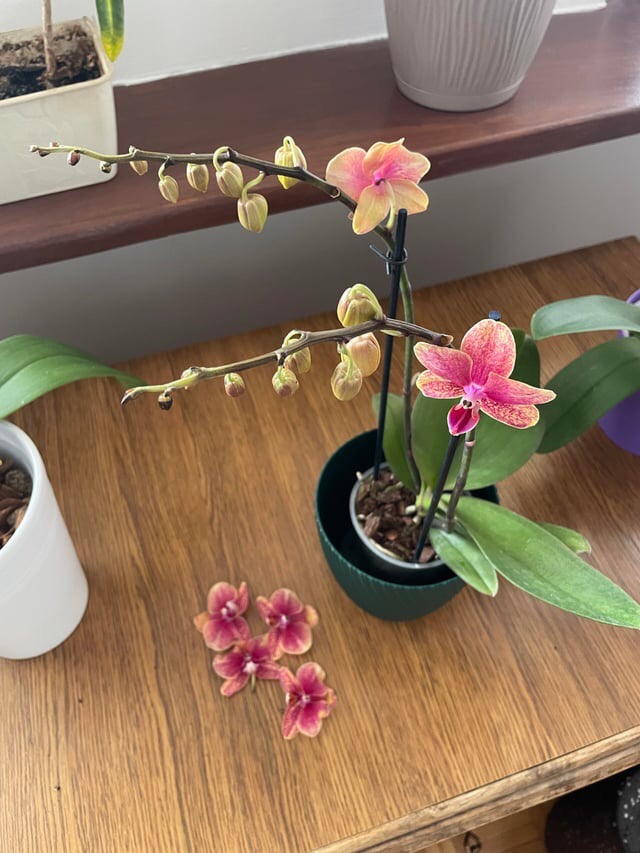
Orchid buds are sensitive to changes in the temperature more than to the actual temperature itself. If it’s in a cold draft coming from a window or being hit with hot air from air conditioning, or even hot air when you open the oven, it can all be enough to make a budding orchid drop.
So the bright windowsill you have your orchid on might be too hot for it during the day and chilling it off at night. And the swing in temperature from day to night is exactly what buds hate.
Signs It’s This:
- The orchid is on a cold windowsill, near a door or above a radiator.
- Buds dropped after a cold spell or the heating being turned on.
- The room temperature changes a lot between the day and night.
The Fix:
- Find a stable spot: You want a steady 65 to 80°F (18 to 27°C) without there being any big changes or swings.
- Move it off cold glass: Taking it a few inches away from a cold window at night makes a big difference.
- No vents: Keep it away from heating and air conditioners, and away from the oven and outside doors.
It’s also worth knowing that many white and pink Phalaenopsis won’t set or hold buds well if the daytime temperatures stay above about 82°F (28°C). So a room that’s too warm can be just as much of a problem as a cold one.

6. The Air Is Too Dry (Low Humidity)
The Problem:
Orchids come from humid environments and most of our homes, especially with the heating or air conditioning on, are a lot more dry than they’d like. When the air is too dry the buds lose moisture faster than the plant can replace it and so they shrivel up.
Orchids for the most part want the humidity to be around 40 to 70%. A centrally heated living room in the winter can easily drop below 30%, which is too much for a plant trying to flower.
Signs It’s This:
- Buds dry up and go sort of papery instead of rotting.
- You’ve got the heating or air conditioner running a lot.
- The tips of the leaves also look a bit crispy.
The Fix:
- Use a humidity tray: put the pot on a tray of pebbles with a little water in it making sure you keep the base of the pot above the water line.
- Group your plants: Putting all of your houseplants together increases the humidity around them.
- Think about a humidifier: In a really dry room a small humidifier is the best fix.
A quick mention about misting as it gets recommended by everyone: it doesn’t really raise the surrounding humidity for more than a few minutes and misting onto the buds or into the crown can do more harm than good (see the next point). A tray or humidifier does a much better job.
7. Not Enough Light or Too Much
The Problem:
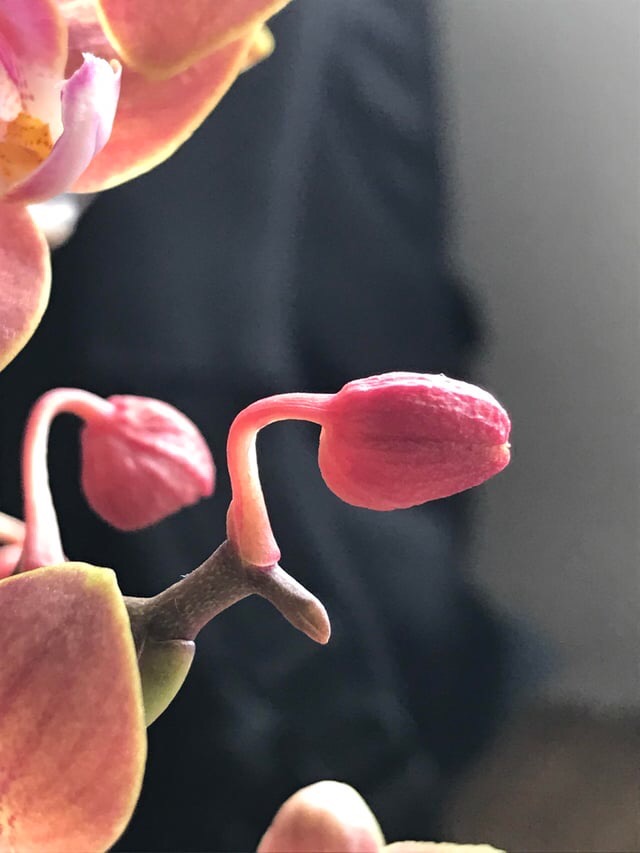
An orchid needs decent light to make a whole spike of buds grow. If it’s been put in a corner that gets very little it may not have the energy to get them all to open and so it drops some.
The other side is just as bad. Moving a plant into much brighter or more direct light all at once can stress it (and risk burning the leaves) and that shock can also trigger blast. Either way it comes back to sudden change while it’s budding.
Signs It’s This:
- The orchid is somewhere quite dark or you just moved it into strong sun.
- Floppy leaves can be a sign of too little light.
- It struggles to bloom at all. These are 8 reasons an orchid won’t bloom.
The Fix:
- You want bright, indirect light: An east or shaded south window is best for moth orchids.
- No harsh midday sun: Direct sun coming through the glass of a window can burn the leaves very quickly.
- Change light gradually: If you do need to give it more light do it slowly over a couple of weeks rather than all at once, and ideally not while it’s in bud.
8. You’re Watering It the Wrong Way
The Problem:
It’s not only how much you water it, but how you do it too. Doing two things wrong in particular can cause bud blast.
First, cold water. Watering an orchid with cold water from the tap can shock it enough to make it drop buds.
Second, water that sits in the crown of the plant or inside the bud sheath. That trapped water is the perfect breeding ground for fungus and bacteria and it’ll rot the buds.
Signs It’s This:
- You water with cold water straight from the cold tap.
- Buds turn black or rot rather than dry out.
- There’s water you can see sitting in the crown or sheath after watering.
The Fix:
- Use room temperature water: Let it sit out for a bit or mix it with a little warm water so it’s not cold.
- Water the roots, not the plant: Try to water the bark and keep it off the crown and buds.
- Dab up any pooling: If the water does settle in the crown then tip it out or blot it with a paper towel.
9. Pests Are Draining It
The Problem:
A budding orchid is putting everything into its flowers so it doesn’t have much spare energy. If pests like mealybugs, scale or aphids become a problem they take the plant’s resources and the buds are usually the first thing to be let go.
Buds and new spikes are soft and sweet, exactly what these pests like. So they usually congregate right where it hurts most.
Signs It’s This:
- You’ll find a sticky substance on the leaves, spike or nearby surfaces.
- Tiny white spots (mealybugs) or little brown bumps (scale).
- Sticky buds.
The Fix:
- Spot treat with alcohol: Dab the pests with a cotton bud thats been dipped in 70% isopropyl alcohol.
- Wipe the plant down: Clean the leaves, spike and pot to remove any eggs.
- Isolate and repeat: Keep the plant away from your others and treat again after a week. This guide to common orchid pests covers each one in detail.
Worried you're killing your orchid?
Orchids fail for a small handful of specific reasons. My free guide 7 Gardening Mistakes That Are Killing Your Plants covers all of them — and what to do instead.
Quick Bud Blast Troubleshooter
| Cause | What To Do |
|---|---|
| Recently moved or rotated | Leave it in one spot until it finishes flowering. |
| Ripening fruit or fumes near to it | Take the plant away from fruit, smoke and gas appliances. |
| Too dry | Water thoroughly and check moisture before each watering. |
| Overwatered / root rot | Let it dry out and trim away any rotten roots, then repot if it needs it. |
| Drafts or temperature swings | Keep it at a steady 65 to 80°F, away from vents and cold glass. |
| Dry air | Use a humidity tray or humidifier to get the humidity to 40 to 70%. |
| Light too low or changed suddenly | Give bright, indirect light and change conditions slowlu. |
| Cold water or wet crown | Use room temperature water and keep the crown dry. |
| Pests | Treat with 70% alcohol and get the plant away from others so it doesn’t spread. |
Final Thoughts
Bud blast can feel like a disaster when it happens. But it’s just your orchid reacting to something it doesn’t like. Thankfully most causes are easy enough to fix.
If your orchid buds are falling off before they bloom work through the list: did you move it, is there fruit nearby, is it too dry, too wet, in a draft or under attack from pests? Nine times out of ten it’s one of those.
The buds you’ve already lost won’t come back sadly but the ones you’ve still got can usually be saved once you sort out the cause. So pick a good spot for it, keep the watering steady, be careful of the fruit bowl and then leave it alone.
And don’t write the plant off if it blasts everything. That first orchid of mine dropped every bud, didn’t do much for months and I was convinced it was dead. I almost threw it out.
Instead it gave me a new spike the following year and it’s now on its second rebloom. Orchids are far tougher than they look. If yours has gone quiet, this guide on how to get an orchid to rebloom and bring it back to bloom will help.
Worried you're killing your orchid?
Orchids fail for a small handful of specific reasons. My free guide 7 Gardening Mistakes That Are Killing Your Plants covers all of them — and what to do instead.
