
Orchids are stubborn about telling you what they need. A lot of plants will make a big deal about showing you how they’re feeling. Peace lilies are the classic example of a plant that reacts very dramatically when it’s unhappy.
Orchids though will sit in the same pot looking perfectly fine for years. That is up until the point when they aren’t fine, and then it’s often too late.
That’s why so many people miss the signs your orchid needs repotting until the roots have already started to rot.
I almost got rid of my first moth orchid over this. It had stopped blooming, the leaves had gone soft and I just assumed it was dying/dead.
But it was the bark it was sitting in had broken down into a sludge and the roots were suffocating underneath. I repotted it and it’s now on its second rebloom and sitting on my kitchen windowsill looking very happy with itself.
So before you give up on yours check through these 7 clear signs your orchid needs repotting as well as what to do about each one.
Quick Answer
- Roots Escaping the Pot: A few aerial roots are normal but a large amount of them climbing out and over the edge of the pot usually means the orchid has outgrown it.
- The Mix Has Turned to Mush: When the bark breaks down into a sludge it stops draining and instead will smother the roots. This happens roughly every 1 to 2 years.
- Soft, Brown or Hollow Roots: Healthy roots are plump and will be green or a silver sort of color. Brown ones mean rot, and rot means you need to repot it now, not later.
- It’s Been 2+ Years (or You’ve Never Done It): If you can’t remember the last time you repotted, or it’s still in the moss it came in from the store, it’s almost certainly overdue.
1. The Roots Are Climbing Out of the Pot
Orchid roots love to wander. A few of them poking out into the air are completely normal and actually a good sign of a happy plant, so don’t panic the moment you see one. The problem is when that one or two turns into a mass of them coming over the rim of the pot and even wrapping around the outside of it.
When that happens the roots have run out of room. There’s no fresh medium left for new roots to grow into so they go looking elsewhere. At that point the orchid is telling you it wants more space or at the very least some fresh material to grow into.
Something a lot of people get wrong is mistaking a new flower spike for a stray root and forcing it back into the pot. They look similar when they’re young.
If you’re not sure which is which this guide on how to tell a new root from a new flower spike will save you from cutting off and getting rid of a future bloom.
What to do:
- Leave healthy aerial roots alone. Don’t ever try to bury them all back in.
- If the roots have outgrown the pot then move it up just one size. Orchids like to be tight and snug.
- If the roots look fine but there’s no room left you can often refresh the medium in the same pot rather than going up a size.
2. The Potting Mix Has Broken Down Into Mush
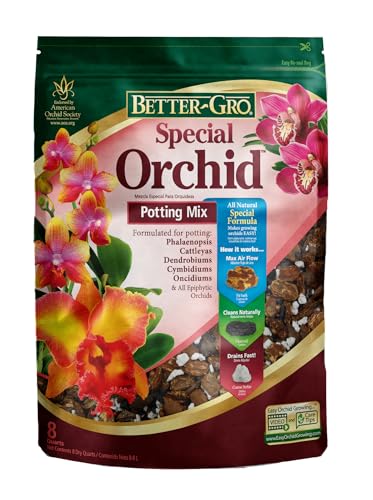
This gets a lot of orchids killed and it’s the reason mine nearly ended up in the bin. Orchids aren’t planted in soil. They sit in chunky bark, sometimes mixed with sphagnum moss or perlite, and that all does a job: letting air get to the roots and letting water drain through.
Over time that bark slowly rots and crumbles. The chunks break down and pack together and then hold on to water like a wet sponge. The American Orchid Society points to a broken down mix as one of the two main reasons orchids need repotting and for good reason. Once there are no air pockets the roots can’t breathe which will cause them to rot.
Most bark mixes start breaking down after roughly 2 years, sometimes sooner if you water a lot. So even if everything looks okay from the top the medium won’t last forever.
How to check:
- Squeeze a bit of the mix. If it feels firm and springy that’s all good. If it’s crumbly then its not.
- Give it a sniff. A nasty smell means it’s decomposing.
- Notice how long it stays wet. Old mix will stay wet for days.
3. The Roots Are Soft, Brown or Hollow
If you ever needed an excuse to grow your orchid in a clear plastic pot, this is it. A clear pot lets you see exactly what the roots are doing without disturbing anything. And the roots tell you more about your orchid’s health than the leaves ever will.
Healthy orchid roots will feel firm and look plump. When they get dry they look a sort of silver or green color and when they get wet they turn a very bright green.
If the roots that have gone brown that’s usually rotting, often because they’ve been sat in a waterlogged mix. Roots that are dried out and hollow have died from a lack of water. Either way a lot of dead roots means the plant can’t take in the food it needs and means you should be giving it fresh material fast.
If the leaves have also become limp or wrinkled that’s often the knock on effect of roots that can’t take up water. I’ve written more on the reasons an orchid wilts if that’s what you’re seeing, and if things are looking really bad then these practical tips to save a dying orchid will help you rescue it.
What to do:
- Take the orchid out of its pot and clear the old medium off it’s roots.
- Trim away every soft, brown or hollow root.
- Repot it into fresh, dry bark and don’t water it much for the next couple of weeks while it settles.
4. Water Runs Straight Through or Won’t Drain at All
Watering tells you a surprising amount. When fresh bark is doing its job the water will run through, get the roots properly wet and then drain away within a few seconds. When the medium is to old you’ll usually see one of two extremes.
Either the water runs straight through far too fast because the mix has shrunk and compacted away from the roots and the water can get around it. Or it pools on top and takes ages to drain away because the broken down mix has clogged everything up and stopped draining.
Neither is what you want. Both mean the medium can’t hold on to moisture evenly around the roots which leads to a plant that needs water and is waterlogged at the same time.
It’s easy to blame your watering routine for this, and people often start watering more or less to compensate. But if the mix is the real problem then there isn’t change to your schedule that will fix it.
For what a healthy routine looks like once you’ve repotted this guide on how and when to water an orchid covers it.

5. The Plant Is Top Heavy and Wobbles in the Pot
Pick your orchid up by the leaves, very gently, and give it a bit of a wiggle. If it’s well rooted then it should be anchored in its pot and not move.
If it’s overdue a repot then you’ll find it rock about loosely or the whole plant feels like it’s about to drag itself out.
This happens when the roots have outgrown the anchor or when so many roots have died off that there’s nothing left holding the plant steady. The leaves and any flower spikes keep getting bigger but the support below shrinks and the balance tips.
One of my orchids toppled off the windowsill one morning all because it had become too top heavy and the roots were no longer gripping on to anything.
A loose and unstable plant is more than just a nuisance. It’s a sign the foundations have failed and need to be rebuilt with fresh medium. Sometimes it may need a slightly bigger or heavier pot too to keep things steady.
6. Growth Has Stopped or It Won’t Rebloom Despite Good Care
This can be tricky to diagnose because nothing looks obviously wrong. The orchid isn’t dying but it’s just sort of stuck.
It’s not growing any new leaves, no new roots, no flowers etc. even though you’re giving it the right light, water and feed it’s supposed to want.
When the medium has broken down and the roots are struggling the plant isn’t able to take up enough nutrients to grow anything new. The little energy it has left is used to stay alive rather than blooming.
So before you make any changes to how you’re fertilizing or it’s light check the pot first. A fresh medium and a happy roots are often what an orchid needs to get going again.
Of course repotting isn’t the only reason an orchid will be unhappy. If your plant otherwise looks healthy and the roots are fine have a look at these reasons your orchid won’t bloom before you disturb it.
And if you’re noticing yellow leaves alongside the lack of growth this guide on orchid leaves turning yellow will help you tell normal shedding from a real problem.
7. It’s Been Over 2 Years (or You’ve No Idea)
Sometimes the clearest sign isn’t on the plant at all. It comes down to the date and time.
Most orchids want to be repotted every 1 to 2 years because their medium wears out on after that long. And it doesn’t matter how the plant looks.
There are two versions of this. The first is the orchid you’ve owned for years and never repotted. In this case the medium is likely to be long past its best.
The second is the brand new orchid that’s still sitting in the sphagnum moss it was sold in. It usually comes with a couple of inches of wet moss packed around the base of the plant too.
That moss holds far too much water and is a big cause of root rot in the future.
The American Orchid Society suggests repotting a new plant within a couple of weeks of bringing it home if it needs it with one big caveat we’ll get to in a second: not while it’s in full bloom.
What to do:
- If you can’t remember the last time you repotted assume it’s due and check the roots and medium.
- With a new orchid take the moss off the roots once it finishes flowering and switch to using a proper bark mix.
- Set yourself a reminder so the next time to repot doesn’t arrive without you being ready.
Not sure which of these is going on with your orchid? Use the quick checker below. Answer a few questions and it’ll point you to the most likely cause.
What's Wrong With My Plant?
Answer a few questions and we'll help diagnose the problem.
Worried you're killing your orchid?
Orchids fail for a small handful of specific reasons. My free guide 7 Gardening Mistakes That Are Killing Your Plants covers all of them — and what to do instead.
What People Get Wrong About Repotting Orchids
Lots of people make mistakes down to untrue myths that have circulated about orchids and when/how to repot them.
Myth 1: Repot on a Strict Annual Schedule
Having a reminder is handy but you shouldn’t be relying on the calendar. You should really be repotting by condition of the orchid, not by date.
If the medium is still chunky and the roots are firm and green you can leave a healthy orchid alone for another season. Repotting a plant that doesn’t need it just disturbs it for no reason.
Myth 2: Repotting at the Wrong Time Will Kill It
You might hear some people say one badly timed repot will kill your orchid off. In reality it’s far more forgiving than that.
The American Orchid Society notes that unless you damage more than half the roots a healthy orchid won’t be killed by repotting. And if it really needed it then it will usually give your lots of new growth afterwards.
The real risk is doing it mid bloom, which can make it drop its flowers early. So if it’s flowering and not particularly unhappy it’s best to wait until the blooms have faded.
Myth 3: Always Move Up to a Bigger Pot
Orchids like being a bit cramped. Going up too much in pot size leaves a lot of empty medium that stays wet and will lead to rot.
Often the right thing to do is to refresh the medium and put the orchid straight back into the same pot. Only go up a size when the roots have run out of room.
Myth 4: You Must Push the Aerial Roots Back In
The roots that are growing into the air aren’t something that need to be corrected. In the wild they would be clinging to trees and taking moisture out of the air.
Forcing them down into the pot can snap them. So leave the healthy ones alone.

When to Repot an Orchid (and When to Leave It Alone)
Once you’ve spotted the signs the timing makes the job easier and safer. The best time is just after the orchid finishes flowering, ideally in spring, when it’s about to grow new roots and leaves. Repotting when fresh root tips appear means the plant heals into its new home straightaway.
The one time to hold off is when it’s in full bloom and otherwise healthy. Disturbing the roots then often results in losing the flowers.
The only exception is an emergency: if you find bad root rot or the medium has become
very wet/waterlogged repot it straight away whatever the season. Saving the plant is more important than saving its flowers.
If you’d like a more thorough step by step walkthrough the Missouri Botanical Garden has a solid visual guide to repotting moth orchids that’s worth a look.
How to Repot Your Orchid Without Killing It
This is a short version once you’ve decided it’s time. Take it slowly and the whole thing is pretty simple.
- Water the orchid an hour or so beforehand so the roots are flexible and less likely to snap.
- Take the plant out of its pot and get rid of all the old medium from the roots.
- Trim off any dead or hollow roots.
- Settle the orchid into fresh bark mix in a pot with good drainage, working the bark around the roots.
- Don’t water for a few days to let any trimmed roots seal over, then resume your normal routine.
That’s a very basic version but there are a few details worth getting right, like choosing a pot and the mix to use. I’ve covered all of it in this full guide on how to repot an orchid the easy way.
Final Thoughts
Orchids don’t make a big fuss about their needs but at the same time they’re not silent. They do give you some big signs they need reporting: the roots growing out of the pot, a mix that’s turned to mush, soft brown roots, water that won’t drain properly, a top heavy plant, stopped growth and the simple fact that it’s been a couple of years since the last repotting.
If you see any one of those and then it’s worth investigating because the longer broken down medium sits there, the more damage it will be doing to the roots.
Repotting is one of the best things you can do for an orchid though. It makes a big difference.
Get the timing roughly right, use fresh bark, trim away the dead roots and most orchids bounce back with new growth and, before long, new flowers.
So go and have a feel around your orchid’s roots and medium this week. If it’s overdue, refresh it.
Then once it’s settled into its new pot and you want to get the blooms back, here’s how to make your orchid rebloom.
Worried you're killing your orchid?
Orchids fail for a small handful of specific reasons. My free guide 7 Gardening Mistakes That Are Killing Your Plants covers all of them — and what to do instead.
