
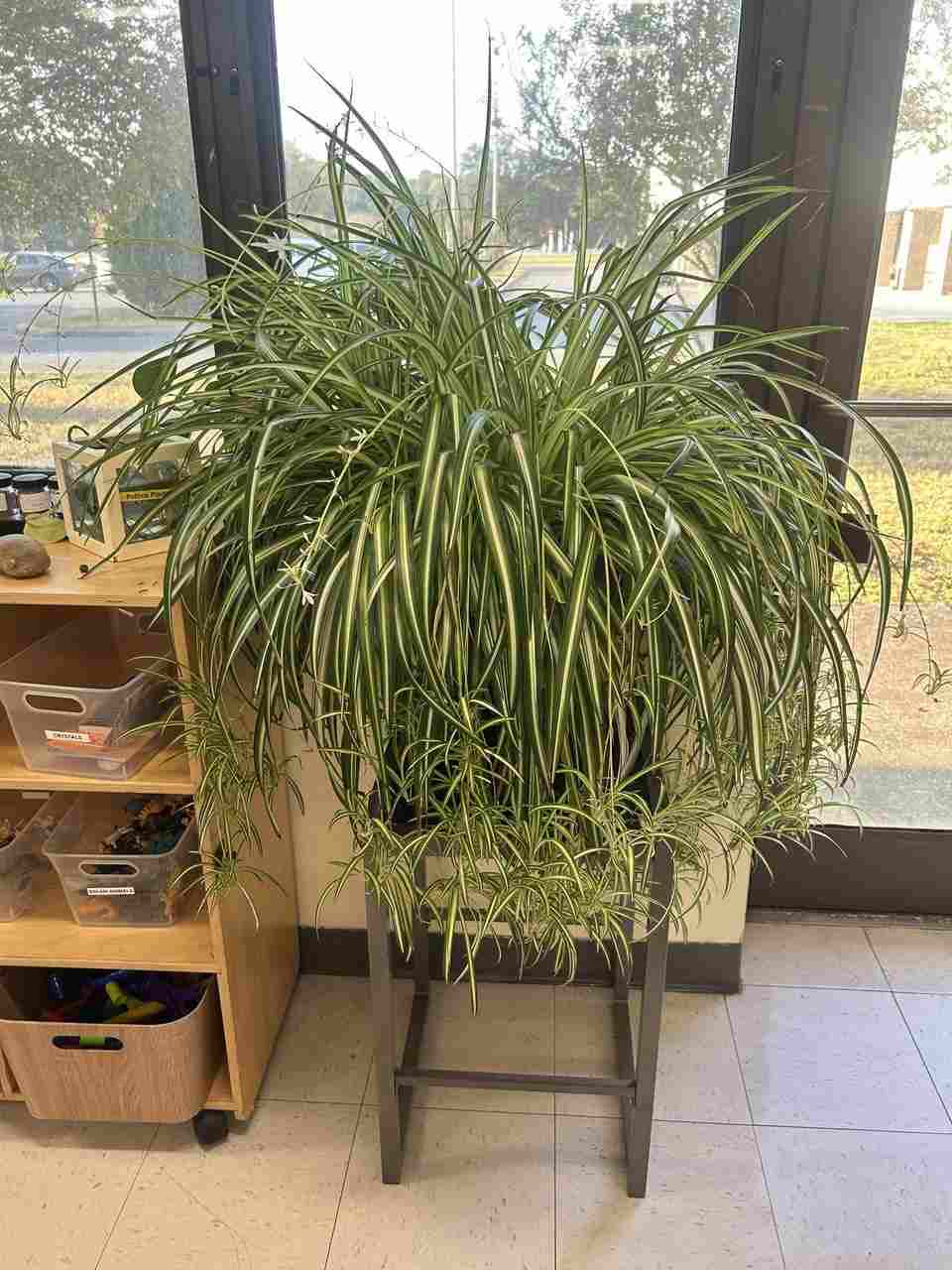
Spider plants have such a forgiving reputation that feeding them
often gets forgotten. They survive without it so its easy to think it doesn’t matter much.
And it’s true that a spider plant in can keep its leaves green in compost without a lot of nutrients. But that doesn’t mean it will look good or that it’ll be good for h the plant. And a spider that’s actively producing new leaves, runners and spiderettes at a good rate comes down to whether and how it’s been fed.
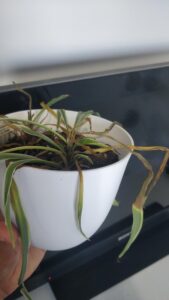
The other side of spider plant fertilizing is the brown tip problem. Spider plants are sensitive to the fluoride and chlorine in tap water but salt build up from over fertilizing or is just as common and an overlooked cause of the chronic brown tips they get.
So getting the fertilizing right means getting the growth benefits without triggering the very symptom you’re trying to improve the plant’s health to avoid.
This guide covers what spider plants need from fertilizer and why, which types of fertilizer work best, the seasonal schedule that produces consistent results, how to apply fertilizer without causing brown tips or root damage and the mistakes that hold plants back or cause harm.
Quick Answer
- Use a Balanced Liquid Fertilizer (Best Choice): A balanced houseplant fertilizer with an NPK ratio of 10-10-10 or 20-20-20 provides the nutrients spider plants need for healthy leaves and strong growth.
- Feed During the Growing Season: Apply diluted fertilizer every 4–6 weeks in spring and summer. Reduce or stop feeding in winter when growth slows.
- Avoid Over-Fertilizing: Too much fertilizer causes salt buildup, brown leaf tips, and root damage. Use half-strength fertilizer and occasionally flush the soil with clean water.
What Spider Plants Need From fertilizer
Spider plants grow a lot through the spring and summer – producing new leaves from the central crown, extending runners and developing spiderettes at the ends of the runners. All of that growth requires building blocks: nitrogen for the proteins that make up leaf and stem tissue, phosphorus for roots and energy transfer, potassium for overall health and a range of micronutrients that support certain processes throughout the plant.
The Three Main Nutrients: NPK
fertilizer labels display three numbers that represent the percentage by weight of nitrogen (N), phosphorus (P), and potassium (K) in the product – this is the NPK ratio. For spider plants a balanced ratio – something in the region of 20-20-20, 10-10-10 or similar equal proportions – is appropriate for general growing season use.
The equal proportions support the full range of what the plant is doing: vegetative growth (nitrogen), roots developing (phosphorus) and overall growth (potassium).
Some growers use a slightly more nitrogen ratio in the spring when the plant is beginning its main push of growth – a 3-1-2 ratio or similar – changing to a more balanced feed through summer as root and runners growing becomes as important as leaf production.
This is a refinement rather than something you have to do; a consistently balanced feed used throughout the growing season produces good results for most spider plant owners without the need to switch between the two.
Micronutrients: The Overlooked Component
The primary NPK nutrients get most of the attention but micronutrients matter a lot for spider plant health. Iron, manganese, zinc, copper, boron, and molybdenum are all needed in small quantities for specific processes – and deficiency in any of them can cause symptoms that look like primary nutrient problems but don’t respond to standard NPK feeding.
Iron deficiency in particular is worth knowing about for spider plants. It produces a yellowing between the leaf veins while the veins themselves stay green and is often caused not by a lack of iron but by soil pH that’s become too alkaline, making iron unavailable even when it’s present.
A complete fertilizer that includes chelated micronutrients (in which the micronutrients are bound to organic molecules that keep them available across a wider pH range) addresses this more reliably than a simple NPK only feed.
Most good quality houseplant liquid fertilizers include a micronutrient package – check the label for a list of trace elements. Budget products and some garden centre own brand fertilizers don’t include micronutrients, which is one of the main reasons a slightly better quality fertilizer gets noticeably better over a full growing season.
Why Spider Plants Are Sensitive to Over fertilizing
Spider plants have fleshy roots that are efficient at absorbing water and nutrients – which is part of what makes them such adaptable plants. That same efficiency makes them more sensitive than many other houseplants to too much fertilizer salts in the soil/compost.
When fertilizer is too high a concentration or used too frequently without flushing the dissolved salts build up in the compost. These salts raise the osmotic concentration of the soil solution to a level that takes moisture out of root cells rather than allowing the roots to absorb it – effectively causing drought stress at the roots even when the soil is moist.
This shows up as brown leaf tips which is why fertilizer burn and fluoride sensitivity produce almost identical symptoms.
This sensitivity is the main reason half strength application is the right way to go for spider plants rather than feeding at full label concentration. The plant gets the nutritional benefit without the salt that causes tip damage.

Best fertilizer Types for Spider Plants
Quite a few types of fertilizer are suitable for spider plants, each with different characteristics that suit different growing approaches and preferences. Understanding what each type does well – and where its not so good – lets you choose the approach that fits your routine and what your plant needs.
 Spider Plant Fertilizer, Liquid Plant Food for Longer Runners, 8 oz
Balanced Liquid Houseplant fertilizer: The Most Versatile Option
A balanced liquid houseplant fertilizer – either a ready to use formula or a concentrated liquid diluted in water before application – is the most used for spider plants. Liquid fertilizers are absorbed quickly, allow good control over the concentration and can be adjusted easily based on the season and the plant’s growth stage.
For most spider plant growers a good quality balanced liquid fertilizer applied at half strength is the starting point and often the only product they’ll need.
The main things to look for in a liquid fertilizer for spider plants: a balanced NPK ratio (equal or near equal proportions), having chelated micronutrients and ideally a low salt formulation if you have a history of the tips turning brown.
High quality liquid feeds designed specifically for houseplants usually include the full micronutrient complement and are formulated at concentrations appropriate for regular application – which makes them a better fit for spider plants than general garden feeds designed for occasional heavy application.
Slow Release Granular fertilizer
Slow release fertilizer pellets or granules are a low maintenance alternative to liquid feeding. Applied to the surface of the soil at the start of the growing season they deliver a steady supply of nutrients without needing fortnightly or monthly liquid applications. For those who find the liquid feeding schedule easy to forget or too time consuming then slow release granules are a good solution.
What you lose is control. With a liquid fertilizer you can adjust the concentration and how often you use it based on the plant and the season. With slow release granules the nutrient delivery is fixed once the granules are in place.
This makes them less suited to the finer seasonal adjustments that produce the best results and potentially problematic in winter if the granules put in the spring are still releasing nutrients when the plant has stopped growing and can’t use them.
Use slow release products formulated for indoor plants rather than garden granules which are typically higher in concentration. Apply it only at the start of the growing season and don’t supplement with heavy liquid feeding on top – combined they can lead to the build up of salta you’re trying to avoid.
Organic and Natural fertilizers
Organic fertilizers – so things like worm castings, seaweed extract, fish emulsion, and composted plant material – are gentler options that release nutrients slowly and have lower salt than synthetic fertilizers. They’re particularly useful if you’ve had problems with the tips go turning brown from fertilizer salt or if you prefer a more natural approach to caring for your plants.
Worm castings used in the potting mix at repotting time provide slow release nutrients over several months with minimal salt and no risk of the tips getting burnt. Seaweed extract used every few weeks gives a range of trace elements, plant hormones and growth stimulants that complement a main fertilizer programme.
It’s not a complete fertilizer on its own but it fills nutritional gaps and supports root health in ways that synthetic fertilizers don’t.
Fish emulsion is effective but has a distinctive smell that some people really don’t like – something to think about before you commit to buying a large bottle. Dilute it well and apply less often than the label suggests for spider plants.
fertilizer Spikes
fertilizer spikes – compressed sticks of slow release fertilizer pushed into the growing medium – are marketed for how easy to use they are. In practice they deliver nutrients unevenly, concentrating them in the area immediately around the spike rather than distributing them through the root zone.
Roots near the spike receive much more; roots further away get little or nothing. The uneven distribution can cause root burn near the spike while not enough nutrition to the rest of the roots.
For spider plants, with their spreading roots, spikes are one of the least effective ways to fertilize. A liquid feed applied during watering distributes the nutrients to all the roots and gets better results.
Feeding Schedules by Season and Growth Stage
Spider plant fertilizing is not something you do all year round. What the plant needs changes significantly across the seasons and a feeding programme that stays consistent regardless of what the plant is doing either pushes nutrients into a plant that can’t use them (in winter) or undersupplies a plant at its most active (in summer).
Matching the feeding programme to the plant’s growth stage will get better results with less waste and less risk.
Early Spring: Resume Carefully
As the days get longer and light improves from late February or March onward spider plants begin to stir from their winter slowdown. New leaves start to emerge from the crown, growth resumes and the need for nutrients increases.
This is the time to resume feeding – but carefully. A single application of fertilizer to a plant that’s just waking up after months of minimal feeding can be a bit of a shock to roots that have been in a low activity state.
Start at quarter strength for the first application or two, watch how the plant reacts before moving to half strength as growth becomes more active.
Spring is also the best time to apply slow release granules if you’re using them – the entire growing season lies ahead for the granules to release into and the plant has maximum time to use what’s delivered before growth slows again in autumn.
Spider plant looking sad?
My free guide 7 Gardening Mistakes That Are Killing Your Plants covers the small habits that hold spider plants back from thriving — and how to turn yours around.
Late Spring and Summer: The Main Feeding Season
From late spring through the midsummer spider plants are at their most active – producing new leaves, extending runners and growing spiderettes. This is when feeding has the most impact and when the plant needs the most nutrients.
Apply a balanced liquid fertilizer at half the recommended strength every two to three weeks through this period. In peak summer growth some people feed every two weeks; in slightly less active conditions, every three weeks is enough.
The important thing is consistency – regular light feeding will do better than occasionally heavy feeding for both growth and the overall health of the plant.
If the plant is producing lots of runners and spiderettes maintaining the balanced feed through summer supports the development of those as well as the parent plant. Runners and spiderettes are an investment by the plant and they benefit from the same support.
Late Summer: Begin Tapering Off
From August or September onward as the day begins to shorten spider plants start to slow their growth in preparation for less light in the winter. Continue feeding them but reduce how often – every three to four weeks rather than every two.
This slow reduction is the same as the plant’s own slowing down rather than a sudden stop. This is better for the roots and avoids the build up of unused fertilizer that a sudden stopping can leave in the soil.
Autumn: Stop Feeding
By mid autumn spider plant growth has slowed a lot or stopped completely in most home conditions. Feeding a plant that isn’t growing means nutrients build up as salts in the compost rather than being taken up and used.
Stop feeding entirely by early to mid October. If you’re growing under grow lights that keep more consistent light levels all year round and your plant is still giving you new growth through winter you can continue feeding but less often (every four to six weeks) at quarter strength – but if growth has clearly slowed or stopped no feeding is the right choice.
Winter: Rest the Plant and the Soil
Through the coldest and darkest months a spider plant doesn’t need any fertilizer. Stop feeding from October through February or until you see signs of new growth resuming in spring.
This rest period is not just about the plant’s needs, or lack of, it’s also about allowing the compost to partially reset. Salt that’s built up from months of feeding dissipates slightly over winter as regular watering flushes it out and resuming with fresh compost conditions in spring produces a better growing environment than one that has months of built up nutrients.
- Early spring (Feb-March): Resume at quarter strength for first 1-2 applications, then increase to half strength as growth becomes active
- Late spring to midsummer (April-July): Balanced liquid feed at half strength every 2-3 weeks – the main feeding season
- Late summer (August-September): Reduce to every 3-4 weeks at half strength as growth begins to ease
- Autumn (October): Stop feeding entirely, or reduce to quarterly at quarter strength if plant is still visibly growing under grow lights
- Winter (November-January): No feeding for most plants; resume only when new growth is clearly visible in spring
How to fertilize Without Causing Brown Tips or Salt Burn
Brown tips on the leaves are the signature spider plant problem and one of thy main reasons for them are using fertilizer wrong (the is fluoride in tap water). The good news is that it’s very easy to stop with the right approach – it’s not an inevitable consequence of feeding, it’s a consequence of feeding incorrectly.
Always Use Half Strength or Less
This is the most important rule in spider plant fertilizing. The concentrations recommended on fertilizer labels are worked out for plants that can handle standard dosing – most garden plants, many houseplants and a range of ornamental subjects.
Spider plants, having roots that are sensitive to chemicals, are not one of those. Full strength fertilizer has salt levels that damage the roots and cause the tips to turn brown. Half strength is the right dose for this plant.
Some spider plant specialists recommend as low as quarter strength applied more frequently rather than half strength applied less frequently. Both will work. The principle is consistent: low concentration, regular delivery, rather than high concentration, occasional application.
Water Before fertilizing
Always water with plain water before applying a liquid fertilizer. Don’t apply fertilizer to dry compost.
Water the plant, allow it to drain completely, and then apply the diluted fertilizer. The extra step takes two minutes and makes a real difference to root health over a full growing season.
Flush the Growing Medium Monthly
Even when fertilizer is applied at half strength consistent feeding over months leads to salt build up. The way to manage this is regular flushing.
So once a month, or every fourth watering, run a lot of plain water – without any fertilizer – through the pot. In practice this means placing the pot in a sink or taking it outside and pouring enough water through the compost to flush several pot-volumes through the drainage holes.
This dissolves the salts and carries them out through the bottom.
Signs that salt build up has reached a level that could cause problems without regular flushing: white or pale crusty deposits on the top of the soil or rim of the pot, new brown tips on a plant that’s being watered with rainwater or filtered water (so fluoride sensitivity isn’t the explanation) and a plant that seems to be struggling despite continued feeding.
A good flush followed by two to three weeks without feeding before resuming at half strength often produces a big improvement in the condition of the leaves within a month.
Use Rainwater or Filtered Water for Mixing fertilizer
If you’re already using rainwater or filtered water for watering to manage fluoride sensitivity use the same water to mix your liquid fertilizer solution. Hard tap water adds mineral salts (calcium, magnesium, and others) on top of the fertilizer salts, which just makes the build up problem worse.
Mixing fertilizer in rainwater or filtered water reduces the total salt load of each application and is particularly worth doing if your tap water is notably hard or heavily treated.
Don’t Feed a Stressed or Recently Repotted Plant
fertilizer applied to a stressed plant – one recovering from root rot, recently repotted or showing signs of pest damage or other problems – causes more harm than good. Damaged or newly reestablishing roots are less able to process nutrients and more vulnerable to the salt load of fertilizer being applied.
Wait until the plant is growing again and the roots are healthy and established before feeding. After repotting, a minimum of four to six weeks before resuming feeding gives the roots time to anchor into the new compost before being asked to absorb nutrients from fertilizer.
fertilizing Mistakes and How to Avoid Them
Most spider plant fertilizing problems come from a small number of patterns. These are the ones worth knowing about before you start rather than working out through the experience of a plant that’s steadily deteriorating.
Not Feeding at All
The most common mistake by some distance, caused by the plant’s reputation for thriving on neglect. A spider plant in potting compost that hasn’t been repotted or refreshed for two or more years, and has never been fed, is growing in a medium that has lost most of its nutrients.
The plant looks fine but how much it’s growing, the size of the leaf and spiderette production are all significantly below what they would be in better conditions. Introducing a regular half strength balanced feed is often the simplest and fastest way to improve a spider plant that seems permanently stuck at the same size.
The improvement in growth rate over a single growing season can be striking – particularly for a plant that has been in the same compost for several years.
Feeding at Full Concentration
Following the label instructions without halving the concentration is the most common cause of brown tips from fertilizer. Labels are not designed for spider plant sensitivity.
Half strength is the appropriate dose and the one that produces the growth benefits without the salt damage. If you’ve been feeding at full strength and have persistent brown tips that won’t resolve with a water source change, reduce to half strength, flush the growing medium and give it four to six weeks. In most cases, the browning stops and new leaf growth comes in cleanly.
Feeding in Autumn and Winter
Continuing the summer feeding programme into autumn and through winter means nutrients build up in the compost during the period when the plant is growing slowest and using the least. By the time spring arrives the growing medium has a lot of salts that stop the root function you need for the growing season.
Stop in early autumn and resist the impulse to feed to “help” a plant that seems slow in winter – slow winter growth is normal and appropriate and feeding doesn’t accelerate it, it just adds to the salt accumulation.
Feeding a Dry Plant
Applying fertilizer solution to a plant that hasn’t been watered first concentrates the nutrients against dry, thirsty roots that absorbs it too fast. This is one of the more reliable ways to burn the roots even with a properly diluted fertilizer.
Water the plant first. Always. It takes an extra few minutes and protects the roots from the concentration hit that dry application causes.
Never Flushing the Growing Medium
An spider plant that’s being fed but that has never been flushed will have lots of salt built up in its growing medium. This is invisible until symptoms appear – and by the time you’re seeing brown tips or the plant looking sad the accumulation has often been building for months.
Do a monthly plain water flush as part of the routine from the beginning. It takes five minutes, stops the accumulation from ever reaching a level that causes problems and is simpler to maintain as a habit than to catch up on after the damage is done.
Using Lawn Feed or Tomato Feed as a Substitute
Lawn feeds are very high in nitrogen and designed for fast vegetative growth in grass – their NPK ratios are wildly unbalanced for a spider plant and their salt content is usually very high. Tomato feeds are high in potassium and designed for fruiting crops – the high potassium is not what spider plants need.
Neither product is an appropriate substitute for a balanced houseplant fertilizer. A bottle of good quality balanced liquid houseplant feed costs very little and lasts a long time at half strength rates. Using the right product from the start is simpler than adjusting the consequences of using the wrong one.
Expecting fertilizer to Fix Other Problems
This is the most important mistake to understand. fertilizer supports growth in a plant that has everything else it needs – good light, appropriate watering, healthy roots, correct temperature etc.
It doesn’t fix light deficiency, root rot, pest damage or any other environmental problem. A spider plant not getting enough light will not respond to increased feeding with faster growth – the limiting factor is light and feeding more doesn’t change that.
A plant with root rot doesn’t need nutrients; it needs its roots treated.
So before adjusting a fertilizer programme in response to a plant that seems slow or unresponsive, check the light, watering, root health and temperature are all appropriate. Nutrition is what you address last, not first.
Putting It All Together
The best fertilizer for spider plants is a balanced, complete liquid houseplant feed applied at half the recommended strength every two to three weeks through the active growing season. On top of that there should be a clean stop in early autumn and a careful restart in spring. That’s the core of it.
Everything else in this guide – the micronutrient consideration, the flushing routine, the water before feeding habit, the organic alternatives – helps that: getting the nutritional benefits of consistent feeding without the salt build up damage that makes brown tips worse than the nutritional deficiency it was meant to address.
I spent about two years convinced that my spider plant’s chronic brown tips were only a fluoride problem. I switched to rainwater, the tips improved but didn’t stop entirely, and I kept looking for another explanation.
Eventually I realized I’d been feeding at full concentration every two weeks all summer – adding a significant salt load on top of whatever mineral content the rainwater still had. Switching to half strength and introducing a monthly flush cleared the new brown tips within one growing season.
The plant was fine. It was being fed incorrectly.
That’s almost always the story with spider plant feeding problems – not a mysterious deficiency or an incurable sensitivity, just the wrong concentration, the wrong frequency, or the wrong time of year.
Get those three things right and spider plant feeding becomes one of the simpler parts of the plant’s care. A well fed spider plant in good light is an impressive plant – fuller, faster growing, and more productive of the runners and spiderettes that make it worth growing in the first place.
Spider plant looking sad?
My free guide 7 Gardening Mistakes That Are Killing Your Plants covers the small habits that hold spider plants back from thriving — and how to turn yours around.
