
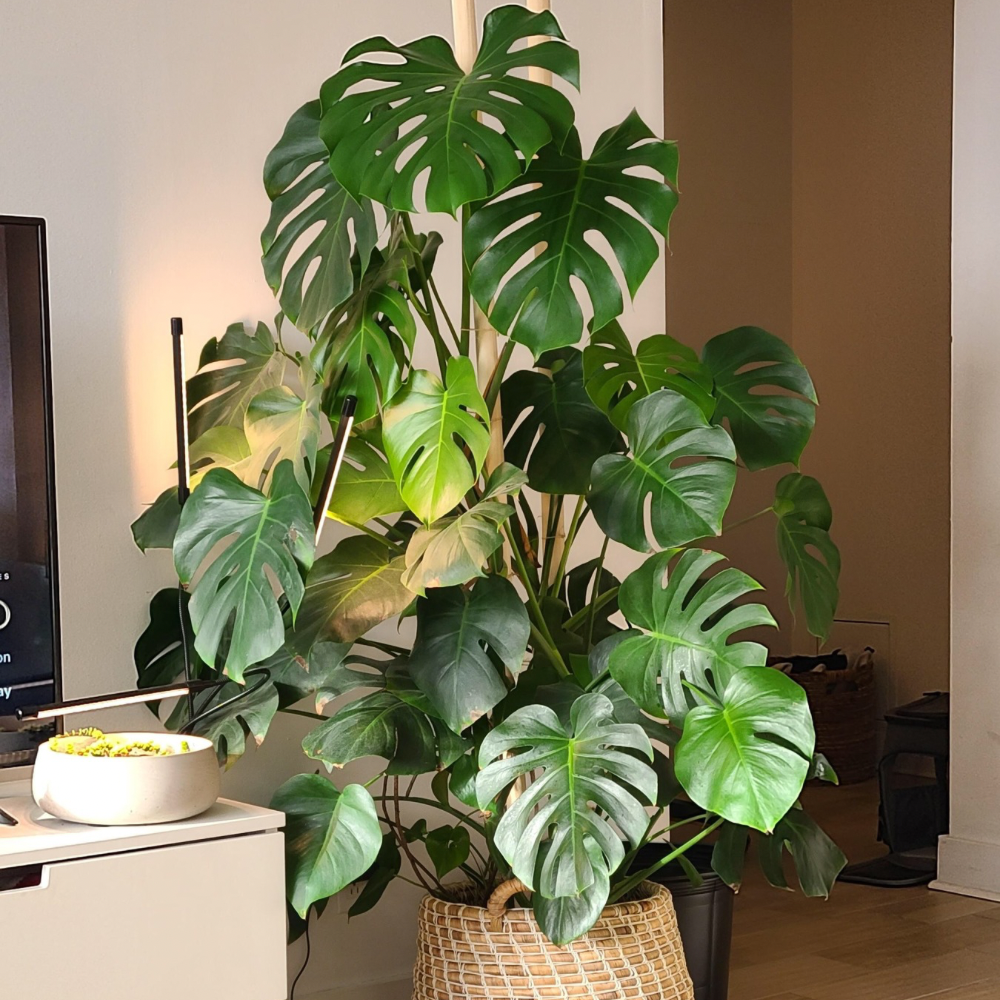
When I bought my first monstera it had three leaves and fit perfectly on my desk. That was quite a few ago years ago.
Now it’s surprisingly tall, has leaves the size of dinner plates and lives in the corner of my living room where its taken up a lot of space
I’m not complaining! Watching it grow into an absolute unit has been so satisfying. And it’s one of the best parts of having houseplants.
But I had to work hard for it to happen. For the first year that monstera barely grew at all. That was down to me making quite a few basic mistakes.
Healthy monstera plants will usually grow about 1 to 2 feet per year, assuming you give it the right conditions like sufficient light, water and nutrients. But getting your plant to hit that growth rate? That’s where things get interesting.
This guide is is what I’ve learned and has worked for me when growing massive monsteras and I think it will be useful to you to get a bigger and more impressive plant.
Quick Answer
- Increase Bright, Indirect Light: Monsteras grow larger leaves when they get steady, bright light without direct sun.
- Add a Support Pole: Give the plant a moss pole or stake so it can climb as it will grow bigger, more mature leaves with this.
- Feed and Repot When Needed: Use a balanced houseplant fertilizer during the growing season and repot it when the roots have filled up the pot.
Why Your Monstera Isn’t Growing
Before we talk about how to make your monstera huge it’s a good idea to deal with why most monsteras stay small.
The biggest issue? Light.
People hear “tropical plant” and think it means low light. They’re wrong. Monsteras are climbing plants that spend their lives trying to reach the canopy of the rainforest. They want bright light. And a lot more than most people give them.
Second issue: no support structure. In the wild monsteras would climb up trees. Without something to climb they put all their energy into making roots instead of leaves. I didn’t give mine a moss pole for a couple of years and once I did the difference was instant.
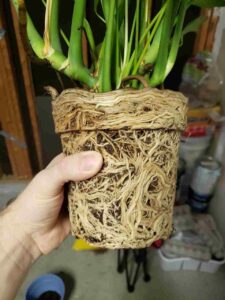
Third: pot size. If your monstera has been in the same pot for two years it’s probably root bound and has nowhere left to grow.
And fourth: you’re being too careful with it. Monsteras aren’t delicate. They grow vigorously and can handle (and in fact benefit from) more aggressive care than you’d think.
If you want a more in depth look at this then see our guide to why your monstera isn’t growing.
Light: The Single Most Important Factor
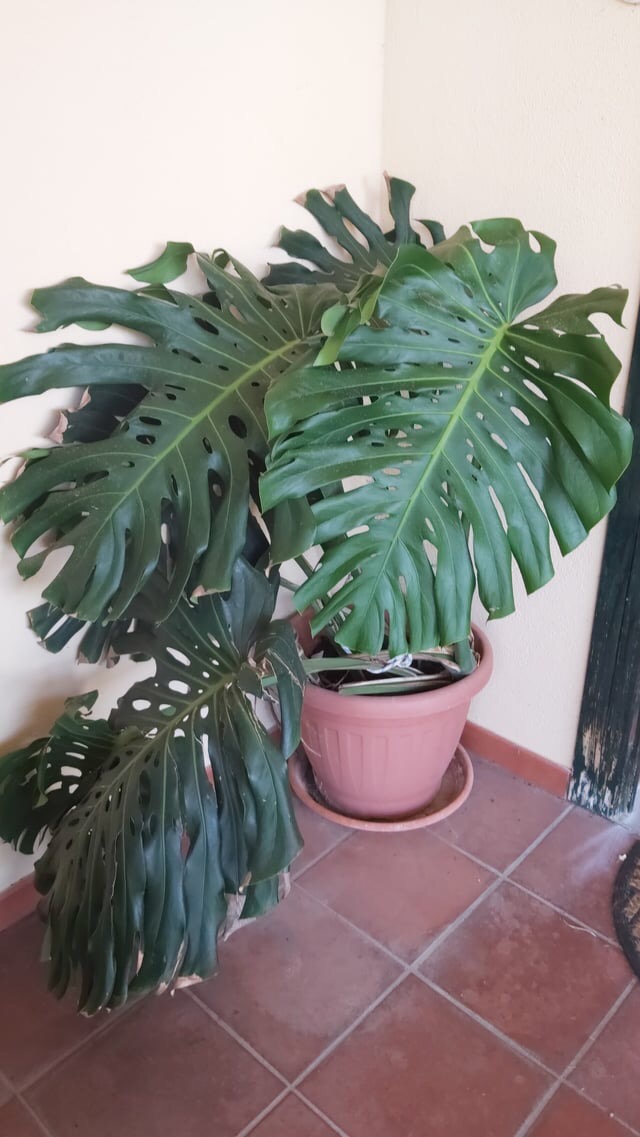
This is not up for debate. Light is one of the most important factors in a monstera’s growth because monsteras make energy from sunlight through photosynthesis, and it takes lots of energy to grow.
My monstera spent its first year about eight feet from a window. It grew maybe two new leaves in that time. Then I moved it next to an east facing window and within about three months it had doubled in size.
See this for a full monstera lighting guide.
Where to Put Your Monstera
An east facing window is perfect because it can get a few hours of morning light and then plenty of bright but indirect light the rest of the day. That’s where mine lives now and it’s been doing great ever since.
If you only have south or west facing windows that will work too. Just use a sheer curtain to filter the afternoon sun or put your plant a few feet back from the window. Direct midday sun can burn the leaves and you’ll end up you those annoying brown spots.
North facing windows are better than nothing but it does mean that your monstera will grow slower. If that’s your only option then you might want to get and use a grow light. I have a friend who uses one during the winter and her monstera keeps growing even when mine slows down.
The Outdoor Secret
Putting my monstera outside during the warmer months made a big difference. I was terrified the first time I did it.
What if it got sunburned? What if a storm wrecked it? But I put it in a shaded spot on my patio and the growth was amazing. Like a new leaf every two weeks.
I once read about someone that put their monstera outside and that if had a massive impact on how much it grew. Even shaded spots outside are brighter than inside near a window, which sounds weird but makes sense when you think about it.
If you have any outdoor space and the temperature isn’t consistently above 60°F, try it. Just make the transition gradually – a few hours outside on the first day, then build it up to full days over a week.
Give It Something to Climb
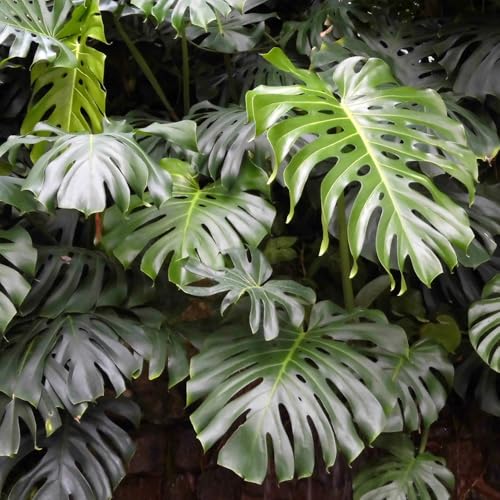
Monsteras are epiphytes in the wild. They climb up tree trunks using aerial roots. When you give them a moss pole or some other type of support something clicks in the plant’s biology and it starts producing bigger leaves with more holes.
Without support your monstera will just grow out horizontally and the leaves stay smaller. With the right support it grows vertically and the leaves get huge.
Best Support Options
I use a moss pole (coconut coir wrapped around a PVC pipe). You can buy these ready made or DIY them pretty easily. The moss holds moisture which the aerial roots love.
Other options: wooden stakes, bamboo poles or even a small trellis. Anything sturdy that the plant can attach to works.
Make sure you secure the stem to the pole with plant ties or some twine. Don’t wait for the plant to “figure it out” on its own. You’ve got to tie it to the support as it grows. I tie mine every 6 to 8 inches up the stem.

When to Add Support
As soon as possible! If your monstera is already big and you’re giving it some support for the first time you might need to be a bit rough with it. Mine was growing all over the place when I finally got a pole and I had to kind of wrestle it upright. The plant was fine though so don’t worry.
For more help see our tips for getting a monstera to climb.
Repotting for Growth
Monstera plants should add around 2 feet to their height each year until they’re held back by the pot size or another factor. Notice that “pot size” part? That’s your cue.
If your monstera hasn’t been repotted in 1 to 2 years it’s probably time. Root bound plants can survive but they can’t grow.
How to Know When to Repot
Check the drainage holes. If you see roots coming out that’s your sign. Or if the water is draining through super fast (because there’s more root than soil)then that’s also time to repot.
Another clue: growth has completely stoped even though you’re giving it good light and care.
I repot mine every 18 to 24 months. Some people wait longer but I’ve found that giving them fresh soil and more space keeps the growth going.
The Repotting Process
Go up one pot size – just one. If you go too big then the soil will stay wet too long and you’ll end up with root rot.
Use a well draining potting mix. I do a mix of regular potting soil with extra perlite and a bit of orchid bark. You want something that holds on to moisture but doesn’t stay soggy.
When you slide the plant out of its old pot don’t be scared to mess with the roots a bit. If they’re circling around the bottom just loosen them (carefully) with your fingers. If they’re really compacted you can even cut some off.
Fill the new pot about a third full with soil, put your monstera in the center then fill in around it. Water thoroughly, let it drain completely and you’re done.
Within a few weeks you should see new growth as the roots grow into the fresh soil.
Watering
Monsteras like consistent moisture. The soil should be left to dry out between each watering.
I check mine by sticking my finger about 2 inches into the soil. If it’s dry I water. If it’s still damp I wait. If your plant is using water efficiently and your soil drains well you should be watering every 7 to 14 days.
In summer mine needs water about once a week. In the winter I’ll stretch it out to every 10 to 14 days.
For a further look at monstera watering – when to, how often, how to do it etc. see this guide.
How to Water
When I water I really go for it. I take the plant to the sink or shower and drench it until the water is pouring out the of bottom. Then I let it drain completely before putting it back.
Bottom watering also works great. Put the pot in a tub or sink filled with a few inches of water and let it sit for 20 to 30 minutes. The soil takes up the moisture from the bottom and the roots love it.
The worst thing you can do is give it a little sip of water every few days. That just wets the top of the soil and none will get to the roots. So water deeply but infrequently.

Humidity Helps (But Isn’t Necessary)
Monsteras like humidity but they also won’t complain if they’re not getting it.
I don’t do anything special for humidity – my house sits around 40 to 50% most of the year and my monstera is fine. But if you want to boost growth even more then humidity will help.
Easy humidity hacks:
- Put the plant in the bathroom (if you have a bright bathroom)
- Group plants together so they increase the humidity for each other
- Run a humidifier nearby
- Mist the leaves occasionally (though this is more for looks than actual humidity)
I’ve noticed that during a humid summer my monstera grows faster than in the dry winter. But it’s not a dealbreaker.
Fertilizer
Now this where you can really speed things up.
I use a balanced liquid fertilizer (20-20-20) diluted to half strength. I fertilize every time I water during spring and summer – that’s about once a week or every other week.
In fall and winter I stop fertilizing completely. Monsteras naturally slow down during winter and pushing them to grow during dormancy just wastes fertilizer and can cause salt to build up.
Some people swear by worm castings or compost tea. I’ve tried those too and they work great. Really any balanced fertilizer will do the job as long as you’re consistent during the growing season.
Just don’t go crazy with it. More fertilizer doesn’t mean faster growth, it just means you’ll get burnt leaves and brown tips. Stick with half strength.

Getting The Split Leaves
The fenestrations (splits and holes) are what everyone wants. They’re synonymous with monsteras and a big part of their appeal.
But monstera plants reach two to three years old before they start producing fenestrated leaves. So if your monstera is young you just have to wait. There’s no way around it.
Young monsteras have heart shaped leaves with no splits. As they mature new leaves start developing those characteristic holes.
But age isn’t the only factor. Monstera deliciosa requires at least 4 to 6 hours of bright, indirect light daily to both start and sustain fenestration.
See this guide for how to get holes in your monstera leaves.
What Triggers Fenestration
Light is the biggest factor. My monstera didn’t produce a single split leaf until I moved it to a brighter spot. The first fenestrated leaf appeared about four months after the move.
Support also matters. Once I added a moss pole the next leaf that came out had way more splits than the previous one. Something about climbing triggers the plant to grow more mature foliage (I don’t know why though).
And consistent care. If your plant is stressed, be that from not enough water, too much water, not enough nutrients etc. then it focuses on survival instead of producing any fancy split leaves.
Progression of Fenestrations
The first split leaves usually have just a few splits along the edges. As the plant continues to mature those splits get deeper and holes start forming in the middle of the leaf.
This entire process takes almost 4 to 6 years for a monstera to reach full maturity with the really heavily fenestrated leaves. So if yours just started splitting, give it time. Each new leaf should be more fenestrated than the last.

Pruning for Bushier Growth
Most people don’t prune monsteras but it can encourage them to have bushier, fuller growth.
If your plant is getting leggy or you want it to branch out then cut the main stem just above a node (that’s the bump where leaves attach). The plant will put out some new growth from below where you’ve cut and quite often give you multiple stems instead of just one.
I did this with mine when it got too tall for my ceiling. Cut the top off, propagated it in water and the original plant gave me two new points of growth where I’d made the cut.
Pruning also helps if you’ve got any dead or yellow leaves. Just cut them off at the base.
It doesn’t hurt to leave them but removing them looks cleaner and lets the plant focus energy on healthy growth and leaves.
Best Time to Prune
Spring or early summer when the plant is growing. Avoid pruning in the fall or winter when the growth is slow.

Temperature: Keep It Warm
Monsteras are tropical plants so they like warmth.
A warm environment that supports steady growth, ideally between 65 to 85°F. They’ll tolerate cooler temps (down to about 50°F) but growth slows down a lot.
Keep them away from drafty windows in the winter as well as any air conditioner or heating vents. The temperature swinging suddenly will stress the plant out.
Mine lives in a pretty consistent 68 to 72°F environment all year round and it’s happy. During summer when the temperatures hit the 80s it speeds up growth a lot.
Dealing with Growth Problems
Even with good care things can go wrong. These are some of the ones I’ve dealt with:
New Leaves Are Small
Usually means not enough light. Move it closer to a window.
Or the plant is stressed from being repotted or a change in it’s environment. Give it time – the next leaf should be bigger.
Leaves Are Pale or Yellow
Either too much water (root rot) or not enough nutrients. Check how moist the soil is and change up how often you’re fertilizing. See this guide for more help with yellow leaves.
Brown Tips
Usually from inconsistent watering or low humidity. I get these in winter when the air is super dry. They’re annoying but don’t do any harm.
No New Growth for Months
Check the roots as it’s probably root bound. Or it’s winter and the plant is just taking a break. Don’t panic if growth stops in December through to February.
Growth Timeline: What to Expect
Monsteras can be expected to produce one or two new leaves per month and can grow two feet or more in up or outward growth during the active growing season.
That’s under the best conditions. If you’re just starting out or your plant has been neglected then you should expect growth to be slower at first.
My monstera took about six months to really get going after I fixed the way I cared for it. The first few new leaves were small and unimpressive. But once it hit its stride it was unstoppable.
Year one: Barely grew. I was doing everything wrong.
Year two: Moved to better light, added a moss pole and started fertilizing. Growth picked up significantly.
Year three: Repotted, continued good care. This is when it really took off. Massive leaves, lots of fenestrations.
It’s still looking great now. In fact I’ve had to prune it back a few times just to keep it manageable.
Experimenting with Outdoor Growth
I mentioned this earlier but it deserves its own section because the results were so amazing.
Last summer I moved my monstera outside for four months (late May through mid September). I put it on my covered patio where it got bright light in the morning and afternoon shade.
In those four months it produced 12 new leaves! That’s more than it had produced in the entire previous year indoors.
The leaves were also bigger and more fenestrated than any it had made before. Something about the outdoor light, circulation and natural humidity just supercharged its growth.
When I brought it back inside for fall it took a few weeks to adjust and growth slowed back to its normal indoor pace. But the size and maturity it gained during that outdoor period made a permanent difference.
If you can safely move your monstera outside during warm months, do it. Just acclimate it gradually so you don’t shock it.
Propagation for Fuller Plants
Want your monstera to look fuller without waiting years? Propagate it and plant multiple cuttings together.
I did this with my second monstera. Took three cuttings from a friend’s plant, put the roots in water then planted all three in the same pot. Within a year it looked like a full, bushy plant instead of a single stem.
How to Propagate
Cut the stem just below a node (that bump where aerial roots might be growing). The cutting should have at least one leaf and one node.
Put it in water and place it in bright, indirect light. Change the water every few days.
Roots should appear within 2 to 4 weeks. Once they’re a few inches long you can plant the cutting in soil.
Or skip the water step and plant directly in moist soil. This works too, though I’ve had better success with water propagation.
My Biggest Monstera Mistakes
I did some really stupid stuff which I’ll now go through so you don’t make the same mistakes:
Keeping it too far from the window. This single mistake cost me a year of growth. Light matters more than anything else.
Not adding a moss pole sooner. The difference in leaf size and fenestration after adding support was immediate.
Overwatering. I killed my first monstera by watering it every time I walked past. Let the soil dry out between waterings.
Using a pot without drainage holes. This was part of the overwatering problem. All pots need drainage.
Being scared to repot. I waited way too long to repot because I thought it would stress the plant. Turns out being root bound stresses it way more.
Not fertilizing consistently. I’d remember to fertilize for a few weeks, then forget for months. Consistent feeding during the growing season makes a huge difference.
What to Do Right Now
If you want your monstera to get bigger this is what to do now:
Today: Move it closer to a bright window. If it’s more than a few feet from natural light relocate it straighaway.
This week: Get a moss pole or other support. Even a cheap bamboo stake is better than nothing. Tie the stem to it.
This month: Check if it needs repotting. If it’s been in the same pot for more than two years it probably does. Get a pot one size bigger and fresh soil.
Ongoing: Water when the top 2 inches of soil are dry. Fertilize every 1 to 2 weeks during spring and summer with diluted fertilizer.
That’s it. Those four things will turn your monstera from a sad desk plant into a showpiece.
Final Thoughts
Growing a massive monstera takes patience but it’s really worth it.
In the right environment a monstera can live for decades, with some reports of plants going on for 40 years or more. That’s a lifetime companion plant.
My monstera is still getting bigger every year. I’ve had to move it twice because it outgrew its spot. It’s currently climbing a 6 foot moss pole and showing no signs of slowing down.
The thing about monsteras is that once you get them going they’re almost impossible to stop. Give them bright light, something to climb and decent care and they’ll give you tons if growth and those awesome split leaves.
Every new leaf I get is exciting. Even after all those years I still check on mine every morning to see if anything new is happening. When I see a new leaf starting to come out I get excited.
That’s the magic of growing a monstera. They’re not difficult plants. They just need you to give them what they actually want instead of what you think they want. Do that and you’ll end up with a plant that makes everyone who visits ask “How did you get it so big?”
