

It can be really disappointing to see your once successful snake plant leaves wrinkling and folding over. Snake plants are supposed to be pretty much indestructible. That’s why we bought them in the first place!
But even they have theirs limited. And if your snake plant’s looking a bit, well, crumpled, then something’s definitely up.
I’ve been growing snake plants for years (and yes, I’ve killed my fair share too). But through the mistakes I’ve made I’ve figured out why these they will sometimes simply give up.
So I’m going to help you figure out why your snake plant leaves might be wrinkling and how to get the leaves standing tall again.
Why Do Snake Plant Leaves Wrinkle?
Snake plants are known having very upright leaves. It’s a trademark of them. So a hen they start to wrinkle, fold up or get soft and bendy, it’s a very obvious sign they’re unhappy.
For the most part wrinkled leaves are down to issues with water. But there are some other reasons that could be behind them. So we’ll take a look at them one by one to help you figure out which it is.
1. Underwatering
This is probably the most common reason you’ll see wrinkles on your snake plant. I know that everyone says snake plants can survive neglect, and you may have been letting yours tough it out for that reason. But they will eventually reach a breaking point.
When a snake plant doesn’t get enough water it starts to use up moisture it’s stored in its leaves. This causes them to wrinkle, fold over and sometimes the edges of the leaves will turn brown.
How to fix it: Give your plant a proper watering. But don’t just dump water on top of it – make sure you water it until the water runs out of the drainage holes. Then let the soil dry out completely before you water again.
I usually stick my finger about 2 inches into the soil. If when I do I can feel how dry it is then I know I should be watering.
For my plants this works out to about once every 2 or 3 weeks in the summer and once a month in the winter. But your mileage may vary depending on where you live and your home.
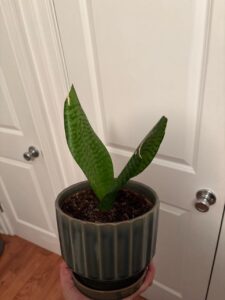
2. Overwatering
Overwatering can also cause wrinkled leaves. But these wrinkles usually look different – the leaves get soft and mushy, and will sometimes turn yellow before they wrinkle.
Overwatering is actually much more dangerous than underwatering for snake plants. Their roots are more likely to rot if they’re left to sit in soil that’s soggy. And root rot can kill your plant pretty quickly.
How to fix it: First, stop watering right away! If the soil is really soggy you might need to repot the plant in fresh and dry soil. Check the roots while you’re at it – healthy roots should be firm and white. Cut away any black roots.
So you don’t face this problem in the future only water when the soil is completely dry and make sure your pot has a good number of drainage holes.
3. Temperature Stress
Snake plants might be tough but they hate cold drafts and the temperature changing out of the blue. If they’re in temperatures below 50°F (10°C) their leaves can wrinkle as a response to the stress of being cold.
I once put my snake plant near a drafty window in the winter and within a few days the leaves had started to wrinkle.
How to fix it: Move it away from any cold windows, doors that have drafts or vents from air conditioners. They like the temperature to be between 65 to 85°F (18-29°C). Also don’t put them somewhere the temperature can change quickly as that will stress them too.
4. Low Humidity
Snake plants can deal with dry air better than most other houseplants but if the humidity gets too low it will cause the leaves to wrinkle. This is especially common in winter when our indoor heating systems suck all the moisture out of the air.
How to fix it: Snake plants don’t need the humidity too high like some houseplants but they do like it not being ridiculously dry. So if your home gets very dry (below 30% humidity), you may have to use a humidifier or put your snake plant on a pebble tray with water.
Don’t go crazy though – too much humidity can result in fungal issues. A moderate humidity level of 40 to 50% is perfect.
5. Pest Infestations
Snake plants don’t get targeted by pests too much but that doesn’t mean it never happens. Spider mites, mealybugs and scale insects can all attack your snake plant and suck the moisture from the leaves which causes them to wrinkle.
They’re often sneaky too, hiding under the leaves or in the grooves where the leaves meet. I once had a mealybug infestation that I didn’t notice until half my plant was affected!
How to fix it: Look closely your snake plant, especially in those hidden spots. If you find any pests then quickly isolate that plant from the others. For smaller infestations just wipe the leaves with a cloth, maybe with a bit of soapy water. If it’s a more serious case you might need to use neem oil or insecticidal soap.
Personally I’ve had good luck with giving my snake plant a shower fairly regularly. The water pressure helps blast away most of the pests and then I follow up with some spraying of diluted neem oil.

6. Root Bound Conditions
Snake plants actually like being a little root bound, but only up to a certain point. If yours has been in the same pot for years and years it might be so cramped that the roots can’t properly take up the water and nutrients anymore.
When this happens you could see wrinkled leaves even though you’re watering it the right way. The pot might also look like it’s bulging, or you they could be roots growing out of the drainage holes.
How to fix it: It needs a bigger home! Repot your snake plant into a container that’s about 1 to 2 inches bigger in diameter. Don’t go too big too fast though. Snake plants like to be a little snug. Use fresh potting mix that drains well (I mix regular potting soil with some perlite to give a bit more drainage).
Spring or early summer is the best time to repot but I’ve done it in other seasons when necessary without any problems.
7. Disease Issues
There are some bacteria and fungal diseases that cause the leaves to wrinkle in snake plants. These usually show up as soft, discolored spots that spread over time and will eventually cause the leaves wrinkle and collapse.
Root rot is usually the issue (caused by overwatering), but other fungal infections can be a problem as well, especially if your plant has been stressed or damaged.
How to fix it: If you think it’s a disease of then you’ll need to act quickly. Get rid of any leaves that are really affected (just chop them off. For bacterial or fungal issues on the remaining leaves you can try spraying them with a fungicide.
If root rot is the issue you’ll need to repot the plant after cutting away all the rotted roots. Use fresh soil and make sure not to overwater in the future.
Prevention is really the best way to deal with these sorts of problems. Don’t overwater, stop getting water on the leaves when possible and make sure there’s good air flow around your snake plant.
FAQ About Wrinkled Snake Plant Leaves
Can wrinkled snake plant leaves recover?
It depends on the cause and how bad it is. Leaves that are wrinkled not enough watering will return to normal once you’ve given them a proper watering. But leaves that have been damaged by pests, disease or temperature stress may not recover. The good news is that even if some leaves are permanently damaged your snake plant will usually grow new, healthy leaves if you correct whatever the underlying problem is.
Should I cut off wrinkled snake plant leaves?
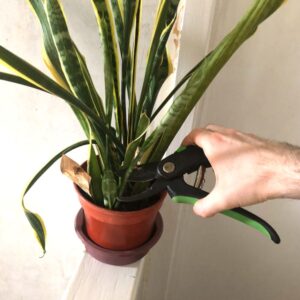
You don’t need to remove leaves that are just slightly wrinkled as they have a chance to recover. But if there are any leaves that are very wrinkled or have lost their color then it’s best to cut them off. It will help your snake plant to send its energy to healthy growth instead of trying to save those damaged leaves.
I usually wait a week or two after fixing the underlying issue before deciding which leaves to cut. Some will bounce back surprisingly well!
Why are my snake plant leaves wrinkled and yellow?
Wrinkled leaves that are also turning yellow typically indicate overwatering. This is serious because it might mean root rot has set in. Check the soil – if it feels wet or soggy, you need to let it dry out completely. You might also need to check the roots and repot in fresh soil if root rot has developed.
Why are my snake plant leaves wrinkled and brown?
Brown edges along with wrinkling usually points to underwatering or very low humidity. If the brown is soft rather than crispy it could be a fungal issue or damage from the cold. Check your how and when you’re watering, the humidity in your home and whether the plant is in the path of a draft or the temperature is changing too much for it.
My snake plant leaves are wrinkled after repotting – what’s wrong?
This is actually fairly common! Repotting can be stressful for plant and they sometimes react by wrinkling the leaves temporarily. Your snake plant might also be adjusting to the new soil’s moisture level. Give it time to settle in – so don’t fertilize it for a month after repotting and only water it when the soil is completely dry. Most plants bounce back within a few weeks.
How often should I water my snake plant to prevent wrinkled leaves?
There’s no answer for every plant because it depends on things like your home’s conditions. Generally though snake plants need watering only when the soil is completely dry. That should be about every 2 to 3 weeks in the summer and once a month in the winter. However, if your home is very hot or dry you will probably need to water more often. As always you’re best bet is to check the soil with your finger. If it feels dry when you put your finger in the soil then you can feel confident watering.
Can too much sunlight cause snake plant leaves to wrinkle?
Yes! Snake plants may be able to deal with some direct sun too much sunlight can burn their leaves, and this can cause wrinkling and brown patches. They like bright, indirect light.
I had a snake plant that I moved to a south facing window in the summer and after a few days some of the leaves had got some wrinkled, pale patches from sunburn. If this happens then move your plant to somewhere that gets less intense light and it should be fine.
Final Thoughts
Snake plants may have a reputation for being hard to kill but as we’ve just seen they do have some limits. But as long as you figure out what’s wrong you can fix whatever is is that’s causing the wrinkles leaves.
I’ve found that the most common causes are either watering issues (too much or too little) or stress from things like cold drafts or sudden changes in the temperature.
Don’t worry if you make some mistakes though. It happens. I’ve certainly killed my fair share. And even now after years of growing them I still occasionally overwater or forget to check for pests until it’s almost too late.
The most important thing is to react when you find a problem. Don’t wait. And if you give it what I needs your snake plant can recover from wrinkled leaves.
