

There’s a particular kind of garden that stops people in their tracks. One that has overflowing borders, an abundance of flowers, something always in bloom.
That’s the cottage garden aesthetic and it’s one of the most popular styles in gardening for good reason. It’s charming and when it works it looks like the garden planned itself.
What most people aren’t aware of until they try to recreate it is that it may look like to doesn’t take much effort but it really needs quite a bit of thought. The best cottage gardens are packed with a a mix of annuals, perennials, biennials, climbers and bulbs that together provide color and structure from early spring right through to the first frosts.
Get the plant selection right and the garden largely takes care of the aesthetic for you. Get it wrong and you’ve got a bed that looks great for three weeks and then does very little else.
So I’ve put together fifteen of the best cottage garden flowers from across all five of those major categories I just mentioned with growing advice for each one – what conditions they need, how to establish them, where they’re most likely to cause problems and what they do particularly well.
These aren’t the easiest plants in every case but they’re the ones that deliver most reliably for getting the best cottage garden.
Annuals
Annuals complete their entire life cycle in a single season. They germinate, grow, flower (a lot), set seed and then die – all within one year.
That sounds like a disadvantage until you see how much a good annual contributes to a border from June through to October. They fill gaps between perennials, add color in a border’s first year before things establish and many of them self seed, meaning when you’ve grown them once they tend to come back on their own year after year.
That self seeding habit – plants popping up in places you wouldn’t expect, softening edges, threading through the gaps – is much of what gives a cottage garden its signature feel.
Cosmos

Cosmos is, without question, one of the easiest and plants you can grow from seed. It has a sort of feathery foliage that is delicate, the flowers – which come in white, pink, magenta and bicolors – are simple and look like daisies and it blooms continuously from midsummer until the first hard frost.
It grows quickly, needs very little attention once established and looks at home in almost any cottage garden. The variety ‘Purity’ (pure white) and ‘Rubenza’ (deep ruby red) are both some of the best.
Soil: Poor to average, well drained. Rich soil will mean lots if lush foliage instead of flowers.
Sow: Direct sow after last frost or start indoors 4 to 6 weeks before the last frost date
Height: 90 to 120cm (3 to 4ft)
Key tip: Don’t overfeed. Cosmos flowers better in lean soil. Too much nitrogen and you get a very beautiful leafy plant but one that barely blooms.
Nigella

Nigella – also called love-in-a-mist – has a quality that’s hard to describe until you’ve grown it. The flowers sit inside a ruff of green bracts.
The seed pods that follow are just as beautiful – striped and papery, you can even use them in dried arrangements. It comes in blue, white, pink and deep purple and the blue varieties in have a romantic feel to them that’s no other flower really does as well. It self seeds with great enthusiasm, which is exactly what you want.
Soil: Average, well drained
Sow: Direct sow in the fall for spring germination, or in early spring. Nigella doesn’t like it’s root being disturbed so sow where it’s to grow.
Height: 45 to 60cm (18 to 24in)
Key tip: Let some plants go to seed and don’t be too tidy with clearing spent plants. The self seeded offspring are what give nigella its cottage garden quality over time.
Sweet Peas

Sweet peas are a must in a cottage garden. The scent alone justifies growing them – rich and completely unlike anything you can buy in a bottle.
They climb, flower prolifically if you keep picking and they come in every shade from white through palest blush to deep burgundy and near black. The catch is that they need a bit more attention than most annuals: early sowing, support for climbing and regular deadheading to keep them flowering.
But the payoff is amazing and a jar of sweet peas on a kitchen table is one of the great pleasures of the gardening year.
Soil: Rich, deep, that holds on to moisture but well drained. Unlike cosmos sweet peas love lots if feeding.
Sow: Fall (overwinter in a cold frame) or late winter indoors. Soak the seeds overnight before sowing them.
Height: 150 to 200cm (5 to 6ft) with support
Key tip: Pick the flowers constantly. The moment sweet peas are allowed to set seed they stop producing new flowers. Even if you don’t want them in a vase, deadhead religiously.
Perennials
Perennials are the plants that come back year after year, slowly building into larger, more impressive groups. In their first season they can look underwhelming – a small plant that produces a handful of flowers and then dies back.
By their third or fourth year they’re the anchors for the whole border. The cottage garden rule of thumb is “sleep, creep, leap” – first year they sleep, second year they creep, third year they leap. It’s the truth and worth being patient about.
Echinacea
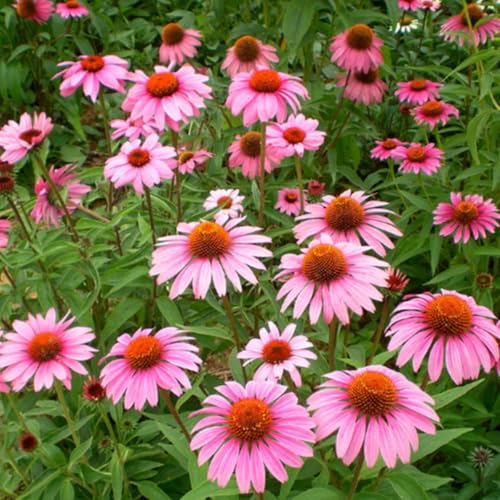
Echinacea – or coneflower – is one of those plants that earns its keep across more than one of the seasons. The flowers, with their spiky central cones and petals in shades of purple, pink, white and orange, are beautiful from midsummer onward.
Then the seed heads persist well into winter, providing food for goldfinches and some interest when everything else has died back. It’s drought tolerant when it gets established, lives a long time and improves with age.
The straight species Echinacea purpurea is as good as any of the fancier varieties and reliably comes back strong year after year.
Soil: Average to poor, well drained. Doesn’t mind dry conditions well once established.
Hardiness: USDA zones 3-9 / RHS H7
Height: 60 to 90cm (2 to 3ft)
Key tip: Leave the seed heads standing through the winter. They’re really attractive and the birds will thank you. Cut them back in early spring before new growth happens.
Salvia

Hardy salvias are among the most reliably useful plants in the cottage garden. Salvia nemorosa ‘Caradonna’ – with black stems and violet flower spikes – is one of those plants that looks good with almost everything and gets compliments from everyone who sees it.
Cut it back hard after the first flush of flowers and it’ll rebloom in the late summer. It’s fully hardy, resistant to slugs, drought-tolerant and loved by bees. If you could only have one perennial salvia, ‘Caradonna’ would be the one to choose – though ‘Ostfriesland’ and ‘Marcus’ are excellent compact alternatives if you have a smaller space.
Soil: Average to poor, well drained. Hates sitting in wet soil over winter.
Hardiness: USDA zones 4-8 / RHS H6
Height: 45 to 60cm (18 to 24in)
Key tip: Cut back by about two thirds immediately after the first flush finishes. It looks brutal but it will trigger a second wave of flowering 6 to 8 weeks later that can be as good as the first.
Astrantia

Astrantia is one of those plants that looks delicate but is actually pretty tough. The flowers are intricate – a central pincushion of tiny florets surrounded by a collar of pointed bracts – in shades of white, pink and deep burgundy/red.
‘Ruby Wedding’ and ‘Roma’ are both outstanding named varieties. Astrantia tolerates partial shade better than most cottage garden plants, making it great for the trickier spots in the border.
It also has a long season, flowering from late spring through midsummer and often reblooming if cut back. It self seeds too which is useful rather than problematic.
Soil: Moisture retentive, humus rich. Does not like dry conditions.
Hardiness: USDA zones 4-7 / RHS H7
Height: 60 to 90cm (2 to 3ft)
Key tip: Astrantia doesn’t like dry soil. If your border tends toward the dry side then improve the soil with lots of organic matter before planting and mulch well.
Biennials
Biennials are slightly misunderstood. They take two years to complete their life cycle and spend their first year building roots and foliage, then flowering, setting seed before dying in their second. That two year timeline puts some gardeners off.
But the flowers biennials produce are often spectacular in a way few annuals or perennials match. And once you’ve established lots that self seed they behave like perennials – always something in the first year vegetative stage, always something in full flower, with a constant rolling population that doesn’t need you to sow fresh each year.
Foxglove
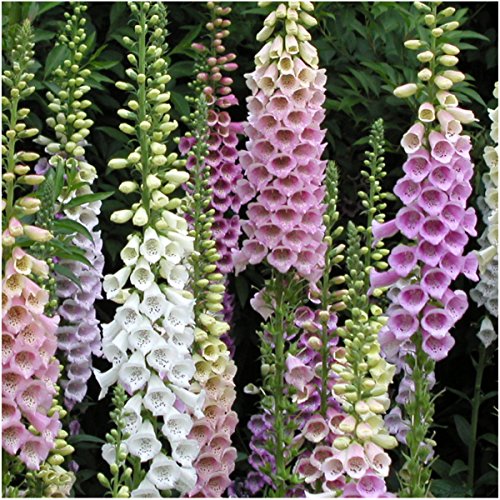
If there is one plant that defines the cottage garden more than any other, it’s probably the foxglove. It has tall tubular flowers that come in white, cream, pink and purple and are often spotted inside.
They look magnificent at the back of a border, they fill vertical space in a way few other plants can and they’re incredible for bumblebees, which disappear completely inside the flowers to reach the nectar. They self seed tons once established, popping up in gaps and at the bases of hedges and walls in exactly the way cottage garden plants are supposed to.
Soil: Moist, humus rich. Tolerates a wide range of conditions.
Hardiness: USDA zones 4-9 / RHS H7
Height: 100 to 150cm (3 to 5ft)
Key tip: All parts of the foxglove are toxic – wear gloves when handling and wash hands afterwards. Worth noting if you have young children or dogs who spend time in the garden.
Hollyhock

Hollyhocks are the quintessential cottage garden plant – tall, flowering in the warmest colors and most at home growing against a weathered wall or fence. Single flowered varieties have a simple elegance; the double forms look like something from a Tudor painting.
They can reach 2 metres or more in a good year and have to be staked in exposed positions. But that height is exactly their value – they fill the back of a border in a way nothing else quite matches. Rust disease is a real problem (more on that below) but it doesn’t stop them flowering.
Soil: Rich, well drained. Particularly good against a south facing wall where the soil is warm and dry.
Hardiness: USDA zones 3-9 / RHS H6
Height: 150 to 200cm (5 to 6ft+). Stake in exposed positions.
Key tip: Rust – orange things that look like blisters on the undersides of leaves – is almost inevitable on hollyhocks. Remove the leaves that are affected and don’t compost them. It disfigures the foliage but rarely kills the plant and the flowers are largely unaffected.
Wallflower

Wallflowers are a spring essential – one of the first heavily scented flowers of the year, filling the gap between the late bulbs and the early summer perennials.
Planted in fall alongside spring bulbs, they flower from March through May in shades of yellow, orange, red, mahogany, and cream and the scent on a warm spring day is amazing – warm and so distinctive. They live for a short time in colder climates and often treated as annuals but in sheltered positions they can persist and flower for several seasons.
Soil: Average to poor, well drained. Prefers slightly alkaline conditions.
Sow: Sow outdoors in late spring for fall planting. Or buy as plugs in fall for immediate planting.
Height: 30 to 60cm (12 to 24in) depending on variety
Key tip: Plant wallflowers in fall alongside tulip bulbs. They emerge together in spring and the combination – tulip stems rising above a carpet of wallflower color and scent – is one of the great spring garden pairings.
Climbing Plants
No cottage garden is complete without climbers. They cover fences, climb up walls, thread through arches and pergolas – and in doing so they turn flat borders into something with that looks great.
The best cottage garden climbers are slightly unruly, covering a lot of ground quickly and flowering with an abundance that makes the whole garden feel more lush.
Rosa

Roses are the heart of the cottage garden, and specifically the old fashioned and English shrub roses – David Austin varieties in particular – that produce large, cupped blooms that you don’t get from modern hybrid teas.
For climbing, ‘Gertrude Jekyll’ is one of the most reliably beautiful and fragrant roses in existence. For something more vigorous and once flowering but spectacular, ‘Veilchenblau’ (violet-purple, almost no thorns) or ‘Francis E. Lester’ (single pink and white) are outstanding ramblers.
Roses need more maintenance than most cottage garden plants – pruning, feeding, watching for disease – but nothing else delivers what they do.
Soil: Rich, deep, moisture retentive. Roses are hungry plants – feed with a specialist rose fertiliser in spring and again after the first flush.
Hardiness: Varies by variety – most English roses are USDA zones 5-9 / RHS H6
Height: 2 to 5m (6 to 16ft) depending on variety
Key tip: Train climbing rose stems as horizontally as possible along wires or trellis. Horizontal stems produce far more flowering side shoots than vertical ones – this single pruning principle makes a bigger difference to flowering than almost anything else.
Clematis

Clematis is the perfect partner for roses – they flower at complementary times, they scramble through each other beautifully and they cover a lot of wall and fence space with relatively little effort. The range of flower forms and colors is extraordinary: large flowered hybrids like ‘The President’ (deep purple) or ‘Nelly Moser’ (pale pink with darker stripe) for impact, or the smaller-flowered species like Clematis viticella for a more relaxed, cottage feel.
Understanding which pruning group your clematis belongs to – and there are three, each requiring different treatment – is important and worth looking up for the specific variety you buy.
Soil: Rich, moisture retentive, well drained. Add lime if your soil is acidic.
Hardiness: Most are USDA zones 4-9 / RHS H6-H7
Height: 2 to 6m (6 to 20ft) depending on variety and pruning group
Key tip: If clematis wilt strikes – the sudden collapse of stems and foliage – cut back to healthy growth at soil level and don’t panic. Most established plants recover fully from wilt.
Honeysuckle

Honeysuckle is perhaps the most enjoyable scent in the cottage garden – sweet and strongest in the evening, which makes it perfect grown over a gate or archway you pass through at the end of the day. The native British honeysuckle Lonicera periclymenum and its varieties – ‘Serotina’ (late Dutch, deep purple-red and cream), ‘Graham Thomas’ (white aging to yellow) – are all excellent.
It twines enthusiastically over any support and once established it needs very little attention. It does get aphids each spring, which the blue tits deal with just as reliably, so it’s best not to spray.
Soil: Moist, humus rich. Mulch the root zone to retain moisture.
Hardiness: USDA zones 4-9 / RHS H6
Height: 4 to 7m (12 to 22ft)
Key tip: Don’t tidy honeysuckle too much. It flowers on the previous year’s growth – heavy pruning removes the stems that would have flowered. A light tidy after flowering is all it needs most years.
Bulbs
Bulbs do something no other plants do quite as well: they appear, flower and then disappear, leaving the space for whatever comes next. A well chosen selection of bulbs means the cottage garden starts performing in February or March – months before the perennials are really underway – and continues right through to October.
They layer through the border, naturalise over time and increase in number each year without any effort on your part. The investment pays back big time.
Allium
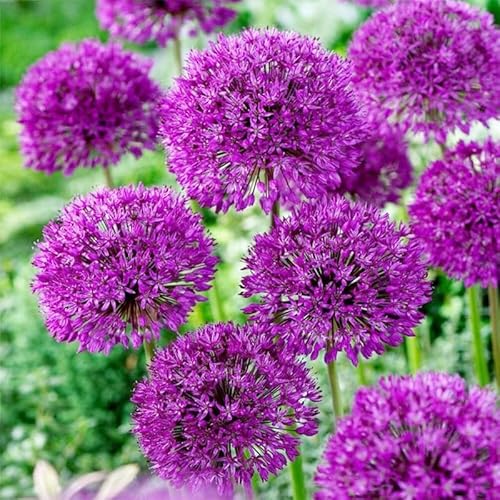
Alliums are the structural plants of the late spring cottage garden border – their tiny purple, white or violet flowers on tall straight stems rise above everything else.
They bring together the spring bulbs and the early summer perennials and look magnificent interplanted with perennials whose foliage helps disguise the allium’s own rather untidy dying leaves. Allium hollandicum ‘Purple Sensation’ is the one most people know, but Allium ‘Globemaster’ (larger, later) and the elegant white Allium ‘Mount Everest’ are both brilliant.
Soil: Well drained. Bulbs rot in waterlogged conditions over winter.
Plant: Fall, at a depth of three times the bulb’s diameter
Height: 60 to 120cm (2 to 4ft) depending on variety
Key tip: Plant alliums in groups of 7, 9 or 11 rather than in neat rows – odd numbers make a more natural look and groups give more visual impact than singles scattered through a border.
Tulip

Tulips are spring’s most theatrical performers. No other spring bulb offers the same range of colors, forms and heights – from the elegant lily flowered types to the fringed parrot tulips to the simple single early varieties that flower when little else is going.
For the cottage garden, the Viridiflora tulips (petals streaked with green) and the Rembrandt style ‘broken’ tulips with their flame like patterning are particularly at home in an informal setting. ‘Tulipa ‘Spring Green’ (white with green feathering) and the near black ‘Queen of Night’ are classics for good reason.
Soil: Well drained. In heavy soils plant on a handful of grit to improve drainage around the bulb.
Plant: Late October to November – later than you’d think. Planting early increases the risk of tulip fire disease.
Height: 30 to 70cm (12 to 28in) depending on variety
Key tip: In heavy clay soils or areas with a history of tulip problems, lift the bulbs after foliage has died down, dry them off and store in a cool dry place until replanting in fall. In well drained soils they often come back without lifting.
Dahlia

When most other things are winding down from August onward dahlias are hitting their stride. They flower continuously from midsummer until the first hard frost, producing a huge amount of blooms in every color except blue.
For the cottage garden the dinner plate varieties are perhaps too formal – the decorative types like ‘Cafe au Lait’ (blush and caramel, endlessly popular for good reason) and the simpler single flowered Bishop series are more in keeping with the relaxed aesthetic. They’re tender in most climates and need lifting or protecting in winter but the effort is definitely worth it.
Soil: Rich, well drained. Feed with a high-potash fertiliser from midsummer onward.
Plant: After last frost – dahlias are frost tender. Start tubers in pots indoors in April to get earlier flowering.
Height: 60 to 150cm (2 to 5ft) depending on variety
Key tip: In USDA zones 8 and above dahlias can be left in the ground over winter with a deep mulch. In colder zones lift the tubers after the first frost turns the foliage black, dry thoroughly and store in slightly damp compost or vermiculite in somewhere that doesn’t have frost.
Final Thoughts
The fifteen plants in this guide give you a starting point for your cottage garden that covers every season from February through to November, every layer of the border from ground level to six feet and above and a full range of conditions from full sun to partial shade. That’s the point of choosing across all five categories rather than just going with a single type.
A border with alliums and wallflowers flowering together in April, foxgloves and sweet peas taking over in June, salvias and astrantia bridging midsummer, echinacea and cosmos carrying the late season, and dahlias finishing strong into October – that’s a border that going to look incredible for nine months of the year. Add honeysuckle and roses up the fence, clematis threading through and nigella self seeding into every gap and you’re close to the cottage garden look that will make people stop on the pavement outside.
None of these plants are especially difficult. Some need more attention than others – sweet peas want regular picking, roses want feeding and pruning, dahlias need winter protection in colder climates.
But all of them are plants that experienced gardeners grow because they deliver, year after year. Start with three or four from this list, get to know them and then go from there.
The cottage garden look is built gradually, not all at once – with plants establishing and self seeding and filling in is a large part of what makes it so satisfying to create.
