

ZZ plants are probably the best houseplant that you can just set and leave. But even they can get run in to some trouble.
Drooping leaves or stems are a common issue and a sign your plant isn’t happy. But the reasons why it’s happening aren’t always obvious.
From getting the retiring wrong to pests or diseases this guide will help you to work out why your ZZ plant leaves are drooping and how to bring it back to former, perky self.
1. Watering: Too Much or Too Little
The main cause of drooping ZZ plants? Watering mistakes. They like a nice balance between the two – not too dry and not too wet.
Underwatering: Thirsty and Tired
ZZ plants are built to survive droughts. They have rhizomes (potato looking things you’ll find under the soil) that store water.
But if you neglect them for too long then the water they’ve stored will eventually run out and that’s when the leaves and stems will start to droop and wilt.
Signs of Underwatering:
- Wrinkled leaves.
- Tips of leaves turning brown.
- Dry soil that pulls away from the edges of the pot.
How to Fix It:
- Water thoroughly and fully. Let the excess drain away. Never leave the plant to sit in water.
- Use a moisture meter so you can figure out when the soil is too dry. If you don’t have one then you can just push to it finger into the soil and judge by that.
- Keep a close eye on your plant for the next few days. You should see it start to look better within a week or so.
Overwatering
If you overwater your ZZ plant it can result in the roots rotting. This in turn suffocates the plant as the roots can’t absorb the nutrients and water it needs. This will lead to the drooping you’re worried about.
Signs of Overwatering:
- Yellow leaves that eventually droop.
- Mushy, soggy stems.
- A nasty smell that is coming from the soil.
How to Fix It:
- Take the plant out of its pot and look at the roots. Healthy roots will be white and feel firm. Rotting roots will be brown or black and mushy.
- Trim away any rotten roots.
- Repot the plant in fresh soil (more on the best soil types below).
- Change how you’re watering. You should be doing it every 2 to 3 weeks depending on how humid it is and how much light your plant is getting.

2. Not Enough Light
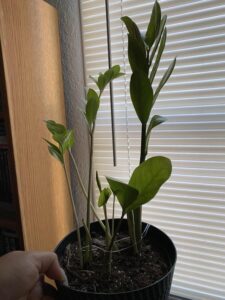
ZZ plants are able to put up with low light but it doesn’t mean they like it. When they aren’t getting enough light they will start to stretch towards whatever the nearest source of light is and the stems will grow too long and droop.
How to Recognize Light Problems:
- Stems leaning heavily in one direction.
- Pale, lighter green leaves.
- Poor growth when compared to earlier seasons.
How to Fix It:
- Put your ZZ plant near a bright window. An east or north facing one usually works well. But keep it out of direct sunlight so it doesn’t get burnt.
- Use sheer curtains to filter the light if you’re having to put your plant in a bright room.
- Rotate the plant every few weeks so every side gets an even amount of light.
3. Temperature Extremes
As ZZ plants come from warmer climates they are sensitive to the temperature fluctuating too much. So even something like a draft from your window or door can upset them. Sudden changes can result in a floppy and drooping plant.
Temperature Guidelines:
- Ideal: 60 to 75°F (15 to 24°C).
- Danger Zone: Below 50°F (10°C) or above 85°F (29°C).
How to Protect Your Plant:
- Keep it away from air conditioners, heaters or windows with drafts.
- In the winter move it to somewhere that keeps a stable temperature, especially if the temperature is dropping overnight.
- Think about using a thermometer to monitor the temperature.
4. Poor Soil and Drainage
ZZ plants need soil that drains well. A mix that holds on to water will quickly become a problem.
Signs of Poor Soil:
- Soil feels soggy all the time
even when you’re not watering it often. - Roots rotting or not growing properly.
The Perfect Soil Recipe:
- Use a potting mix that is designed for succulents and cacti.
- Add perlite or sand as it can make the mix drain better.
- Test the mix by watering it. If the water pools on the surface you’ll know it’s not draining fast enough.
Tip: Always use a pot with drainage holes. Without them even if you’re soil is good it won’t save your plant.
5. Nutrient Imbalances
ZZ plants don’t need to be fed all the time but if you don’t give them any fertilizer or too luck it can result in weak and droopy leaves.
Signs of Nutrient Issues:
- Pale or yellow leaves.
- Poor growth even though they have ideal conditions.
How to Feed Your ZZ Plant:
- Use a balanced fertilizer (10-10-10 is a good choice) during the growing season (spring and summer).
- Feed sparingly – once every 2 to 3 months should be enough.
- Don’t fertilize in the fall and winter as your plant will naturally slow down.

6. Pests
It doesn’t happen often but pests like mealybugs, spider mites and scale insects can do harm to your ZZ plant. If they get infested then the pests will sap the energy and leave it weak and drooping.
How to Spot Pests:
- Sticky substance on the leaves or soil.
- Tiny white, brown or red bugs.
- Yellow or curling leaves.
How to Treat Pests:
- Wipe the leaves with a cloth to get rid of visible bugs.
- Spray with neem oil or a mild insecticidal soap.
- Quarantine whichever plant is affected so the pests don’t spread to any of your other plants (if you have them).
7. It’s Root Bound
ZZ plants actually like to be snug in their pot. But if the roots have outgrown the pot they’re in then they might be struggling to get the water and nutrients they need.
Signs Your Plant is Root Bound:
- Roots that are growing out of the drainage holes and too crowded in the pot.
- Poor growth and drooping stems.
How to Repot:
- Choose a pot that is one size larger than the one it’s currently in.
- Loosen the ball of roots and put it in fresh soil.
- Water it lightly after you’ve repotted.
8. Low Humidity
Though ZZ plants are able to deal with a lack of water they don’t like dry air, especially in winter when the indoor heating we have in our homes can dry out the air.
How to Boost Humidity:
- Put a tray filled with pebbles and water under the pot.
- Group any plants you have together as they boost the humidity for each other.
- Use a small humidifier if you live somewhere that is especially dry.
9. Physical Damage
If you accidentally knock your plant or have handle it roughly it can cause the stems to to bend or break, which can lead to drooping.
How to Handle Your Plant Gently:
- Always move the plant by supporting the base of the pot.
- Don’t put it somewhere that gets crowded or lots of people walking past as it can get bumped into.
- Prune any damaged stems so it doesn’t get more stressed.
10. Natural Growth and Aging
Sometimes drooping stems are just a sign of that your plant is older and some of its growth has reached the end of its life cycle.
What to Do:
- Trim the older stems with as it will help with new growth.
- Don’t panic – this is completely normal and not a sign of anything you’ve done wrong.
Prevent Drooping: A Checklist for Healthy ZZ Plants
| Problem | Signs | Solution |
|---|---|---|
| Underwatering | Wrinkled leaves, dry soil | Water fully and monitor the moisture of the soil |
| Overwatering | Yellow leaves, soggy soil | Repot and water less often |
| Low Light | Leaning stems, pale leaves | Move to a brighter spot that gets indirect light |
| Pests | Sticky substance, visible bugs | Treat with neem oil or insecticidal soap |
Final Thoughts
If you keep an eye on your plant and make a few changes to what you’re doing you can easily fix drooping stems and leaves. Go through all the tips here and you should be able to figure out what the problem is and work on correcting it.
For more help try our ZZ plant care guide or tips to get your ZZ plant growing faster and healthier.
