
Getting your pothos watering right can feel tricky at first. When you get it right though then your pothos will absolutely thrive. But too much or too little will result in problems.
I’ve been lucky enough to grow dozens of pothos varieties over the years and so have become pretty familiar with what they like when it comes to watering. In fact they’ll show you when they want a drink, you just need to know what to look for.
So follow this guide to get their watering just right.
When to Water
Let’s start with when you should be watering. The one thing you shouldn’t do is stick to a very strict schedule.
Your pothos will need different amounts of water depending on the temperature in your home, the humidity and even the season.
But as a quick rule: Put your finger in the soil to see how dry it is. If when you go down about an inch it’s dry then you can feel confident watering it. And when you’ve watered the soil it shouldn’t feel soggy or extremely dry.
Signs Your Pothos Needs Water
By its leaves your pothos will show you an awful lot about how it’s feeling. When the leaves start to droop a little and look less perky you should take a closer look at your plant.
Healthy pothos leaves should strong and crisp. If they’re soft and drooping even though the soil feels damp it could be because you’re overwatering.
But look out for brown edges on the leaves too. This shows it needs more water.
The soil tells an even clearer story. Dry soil that you can see is pulling away from the sides of the pot is another sign of your plant not having enough water. If the pot is noticeably light when you pick it up that’s also a big sign.
But waterlogged soil will smells unpleasant and stay wet for days. Your pot must have drainage holes too. I put my first pothos in a pot without drainage holes and it really struggled until I figured out what was the issue.
How to Water Pothos
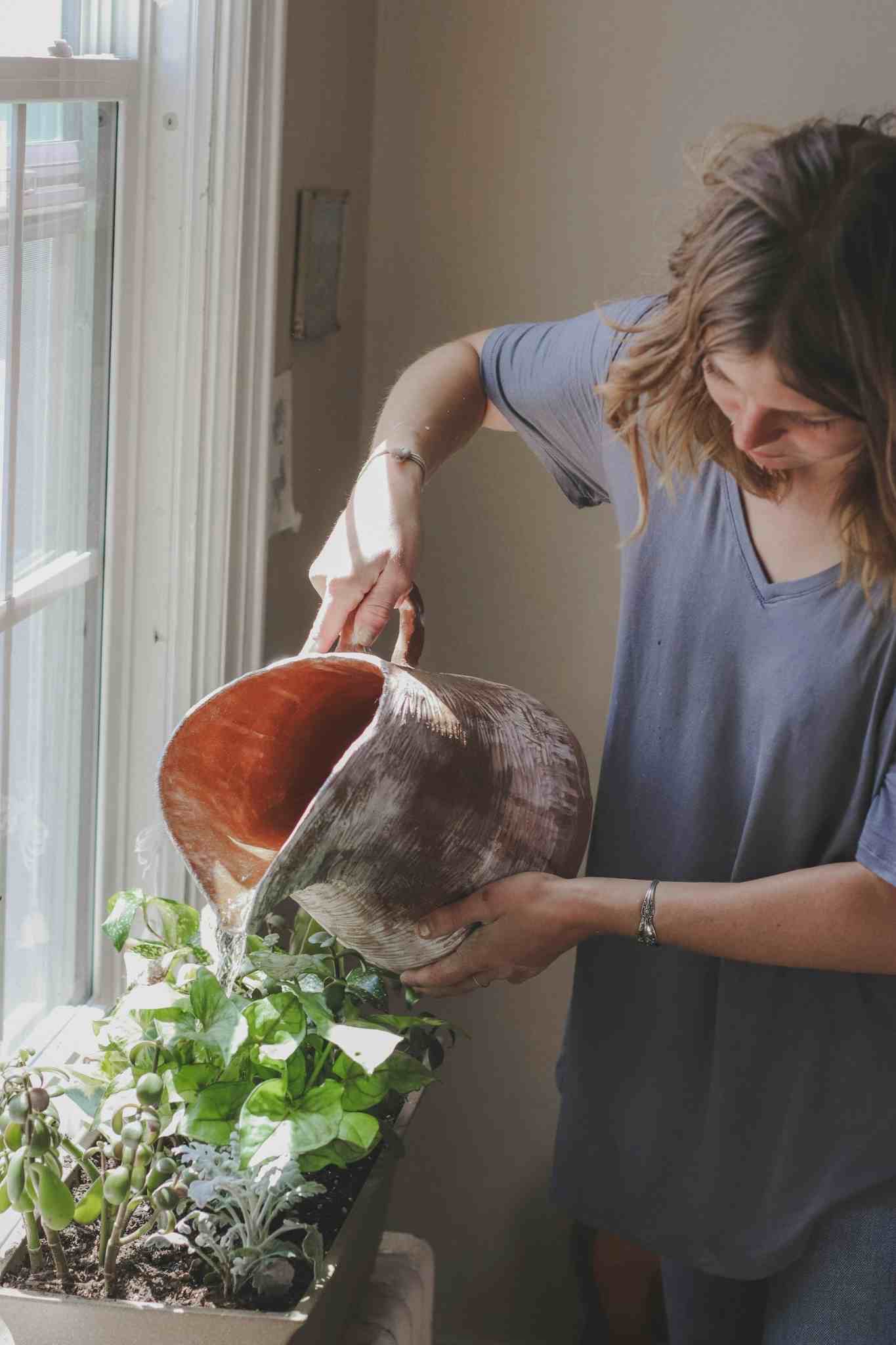
Begin by pouring water slowly around the base of your pothos. Room temperature water is better because if it’s too cold it can shock the plant.
Make sure when you’ve poured it the water comes out of the drainage holes. Let it drain completely afterwards which shouldn’t take more than 5 or so minutes.
Get rid of any water that collects in the saucer. If you leave it behind or could lead to root rot.
During the hot summer months or if you’ve put your pothos near a heating vent you might need to water it twice a week. In the winter though the same plant might only need to be watered every 10 to 14 days.
Dealing with Different Environments
Light makes a big difference to everything about watering. The pothos I have in my kitchen sits in a bright window and uses up water much faster than the ones I have in my bedroom window. And it’s the amount of light they get that’s the difference between them.
What to look out for? How quickly the soil dries out in each spot is the real sign.
If you notice the soil is staying wet for over a week you may want to move your plant to somewhere brighter or change how often you’re watering.
Humidity plays a big role too. You might want to use a humidity tray or mist your pothos from time to time in the winter as it’s usually dryer.
But don’t let this replace proper watering. Misting will help the leaves but the roots still need proper watering.
Seasonal Adjustments
The spring is when your pothos will be growing at it’s most. So it will want more water during this period.
You’ll probably see new leaves growing faster and the roots might even start to push out of the drainage holes.
It’s at this point that having consistent watering becomes even more important. In the fall the growth will slow down and you can ease back on how much and often you’re watering (if you don’t then you might run the risk of root rot).
Troubleshooting Common Issues
Yellow leaves are the most clear sign of too much water. But don’t panic. If it’s caught early then all you have to do is let the soil dry out fully between each time you water.
Check that the water isn’t pooling in the bottom of your pot. If your plant gets several leaves yellow at once and the soil feels soggy you might need to repot it.
Brown leaves usually mean your pothos is too dry. The oldest leaves will be the first ones to show this so keep an eye on them.
Once the leaves have turned brown sadly they won’t recover. But that doesn’t mean your pothos is doomed too.
As long as you change how you’re watering and get it right your plant will bounce back. Just trim off the brown leaves though as it will help with new growth.
Recovery Tips
If you’ve overwatered your pothos then hold off watering until the top 2 or so inches of the soil are dry. You might see some leaves turn yellow and drop off and while this is unsettling it’s normal as the plant recovers.
If you’ve massively overwatered your plant then check the roots. Healthy roots will be white and from. Any parts that are black or mushy you should trim away and repot the plant in fresh soil.
Tools and Techniques That Actually Work
Don’t bother with the ice cube method – it’s a lot of hassle and doesn’t help much (if you’re not familiar with it then ignore that!). Instead I would get a good watering can that has a narrow spout.
This is because it will give you good control over where your water goes. You don’t earn the leaves to get wet.
I also use a simple plastic moisture meter when I’m unsure. But really your finger is just as reliable once you get to know your plant.
Bottom watering works really well too, especially if you’ve let your pothos get too dry. Just fill your sink with about two inches of water and leave your plant to sit in it for 15 minutes.
You’ll know it’s ready to be removed from the water when you see the top of the soil start to become darker. Let it drain afterwards though before you put it back where it lives.
Bottom watering helps with deep root growth and make sure the water is distributed evenly.
The Right Water Makes a Difference
If your tap water has a lot of chlorine in it you might have noticed some of the tips of your leaves turn brown. Even when you’re watering it properly.
I like to leave my tap water out overnight in the watering can as the chemicals dissipate. It can make a surprising difference.
Rainwater works very well too and my pothos seem to look a lot happier after getting some natural rain when I leave them on the porch (if you’re going to do this don’t forget to bring them in before the temperature drops)
Adapting to Your Plant’s Growth
As your pothos grows how you water it will need to change. The bigger it gets it will probably need more watering than when it was smaller.
Look out for signs that your plant has got too big for its pot. When the roots are pushing out of the drainage holes or the soil drying out much faster than it was it usually mean it’s time move it to a bigger pot.
When you repot it take the opportunity to think about your soil mix. I like to add some extra perlite to any standard potting soil I’m using.
It will improve the drainage and also makes it harder to overwater. The soil being too wet is one thing your pothos won’t forgive and be able to get over.
Long Term Care Tips
There’s more to having a successful pothos than simply watering it right. You have to give it the prefer environment. And a good way to keep an eye on it is putting it somewhere you’ll notice any changes easily.
I keep mine at eye level so I can spot early warning signs like the leaves curling or the soil starting to pull away at the edges of the pot. This way you’ll catch things quickly and can make the changes you need to before they become more serious.
Special Situations
If you’re going on vacation you’ll need to prepare and handle it differently. For short trips (up to a week), give your pothos a big water before you leave.
Move it away from any direct sun so it loses less water. If you’re going away for longer then you could look into something that waters your plant for you. A wicking setup, for example.
I’ve found that some string running from a water reservoir into the soil works better than expensive watering globes.
Winter will always have its own challenges. When we turn the heating on it tends to dry out the air in our homes. But at the same time plants will be using less water during those shorter days.
So check how most the soil is more often than you would in the summer. But expect to be watering less often.
If leaves any of the leaves get brown edges despite watering the right way then try grouping any plants you have together as they will increase the humidity amongst themselves.

Propagation and New Plants
When you’re rooting cuttings they will need different watering compared to fully established plants. The soil needs to stay moist but not overly wet otherwise the roots will struggle.
Once you see some new growth you can start to water it normally. It should take around three to four weeks to reach this point.
Common Questions About Pothos Watering
Can I save my overwatered pothos?
Yes! I’ve managed to save a few pothos plants that were on the brink. First thing to do is remove the plant from its pot and get rid of any soggy soil from the roots. Then trim away the black, mushy roots.
Let the plant sit out for an hour before repotting it in fresh soil. Don’t water it for a few days so it has a chance to recover.
You’ll probably lose a few leaves during the recovery process but as it stabilizes new growth will begin again.
Why are my pothos leaves turning yellow one at a time?
Single yellow leaves, especially if they’re older, are usually just part of normal aging. But if you see lots of leaves all turning yellow at once or together then that’s probably down to how you’re watering.
Wet soil is often a cause of yellow leaves.
My pothos was thriving, then suddenly declined. What happened?
This is usually down to a change in the seasons or you having recently moved your pothos. Have you moved your plant? Even a few feet can change its light and the humidity it’s getting and this will impact how much water it needs.
Keep notes about when you water and any environmental changes. You’ll start to notice patterns that can explain a sudden change.
Real Success Tips
The best thing I can recommend is not to stick to any rules and instead watch your pothos. Touch it and become familiar with all its habits.
Notice how its leaves feel early in the morning versus the evening. Watch how quickly the water drains through the pot. It’s these small thing that will tell you far more than any care guide can.
The health of the roots plays a massive role in how successful your watering keep. So every few months take your plant out of its pot and check the roots.
Healthy roots should be light in color and firm. Checking this quickly will help you alter your watering ring before you end up with any problems.
Drooping leaves that look better right after you’ve watered mean you have waited too long in between watering. If the leaves stay droopy but the soil is wet could be down to you having watered too much.
If you learn these signals then watering will become a lot more intuitive rather than being something you find yourself guessing about.
Quick Reference Table for Pothos Watering
| Condition | Action |
|---|---|
| Soil feels dry 1 inch under the surface | Water thoroughly |
| Soil feels damp 1 inch below the surface | Wait a few days and check again |
| Leaves turning yellow | Check for overwatering |
| Edges of leaves turning brown | Check for underwatering |
| Water left in the saucer | Empty the saucer immediately |
Final Thoughts
If you get the basics of watering down from this guide and then adjust what you’re doing on the basis of the conditions of your home and how your plant reacts to it your pothos will do well. Don’t worry if you make some mistakes. Just use them as chances to learn from.
Over time you’ll start to get a feeling for when your pothos needs watering. If there are small changes you’ll notice them, like with the look of the soil and how the leaves are positioned, and know your plant needs watering.
This all comes from experience and not from following rigid rules.
