

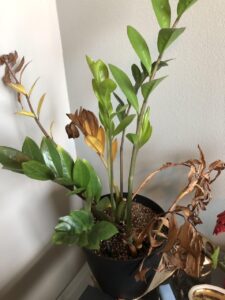
If your ZZ plant has enveloped brown leaves it’s a sign something isn’t right. It could be that you’ve been too generous with water or your plant doesn’t like dry air from your heater.
Whatever it is the brown spots and crispy edges are your plant showing you it’s unhappy and you need change how you’re caring for it.
So I’ll take you through each of the potential causes of brown leaves. From the most common reasons to the more sneaky problems that might surprise you.
By the time you finish reading you’ll have all you need to bring you ZZ plant back to it’s full health.
1. Overwatering
Too much water is often the main reason for brown leaves on your ZZ plant. They store their water in rhizomes and this makes them very sensitive to the soil getting too soggy.
You might notice the brown starts as yellow patches that get darker. Give the leaves a squeeze and if they feel mushy rather than firm you can be confident it’s overwatering that’s the issue.
A nasty smell coming from the soil is another sign. Look at the drainage holes – if you can see the roots looking dark and mushy then you should take action quickly.
Solution
Take your ZZ plant out of its pot and trim the rotted roots. Let the plant dry out for a day then repot it in fresh soil. You can add some extra perlite to make it drain better if you want. And from then on only water when you feel the top of the soil is very dry.
2. Underwatering
ZZ plants can deal with a lack of water for a while but if it’s too long they’ll start to struggle. If that’s the case you should be looking out for the tips of the leaves turning brown and crispy.
If the soil starts to pull away at the sides of the pot that’s definitely a sign it needs more water. You need to find the right balance between too much and too little. Your ZZ plant will tell you when you’ve got it right though as it’ll look healthy and the leaves will be a bright green.
Signs of Underwatering
- Soil pulling away from the edges of the pot.
- Brown, curled leaves.
- The plant looks sad, is wilting and isn’t as firm as it would be.
Solution
- Water the soil gradually. You don’t want to flood the pot quickly as you might stress the roots.
- Set a reminder to water every 2 to 3 weeks. Although you will need to adjust this when the humidity and temperature changes.
3. Sunburn from Excessive Sunlight
The leaves on your ZZ plant can get burnt by the sun. If you’ve recently moved your plant closer to a window and have noticed brown patches suddenly appearing then sunburn is a real possibility.
ZZ plants may like being put somewhere bright they do best in indirect light. A good spot would be somewhere that you can read without needing to turn on a lamp.
Dry air from heating or air conditioning can also affect your ZZ plant. If the leaves have brown crispy tips and the rest of the plant is healthy then it could be the humidity in your home.
Solution
You could mist your plant but that could cause it’s own problems. Instead try things like putting some trays filled with pebbles near your ZZ plant.
Just watch out for drafts from vents or doors that get opened a lot. The temperature swings can stress your plant.
4. Low Humidity
The heating systems in our homes and drier climates can make the humidity too low for your ZZ plant. When the air becomes too dry the leaves one moisture faster than they can replace it and this can cause the tips to turn brown.
How to Boost Humidity
- Put a tray that’s filled with pebbles and water under your plant (but don’t let the pot touch the water).
- Group it with other plants as they increase the humidity for each other.
- Buy a humidifier if the air indoors is always dry.
5. Cold and Heat Stress
ZZ plants like temperature to stay stable. If they change suddenly or are exposed to extremes of heat or cold then it can stress the plant and make the leaves turn brown.
Common Triggers
- Drafts from windows, air conditioners or heating vents.
- Putting the plant near a radiator or fireplace.
- Temperatures dropping below 50°F (10°C).
Solution
- Make sure your plant is kept somewhere that the temperature stays consistently between 65°F and 75°F.
- Move it somewhere away from drafts on the winter months.
6. Overfertilization
If you give your ZZ plant too much fertilizer you can do more harm than good. If you’ve seen a white film on the surface of the soil as well as brown leaves that’s a sign you’ve given it too much.
Thankfully it’s easy to fix – just don’t fertilize it! And flush the soil next time you water.
When you do feed your ZZ plant think less is more. A balanced fertilizer that you’ve diluted used once during the spring and again in the summer should be enough.
7. Pests
If you’ve seen a sticky substance on the leaves of your ZZ plant or some webbing then there’s a good chance you’ve got pests.
Mealybugs love to hide under leaves and in stem joints. And spider mites can be lurking without you seeing them until you get an explosion of them.
Wiping the leaves with insecticidal soap usually does the trick but you’ll also want to isolate any affected plants until you’ve got the pests under control.
How to Spot a Pest Problem
- Small, sticky substance on the leaves.
- Webbing between the stems and leaves (spider mites).
- Groups of tiny insects (mealybugs).
Solution
- Wipe the leaves with a cloth and a mixture of water and dish soap.
- Use neem oil or insecticidal soap on the areas that are affected.
- Quarantine the plant if the infestation is really bad.

8. Tap Water
You might not think it but the water from your tap could be causing issues. If the area you live has hard water minerals they can build up on the soil over time and this can cause brown leaf tips.
Instead you can collect rainwater or leave your tap water out overnight before using it on your plants. This lets the chlorine evaporate and can really help your ZZ plant.
9. Natural Aging
Sometimes brown leaves are just a natural part of your plants lifecycle. The older leaves that have been on the plant for years won’t last forever.
If any older leaves have turned yellow or brown and the newer ones look healthy then it’s probably just normal aging. Trim away those leaves at the base as it will keep the plant looking fresh as well as sending its energy towards new growth.
10. Fungal Infections
If your ZZ doesn’t get enough air flowing around it or is left in dampness for too long it can result in fungal diseases developing. Something like leaf spot can appear as brown or black lesions on the leaves.
Prevention and Treatment
- Don’t start from above as you want to keep the leaves dry.
- Keep your plants apart to improve the air flow.
- Use a fungicide if the problem carries on.
11. Poor Soil Quality
The soil is very important for your plants health. If the water sits on the top of the soil or it’s not draining through quickly then the roots might be suffocated.
You can create air pockets in the soil by mixing some perlite or orchid bark to the mix. And if notice the roots coming out of the drainage holes or looking cramped in the pot then you should move it to a bigger one.
But don’t go too big with the pot. They like being a bit snug.
12. Root Bound Stress
ZZ plants need room to grow. If the roots have become too big for their pot they’ll struggle to take up the water and nutrients they need and this will eventually lead to brown leaves.
Solution
- Repot the plant into a pot that’s 1 to 2 inches larger in diameter.
- Check to see if there’s root brining when you see roots pushing out through the drainage holes.
13. Chemical Sensitivity
ZZ plants are tough but they’re still very sensitive to certain chemicals. If you’ve noticed brown spots appearing on your plant the day after you’ve cleaned the house that’s not a coincidence.
Furniture polish, aerosol sprays and even things like scented candles can all affect ZZ plants. If you’ve seen spots or marks after using cleaning products try covering your plant or moving it to another room when you clean.
Wiping them down with clean water can also help. It will remove anything that’s left on the leaves before it causes damage.
The air quality is also an issue. If you smoke indoors or regularly burn candles that can also stress ZZ plants. That will show up as brown leaves or them falling off the plant.
So think about where your plant is. Especially in relation to these chemicals.
Good air circulation is key but remember – that doesn’t mean putting your plant in the way or drafts.
14. Mechanical Damage
Even the toughest plants can get bruised. So a brown spot or patch could be because you’ve move or repotted your plant and damaged it.
So even though they’re resilient the leaves can show marks if you’ve handled them roughly. If you need to move your ZZ plant the be careful with it. Don’t grab it by it stems and always support it’s base.
If you’re repotting it then take extra care with the rhizomes – they’re the plant’s lifeline for water storage.

15. Not Enough Light
ZZ plants are known for being able to survive in low light but they still need some. If they’re leggy and the stems are stretching towards a window that’s a sign it needs more light and a better spot.
If the leaves start turning yellow before they turn brown, especially on one side, try moving your plant to where it can get more indirect light. A north facing window or a few feet away from an east facing one is usually the perfect mix of brightness without the harsh direct sun.
If you’re growing yours under office fluorescent lights then supplement it with a grow light during the winter months. IT will have better growth and keep the leaves looking healthy and glossy.
16. Transplant Shock
When you move or repot your ZZ don’t panic if it looks stressed. They don’t like when things change.
All you need to do is give them time to get used to the new conditions. Just care for them normally and they should be fine and bounce back within a few weeks.
Recovery and Care
When you them bouncing back from brown leaves it’s a bit like seeing a small miracle. Remove any of the completely brown leaves as they won’t turn green again and your plant can send its energy to the new growth.
Keep in mind that recovery doesn’t happen instantly. Depending on what has caused the brown leaves you might have to wait for a few weeks to see things improve.
As they’re recovering try not to make a lot of changes all at once. If you’ve worked out what’s causing the problem then you should address that and then let your plant have the chance to react.
Too many changes all at once can stress the plant even further and make it harder to divide out exactly what’s helping.
While you’re waiting for new growth you can use this time to work out a more constant care routine. ZZ plants like their care to be predictable, even if that predictability is actually neglect!
Set reminders so you can regularly check in and see how it’s doing rather than watering on a very strict schedule. How your plant looks and the moisture of the soil guide how you care for it.
And remember that seasonal changes affect what your ZZ plant needs. It will grow slower naturally in the winter so you’ll have to water differently and not fertilize during this period.
When spring arrives look for new growth coming from the soil. That’s when your plant is ready to be looked after again.
For more help see our ZZ plant care guide or use these tips to make your ZZ plant grow faster and healthier.
