
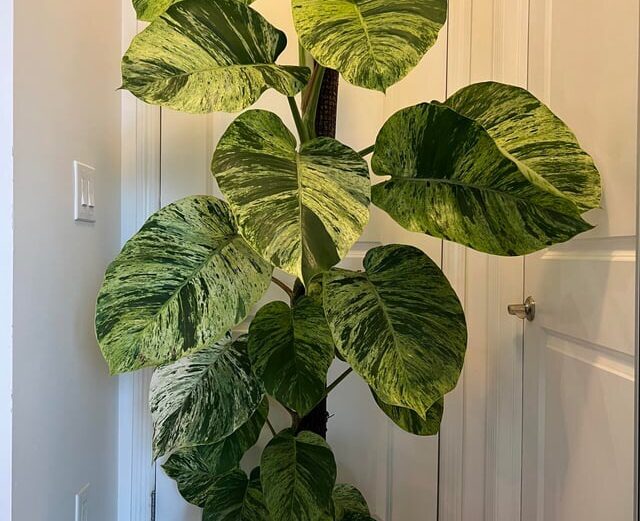
Like most of us I’ve killed some plants over the years. Pothos being no exception.
But I’ve also managed to grow some that took over my living room they grew so big. And I did that by learning what pothos need, not what I thought they needed.
If you get the conditions right then pothos will grow quickly. A healthy pothos can grow around 12 inches per month on average during the growing season if it has the proper conditions to do so. That’s a foot of new growth every month.
But in order to get that kind of growth you need to know what pothos want and need. So I’m going to take you through nine ways to get your pothos growing like crazy.
Quick Answer
- Increase Bright, Indirect Light (Most Common): Pothos grow much faster in strong, filtered light. Move the plant closer to a bright window without direct sun.
- Prune to Stimulate Growth: Trim long vines regularly to encourage new shoots and fuller growth from the base.
- Feed During Active Growth: Use a balanced houseplant fertilizer every 4–6 weeks in spring and summer.
1. Get the Light Right (This Is Where Most People Mess Up)
I had a pothos sitting in the corner of my bedroom for six months once. It didn’t die but clearly could have been doing better.
The leaves were small, the vines hardly grew and the whole thing just looked a little sad. Then I randomly moved it near a window with bright, indirect light (I can’t remember why) and lo and behold it was like I had a completely different plant after merely a few weeks.
What to take from this? Pothos want bright, indirect light. Not direct light that will scorch the leaves, and not a dark corner with very little sun at all.
They come from tropical forest floors where light filters down through the trees above. That’s what you should be trying to recreate to get them growing well.
If you’ve got a variegated pothos like Golden Pothos or Marble Queen they need even more light to keep their beautiful patterns. When variegated varieties don’t get enough light they’ll turn back to having green leaves because the plant is trying survive and so increases its production of chlorophyll.
Here’s what to do: put your pothos near an east or west facing window. One where it will get a good amount of filtered sunlight.
If you only have south facing windows then keep the plant at least 8 to 10 feet away from the glass. North facing windows work too but it will grow slower than east or west windows.
If your pothos lives in an office that only gets fluorescent lighting then that’s not the end of the world. Pothos will still grow in it just not as quickly as with natural light.
For a more full explanation try our pothos lighting guide.
2. Water Consistently
Watering is usually the biggest mistake that beginners make. They either water too much and their pothos gets root rot or they wait too long before giving it water. Pothos like consistency.
It isn’t difficult to get it right though. Just don’t let the top inch or so of soil dry out between each time you water. Put your finger in the soil. If it’s dry down to your first knuckle you can be confident you need to water.
If it’s still moist then wait another day or two. And when you do water do it until you see the water draining from the bottom of the pot.
I made a mistake once by kepeping one of my pothos in a pot without drainage holes. The water had nowhere to go so the roots were sat in wet soil and eventually the plant got brown roots and yellow leaves.
I always make sure I use pots with drainage holes now and check that the water can get out.
During the winter it’s a good idea to reduce how much you’re watering. The plant will be growing slower when there isn’t as much light and heat in the winter so it needs less water. I usually water about half as often in January as I do in July.
This pothos watering guide will show you when to, how to and how often to water your pothos.
3. Increase the Humidity
Pothos come from humid tropical regions in Southeast Asia where the air is thick and moist. Our living rooms are quite like that!
Most homes have about 30 to 40% humidity, especially in the winter when we turn the heating on. Pothos can survive in that but they won’t be growing fast.
But you don’t have to turn your home into a rainforest. You can just make some small pockets of humidity for your plants.
These are a few ways that work:
- Keep your pothos in the bathroom or kitchen where the humidity is higher naturally
- Group plants together as they increase the humidity for each other
- Set up a pebble tray: put pebbles in a shallow tray, add some water (but don’t cover the pebbles completely), and put the pot on top
- Use a humidifier if you’re you really want them to grow faster
- Mist the leaves from time to time. But this is probably the least effective method
Whatever you do though don’t mist the leaves right before nighttime. That can lead to issues with fungus.

4. Feed Your Plant
Plants get water through photosynthesis but they still need nutrients from the soil to grow well. Fertilizer is a bit like vitamins for plants.
During the growing season, which goes from about mid to spring to mid fall, feed your pothos once a month with a balanced, fertilizer. You must use it at half strength too.
The label might say use a full teaspoon per gallon but cut that in half for pothos. They don’t need a lot of feeding and too much will cause more problems than it helps with.
A balanced fertilizer should have roughly equal amounts of nitrogen (N), phosphorus (P) and potassium (K). Something like 10-10-10 or 20-20-20 works.
The nitrogen helps with growing the leaves and phosphorus supports the roots. Potassium is for the overall plant health and for resisting disease.
During the fall and winter stop fertilizing entirely. The plant isn’t growing so it doesn’t need the extra nutrients. Start up again when you see new growth starting in spring.
5. Keep Temperatures Warm and Stable
As mentioned before Pothos are tropical plants, which means they like it warm. The ideal temperature range is between 70 to 90°F, with 65°F being about the minimum you want.
But it’s not just about getting the right temperature. Stability matters too.
Don’t put your pothos near windows that have drafts, any vents or air conditioning units. Being subjected to swings in the temperature from those will stress the plant and slow down how quickly is grows.
If you live somewhere with very cold winters you might need to move your pothos away from the windows when temperature drops. And definitely don’t leave them near doors that are opening and closing a lot.
6. Prune to Encourage Growth
This might seem counterintuitive but pruning will make your pothos grow faster and fuller. When you cut back long vines the plant reacts by starting new growth from different points instead of just making those same vines longer.
I was nervous the first time I pruned one of my pothos. It had really beautiful long vines and cutting them felt wrong. But within a month I had quite a few new shoots and the plant looked way better than it did before.
To prune properly: Use clean scissors or pruning shears. Cut just above a node, which is where a leaf attaches to the stem. The plant will then grow new growth from that node. You can also propagate those cuttings in water to create new plants.
Prune during the growing season (spring or summer). Don’t prune in winter when growth has slowed down. And don’t be afraid to cut back leggy vines that have long gaps between leaves. Those won’t fill in with new leaves so it’s better to trim them and encourage fresh growth.

7. Repot When Your Plant Gets Root Bound
Pothos grow faster when they’re a little bit root bound. You don’t want them massively root bound where roots are going around the pot like crazy though. However, if you let them go too long without repotting the growth will slow down a lot.
Check your pothos every year by gently lifting it out of its pot (or at least checking the drainage holes). If you see the roots growing in circles around the outside of the soil or coming out the drainage holes you’ll want to repot it. This will usually happen every 1 to 2 years depending on how fast your plant is growing.
(For more help try this guide to fixing root rot in pothos)
When you repot it only go up one pot size. Don’t jump from a 4 inch pot to an 8 inch pot thinking it’ll give the plant more room to grow.
Too much soil will then retain too much moisture and this can also lead to root rot. An inch or two larger in diameter is perfect.
Use fresh potting mix that drains when you do repot. Even if the old soil looks fine it’s likely to have a lot less nutrients than when it starts.
I like a mix that includes peat moss, perlite and some pine bark for good drainage. Regular all purpose potting soil works too as long as it’s not too heavy.
8. Give Your Pothos Something to Climb
In the wild pothos plants climb up trees using their aerial roots. They can grow 60 to 80 feet tall.
Indoors most people let them trail but if you want to get bigger growth a good way to help is by giving them something to climb.
I added a moss pole to one of my pothos last year and the difference was pretty crazy. The leaves got much larger, the vines became thicker and the whole plant just looked more alive.
You can use a moss pole, a bamboo stake, a trellis or even just train the vines up a wall with hooks or clips. As the plant climbs the aerial roots will attach to whatever surface you give it. Those aerial roots absorb moisture from the air which helps the regular roots.
When you first set up something for your pothos to climb you might need to tie or secure the vines until the aerial roots take hold. Use some plant ties or even twist ties, but make sure you aren’t using anything that will cut into the stems.
If you need some inspiration try these easy pothos climbing ideas.
9. Choose the Right Pothos Variety
Not all pothos grow at the same speed. If you’re specifically looking for one that grows fast then some varieties will be better than others.
Golden Pothos is the quickest of all the pothos. It’s got those classic green leaves with yellow variegation and it grows very fast when you give it the right conditions. Jade Pothos, which has solid green leaves, also grows quickly and actually does best in lower light compared to variegated varieties.
N’Joy Pothos, on the other hand, grows slowly. It only grows about 4-6 inches per year.
The more variegation a pothos has the slower it tends to grow because less of the leaf surface can photosynthesize. Marble Queen grows slower than Golden Pothos for this reason.
Neon Pothos sits somewhere in the middle. It grows well but it needs more light than other varieties to keep its color and grow at a good pace.
None of this means you should only grow Golden Pothos. Each variety has its own appeal. But if you’re only looking for speed then knowing which is the fastest and which the slowest will help you make a good decision.

Final Thoughts
If you want to grow pothos faster then you don’t really need to do everything perfectly. You just have to understand what it wants and then giving it to your plant.
What helps is if you pay proper attention to your pothos. That doesn’t mean you have to obsessively check it every day but noticing when the soil is getting dry, when the leaves look paler, when it’s getting leggy etc. You will start to develop an intuition over time.
Start with the basics: good light, consistent watering and the right humidity. Get those three things right and you’re already ahead of most people. Then add the other stuff in like fertilizing during the growing season, pruning and repotting when needed.
And remember that even with all these tips your pothos might grow slower than someone else’s. Different homes have different conditions.
Maybe your house doesn’t get as much light, or your water is harder, or your humidity runs lower. There’s not a lot you can do about any of that though. But you shouldn’t be in competition with other people’s plants.
One last thing: pothos will forgive you for making mistakes. If you forget to water it for a week it’s unlikely it’ll have a problem.
If you give them less than ideal light, they’ll adapt. They’re tough. But when you give them what they really want thats when you give it the best chance for faster growth.