
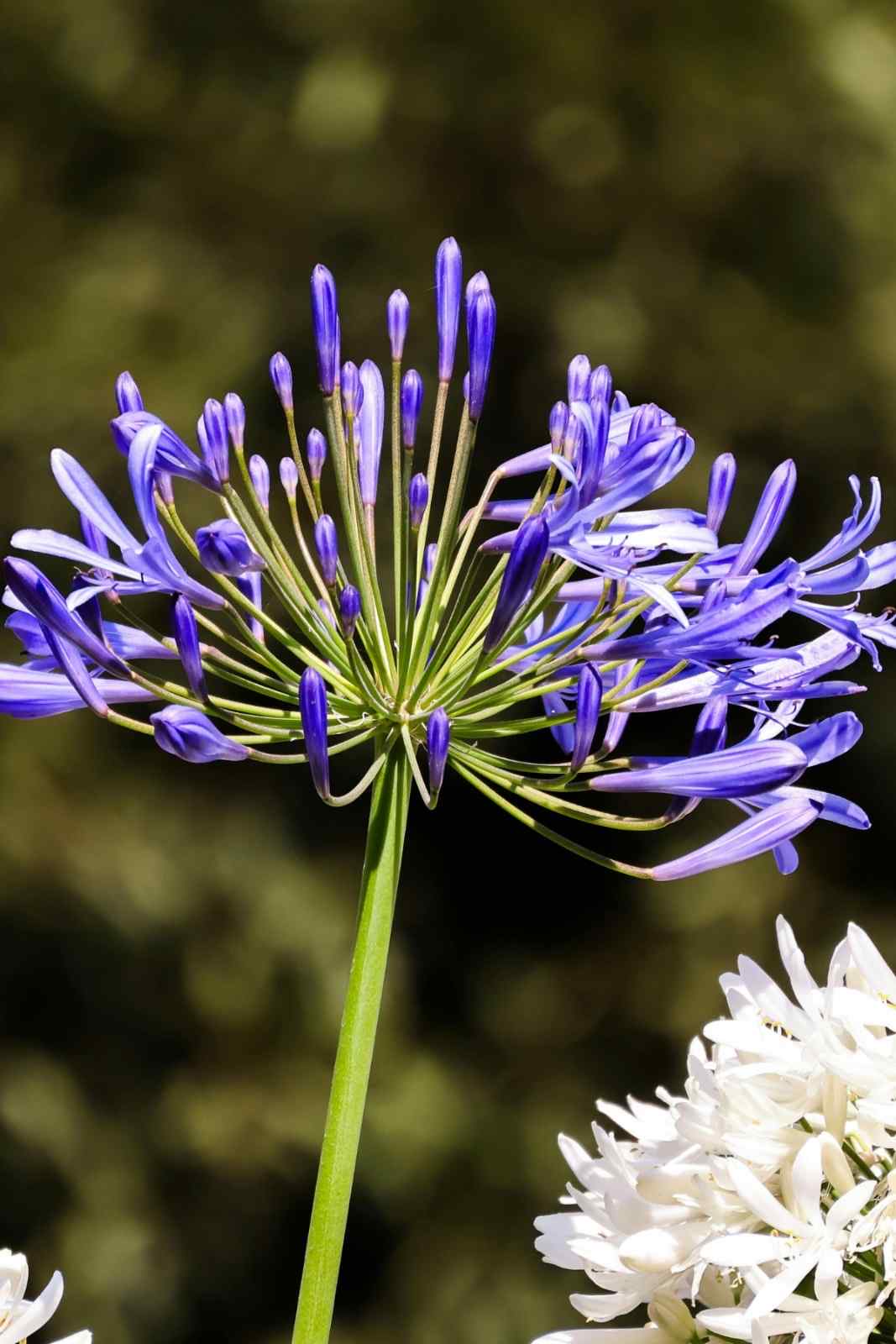
Companion planting can be tricky. And I’ve seen a lot of mistakes made when planting their Agapanthus
So I thought it would by sharing what really works and more importantly what really doesn’t.
I’ll take you through the plants that will turn your beautiful Lily of the Nile into a stressed out mess. Avoid these plants though and you’ll be fine.
Understanding Agapanthus
Agapanthus, are South African natives (sometimes called African Lily or Lily of the Nile) and have needs that make them a bit particular about their neighbors. They’re fairly selfish when it comes to resources.
They have thick, fleshy roots that spread horizontally underground and those roots mean they’re literally designed to hog water, nutrients and space. That’s great for survival in their native habitat but terrible for garden companions that can’t compete.
Why can’t you just plant whatever you want alongside them? Because Agapanthus have:
- Dense, mat-forming root systems that crowd out less aggressive plants
- Moderate to high water needs during growing season
- A preference for well-draining soil that many moisture-loving plants can’t tolerate
- Specific sunlight requirements (they need at least 6 hours of sun in most regions)
Get these combinations wrong and you’ll find yourself with either struggling Agapanthus or sad companion plants – sometimes both!
Plants NOT to Plant with Agapanthus
1. Shallow-Rooted Annual

The likes of pansies and violas look cheerful and diminutive but plant them next to Agapanthus and it won’t stand a chance. Within weeks they will be wilting daily despite any regular watering.
The reason? Agapanthus roots are ruthless water thieves. Their thick roots extends horizontally and will literally suck the moisture away from shallow rooted annuals before they can get their share. Any pansies will never have a chance.
Why it doesn’t work:
- Agapanthus roots outcompete the smaller root systems
- Different watering needs create impossible compromises
- Most annuals can’t handle the thick shade mature Agapanthus foliage creates
2. Thirsty Perennials Like Astilbe

Gorgeous Astilbes might look like they’d complement your Agapanthus perfectly but don’t be fooled. While Agapanthus appreciate consistent moisture they absolutely hate wet feet and soggy soil. Astilbe on the other hand wants consistently moist to wet conditions.
Every time you water enough to keep the Astilbe happy you’re slowly rotting your Agapanthus roots. Try to keep Agapanthus properly dry and watch your Astilbe wilt dramatically.
Problems with this pairing:
- Mismatched water requirements create constant tension
- Astilbe’s need for partial shade conflicts with Agapanthus’ sun requirements
- Root rot develops in Agapanthus when watered to Astilbe’s standards
3. Aggressive Ground Covers (Especially Ivy)

Ground covers like ivy, periwinkle or aggressive varieties of ajuga will literally climb over and through your Agapanthus, competing for every resource while physically blocking sunlight from reaching the plant base.
Why it’s a disaster:
- Ivy physically smothers Agapanthus crowns
- Aggressive ground covers steal surface nutrients and water
- The ongoing maintenance battle makes gardening miserable
4. Bamboo (Even the “Behaved” Varieties)
Yes, bamboo might stay somewhat contained but its overly aggressive roots will wage underground war with your Agapanthus. I’ve seen a stand of Agapanthus completely decline within two seasons after bamboo was planted nearby.
Bamboo’s vigorous rhizomes will outcompete even Agapanthus roots while creating a physical barrier to new growth. Plus the dense shade from bamboo foliage will reduce flowering dramatically.
The bamboo problem:
- Extraordinarily competitive root systems
- Creates too much shade for flower production
- Often steals water from surrounding plants
5. Water Demanding Vegetables
Tomatoes (and most vegetables) need consistent, frequent watering that will quickly lead to root rot in Agapanthus.
Besides the water conflicts, vegetables typically need regular feeding schedules that can overstimulate Agapanthus into producing foliage at the expense of their flowers.
Why vegetables make poor neighbors:
- Incompatible watering schedules
- Vegetable fertilizers promote leaf growth over flowering
- Short-term vegetables disrupt the root zone when harvested
6. Trees with Invasive Root Systems
A cute little willow sapling might look harmless at first but trees with aggressive roots (willows, poplars, maples) will eventually turn your Agapanthus bed into a battlezone. They send surface roots that can extend far beyond their canopy, starving out nearby perennials.
Tree problems to avoid:
- Surface roots physically displace Agapanthus rhizomes
- Competition for water becomes impossible for Agapanthus to win
- Eventual shade reduces flowering significantly
7. Plants That Create Deep Shade
Hostas and other large leaved plants might seem like natural companions since they’re also clump forming perennials. But mature hostas create such dense shade that your Agapanthus will produce fewer and fewer flowers each year.
The shade issue:
- Insufficient light for flower production
- Temperature differences in dense shade affect growth cycles
- Increased humidity under shade can promote fungal issues
8. Heavy Feeders Like Dahlias

I once tried interplanting Agapanthus with dahlias, thinking their different bloom times would create a season long display. It wasn’t to be. Dahlias are notorious for hogging nutrient and so will deplete soil faster than Agapanthus can compete.
Even with regular fertilizing the dahlias outperform while the Agapanthus gradually decline. Both of these plants just have appetites that don’t match.
Why heavy feeders fail:
- Competition for soil nutrients leaves Agapanthus undernourished
- Different fertilizer needs create impossible maintenance
- Physical competition for space as plants mature
9. Mint Family Members
Anyone who’s ever grown mint knows it’s a garden nightmare. But even “well-behaved” mint relatives like Russian sage and some salvias can create problems for Agapanthus through allelopathy. They release compounds that can inhibit the growth of nearby plants.
The mint family problem:
- Aggressive spreading habits physically crowd Agapanthus
- Possible allelopathic effects inhibiting growth
- Competition for pollinators during bloom season
10. Spreading Ornamental Grasses
Miscanthus or Pennisetum grasses might look spectacular waving behind Agapanthus but the way they spread will eventually encroach on Agapanthus territory. Even “clumping” varieties expand outward each year.
Grass problems:
- Gradual encroachment into Agapanthus space
- Difficult root separation once established
- Competing water needs during different seasons
11. Plants Requiring Acidic Soil

Azaleas, rhododendrons, camellias and other acid loving plants create an impossible soil situation. Agapanthus prefer slightly acidic to neutral soil (pH 6.0-7.0), while these shrubs need much more acidic conditions to thrive.
Any soil amendments you add to please one will actively harm the other. You’ll end up with either chlorotic acid lovers or stressed Agapanthus.
The pH problem:
- Incompatible soil chemistry requirements
- Amendments that help one harm the other
- Increased susceptibility to disease in stressed plants
12. Tall Summer Bloomers That Create Shade
Plants like hollyhocks, delphiniums and tall dahlias might seem like good companions since their flowers appear on tall stalks like Agapanthus. However, their dense foliage creates a lot of shade during the exact months when Agapanthus need the most sun exposure.
Why tall neighbors cause problems:
- Critical summer sun blockage reduces flowering
- Physical crowding as plants mature
- Difficult maintenance access between tall plants
13. Plants Susceptible to Agapanthus’s Common Pests
Some plants act as magnets for the same pests that trouble Agapanthus. Lilies, amaryllis and other plants in the Amaryllidaceae family can attract the same thrips, mealybugs and aphids that occasionally bother Agapanthus.
I’ve seen pest problems spread quickly through mixed plantings when susceptible plants were grouped together, turning a small issue into a major infestation.
The pest problem:
- Shared susceptibility amplifies pest issues
- Treatment complications when plants have different sensitivities
- Creates reservoirs for pests to reinfest after treatment
What Actually Works with Agapanthus?
Now that I’ve scared you with all the wrong choices I should show what actually works. I’ve had great success pairing Agapanthus with:
Good Companions:
- Drought-tolerant perennials like lavender and salvia that won’t compete for water
- Low-growing sedums that create ground cover without aggressive spreading
- Spring-blooming bulbs like daffodils that complete their cycle before Agapanthus reaches full growth
- Mediterranean herbs like rosemary and thyme that share similar growing conditions
- Ornamental alliums that bloom at different times but have similar cultural needs
One of my favorite combinations is Agapanthus with lamb’s ears (Stachys byzantina). The silver foliage provides beautiful contrast to the strappy green Agapanthus leaves, and they have remarkably compatible needs.
Tips for Successful Companion Planting
Know Your Plant’s Mature Size
Save yourself having to renovate your garden by avoiding plants being placed too close together. Agapanthus need about 12-18 inches of space between plants at minimum. Plan for their mature size, not how they look when first planted.
Consider Bloom Times
One strategy that’s worked well in my designs is pairing Agapanthus with plants that bloom earlier or later in the season. Spring bulbs like tulips and daffodils will be finishing just as Agapanthus are gearing up, creating sequential interest.
Respect the Root Zone
Agapanthus don’t appreciate root disturbance. Avoid placing annuals or plants that need frequent division too close to established clumps.
Create Microclimates
Sometimes you can make incompatible plants work by creating distinct zones. In larger beds, use hardscape elements like buried slate or small retaining walls to keep aggressive roots separated. I’ve successfully used 12-inch deep barriers to keep mint family plants from encroaching on Agapanthus territory.
Final Thoughts
The good news is that once established with appropriate companions Agapanthus are remarkably low-maintenance plants that will provide years of beautiful flowers. So they’re worth the initial planning effort.
But if you’ve already made some of these companion planting mistakes – don’t worry! Agapanthus are forgiving plants that respond quickly once competition is removed.
