
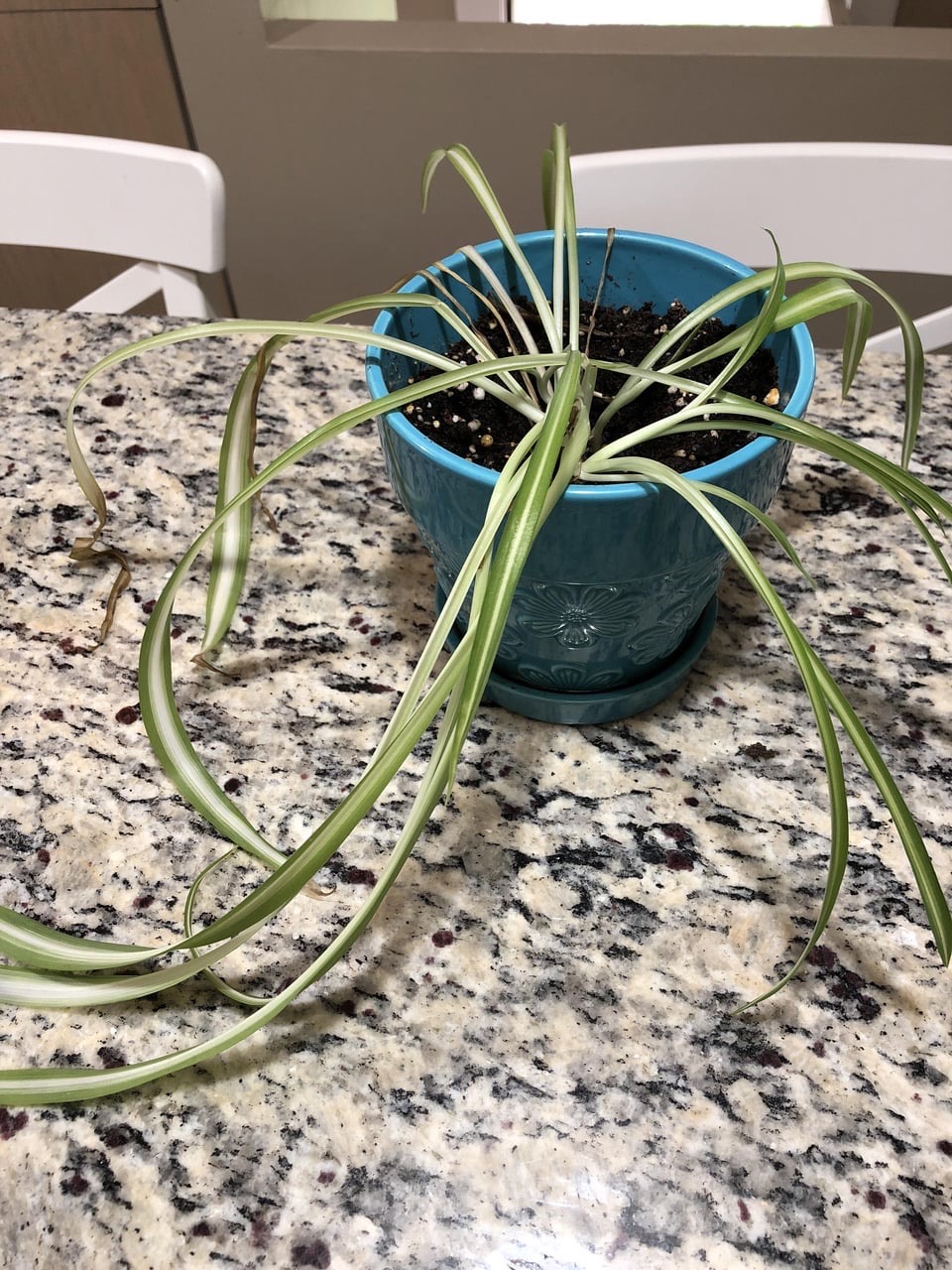
Spider plants are one of the toughest houseplants and can withstand a fair amount of neglect. But even so they can still have their own problems. Especially if you aren’t giving them what they need.
The good news is that reviving a spider plant isn’t difficult. But you will need to identify what’s going wrong and address it quickly if you want to save your spider plant.
So in this guide I’ll take you through the most common causes of a dying spider plant and how to get it back to full health.
Quick Answer
- Check for Root Rot (Most Common): Remove the plant from its pot, trim any dark/black roots and then repot it in new soil.
- Fix Watering: Let the top of the soil dry before you water it again. And empty the saucer so the roots don’t stay wet.
- Improve Light and Humidity: Put the plant in bright, indirect light and mist the leaves if the air is dry.
For more ideas see 3 Main Reasons your Spider Plant isn’t Growing (And the Fixes).
Video: What to Do When your Spider Plant is Dying
1. Assessing the Problem
Before you can get started saving your plant you need to know exactly what it is that’s wrong with it.
So these are some of the most common signs of distress:
- Brown Leaf Tips: Often caused by overwatering, fluoride in tap water or too much direct sunlight. See more reasons and fixes for brown tips.
- Yellowing Leaves: Could be overwatering, underwatering or just not enough sunlight. Find more reasons and ways to save a yellow spider plant.
- Drooping Leaves: A sign of root rot or dehydration.
- Stunted Growth: Not enough nutrients or the roots are too tight.
If you look closely at your spider plant you should be able to work out which it is that is causing it to struggle. And once you’ve identified the cause it’s a lot easier to figure out what you need to do.

2. Watering
Watering is by far and away the most common issue with spider plants. As spider plants are sensitive to both underwatering and overwatering it’s easy to get wrong it either way.
But it’s overwatering that usually causes the most harm so that’s what you should be looking out for the most.
How to Fix Overwatering
Overwatered spider plants often get root rot which if you don’t treat fairly quickly can cause the plant to die.
To revive an overwatered plant:
- Check for Root Rot: Remove the plant from its pot and look at the roots. If they’re healthy the roots should look white while the rotting ones will be brown and mushy.
- Trim Rotting Roots: If you find root rot trim any parts that are affected.
- Repot in Fresh Soil: Use a potting mix that drains well and if possible has orchid bark or peptide in it. It will help stop waterlogging.
How to Fix Underwatering
Underwatered spider plants will look limp and have brown and crispy tips to the leaves.
You can fix this by:
- Soak the Soil: Submerge the pot in water for 15 to 20 minutes so that the soil gets fully saturated.
- Regular Watering Schedule: Check to see if the top two inches of the soil are dry. If so water your spider plant. Try not to use distilled water because it doesn’t have enough of the minerals that spider plants need.
For more help on when to, how to and how often see this spider plant watering guide
3. Light and Placement
Spider plants love bright, indirect light. It’s what really helps them to grow.
If you put them in direct sunlight then there’s a good chance their leaves will get burnt. But not enough light will make them weak and leggy. So it’s a balance and can be tricky to get right.
- Best Spot: An east or west facing window is perfect because it should give your plant bright but indirect light.
- Supplemental Lighting: If your home doesn’t get much light then you can use a grow light to make up for it. Don’t put them too close to your spider plant though as they can also cause the leaves to burn.
4. Soil and Potting
Spider plants like soil that drains well and is loamy. If the container your spider plant is in doesn’t have good drainage or the soil gets condensed then the water won’t pass through and instead will sit with the roots making them rot.
When to Repot
- Signs of Pot Bound Roots: If the roots are growing out or the drainage holes or there isn’t any growth from the plant at all then you can be confident it’s the right time to repot.
- How to Repot: Get a pot that’s larger than the current one and make sure it has good drainage. Fill it with fresh potting mix that also drains well (adding perlite or pumice to it can help).
For more see our full guide to spider plant root rot
5. Temperature and Humidity
Spider plants aren’t that fussy about temperature but their favorite is between 50°F and 85°F (10°C to 27°C). Extreme temperatures, either too hot or too cold, can definitely lead to a damaged plant though.
Humidity
Spider plants like the humidity to be fairly moderate, around 50-60%. If your home has very dry air there’s a few things you can do:
- Mist the Plant: Which will help to increase the humidity.
- Use a Humidifier: This will make a big difference during the winter when you’re using the heating in your home as it often dries out the air.
6. Feeding
They don’t need a lot of feeding but doing so from time to time during the growing season can help them grow better.
- Fertilizer Type: Use a balanced fertilizer.
- Feeding Schedule: Fertilize once a month during spring and summer. In the winter you can bring this down to every two months.
- Avoid Overfertilizing: Too much fertilizer can cause the tips of the leaves to turn brown.
7. Common Pests and Diseases
Like most plants pests can be a problem. The likes of spider mites, mealybugs and aphids can all affect your spider plant. So you’ll need to keep them in check.
Pest Control
- Natural Remedies: Wipe the leaves with neem oil or insecticidal soap if you find an outbreak. You can also remove pests by wiping the leaves with a cotton swab dipped in rubbing alcohol.
Disease Prevention
- Root Rot: Most common disease and caused by too much water. Make sure the pot your plant lives in has good drainage and don’t let the plant sit in soil that is soggy.
8. Bringing It All Together
So after all we’ve been through follow this quick checklist to bring your spider plant back to life:
- Watering: Check for root rot. Let the soil dry out between each watering.
- Light: Move it to a spot with bright, indirect light.
- Soil: Repot in a the roots are rotting or compacted and make sure you’re using well draining potting mix.
- Temperature: Keep the plant between 50°F and 85°F and away from drafts and heat sources.
- Humidity: Mist it or use a humidifier if the air is too dry.
- Fertilizer: Feed once a month during the growing season.
Final Thoughts
Reviving a spider plant is usually just a case of making sure it’s in the right environment and switching up how you care for it. Be patient though – plants need time to heal.
But assuming you find the cause and treat it properly and quickly then you’ll soon be enjoying your healthy spider plant and maybe even some new spiderettes.
