

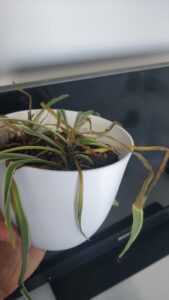
When you first get a spider plant they can either look amazing or, well, a little bit sad and scraggly. The first spider plant I ever had was easy to keep alive. But it also spent the first year looking like it had about seven leaves in total and all of those were stretching out and after something I apparently wasn’t giving it.
But if you’re in the same position don’t worry too much. Spider plants are great in that they can triple in size in just a few weeks if you give them the right care. I’ve seen it happen with my own plants.
But you need to do something to make that happen. They won’t get bushy on their own, especially if you’re making the same mistakes I was.
So this guide is everything I’ve learned about getting spider plants to look full and impressive.
Quick Answer
- Increase Light (Most Common): Spider plants grow bushier in bright, indirect light. Move the plant closer to a window that doesn’t get direct sun.
- Prune Regularly: Trim any long or bare leaves at the base. Cutting the plant back gives it signals push out new shoots.
- Feed Lightly: Use a mild houseplant fertilizer once a month in the spring and summer to get bushier growth.
3 Main Reasons your Spider Plant isn’t Growing (And the Fixes).
Why Your Spider Plant Looks Thin
So lets begin by talking about why your spider plant looks sparse.
Most spider plants sold at garden centers are propagated from a single “baby” plant. That means you’re starting with one tiny plant in a pot and so it’s going to look pretty pathetic for a while. That’s completely normal.
But if you’ve had your spider plant months (or years) and it still looks thin then something else is going on.
Usually it’s one of these things:
Not Enough Light
This was my problem. I put my spider plant in a corner because I read they were low light plants. But low light is responsible for color loss, poor growth and watering issues in spider plants. They can tolerate low light but they don’t do very well in it.
In low light spider plants stretch toward whatever light they can find and that makes them leggy instead of bushy. The leaves get pale and look awful.
Wrong Watering Schedule
Spider plants need water but they also need to dry out between waterings. If you’re watering on a strict schedule (like every Sunday, no matter what) you might be overwatering and not realizing. Or if you’re the forgetful type like me you might be underwatering.
If you forget even one of your twice a month monthly watering sessions the plant can start to look withered, drop some of its leaves and become leggy. Being consistent matters a lot.
For more help see our guide to watering spider plants.
It’s Root Bound and Needs Space
Spider plants grow quickly and usually need to be repotted every two years. If yours has been in the same pot for longer than that then the roots are probably circling around themselves with nowhere to go. When that happens the plant stops producing new leaves and starts putting all its energy into making baby plants instead.
Which is all good until you find the main plant still looks terrible.
A Propagation Trick
This is what made the biggest difference for my spider plants. It’s almost too simple to believe but really works.
You know those baby plants – the spiderettes or spiderlings – that hang off your spider plant on long stems? Most people just leave them hanging there or cut them off and then pot them separately.
But you can propagate them and then add them back to the mother plant’s pot to instantly make it look fuller.
How to Do It
First you need to have some spiderettes. If your plant isn’t producing any go to the section about light and care (you’re probably not giving it enough of something).
Once you’ve got babies:
Option 1: Root them directly in the same pot. This is what I did. While the baby is still attached to the mother plant stick the bottom of the spiderette into the soil of the main pot. Make sure it has its own little space where it won’t be crowded. Keep the soil moist for the first few weeks. After just a few weeks the growth of the spiderettes will fill out the pot and make your spider plant look a lot bushier.
Option 2: Root them separately first and then add them back. Cut the babies off and root them in water or soil until they’ve developed their own roots. Then plant 2 or 3 of them around the edges of the mother plant’s pot.
Both methods work. The first one is faster because you don’t have to wait for the roots to develop in a separate container.
For a more in depth look at propagating spider plants try our full guide.
The Instant Fix (If You’re Impatient)
Want to know the absolute fastest way to make your spider plant look bushy? Buy a couple of tiny spider plants (the ones in small pots that cost just a few dollars) and add them to your main plant’s pot.
This is probably cheating but it works. I did this with one of my plants because I was having people over and was a bit embarrassed about my sad spider plant.
So I grabbed two small plants from the garden center, popped them into the same pot and I had a big and healthy looking spider plant.
Nobody has to know.
Light
Spider plants are marketed as plants that do well in low light which is technically true. They won’t die in low light. But they also won’t look good.
Bright indirect sunlight will really boost the growth of your spider plant so the stripes on the leaves will look their best. That means the plant needs to be near a window – not on a shelf or in a corner that doesn’t get any light.
Where to Put Your Spider Plant
I moved mine to an east facing window and it made a huge difference. East facing windows get bright morning sun that’s not too intense.
If you only have south or west facing windows bring the plant back a foot or two from the glass. Or use a sheer curtain to filter the light. Direct sun in the afternoon can burn the leaves and give the plant annoying brown tips.
North facing windows work too although the growth might be slower.
You just have to be consistent. Once you find a bright spot, leave your plant there. Don’t keep moving it around.
Plants need time to get used to their environment and if you keep shifting them they’ll spend all their energy adapting instead of growing.
What Happens in Low Light
In low light spider plants lose their color. The stripes fade.
The leaves get thin and stretched out as the plant tries to find light. You might even notice the plant leaning toward the nearest source of light.
If your spider plant looks pale and legg then light is almost always the problem. Move it closer to a window and give it a month. You’ll see some new growth that looks completely different – darker, thicker and healthier.

Pruning: Why Cutting Your Plant Makes It Bushier
This feels counterintuitive but it’s true. Pruning stimulates the plant to rapidly regenerate and encourages new growth. When you remove old, damaged or leggy leaves it will send its energy into producing new, healthier leaves.
I was terrified to prune my spider plant the first time. What if I killed it? What if I cut too much?
But spider plants are tough. They grow quite quickly especially in the spring and summer. So don’t be scared to give them a big pruning – they’ll grow back all the better for it.
What to Prune
Start with the obvious stuff: any leaves that are brown, yellow or damaged. Cut them off at the base of the plant (not halfway up the leaf – all the way down).
Next look for leggy growth. If you’ve got long, thin leaves that are stretching way out from the center of the plant you want to trim those back too. You are trying to encourage bushy growth from the center.
If your plant has those long stems that produce babies you can remove those too if you want the plant to focus on leaves instead of reproduction.
This made a big difference to me. Once I started cutting off the baby stems my main plant got a lot fuller within a month.
How Much to Prune
Don’t go crazy. Don’t take off any more than a third of the plant at a time. If you cut more than that you’ll stress it out and it might sulk for a while instead of growing.
For regular care I try to prune my spider plants every few months during the spring and summer. Just a little trim to remove anything that looks sad or out of place.
The Last Resort
If your spider plant is in really bad shape – so something like most of the leaves being brown or damaged – you can cut every last leaf down to about 2 inches tall as it will encourage it to regenerate very fast.
This is definitely drastic, but it works. The plant will grow back fuller and healthier.
I haven’t had to do this with any of mine but I’ve seen photos from people who have, and it’s pretty amazing to look at the before and afters.
Repotting for Fuller Growth
If the roots don’t have enough space to grow the spider plant will focus its energy on producing baby plants instead of new leaves.
So if your plant is giving you tons of babies but not many new leaves on the mother plant it’s probably root bound and needs a bigger pot.
How to Know When to Repot
Check the bottom of your pot. If you see roots coming out of the drainage holes that’s your sign. Or if you notice that water drains through really quickly (because there’s more root than soil in there) it’s also time to repot.
Another clue: if your plant’s growth has stalled and it just looks stagnant. Probably needs repotting.
How to Repot Without Killing Your Plant
This is easier than it sounds. I was so nervous the first time I did it.
First, get a pot that’s just one size bigger than your current one. Don’t go too big – if the pot is much larger than the roots then the soil will stay too wet and you’ll end up with root rot.
Tip your plant to one side and gently slide it out of its current pot. Take a look at the roots. If they’re brown and mushy that’s root rot. So cut those parts off. Healthy roots are white or a light brown and will feel firm.
Fill your new pot about halfway with fresh potting soil (something well draining – I use regular potting mix with some perlite added). Put your plant in the center, then fill in around it with more soil until the roots are covered.
Water it well then let it drain completely and you’re done.
After a few weeks you should see new growth. The plant will start filling out as the roots spread into the soil and get more nutrients.

Watering: Finding the Right Balance
Spider plants are forgiving when it comes to water but there’s still a way to do it really well and they’ll like the most.
I water mine about twice a month – once every 10 to 14 days. But I don’t stick to a strict schedule.
What I do those is check the soil. If the top inch or two is dry it’s time to water. If it’s still damp, I wait.
How to Water
When you do water, do it thoroughly. Water until it runs out the drainage holes at the bottom then let all the excess drain away. Never let your spider plant sit in water – that’s guaranteed to result in root rot.
In the winter spider plants slow down their growth so you can water less frequently. I usually stretch it to every 3 to 4 weeks during the colder months.
The Brown Tip Problem
If your spider plant has brown tips on the leaves it’s probably the water. Fluoride and chlorine in tap water can cause brown tips. I started using filtered water for my plants and the brown tips stopped.
If you don’t want to use filtered water you can let tap water sit out overnight before using it. Some of the chlorine will evaporate.
Fertilizer
Spider plants don’t need a ton of fertilizer but they do like some during the growing season.
I use a balanced liquid fertilizer (10-10-10 or 20-20-20) diluted to half strength. I feed my plants once a month from spring through to the summer. In the fall and winter, I don’t fertilize at all.
The key word here is “diluted”. Over fertilizating your spider plants can cause salt to build up and the leaves to burn, so always dilute fertilizer to half strength.
Temperature and Humidity
Spider plants are pretty adaptable but they do have some preferences when it comes to temperature and humidity. They do best in temperatures between 70 to 90°F (21 to 32°C). Cooler than that and they’ll survive but won’t grow as quickly.
They also appreciate some humidity, though they’re not as picky as some tropical plants. If you notice a lot of brown tips then low humidity could be the issue.
I keep mine in the bathroom which naturally has higher humidity. But you could also mist them occasionally or use a pebble tray (a dish filled with water and pebbles that the pot sits on).
Just don’t put your spider plant near any air conditioning or vents that heat comes out of. Being hit with hot or cold air will stress it out.
Choosing the Right Variety
Not all spider plants grow the same way. If you haven’t bought your plant yet and you specifically want a bushy one then you’ll want to look for certain varieties.
Chlorophytum comosum ‘Bonnie’ is naturally bushy with curly leaves. The leaves curl and bend which makes the plant look fuller even when it’s young.
The standard varieties – ‘Variegatum’ (green with white edges) and ‘Vittatum’ (green with a white center stripe) – can definitely get bushy but they take a bit more work and time.
There’s also a plain green variety that doesn’t have any white stripes. It’s less popular but it grows faster than the variegated types because it has more chlorophyll.

The Baby Plant Problem
When I first got my spider plant I never really knew if I should cut off the baby plants or leave them.
The answer comes down to what what you want. If you want a bushy mother plant cutting off the babies redirects energy back into leaf production. The plant stops focusing on reproduction and starts growing more leaves instead.
But if you want to use those babies to fill out the mother plant (like I talked about earlier) you need to let them grow until they’re big enough to root.
I do a combination. I let a few babies grow so I can propagate them back into the pot then I cut off the rest to get the main plant to focus on getting bushier.
There’s no right answer here. It just comes down to your goals.
How Long Does This Take?
So, how long before you’ll see results?
With the right care spider plants can get noticeably bushier in as little as 4 to 8 weeks. That’s if you’re doing everything right – good light, proper watering and the occasional pruning.
If you’re using the propagation method (adding babies back into the pot) you’ll see results as soon as those new plants root and start growing.
But if you’re waiting for the main plant to naturally fill out through better care, you’ll want to give it a few months. Spider plants grow quickly and often double in size within a month or two when conditions are right.
My first spider plant took about three months to go from sad to impressive. The second one I got was faster because I knew what I was doing from the start.
Mistakes I Made
Let me save you some trouble by listing all the things I did wrong:
Keeping it in low light because I’d been told it’s a low light plant Which is wrong. Move it closer to a window.
Watering on a schedule without checking the soil. The schedule doesn’t matter – how moist the soil is is all that matters. So check before you water.
Being afraid to prune. I wasted months with a leggy plant because I was too scared to cut anything. Spider plants are tough. So get pruning them.
Using a pot that was way too big. I thought I was doing the right thing by giving it tons of room. Instead the soil stayed too wet and it’s growth almost stopped.
Fertilizing too much. The brown tips and edges were down to following the fertilizer package instructions instead of diluting it.
Not repotting when I should have. My plant was root bound for at least six months before I finally repotted it. Those six months could have been spent growing.
What to Do Right Now
If you want your spider plant to get bushier this is what I’d do today:
- Move it closer to a window if it’s not already getting bright, indirect light. This will make the biggest difference.
- Check if it needs water by sticking your finger in the soil. Water thoroughly if the top few inches are dry.
- Look at the pot. Is the plant root bound? If yes then try to repot it within the next week or two.
- Prune any dead, damaged or super leggy leaves. Don’t be scared – just cut them at the base with scissors.
- If your plant has babies hanging off it decide whether you want to propagate them back into the mother pot or cut them off to redirect energy into leaf growth.
That’s it. You don’t need to do everything at once. Start with light and watering because those are the two things that make the biggest immediate difference.
Final Thoughts
Spider plants aren’t hard to grow. But at the same time they’re also not automatic. They need the right light, the right amount of water and some occasional pruning or repotting to look their best.
The difference between a scraggly spider plant and a really bushy one isn’t luck. It’s just about giving the plant what it needs.
My spider plants are huge now. Full and bushy with that striped foliage that looks really impressive. People ask me how I keep them looking so good and the answer is simple – proper light and not overwatering.
That’s it. Those two things will get you 80% of the way there. The rest – pruning, fertilizing, repotting etc. is the extra bit on top to really get the plant looking good.
If your spider plant is sad and thin then you can be be confident that it won’t stay that way forever. Give it a few months of the right care and you’ll be shocked at how far it can come.
