
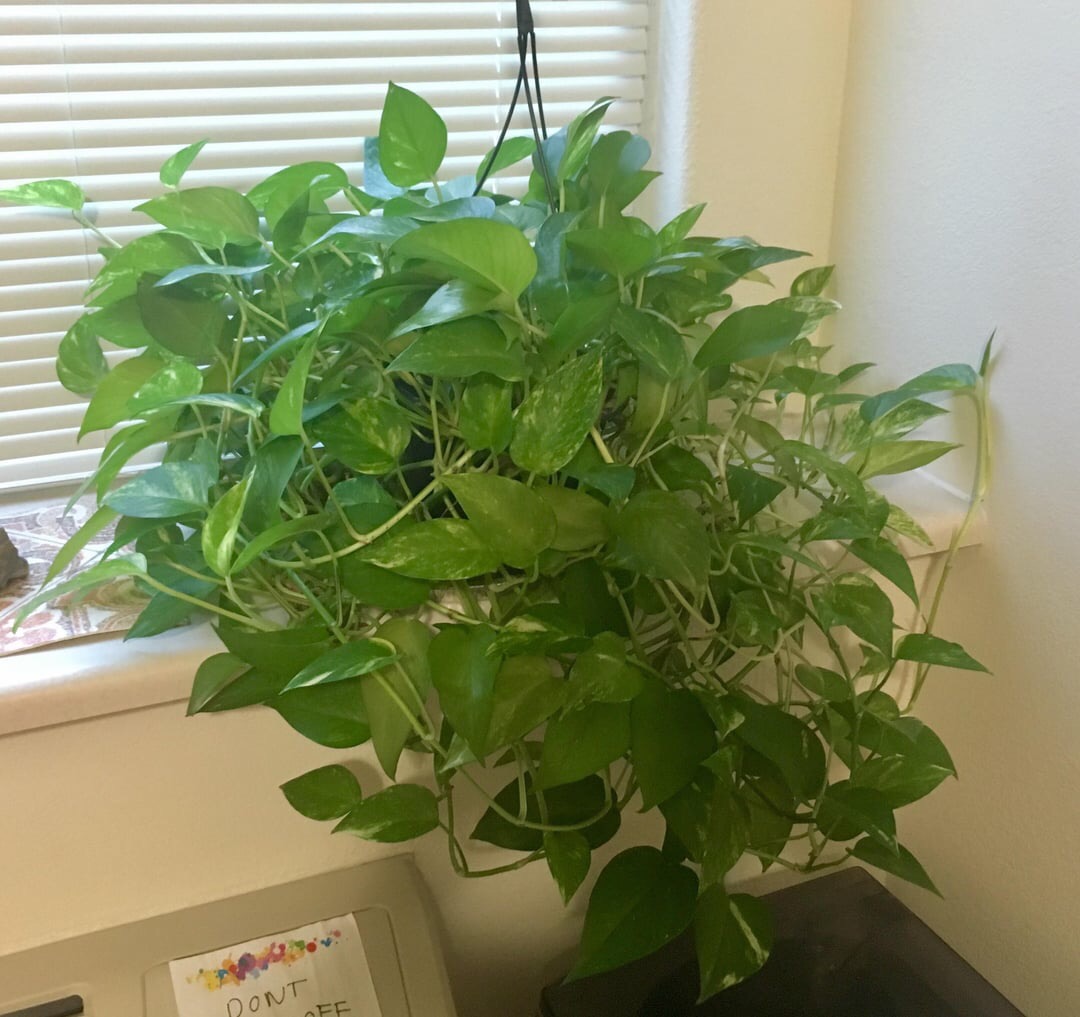
When I first started growing pothos I imagined long and bushy trailing vines. Instead I got a sad and leggy looking plant with leaves spaced so far apart you could drive a car between them.
It was disappointing.
I wanted a pothos that was full AND trailing. That I could let grow down my bookshelf. But I was doing everything wrong.
I was focusing more on getting my plant to grow longer and not on the bushy part.
So I’m going to show you what you’re probably doing wrong with your pothos and what to do to get it growing both long and bushy.
Why Your Pothos Looks Leggy (And It’s Probably Not Your Fault)
Before we get into the solutions I’m going to briefly look at why your pothos is leggy in the first place. I spent months wondering if I had somehow adopted a defective plant. But it was fine and down to what I was doing wrong.
The main reasons for leggy pothos is usually a lack of light. Pothos are marketed as low light plants, which is technically true in that they won’t immediately die in a dark corner.
But “tolerating” low light and “thriving” in low light are two completely different things. When pothos don’t get enough light they do this thing called etiolation, where they stretch out looking for more light.
And results in the long, sparse vines that you’re probably familiar with. Which, frankly, look very sad.
I had my pothos about eight feet from a north facing window. It didn’t die but it looked awful.
But when I moved it closer to bright, indirect light? That’s when it started to grow properly.
I was seeing new leaves popping up closer together on the stems after a few weeks. And kicking myself for not having made such a simple change sooner.
The Best Spot for Light
What worked for me was putting my pothos about 3 to 4 feet from an east facing window. It gets sun in the morning that isn’t too harsh and bright, indirect light the rest of the day.
If you’ve only got a south or west facing window then just pull it back a bit further or use a sheer curtain. You want bright light without direct sun burning the leaves.
But if your home is somewhere that gets very little light then you may have to look into using a grow light. I know, I know – it sounds like more hard work.
But a simple LED grow light for 6 to 8 hours a day can really help a pothos that is struggling.
For even more help with lighting see this guide for the light requirements for pothos plants.
How to Prune
This is where things get interesting, and frankly, where I was most nervous. Cutting back a plant feels counterintuitive when you want it to be bigger, right? But pruning is really important to get bushy growth.
A quick explanation for why this works: pothos have nodes along their stems. You can probably see then in yours – they’re little brown bumps where the leaves attach.
When you cut just above those nodes the plant responds by pushing out new growth from that point and quite often from lower nodes too. You’re telling your plant to stop putting lots of energy into one vine and spread that energy around to others.
How I Prune to Get More Bushiness
I do this during the spring or early summer when the plant is growing.
The process I use is:
- I find the vines that are getting too long or leggy. That’s usually anything that isn’t very lush looking or full
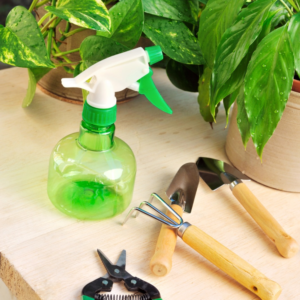
- Using clean scissors (I sterilize mine with rubbing alcohol first) I cut about a quarter inch above a node
- I make sure not to overdo it. I’ll probably prune about 25 to 30% of the plant at the most
- The cuttings don’t go to waste (more on that later)
The first time I did this I was sure I’d killed my plant. But thankfully I hadn’t.
Two weeks later I had lots of new shoots growing from below where I’d cut. The pruning had kickstarted the plant and made it fill out.
Propagation for Fullness
Going back to those cuttings from the pruning – they’re going to be very helpful now. Instead of just having a long pothos, you can make a FULL pothos by propagating and replanting cuttings back into the same pot.
I wasn’t sure about this at first. It felt like cheating in a weird way. But it works incredibly well and it’s the way a lot of the really full and great looking pothos you’ve probably seen online are created.
My Propagation Process
- Take your cuttings (each should have at least 2 to 3 nodes and a few leaves)
- Remove the bottom leaves so the nodes are exposed
- Stick them in water – I use old glass jars so I can see root grow
- Change the water every few days to keep it fresh
- Wait for the roots to grow to about 2 to 3 inches long (this usually takes 2 to 3 weeks)
- Plant them back into the pot they came from around the edges of it or in areas that are sparse
I have about 8 rooted cuttings in one pot at the moment and it looks amazing – really healthy and full. Each cutting will becomes its own vine and then together they all become a cascading mass that makes the plant look super full. It’s something I tried for get right for ages until I did it this way.
For an even more in depth look try our pothos propagation guide.
Fertilizer
I ignored fertilizing for way too long. I thought pothos were supposed to be easy plants to look after that didn’t need much in the way if maintenance. So they probably wouldn’t need any extra feeding. Wrong.
Pothos aren’t particularly heavy feeders compared to some plants but they do need nutrients to support how fast they grow (potentially 12 to 18 inches a month). Without the proper nutrition you’ll get slow, lackluster growth no matter what else you do right.
I use a balanced liquid fertilizer diluted to half strength every 2 to 3 weeks during the growing season (roughly April through to September where I live). In the fall and winter I cut that back to once a month or sometimes don’t bother at all as their growth naturally slows down.
Signs Your Pothos Needs More Nutrients
- Slow growth even with good light and water
- Smaller new leaves than older leaves
- Pale or yellow older leaves (though this can also be a sign of overwatering)
- Overall the plant looks lackluster
One thing you have to remember though: more fertilizer is NOT better. I once got overly enthusiastic and used full strength fertilizer every week.
My pothos ended up with brown and crispy tips to the leaves which is down to burn from the fertilizer. So it’s best to stick to half strength on a regular schedule and your plant will be much happier.
Watering for Growth (Without Causing Root Rot)
Watering is somehow both simple and complicated with pothos. They like to dry out a bit between waterings but not completely. They want the soil to say moist during their active growth, but not become soggy. So you have to get the balance right.
The way I do it is pretty straightforward: I stick my finger in to about two inches of the soil. If it feels dry then I know it’s the right time to water. If it still feels moist I wait another day or two.
When I do water I water thoroughly until it runs out of the drainage holes (you must have drainage holes in your pothos pot!). Then I let all the excess water drain away before I put it back in its pot. This makes sure the roots get lots of water without sitting in it.
Seasonal Watering Adjustments
You need to change how and when you water with the seasons. During the summer when my pothos is actively growing I’m watering it roughly once a week.
In the winter? More like every 10 to 14 days. The plant isn’t growing as much so it’s not using water as quickly.
I also learned to pay attention to the leaves. If they start to look a bit droopy or the edges curl I know it needs more water. Yellow leaves though usually mean I’ve overwatered it.
This guide to pothos watering will give you even more tips.
Temperature and Humidity
Pothos are tropical plants that cane from Southeast Asia originally and while they do adapt well they have preferences. They’re happiest in temperatures between 65 to 85°F. Most of our homes fall into that range naturally and that’s a big part of why pothos are such popular houseplants.
Humidity is where things get slightly more involved. Pothos can handle average household humidity (around 40 to 50%), but they really do best with higher humidity – around 50 to 70%.
I noticed that the pothos I have in my bathroom (which gets steamy from showers) always grows faster and fuller than the one in my living room.
Boosting Humidity Without Expensive Equipment
You don’t need a special humidifier although they do help. There are some simpler options I’ve used:
- Group plants together – they help keep the humidity right for each other
- Put the pot on a pebble tray filled with water (make sure the pot sits on the pebbles, not in the water)
- Keep pothos in naturally humid rooms like your bathroom or kitchen
- Mist the leaves occasionally (though this isn’t accept by everyone – some swear by it whereas others say it doesn’t make much difference)
I like grouping plants together. It’s worked really well for me. My pothos sits among my philodendrons and monsteras and they all seem to do better when they’re together.

Soil and Repotting
I made some basic and silly mistakes here too. I planted my first pothos in regular potting soil straight from the bag. It worked out alright but I wanted better than just alright.
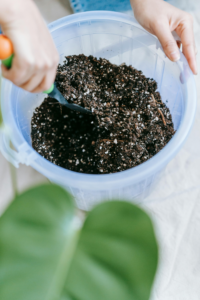
Pothos likes soil that drains well and that holds on to some moisture but doesn’t stay soggy. I make my own mix now: about 60% regular potting soil, 20% perlite and 20% orchid bark. The perlite and bark make pockets of air and improve the drainage while the potting soil holds onto nutrients and some moisture.
If mixing your own sounds like too much work look for potting mixes labeled for aroids or tropical plants. They’re usually made with the right balance.
When to Repot
I repot my pothos roughly every 18 to 24 months or when I see these signs:
- Roots growing out of the drainage holes
- Water running straight through without being absorbed
- Slow growth even though doing everything right
- The plant seems to be unstable in its pot
When I repot mine I go up only one pot size. That’s usually about 2 inches larger in diameter.
Going too big too fast means lots of soil without enough roots to absorb the water, which means there’s a greater chance of root rot.
Training and Support
Once you’ve got your pothos growing like crazy you’ll want to think about how to direct that growth. I’ve tried a few different ways and they each make a different sort of look.
For a really bushy, trailing effect, I let multiple vines cascade down from a hanging planter or high shelf. If you do this way then make sure you’ve got enough plants in the pot (through propagation as we went though earlier) so it looks full rather than just long.
For a more structured look I’ve used moss poles or trellises. Pothos are natural climbers – in their native habitat, they climb up trees – so they respond really well to being supported vertically. Training them upward tends to get larger leaves too, which is another positive.
How to Train Pothos Upward
- Insert a moss pole or trellis into the pot (do this during repotting so you don’t damage the roots)
- Gently wrap or secure vines to the support using plant ties or clips
- Keep the moss pole moist if you’re using one as the aerial roots will attach better
- As new growth happens continue attaching it to the support
The climbing method is great for a different look. Instead of cascading vines you get plant that grows up with progressively larger leaves. Both are beautiful – it really depends on what sort of space you have and your own preference.
For more inspiration see this guide to potthos climbing ideas.
Troubleshooting Common Issues
Even when you everything right things can still go wrong. These are just some of the problems I’ve faced and how I’ve fixed them.
Brown Leaf Tips
This usually means either inconsistent watering, low humidity or too much fertilizer. I’ve dealt with all three at various points.
The fix comes down to finding which one is the culprit. Check how and when youre watering, maybe look at increasing the humidity and make sure you’re not over-fertilizing.
Yellow Leaves
Usually overwatering, but occasionally it’s down to aging (older leaves will yellow and drop eventually).
If more than one of the leaves are yellow at once then check that you’re not watering too often and that the soil is draining properly.
Small Leaves or Slow Growth
Almost always a light issue. Move the plant closer to a window or use a grow light. I’ve also seen this with nutrient deficiency so make sure you’re fertilizing during the growing season.
Pests
Pothos are pretty good at resisting pests but I’ve dealt with spider mites before. They show up as small webs and damaged leaves. I treat them with neem oil spray making sure to get the underneath of the leaves where the pests hide. Consistency is important when treating for spider mites. So I spray every 5 to 7 days until they’re gone.
For more help see our guide to getting rid of bugs on pothos plants.
Patience and Consistency
Getting a full and trailing pothos will take time. Even with perfect care you’re looking at several months to see dramatic results.
My pothos took about four months to gr where I wanted it. It started out leggy and pretty sad looking and eventually ended up quite impressive.
But to get there I had to do everything mentioned here – pruning, propagating, adjusting light and water and consistent fertilizing. Some weeks I saw lots of progress. Other weeks nothing seemed go have changed. But I trusted the process and that the plant was working behind the scenes.
You just have to stick with and be consistent. It’s not about doing one big thing perfectly – it’s about doing a few things pretty well, regularly.
Water on a schedule that makes sense for your environment. Fertilize regularly during the growing season. Keep it in good light. Prune the plant when needed. Propagate to fill things out.
Final Thoughts
Growing a pothos that’s both bushy and long will take a bit more effort then just keeping it alive. But it’s totally possible to do. And you don’t have to have any special gardening or growing skills.
Pothos will respond to what you do, so give them better conditions and they will grow.
Start with getting the light right and doing some pruning. Those two changes alone will make the biggest difference.
Then get the watering spot on, add some fertilizer and be patient. Your pothos will get there. Mine did and I made plenty of mistakes along the way.
And even if you mess it up pothos are tough plants. They’ll bounce back. That’s probably their best quality. So don’t be afraid!
Recommended for pothos care
As an Amazon Associate I earn from qualifying purchases.
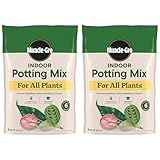
Miracle-Gro Indoor Potting Mix for All Plants, 6 qt., 2-Pack | Use with Houseplants and More, Feeds for up to 6 Months
Standard well-draining mix is all pothos need — they're famously low-maintenance.

Set of 2-10 Inch Hanging Planters for Indoor Plants with Self-Watering Includes Hanging Pots for Plants, Outdoor Hanging Plant Pot with Drainage, and 2 Types of Hanging Baskets Hangers (White, 10inch)
Showcases the trailing growth habit pothos are known for.

Miracle-Gro Indoor Plant Food for All Plants, 8 fl. oz. (2-Pack) | Liquid Plant Food for Indoor Plants, Houseplants, Flowers, Vegetables, Herbs and More
Monthly feeding during spring and summer keeps growth vigorous and leaves variegated.

Fiskars Bypass Pruning Shears, 5/8" Cut Capacity Garden Clippers | Self-Cleaning Sap Groove Prevents Sticking, Non-Slip Grip for Cutting Stems & Branches, Steel Blades w/ Low-Friction Coating
Sharp cuts encourage bushier growth and let you propagate trimmings in water.
Your pothos shouldn't be struggling.
Pothos are nearly indestructible — until they're not. My free guide 7 Gardening Mistakes That Are Killing Your Plants covers the small mistakes that quietly hold pothos back.

Your information was well needed some of the thing you mentioned has happened to my Pothos. Thank you so much for your the information I appreciate.