
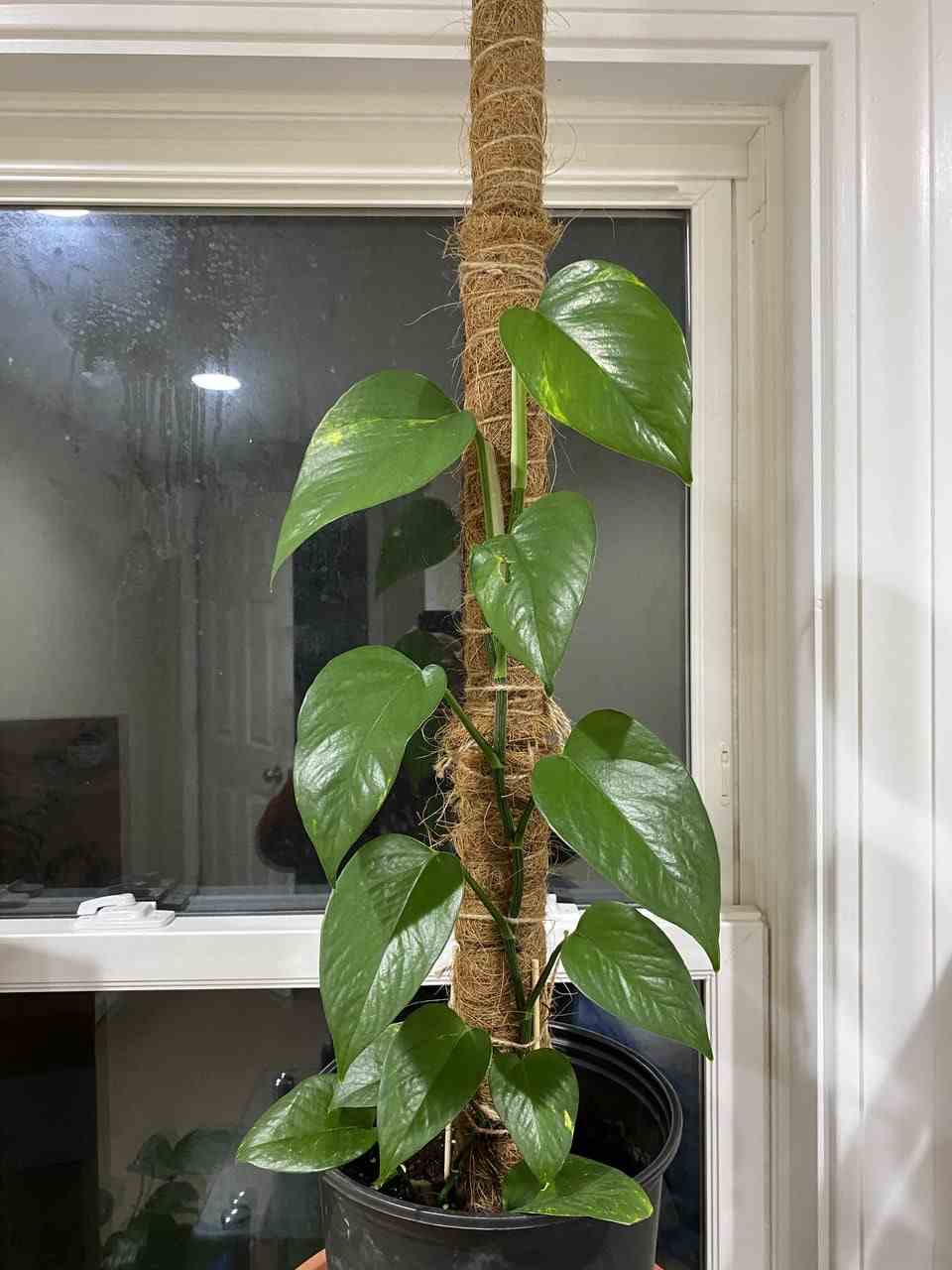
If your beloved Monstera is flopping over and looking like a sprawling mess then it needs some proper support. Something that keeps it upright and tidy.
Thankfully there are solutions that will make a difference to your leaning Monstera. You don’t have to put up with one growing madly all over the place.
I’ll take you through what will work to support your Monstera and what’s just a waste of money)
Quick Answer
- Moss Pole (Most Common): A moss pole gives the aerial roots something to latch on to and helps the plant grow straight, upright and bigger leaves.
- Wooden Stake or Trellis: Simple stakes or a small trellis work well for younger monsteras that need to be guided in a gentle way.
- Wall or Board Support: Securing the stems to a wooden board or wall supports the growth vertically and keeps the plant stable.
Why Your Monstera Needs Support
Monsteras are natural born climbers that desperately look for something to grab onto. In the rainforests where they would naturally grow they would use trees as support. The aerial roots you see them putting out? Those are looking for something they can latch on to and grow towards the light.
So supporting your Monstera will actually help it to grow the way nature intended. And that means better growth.
I’ve seen properly supported Monsteras develop leaves nearly twice the size of unsupported ones, and that’s all within a single growing season.
The Real Benefits of Supporting Your Monstera
- Encourages upward growth instead of sprawling (saving you space on the floor)
- Promotes larger, more mature leaf development with better fenestrations
- Improves the overall health of your Monstera through better air circulation
- Stops stems from breaking under the weight of heavy leaves
- Makes your plant look awesome
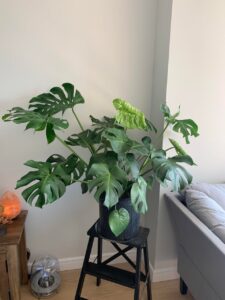
One of my Monsteras tipped its pot over three times in a week. So I set it up with a moss pole and the transformation was impressive. It wasn’t just in appearance either but in how it grew. The newest leaf was already turning toward the support rather than flopping outward.
When It’s Time to Add Support
Don’t wait until your Monstera is already a mess before doing something about support. I made that mistake and spent hours trying to wrangle mature stems onto a pole without breaking them.
Here’s my rule of thumb: if your Monstera has more than 4 to 5 leaves and is starting to lean in any direction then it need some support. Although to be honest the best time is even earlier when you’re first repotting a young plant.
Signs Your Monstera Needs Support
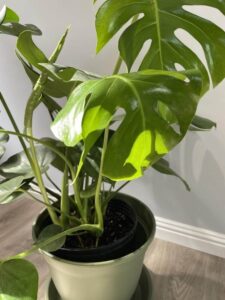
- Stems that are leaning or growing horizontally
- Visible aerial roots that are reaching out into the air
- The pot regularly tips over
- New leaves growing smaller or with fewer fenestrations than they should have
- Plant taking up way more space than it needs to
I find that a lot of people wait until their Monstera looks like it’s trying to get away from the pot across the floor. By that point you’re fighting against an established growth pattern. The plant might have already decided it’s a crawler, not a climber, and trying to change its mind after that point is tough.
Best Support Options for Monsteras
These are some of the best ways to support your Monstera and that will work if it’s starting to lean.
The Moss Pole
 JOYSEUS 30 Inch Moss Pole for Climbing Plants
If I could only recommend one type of support it would be a good moss pole. I recently bought a premium 3 foot sphagnum moss pole for one of my Monsteras and the difference was amazing.
The idea behind a moss pole is really straightforward. It copies a tree that the Monster would climb in the rainforest. That’s it.
When your Monstera starts putting out aerial roots they attach themselves to the pole. It will then start to climb all on its own instead of needing to be constantly tied to the support.
What Makes it Work:
- Miss that retains moisture helps to get the roots to attach
- Natural look that blends with your Monstera
- Can be extended as your plant grows taller
- Sturdy enough for mature plants with heavy leaves
The Downside: Moss poles require commitment. They need regular misting to keep working and quality ones aren’t cheap. I’ve found misting mine 2 to 3 times a week keeps it moist enough for the roots stay interested.
Coco Coir Pole
 JJGoo 17 inch Coco Coir Poles Extending to 53 Inches
If you can’t commit to regular misting (totally understandable) coco coir poles are the next best thing. They look similar to moss poles but use coconut fiber instead of sphagnum moss.
I switched a kitchen Monstera to a coir pole after I kept forgetting to mist its moss pole. And while it doesn’t attach to it as enthusiastically as it did with the moss pole it’s definitely still climbing. So I call that a success.
Why Choose Coir:
- Holds on to moisture longer than moss
- More sustainable than harvested sphagnum moss
- Usually more affordable and you can buy them in most places
- Still gives roots something to grab onto
Trellis Options – Best for Smaller Varieties
 Xeeol 32.6in Plant Trellis for Indoor Climbing Plants
For my Monstera adansonii and other smaller varieties decorative trellises work really well. They take up less space than poles and still give your Monstera the support it needs.
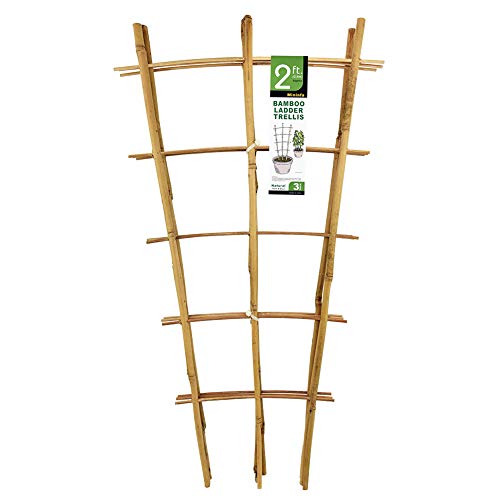
My favorite setup is a simple bamboo grid trellis for my adansonii. It lets me guide the vines in any pattern I want without a lot of hassle. So a potentially messy plant is now something akin to wall art.
Trellis Tips:
- Works best for vining Monstera varieties like adansonii or siltepecana
- Available in different materials so can make it match your home/apartment (bamboo, metal, wood etc.)
- You can train it to grow in any creative way you like
- Can be less intrusive than poles
 Natural Bamboo Trellis 24 Inches Tall
Bamboo Stakes – The Budget Option
 Jollybower 25pcs Thicker Heavy Duty Bamboo Stakes
Sometimes simple is best. For younger Monsteras or a temporary solution then plain bamboo stakes are surprisingly good. I started my first Monstera with three bamboo stakes bundled together and it worked perfectly until it outgrew them.
The best way to make bamboo stakes work is by using multiple stakes for stability and then soft plant ties that won’t damage the stems. Because of how useful the velcro plant ties are I don’t like to be without them now and buy large volumes in bulk.
Making Bamboo Work:
- For the best stability use multiple stakes arranged in a triangle
- Replace with something stronger once your plant matures
- Best for younger plants under 2 feet tall
- Surprisingly sturdy when properly anchored in the soil
The Totem Pole
If you want to get really serious and eventually have a mature Monstera then a substantial totem pole is the best solution. Thicker and heavier than a loss pole they can handle the weight of multiple stems even if they have big leaves.
Totem Advantages:
- Completely stable for large and mature plants
- Can be customized to whatever height your Monstera needs
- Long term solution that grows with your Monstera

Wall Hooks and Clips
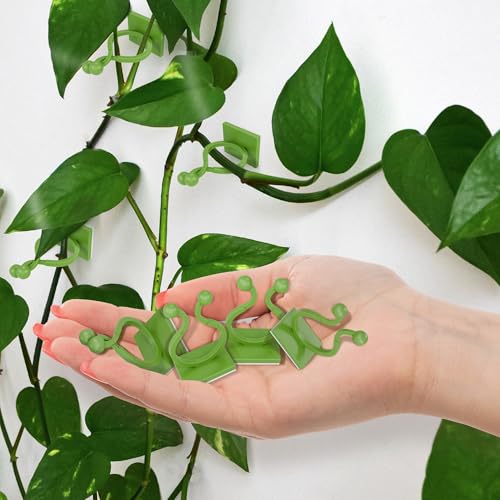
 Plant Wall Clips for Climbing Plants 110 Pcs
Sometimes the best support isn’t in the pot at all. If you only have a small space then wall mounted hooks and plant clips might be the best choice. They can help train your Monstera to grow along a wall or around a window.
I’ve used this in my small bathroom. It took a bit of work but now one of my juvenile Monstera adansonii frames the mirror beautifully instead of taking up a lot of space on my counter. Command hooks and silicone coated wire are what I go to now for projects like this.
What Makes it Work:
- Perfect for small spaces where you don’t have much floor space
- Do it right and you can crate a sort of living wall art
- Works especially well for vining varieties of Monstera
- You can get creative the pattern of how your Monstera grows
How to Install Plant Support Without Damaging Your Monstera
Installing support can be tricky. If you aren’t sure what you’re doing then you can damage your Monstera.
The best time to add support is during repotting when you can position it perfectly without disturbing the roots. But if your plant needs help now the following steps will help you to add support while it’s growing:
Step by Step Support Installation
- Choose the right size: Your support should be at least 2/3 the current height of your plant with some room for growth
- Position carefully: Insert the support near the back of the pot, about 2 inches from the main stem
- Go deep: Push the support at least 4 to 6 inches into the soil and make sure it reaches the bottom of the pot
- Secure gently: Use soft ties (never wire or string!) to loosely attach the main stems to the support
- Leave room: Allow at least a finger’s width of space in each tie for the stem to grow
- Guide, don’t force: Never bend stems more than 15 to 20 degrees at once. Doing things gradually is best
I choose a more forceful way of doing things on my first try. Which ended up with me snapping a lovely stem trying to make it fit a new support overnight.
In situations like this patience is everything. It may seem like a long time but sometimes it takes weeks to safely reposition a mature plant.
Training Your Monstera to Climb
Getting your Monstera onto a support is one thing but training it to actually climb is another. What you want from it is the aerial roots to attach to whatever support you’ve chosen, so your Monstera is supporting itself (and in turn looks amazing).
Last year I finally got my 3 year old Monstera to attach to its pole after months of trying. What was that eventually got it to work? Really simple – consistent moisture and well placed attachment points.
My Proven Training Technique:
- Put the aerial roots against the surface of whatever support you’ve chosen and secure them with soft ties
- For moss poles keep the pole consistently moist (not soaking) where the roots are in contact with it
- Use small bits of sphagnum moss to ‘sandwich’ aerial roots against the pole
- Be patient – attachment can take 4 to 8 weeks
- Once one root attaches others will follow more quickly
If you warm the room slightly (to around 75°F) and maintain higher humidity (60%+) it will have a big impact on the speeds of the attachment process. My bathroom Monstera attached to its support in half the time of my living room plant.

DIY Monstera Support Ideas That Look Good
Store bought supports will get the job done but DIY options let you customize size, how they looks and their function. Plus they’re often cheaper and more sustainable.
My favorite DIY support came from materials I had lying around after another project – an old wooden trellis, some sphagnum moss and garden twine. Total cost: basically nothing.
Easy DIY Support Projects:
- Custom Moss Pole: PVC pipe + chicken wire + sphagnum moss + fishing line
- Natural Wood Support: Cleaned branches (baked to kill pests) + twine + clear coat sealer
- Living Wall Grid: Wire mesh + decorative frame + coated hooks
- Invisible Support System: Clear acrylic rods + silicone tubing + fishing line
One weekend project I’m particularly proud of was turning a damaged vintage ladder into a multi level plant stand with built in supports for three different Monsteras. You know you’ve done a good job when guests asks where you bought it.
Common Mistakes That Kill Your Monstera
There are some support mistakes that come up repeatedly.
A Support That’s Too Short
I cringe when I see tiny 12 inch stakes in massive Monsteras. The support should be at least twice as tall as the current plant. This is so it can accommodate the new growth.
Death Grip
Plant stems need room to grow. I’ve seen people use twist ties, wire and even CABLE TIES to secure plants. These cut into the stems as they grow, sometimes killing entire sections of the plant. Always use soft, adjustable ties and leave some room for the plant expand and grow.
Ignoring Aerial Roots
If you ignore the aerial roots (or worse – cut them off) then it means your plant will never properly attach to its support. I’ve trimmed what I thought were ugly roots a few times and didn’t realize that was a mistake. It was a lot later I learned what they were there for.
Getting Stability Wrong
A support that wobbles is worse than no support at all. I had a friend whose Monstera’s moss pole was far too small for it. And because of that it had pulled it sideways.
The pole needs to be anchored deeply in the pot, ideally all the way to the bottom, and be strong enough to take the plant’s weight.
FAQs
Can I switch support types if I don’t like what I’m using?
Yes, but be gentle. The best time to switch supports is during repotting. If you must change mid growth do it gradually and try not to move or mess with the stem. I’ve managed to transition plants from stakes to poles with some success by using both on a temporary basis until it adjusted to what was happening.
My Monstera won’t attach to the moss pole even though I mist it. What’s wrong?
First check that you’re actually misting enough. The pole should feel damp, not just a little moist. Second, make sure the aerial roots are in direct contact with the pole. Sometimes wrapping the roots around the pole with soft ties helps to get them to attach. But patience is what really matters as it can take months.
Do I have to repot my Monstera to add support?
No but it’s easier if you do. To add support without repotting your Monstera start by clearing a small area near the base of the plant. Next carefully insert the support but make sure you avoid the major roots. Then fill the pot with fresh soil and water it thoroughly. I’ve added support to established plants quite a few times doing it this way and it does work.
How tall should my support be for a small Monstera?
Always go bigger than you think. For a young plant choose a support that’s at least 24″ tall. For more established plants 36″ should be the minimum. Remember that Monsteras can grow surprisingly fast in good conditions.
Best Support by Monstera Type
The different varieties of Monsteras have different needs when it comes to supports. Here’s what I’ve found works best for the most common types:
- Monstera Deliciosa: Sturdy moss pole or totem (these get BIG)
- Monstera Adansonii: Trellis or grid for spreading growth
- Monstera Siltepecana: Small trellis or hooks (perfect for trailing)
- Monstera Dubia: Flat board or bark slab (it grows flat against surfaces)
- Monstera Peru: Small moss pole or stakes
I have or have had all of these types of Monstera and each of them has reacted differently to the trying each of these types of support. For example my Peru seems happiest with a simple stake while my Deliciosa definitely loves a moss pole.
Final Thoughts
The proper support for Monsteras is what really makes them special. The support doesn’t just stop it from toppling over, it helps it grow as it would in nature.
The first time I saw the difference in leaf size between my supported and unsupported Monsteras I how important it was. The plant with support had leaves nearly twice as large and that was all down to giving or something to grow up.
It doesn’t matter if you go high tech with a premium moss pole or DIY from materials you’ve got around your home. Giving your Monstera something to climb will transform both its health and how it looks. Most of all it will thank you with bigger leaves, better growth and the look we’re all secretly aiming for.
