
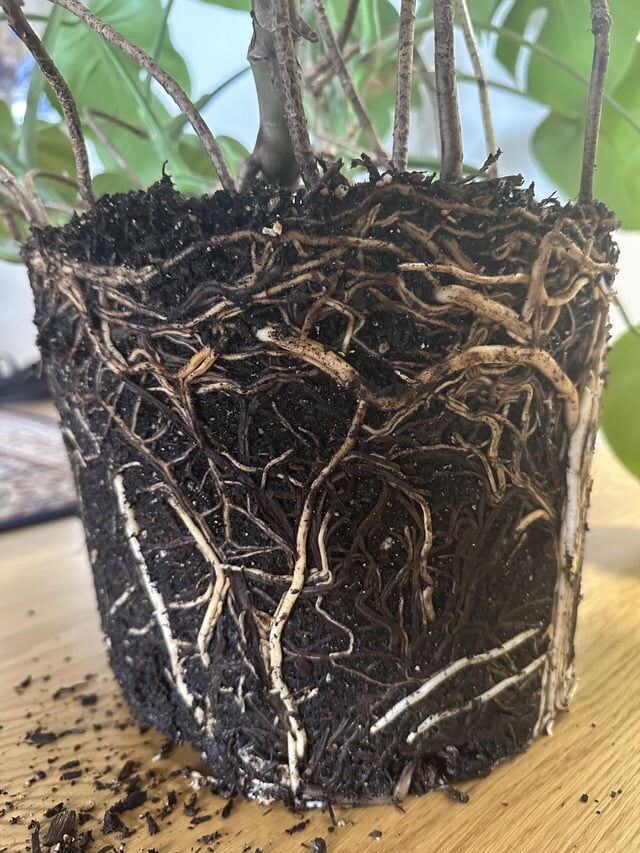
If your pothos has begun to look droopy or is dropping yellow leaves then it could be root rot is the cause. It’s something that can take hold before your plant shows anything is wrong.
But as long as you catch it fairly quickly it’s easy enough to treat.
Your pothos will tell you something’s wrong through some major signs. There will be more subtle leaf changes through to some very obvious signs that’s it’s struggling.
And once you know what to look for you can spot the warning signs and take action before your pothos gets any permanent damage.
So go through the following causes of root rot and use them to help you figure out if it’s the problem with your pothos as well as ways to bring your plant back to health.
Understanding Root Rot in Pothos
Root rot happens when the roots of your pothos don’t get enough oxygen. This is usually down to there being too much moisture.
That excess moisture will encourage fungus to grow and this leads to decaying roots and an unhappy, stressed plant.
Signs of Root Rot in Pothos
Finding your plant has root rot early and treating it quickly can be then difference between a plant you can save and one you can’t. So look out for these signs:
1. Yellowing Leaves
If your pothos leaves are turning yellow, especially the ones lower down the plant, it might be a sign of root rot.
When the roots becomes damaged they can’t take up the nutrients from the soil the plant needs. When the leaves don’t get those nutrients they can respond by turning yellow.
2. Wilting and Drooping
Even if your pothos is getting enough water your pothos can still look droopy and be wilting if the roots are rotting. This happens because the roots can’t absorb water properly.

3. Brown or Black Leaf Spots
Dark spots or patches on the leaves are a sign of a fungus infection that is associated with root rot. The spots can merge with each other and make larger blotches.
4. Mushy or Discolored Roots
Healthy pothos roots will feel firm and look white or tan in color. If the roots are rotting they will turn black or brown and be mushy. They might also smell really bad.
5. Mold or Fungus on Soil Surface
If the surface of your pothos soil has a white or yellow growth on it that is a sign of too much moisture and can lead to root rot.
6. Stunted Growth
If you’ve seen your pothos not growing as well as it was then that could be down to root rot slowing it down because it’s not absorbing the nutrients it needs.
7. Presence of Pests
When a pothos becomes weaker from root rot it makes it more likely to get pests like mealybugs, aphids and spider mites, which are attracted to stressed plants.
Causes of Root Rot in Pothos
Understanding what leads to root rot can help you stop it from happening.
1. Overwatering
Pothos like the soil to dry out between each water. Too much water will keep the soil damp and moist all the time and this will stop the roots from getting the oxygen they need and leading to rot.
2. Poor Drainage
If you’re using a pot that doesn’t have any drainage holes then the water can build up and cause the roots to rot. Heavy soil will also trap the water and cause the same problem.
3. Oversized Pots
But a pot that’s too big will also cause issues. A larger pot means more soil and this holds on to water for longer and can mean you end up overwatering your plant.
4. Low Temperatures
Pothos plants like the temperature to stay between 65 to 80°F (18-27°C). If it’s too cold then that can slow down how it absorbs the water, which will make the soil stay wet for longer and increase the risk of root rot.
5. Fungal Infections
Pathogens like Phytophthora, Pythium and Rhizoctonia grow in conditions where soil is moist and can infect the roots and cause them to rot.
How to Fix Root Rot in Pothos
If you think your pothos has root rot take these steps to save it:
1. Remove the Plant from Its Pot
Take your pothos out of its pot to get a good look at the roots. Be careful not to damage the healthy roots as you do this.
2. Rinse the Roots
Wash the roots under lukewarm water to get rid of the soil. You’ll then be able to see how bad the rot is.
3. Trim Affected Roots
Use scissors or shears and cut away the mushy or black roots. The healthy ones will be white and firm.
4. Disinfect the Remaining Roots
Soak the healthy roots in a solution of one part hydrogen peroxide to four parts water. This helps get rid of any fungal spores that are leftover.

5. Repot the Plant
Fill a clean pot with fresh potting mix. Make sure the pot has lots of drainage holes. And then replant your pothos making sure the roots are spread out and fully covered with soil.
6. Adjust Watering Practices
Once you’ve repotted it water your pothos a little. Let the top inch or so of the soil dry out between each watering so the rot doesn’t happen again.
Preventing Root Rot in Pothos
Stopping rot from happening is always better than trying to cure it. So follow these tips to stop it before it begins:
1. Proper Watering
- Water your pothos only when the top inch of soil feels dry.
- Change how often you’re watering based on the seasons – plants will need less water in the cooler months.
2. Use Well Draining Soil
- Use a potting mix that is designed for indoor plants. Or you can make your own by mixing equal parts of potting soil, perlite and coconut coir or peat moss.
- Don’t use heavy soils that hold on to too much moisture.
3. Select the Right Pot
- Always use a pot with lots of drainage holes so the excess water can escape.
- Don’t choose a pot that is too large as they hold on to more water than the smaller ones.
4. Maintain a Consistent Temperature
- Keep your pothos in an environment between 65°F and 80°F (18°C to 27°C).
- Don’t put your plant near any drafty windows or air conditioners.
5. Monitor Humidity Levels
Pothos do best in moderate humidity. If your home is very dry you can mist your plant occasionally or use a humidifier.
6. Inspect the Plant Regularly
- Check your pothos for early signs of stress or pests. These can make you plant more likely to get rotting roots.
- Keep a close eye on the level of moisture in the soil so you don’t overwater.
7. Use Fungicide When Necessary
- If you suspect fungus then use a diluted fungicide on the soil.
- Always follow the instructions on the label so you don’t harm your pothos.

Common Questions About Root Rot in Pothos
1. Can I Save a Pothos With Severe Root Rot?
If the majority of the roots are mushy and discolored it might be too late to save your pothos. However, you can propagate the healthy stems and start a new plant.
Cut off a healthy portion of the plant with at least one node and put it in water or fresh soil and let it grow new roots.
2. How Long Does It Take for a Pothos to Recover?
If you give it the right care it could be as little as a few weeks before it begins to recover. But it can take a few months to see things like new growth, but it will depending on the extent of the damage.
3. Can I Prevent Root Rot if My Soil Stays Wet for Too Long?
If you’ve accidentally overwatered your pothos then take it out of its pot and let the roots to dry out for a day or two. Repot it in fresh soil and change how you’re watering.
Root Rot Prevention Table
| Problem | Solution |
|---|---|
| Overwatering | Water only when the soil is dry to the touch. |
| Poor drainage | Use pots with drainage holes and soil that drains well. |
| Fungal infections | Use a fungicide if necessary and clean your pot fully. |
| Low temperature | Keep your plant in a warm environment. |
Final Thoughts
Root rot might seem intimidating at first but you should now have the knowledge to spot it early and take the necessary action.
What matters most is how you react when you first notice any yellow leaves or drooping stems. But the tips found here will help your pothos to stay healthy and do well.
